
Prime Meridian, Sutherland Travel Guide
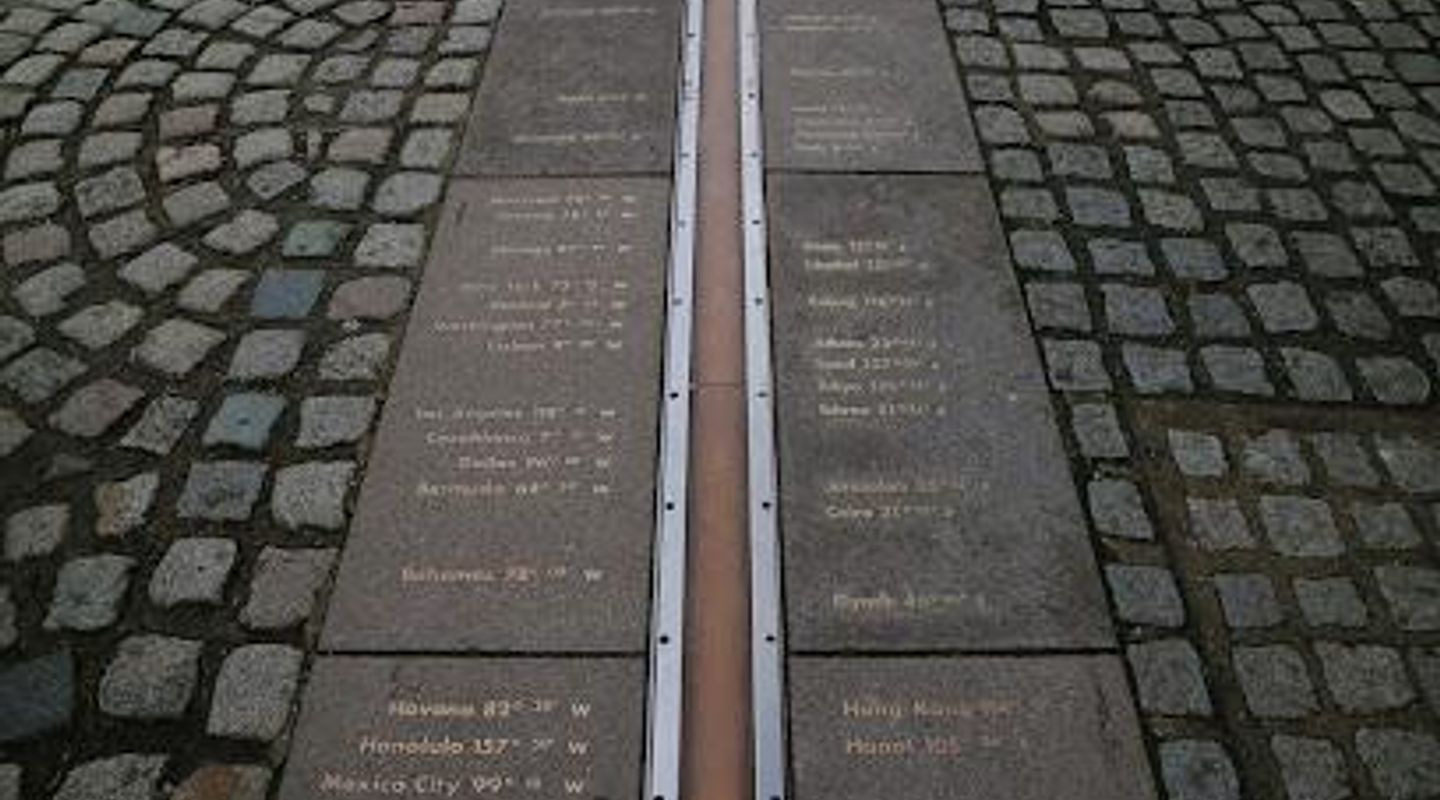
Stand astride the historic zero degrees longitude line where east meets west at the iconic Royal Observatory Greenwich.
The Prime Meridian at the Royal Observatory Greenwich marks the zero degrees longitude line, dividing the eastern and western hemispheres. Established in 1851 with the Airy Transit Circle telescope, it became the global standard in 1884. Visitors can stand astride the historic line in the Observatory courtyard, explore the history of timekeeping, navigation, and astronomy, and enjoy panoramic views over London from Greenwich Park.
A brief summary to Prime Meridian
- Royal Observatory, Blackheath Ave, London, SE10 8XJ, GB
- Click to display
- Click to display
- Duration: 1 to 3 hours
- Mid ranged
-
 Outdoor
- Mobile reception: 4 out of 5
- Monday 10 am-5 pm
- Tuesday 10 am-5 pm
- Wednesday 10 am-5 pm
- Thursday 10 am-5 pm
- Friday 10 am-5 pm
- Saturday 10 am-5 pm
- Sunday 10 am-5 pm

Know before you go
Hi, I'm Eve. Here are a few practical things to know before exploring Prime Meridian.
- Visit the Meridian Courtyard to stand exactly on the Prime Meridian line and take photos with one foot in each hemisphere.
- Explore the historic Flamsteed House and Meridian Building to see original astronomical instruments and learn about timekeeping history.
- Stay for the planetarium shows to experience immersive astronomy presentations suitable for all ages.
- Check the weather and visit on a clear day to enjoy panoramic views of London from Greenwich Park surrounding the Observatory.
- Look out for the green laser beam at night marking the Prime Meridian, visible from over 20 kilometers on clear evenings.
Do you manage this location?
Take control to get all the benefits, like improved information, better appearance, and stronger visibility across AI-powered discovery. Learn more about listing your business on Evendo
Activate your presenceOther nearby places you may find interesting
The closest places of the same kind, if this one is not quite what you had in mind.





Explore Prime Meridian on the Map
A handpicked selection of must-see spots near Prime Meridian, mapped for you.
Unlock the Best of Prime Meridian
Buy tickets
-
No tickets available
Book tours with entry
-
No tours available
Book tours without entry

Getting There
-
Public Transport
Take the Docklands Light Railway (DLR) to Cutty Sark for Maritime Greenwich station, about a 10-minute walk uphill to the Observatory. Services run frequently with single fares around £3-£5.
-
Bus
Bus routes 129, 188, 286, and 386 stop near Greenwich Park. From the bus stop, expect a 10-15 minute uphill walk to the Observatory. Buses operate regularly with fares around £2-£3.
-
Riverboat
Riverboat services from central London piers to Greenwich Pier provide a scenic 30-40 minute journey. From the pier, the Observatory is a 15-minute walk uphill through Greenwich Park. Prices range from £7-£12 one way.
-
Car
Driving is possible but parking near Greenwich Park is limited and often requires payment. Allow extra time for walking uphill to the Observatory. Expect parking fees around £5-£10 per hour.
For the on-the-go comforts that matter to you
-
 Restrooms
-
 Drink Options
-
 Food Options
-
 Seating Areas
-
 Information Boards
-
 Visitor Center
Discover more about Prime Meridian
Origins of the Royal Observatory and Its Global Significance
Founded in 1675 by King Charles II, the Royal Observatory Greenwich was established to improve navigation by accurately measuring longitude at sea. The site was chosen on a hill in Greenwich Park, repurposing the foundations of the old Greenwich Castle, offering a clear vantage point for astronomical observations close to London’s scientific community. Over centuries, astronomers meticulously recorded star transits and celestial data, culminating in the publication of the Nautical Almanac in 1767, which revolutionized sea navigation.The Defining of the Prime Meridian
In 1851, the seventh Astronomer Royal, George Biddell Airy, installed the Airy Transit Circle telescope at the Observatory, defining the meridian line that would become the world’s Prime Meridian. This line, marking zero degrees longitude, was internationally adopted in 1884 at the International Meridian Conference held in Washington, D.C., due to Greenwich’s prominence in maritime navigation and timekeeping. The Prime Meridian divides the Earth into eastern and western hemispheres and serves as the basis for the global time zone system.Features of the Meridian Line and Visitor Experience
Visitors to the Royal Observatory can stand with one foot in each hemisphere on the metal line embedded in the Observatory courtyard. The site also features three different meridian lines, reflecting historical shifts in measurement. At night, a green laser beam projects northward from above the Airy Transit Circle, visible up to 20 kilometers depending on atmospheric conditions. The Observatory houses historic instruments, including John Harrison’s marine chronometers and the Great Equatorial Telescope, alongside modern astronomy galleries and a planetarium.Architectural and Scientific Heritage
The Observatory complex includes Flamsteed House, the Meridian Building, and other historic structures dating from the 17th to 19th centuries. Designed by Christopher Wren and his assistant Robert Hooke, the Observatory embodies England’s scientific and artistic achievements. It was a working observatory until the mid-20th century and remains a symbol of Britain’s leadership in astronomy and navigation.Cultural Impact and Legacy
The Royal Observatory Greenwich is not only a scientific landmark but also a cultural icon symbolizing the measurement of time and space. It played a crucial role in standardizing time worldwide and remains a powerful reminder of humanity’s quest to understand the cosmos. The site is part of the Maritime Greenwich World Heritage Site, reflecting its universal value and historical importance.Modern Engagement and Educational Role
Today, the Observatory functions as a museum and educational center, engaging the public with astronomy’s past and present. Exhibits detail the history of timekeeping, navigation, and space science, complemented by interactive displays and a planetarium. The site continues to inspire visitors with its blend of history, science, and stunning views over London from Greenwich Park.












Your all‑in‑one travel companion app
Explore expert travel guides, compare and book tours, experiences, hotels, and more—all from the palm of your hand. Download now for seamless trip planning wherever your wanderlust takes you.


Explore More of Sutherland

Looking beyond Prime Meridian? Discover Sutherland for broader travel guides, local hot-spots, and regional highlights.
Explore Sutherland
Discover Britain’s maritime heritage through immersive galleries, iconic artifacts, and interactive exhibits at London’s National Maritime Museum.
A tranquil garden steeped in the heritage of British astronomy, offering stunning views and a serene escape within historic Greenwich Park.
