

Folly Bridge Travel Guide
Free Guide: Medieval fortress gateway transformed into Oxford's most iconic river crossing, where history, literature, and rowing heritage converge.


A brief summary of Folly Bridge
Medieval fortress gateway transformed into Oxford's most iconic river crossing, where history, literature, and rowing heritage converge.
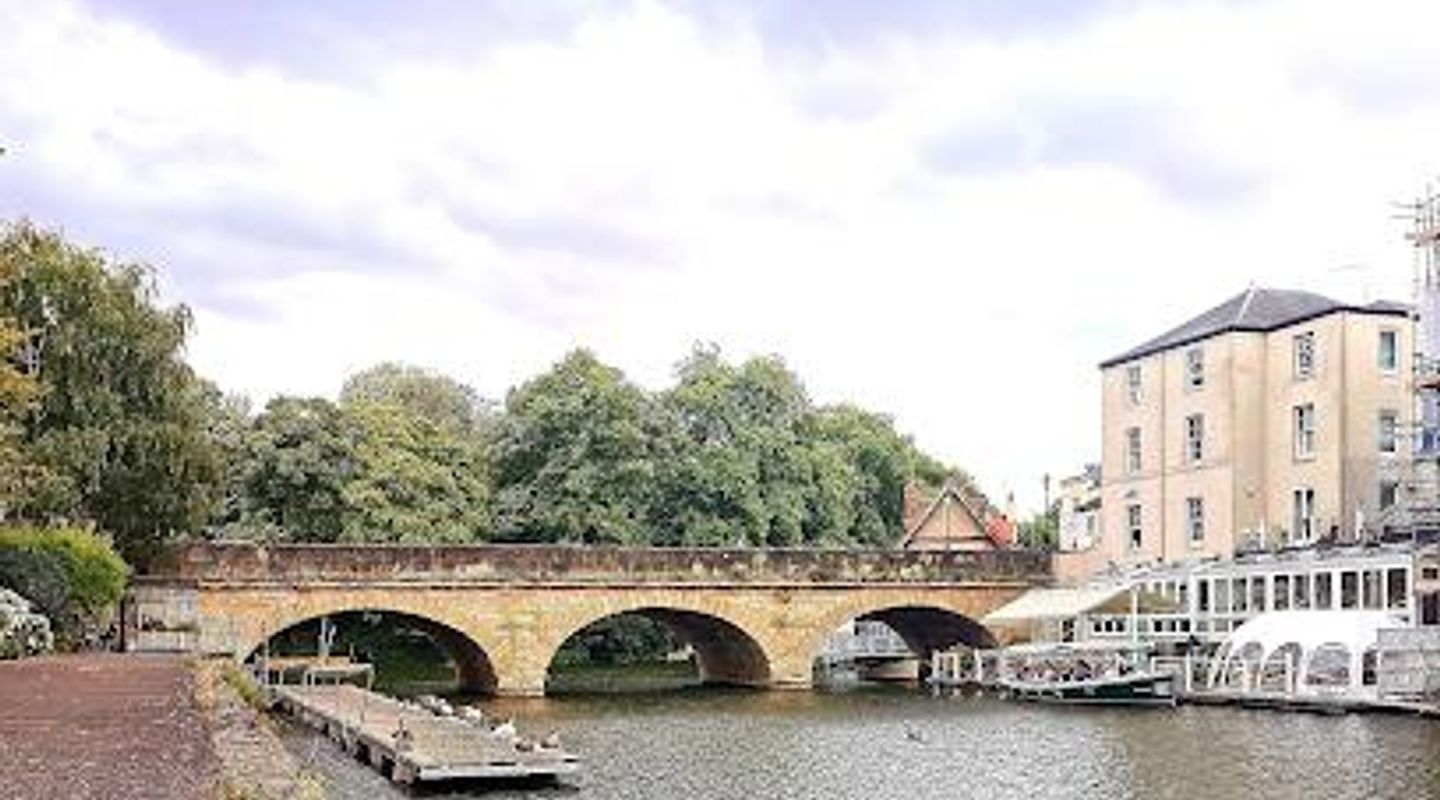
Folly Bridge is an iconic stone bridge spanning the River Thames in Oxford, connecting the city centre with the southern suburb of Grandpont along the Abingdon Road. Built in 1825–27 by architect Ebenezer Perry, this Grade I listed structure stands at a site with over a thousand years of history, from the original oxen ford that gave Oxford its name to its role as a medieval defensive crossing. The bridge's two-part design separated by Folly Island offers picturesque views of the river and remains deeply connected to Oxford's rowing heritage, literary legacy, and architectural significance.
On-site amenities
 Restrooms
 Drink options
 Food options
 Seating areas
 Information boards
Opening hours
- Every dayOpen 24 hours
Opening hours as listed on the venue’s Google Business Profile. Hours can change for services and special events, so check with the venue before you go.
- Address
- Abingdon Rd, Oxford OX1 4LB
Getting there
Walking from Oxford City Centre
Bus from City Centre
Cycling from City Centre
Punt or Boat from Upstream
Discover more about Folly Bridge
From Oxen Ford to Stone Bridge: A Millennium of Crossing
Folly Bridge stands at one of England's most historically significant river crossings, a site whose importance stretches back over a thousand years. The name Oxford itself derives from "oxen ford," referring to the shallow crossing where cattle were driven across the River Thames in the early 10th century. The first stone structure at this location was built around 1085 by Robert d'Oilly, a Norman nobleman who arrived in England with William the Conqueror. This original bridge formed part of the grand causeway known as Grandpont—literally "big bridge"—which stretched south across marshy meadowland with perhaps as many as forty arches, eventually reaching what is now Redbridge.For centuries, this crossing served as a crucial defensive point for Oxford. A hexagonal gatehouse with a portcullis and drawbridge was constructed at the southern end, probably in the 13th century, to guard the walled town from southern approaches. This tower became known as Friar Bacon's Study, named after Roger Bacon, the Franciscan philosopher and alchemist who lived between 1214 and 1292. Bacon used the tower as an observatory for astronomical observations, earning him the title "Doctor Mirabilis" among his contemporaries. The structure remained a point of interest for centuries—Samuel Pepys visited in 1668, and the young J.M.W. Turner painted it before its demolition in 1779.
Welcome's Folly and the Bridge's Modern Name
The bridge's present name emerged in the early 17th century when a tenant named Thomas Welcome added an additional storey to the defensive tower, topped with mullioned windows and crenellations in an architectural flourish that became known as "Welcome's Folly." Though the tower was demolished in 1779 to accommodate heavier traffic, the name Folly Bridge persisted and has remained ever since. The bridge also gained historical prominence during the English Civil War, when Royalist forces used it to control access to Oxford from the south.By the late 18th century, the medieval bridge had become dangerously decayed and too narrow for increasing traffic demands. An Act of Parliament in 1815 authorized its reconstruction. The current bridge, a handsome stone structure with a series of elegant arches, was designed by London architect Ebenezer Perry and constructed between 1825 and 1827. This Grade I listed structure represents a fine example of early 19th-century bridge engineering, characterized by its classical proportions and functional beauty. A toll house was erected at the north end in 1844 to collect fees from travellers using the Abingdon to Banbury turnpike; tolls were abolished in 1850, though the toll house remains as a listed building.
The Island Between Waters: Folly Island's Transformation
One of Folly Bridge's most distinctive features is its two-part design, separated by Folly Island. In the 1820s, during the bridge's reconstruction, Victorian engineers undertook an ambitious project to reshape the island itself. A giant basin was excavated through the middle of the island from west to east, straightening the main course of the Thames while the northern stream was culverted and built over. This engineering feat created more mainland for development and improved navigation for river traffic, though it significantly reduced the island's size. The culverted stream still emerges beyond the bridge and flows across Christ Church Meadows to the east, a visible reminder of this Victorian intervention.
Rowing Heritage and Literary Connections
In the 19th century, Folly Bridge became inseparably linked with Oxford's rowing tradition. The area around the bridge developed into a hub for the sport, with many of the university's boathouses located nearby. The bridge remains a focal point for Oxford's rowing community, offering views upstream towards Christ Church Meadow and downstream towards the more rural stretches of the river. Punting and boating continue to be popular activities beneath and around the bridge.The bridge also holds a special place in literary history, most famously through its association with Lewis Carroll, author of *Alice's Adventures in Wonderland*. Carroll, whose real name was Charles Lutwidge Dodgson, was a mathematics lecturer at Christ Church and is known to have taken boating trips on the River Thames, passing under Folly Bridge. These excursions are thought to have inspired some of the whimsical elements in his celebrated work. The bridge was also admired by Gerard Manley Hopkins, who wrote verses celebrating its beauty and the river's flow beneath it.
A Living Monument to Oxford's Evolution
Today, Folly Bridge remains a bustling part of Oxford, frequented by locals and tourists alike. The stone structure with its graceful arches spans the river at coordinates 51.7463908°N, 1.2563105°W, carrying the Abingdon Road south from the city centre. The bridge offers picturesque views in both directions, with the surrounding area vibrant and diverse, featuring a mix of historic buildings, modern establishments, and green spaces. The bridge's Grade I listing reflects its architectural and historical significance, while the adjacent toll house, Grade II listed, serves as a reminder of the bridge's role in Oxford's commercial history. From its origins as a simple oxen ford to its current status as an iconic landmark, Folly Bridge encapsulates a thousand years of Oxford's development, engineering innovation, and cultural significance.
Evendo Review Centre
 Google
Guest reviews
Best time to go
Quietest: Jan, Feb & Dec · before 6am or from 11pm
Busy times are Evendo estimates for a typical year, to help you plan. Actual crowds vary with events, school holidays and the weather.
Explore Folly Bridge on the map
A handpicked selection of must-see spots near Folly Bridge, mapped for you.
Get your free copy of our complete guide to Folly Bridge, delivered straight to you.
Everything on this page, from opening hours and how to get there to Eve’s tips and the best time to go, in one PDF you can read offline, print or share.
Already have an account? Sign in
Your Folly Bridge guide is ready.
We'll send it to · Not you? Sign out

Getting your guide ready…
We are putting together a fresh copy of the Folly Bridge guide. This can take up to a minute.
This can take a few moments. If your browser asks, choose Allow so the download can start. You'll find the guide in your Downloads folder.
Nothing happened? Download it again
Sorry, the guide is taking longer than usual. Please try again in a minute, or get it by email instead.
Unlock the best of Folly Bridge
Skip-the-line tickets, guided tours with entry, and walking tours of the area, booked in a few clicks.


Other nearby places you may find interesting
The closest places of the same kind, if this one is not quite what you had in mind.
-
-
-
-
-


Swipe for more places
More to explore near Folly Bridge

 Best experiences near Folly Bridge
 Best hotels near Folly Bridge
 Best landmarks near Folly Bridge
 Best attractions near Folly Bridge
 Best shops near Folly Bridge
 Best restaurants near Folly Bridge
 Best bars near Folly Bridge
Do you manage this location?
Take control to get all the benefits, like improved information, better appearance, and stronger visibility across AI-powered discovery.
Explore more

Explore more of The Cotswolds
Explore the enchanting Cotswolds, a quintessential English region with charming villages, historic landmarks, and scenic landscapes perfect for a tranquil getaway.
Explore The Cotswolds
Explore more of United Kingdom
Discover the United Kingdom: A blend of rich history, stunning landscapes, and vibrant cities, offering a unique travel experience for every visitor.
Explore United Kingdom
