

Pulteney Bridge Travel Guide
Free Guide: An 18th-century Palladian masterpiece with shops spanning both sides, linking Bath’s historic heart to the charming Bathwick estate.


A brief summary of Pulteney Bridge
An 18th-century Palladian masterpiece with shops spanning both sides, linking Bath’s historic heart to the charming Bathwick estate.
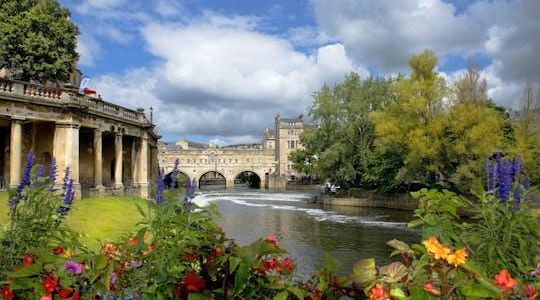
Pulteney Bridge in Bath, England, is a stunning 18th-century Palladian-style bridge spanning the River Avon. Completed in 1774 and designed by Robert Adam, it uniquely features shops along its full length on both sides, a rarity worldwide. Connecting Bath’s city center with the historic Bathwick estate, the bridge is renowned for its elegant architecture, historic significance, and vibrant commercial heritage.
On-site amenities
 Restrooms
 Drink options
 Food options
 Seating areas
 Information boards
Opening hours
- Every dayOpen 24 hours
Opening hours as listed on the venue’s Google Business Profile. Hours can change for services and special events, so check with the venue before you go.
- Address
- Bridge St, Bath BA2 4AT
- Website
Getting there
Bus
Walking
Taxi
Discover more about Pulteney Bridge
An Architectural Marvel Inspired by Italy
Pulteney Bridge stands as one of Bath’s most iconic landmarks, designed by the celebrated Scottish architect Robert Adam. Completed in 1774, its Palladian style draws heavily from the classical architecture of Andrea Palladio and was inspired by the famous Italian bridges Ponte Vecchio in Florence and the Rialto in Venice. Adam’s design was revolutionary for its time, integrating shops across the entire span of the bridge on both sides, making it one of only four such bridges worldwide. The southern façade of the bridge retains much of Adam’s original temple-like elegance, with symmetrical wings, Doric pilasters, and a prominent Venetian window crowning the central bay.
Historical Significance and Urban Connection
The bridge was commissioned by William Johnstone Pulteney to connect Bath’s city center with the Bathwick estate, which he aimed to develop as a new town rivaling the west side of Bath. Construction began in 1769 and overcame challenges such as the River Avon’s strong currents and the need for durable foundations using local Bath stone. Upon opening, Pulteney Bridge transformed Bath’s urban landscape by facilitating easy access and commerce between these areas. Originally hosting a variety of shops including milliners and jewelers, it quickly became a bustling social and commercial hub.
Evolution and Preservation Through the Centuries
Within two decades, commercial demand led to expansions and alterations, including widening the bridge and enlarging shops. Flood damage in the late 18th century necessitated rebuilding parts of the north side, which introduced asymmetrical cantilevered shop extensions that remain today. The 19th and 20th centuries saw further modifications, with efforts to preserve and partially restore the bridge’s original Palladian charm. Despite these changes, the bridge’s architectural integrity and historic character continue to captivate visitors.
Distinctive Features and Visual Appeal
The bridge’s three segmental arches gracefully span the River Avon, framing picturesque views of the river and the crescent-shaped weir nearby. The southern side’s classical symmetry contrasts with the north side’s more eclectic extensions, offering a visual narrative of the bridge’s evolving history. Constructed primarily of limestone with a pitched Welsh slate roof, the bridge’s elegant proportions and detailed ornamentation embody Georgian architectural ideals.
Cultural and Social Impact in Bath
Pulteney Bridge is not only a functional crossing but also a cultural icon that reflects Bath’s Georgian-era transformation. It complements other architectural masterpieces in the city, such as the Royal Crescent and the Roman Baths, contributing to Bath’s reputation as a center of historic beauty and design. The bridge remains a lively commercial space and a popular spot for photography, leisurely strolls, and appreciation of Bath’s heritage.
Contemporary Experience and Visitor Engagement
Today, visitors can explore the shops lining the bridge, enjoy views of the River Avon, and immerse themselves in the bridge’s rich history. The juxtaposition of classical design and later additions provides a unique story of architectural adaptation. Pulteney Bridge continues to be a symbol of Bath’s enduring charm and a testament to 18th-century ingenuity and style.
Evendo Review Centre
 Google
Guest reviews
Best time to go
Quietest: Jan, Feb & Dec · before 6am or from 11pm
Busy times are Evendo estimates for a typical year, to help you plan. Actual crowds vary with events, school holidays and the weather.
Explore Pulteney Bridge on the map
A handpicked selection of must-see spots near Pulteney Bridge, mapped for you.
Get your free copy of our complete guide to Pulteney Bridge, delivered straight to you.
Everything on this page, from opening hours and how to get there to Eve’s tips and the best time to go, in one PDF you can read offline, print or share.
Already have an account? Sign in
Your Pulteney Bridge guide is ready.
We'll send it to · Not you? Sign out

Getting your guide ready…
We are putting together a fresh copy of the Pulteney Bridge guide. This can take up to a minute.
This can take a few moments. If your browser asks, choose Allow so the download can start. You'll find the guide in your Downloads folder.
Nothing happened? Download it again
Sorry, the guide is taking longer than usual. Please try again in a minute, or get it by email instead.
Unlock the best of Pulteney Bridge
Skip-the-line tickets, guided tours with entry, and walking tours of the area, booked in a few clicks.





Other nearby places you may find interesting
The closest places of the same kind, if this one is not quite what you had in mind.
-
-
-
-
-


Swipe for more places
More to explore near Pulteney Bridge

 Best experiences near Pulteney Bridge

 Best hotels near Pulteney Bridge

 Best landmarks near Pulteney Bridge

 Best attractions near Pulteney Bridge

 Best shops near Pulteney Bridge

 Best restaurants near Pulteney Bridge

 Best bars near Pulteney Bridge
Do you manage this location?
Take control to get all the benefits, like improved information, better appearance, and stronger visibility across AI-powered discovery.
Explore more

Explore more of Wiltshire
Discover Wiltshire: Home to Stonehenge, stunning landscapes, and charming villages, this county offers a perfect blend of history, nature, and quintessential English charm.
Explore Wiltshire
Explore more of United Kingdom
Discover the United Kingdom: A blend of rich history, stunning landscapes, and vibrant cities, offering a unique travel experience for every visitor.
Explore United Kingdom
