Stanway House, Worcestershire Travel Guide
Britain's highest gravity fountain crowns a golden Jacobean manor in an unspoiled Cotswold village.
Stanway House is an outstanding Jacobean manor house nestled in the heart of the Cotswolds, renowned for its honey-colored stone architecture and the world's highest gravity fountain at 300 feet. This Grade I listed building, owned by the same family since the 16th century, combines period elegance with lived-in charm, featuring a jewel-like gatehouse, a 14th-century tithe barn, and beautifully restored 18th-century water gardens. The house opens seasonally and welcomes visitors to explore its fascinating interiors, manicured grounds, and the spectacular fountain display.
A brief summary to Stanway House
- Stanway House, Cheltenham, Stanway, GL54 5PQ, GB
- Click to display
- Click to display
- Duration: 1.5 to 3.5 hours
- Mid ranged
-
 Outdoor
- Mobile reception: 3 out of 5

Know before you go
Hi, I'm Eve. Here are a few practical things to know before exploring Stanway House.
- Visit on a Tuesday or Thursday between 2:00 PM and 5:00 PM from June through August to see the spectacular fountain display at 2:45 PM or 4:00 PM. Arrive early to secure parking and allow time to explore the grounds before the fountain plays.
- The best views of the house when it is closed to the public can be enjoyed from the churchyard of St. Peter's Church, which stands adjacent to the estate and offers excellent photo opportunities of the façade and gatehouse.
- Afternoon cream teas, homemade cakes, and locally produced ice cream are available in the Tea Room during opening hours. Bring a picnic to enjoy in the designated picnic areas within the parkland.
- Dogs are welcome on leads throughout the grounds. The estate's open parkland and woodland provide excellent walking opportunities for visitors with pets.
- Group visits and private tours can be arranged outside regular opening hours by prior arrangement. Contact the estate directly for bespoke experiences and wedding venue inquiries.
Do you manage this location?
Take control to get all the benefits, like improved information, better appearance, and stronger visibility across AI-powered discovery. Learn more about listing your business on Evendo
Activate your presenceOther nearby places you may find interesting
The closest places of the same kind, if this one is not quite what you had in mind.
Explore Stanway House on the Map
A handpicked selection of must-see spots near Stanway House, mapped for you.
Getting There
-
By Car
From Cheltenham town center, travel northwest on the B4077 toward Winchcombe for approximately 8 kilometers, taking around 15–20 minutes. Follow signs toward Stanway village. Ample parking for cars and coaches is available at the estate. The nearest major road is the A44, approximately 5 kilometers away.
-
By Bus
Local bus services operate from Cheltenham to nearby villages including Winchcombe and Broadway. Journey times vary from 30–45 minutes depending on service and stops. From Winchcombe, Stanway is approximately 3 kilometers away and accessible by local taxi or on foot via country lanes. Check local transport schedules as frequency varies seasonally.
-
By Taxi
Taxis from Cheltenham town center to Stanway House typically cost between £20–£35 and take 20–25 minutes depending on traffic. This option is convenient for visitors without personal transport and provides direct access to the estate entrance.
-
On Foot from Winchcombe
Stanway village is approximately 3 kilometers from Winchcombe town center via country lanes and footpaths. The walk takes 35–45 minutes through rural Cotswold countryside. Terrain is generally level to gently rolling. This option is suitable for walkers seeking a scenic approach through the surrounding landscape.
For the on-the-go comforts that matter to you
-
 Restrooms
-
 Drink Options
-
 Food Options
-
 Seating Areas
-
 Picnic Areas
-
 Trash Bins
-
 Information Boards
Discover more about Stanway House
A Jacobean Masterpiece in Golden Stone
Stanway House stands as one of the finest examples of Jacobean architecture in the Cotswolds, built gradually over generations beginning in the late 16th century and completed in the early 17th century. The house is constructed of distinctive honey-colored Guiting stone, a rich golden ashlar that glows warmly in sunlight and has become synonymous with Cotswold character. The elegant facade features a magnificent full-height oriel window and reflects the architectural sophistication of the Stuart period, with the south front containing all the principal rooms. The great hall is extraordinarily light and airy, featuring an enormous bay window and a raised dais where manorial courts were held until around 1800. Inside, visitors encounter fascinating period furniture, including unique Chinese Chippendale day beds from approximately 1760 that originated from the Wemyss family seat in Scotland.The Iconic Gatehouse and Village Setting
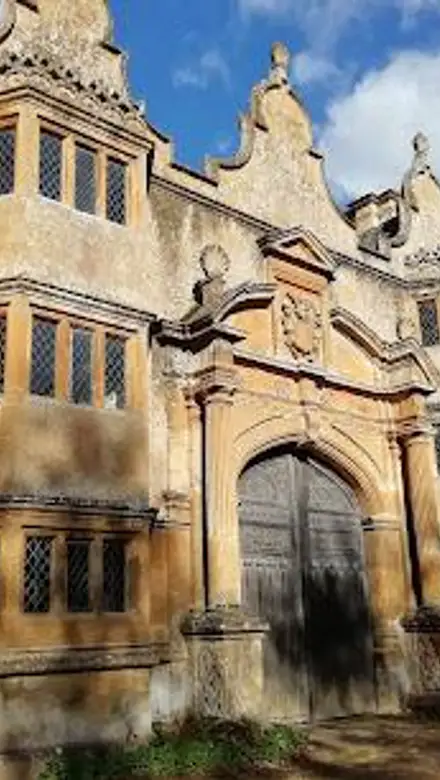
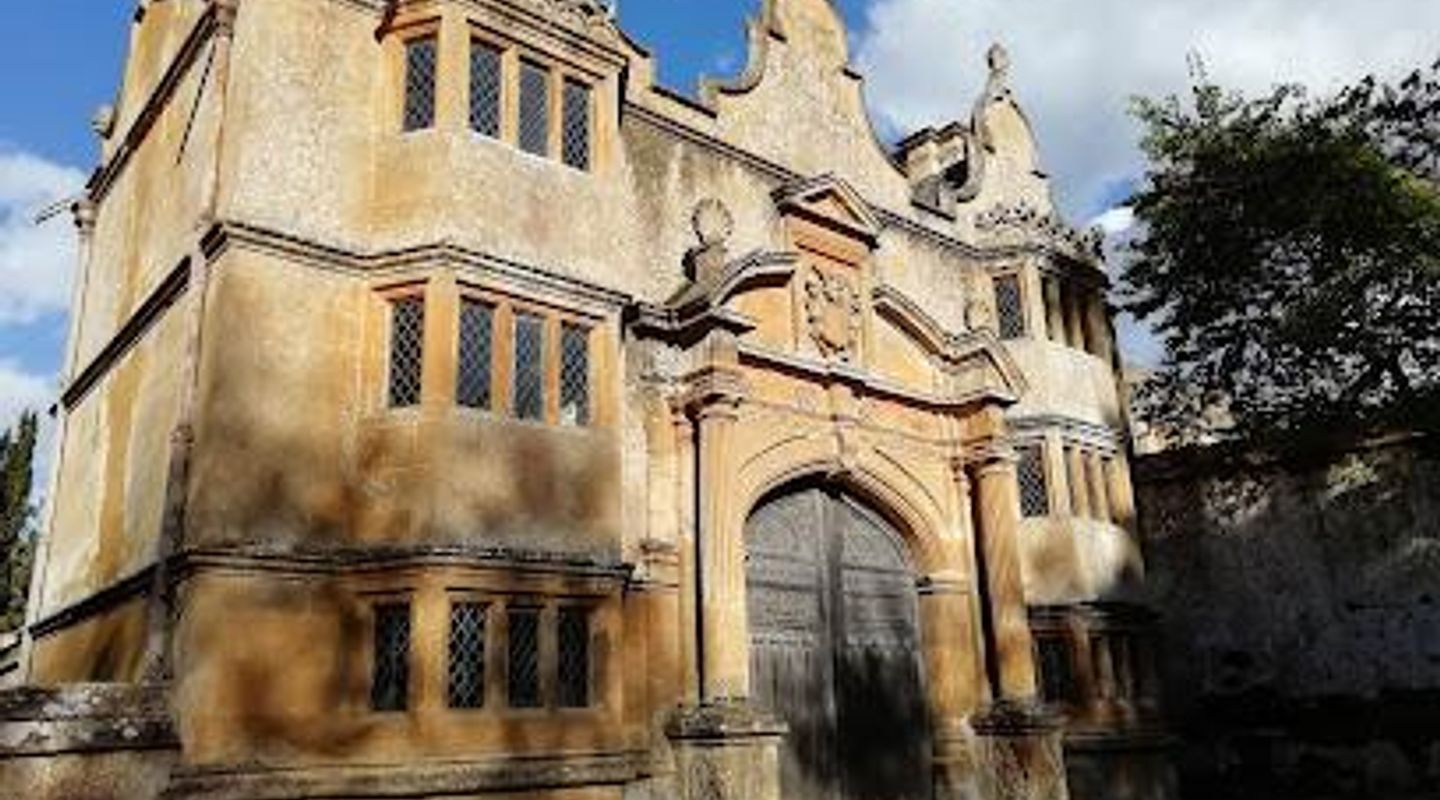
The jewel-like gatehouse, built around 1620 by Richard Tracy, is probably the work of local stonemason Timothy Strong and represents a masterpiece of Jacobean design. Constructed from the same mellow Guiting Yellow stone, it features a distinctive silhouette topped with a row of scallop shells—symbols both of pilgrimage to Santiago de Compostela and of the Tracy family crest. Standing at the entrance to the village, the gatehouse immediately announces the architectural quality that defines Stanway. The village itself has remained remarkably unspoiled, consisting of just the church, the great house, a few cottages and barns, and the recently restored working water mill, all faced in the same golden ashlar stone. This preservation is largely due to the village being held by only two families since the 16th century: the Tracy family for 500 years and, since 1817, the Earls of Wemyss, a noble Scottish family who continue to reside here.Medieval Heritage and the Tithe Barn
The ancient tithe barn, built around 1370 for Tewkesbury Abbey, stands as a building of accidental beauty adjacent to the gatehouse. Constructed of coursed rubble masonry with a gloriously undulating stone slate roof, it was restored in 1927 by architect Sir Philip Stott for the Earl of Wemyss. Inside, seven bays are spanned by impressively massive rafters that speak to centuries of craftsmanship. The barn originally housed the tithes owed by tenants to the abbots of Tewkesbury Abbey, and today it serves as a stunning venue for celebrations. Nearby, the parish church of St. Peter offers views of the house from its churchyard and contains 17th-century pulpit panels and a notable brass lectern that may have survived the Reformation.The World's Highest Gravity Fountain
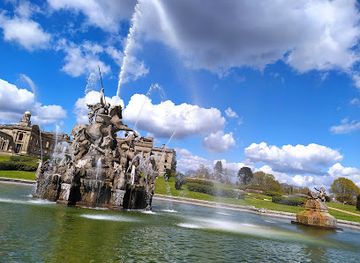
The glory of Stanway's water gardens is the spectacular single-jet fountain that rises to 300 feet 10¼ inches—the highest fountain in Britain and the highest gravity fountain in the world. Opened in June 2004 and engineered by David Bracey of The Fountain Workshop Limited, this engineering marvel plays at 2:45 PM and 4:00 PM for half an hour each time, creating an unforgettable spectacle. The fountain stands in a formal canal on a terrace above the house, part of an 18th-century water garden probably designed by Charles Bridgeman, one of Britain's greatest landscape gardeners. The garden rises in a series of dramatic terraced lawns and features a striking pyramid that once stood at the head of a 190-meter-long cascade descending to the formal canal—a cascade that exceeded in length and height the famous example at Chatsworth.Parkland, Gardens, and Specimen Trees
The estate encompasses 23 acres of beautifully maintained parkland and gardens that subtly combine to create an enclave of very English and almost magical harmony. Specimen trees and avenues line the grounds, and a high walk along the hillside above the cascade reveals splendid park trees and magnificent views across the vale of the Severn. The medieval pond in the lower garden, recently restored, has enhanced the beauty of the setting. North of the house stands a cricket field provided for the village, complete with a thatched pavilion built by John Oakey of Winchcombe. The pavilion is timber-framed and clad with larch poles, raised on twenty-five staddle stones—mushroom-shaped feet originally used to protect granaries from vermin and now serving as garden decorations.A Living Heritage Continuously Preserved
What distinguishes Stanway from many grand estates is its lived-in quality and the commitment of its owners to preserve rather than commercialize. The Wemyss family, who have owned the property since 1817, continue to reside here and have undertaken careful restorations, including the gradual reinstatement of the 18th-century water garden and the addition of the spectacular fountain. The house has been altered and enlarged over the centuries—notably in 1859 by W. Burn for the Earl of Wemyss and again in 1913 by Detmar Blow—yet these changes have been undertaken with sensitivity to the original character. Today, Stanway remains a Grade I listed building and an outstanding example of how a historic property can be maintained as a family home while remaining open to visitors during the summer months.












Your all‑in‑one travel companion app
Explore expert travel guides, compare and book tours, experiences, hotels, and more—all from the palm of your hand. Download now for seamless trip planning wherever your wanderlust takes you.


Explore More of Worcestershire
Looking beyond Stanway House? Discover Worcestershire for broader travel guides, local hot-spots, and regional highlights.
Explore Worcestershire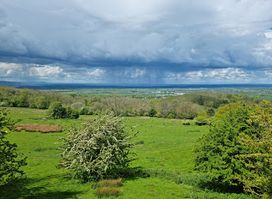
A historic Cotswold amphitheatre with panoramic views, where 17th-century games meet timeless countryside scenery.
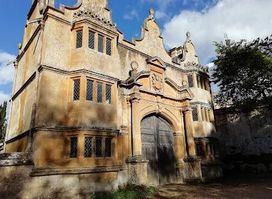
Explore Stanway House, a Jacobean manor with England’s tallest gravity fountain and enchanting historic gardens in the heart of the Cotswolds.