

Lenakel, Vanuatu Travel Guide
Discover Lenakel, Tanna Island's vibrant gateway, where traditional culture, breathtaking landscapes, and the warmth of Ni-Vanuatu hospitality await every visitor.
Welcome to Lenakel, the bustling hub of Tanna Island in Vanuatu. This charming port town is the perfect gateway to explore the island's wonders, where traditional customs meet the natural beauty of the Pacific. As a visitor, you will find a warm welcome from the local Ni-Vanuatu people, who are eager to share their rich culture and hospitality. Lenakel is the main commercial center of Tanna, and you will find a variety of shops, markets, and services here. The town's main market is a vibrant place, filled with local produce, handmade crafts, and the rhythm of island life. Don't miss the chance to taste some fresh tropical fruits or buy a unique souvenir. A short trip from Lenakel will take you to some of Tanna's most stunning attractions. A visit to the active Mount Yasur volcano is a must-do, offering an unforgettable experience as you stand at the edge of its fiery crater. Nearby, you can explore traditional villages where time seems to stand still, and learn about the island's unique customs and lifestyle. For nature lovers, the pristine beaches and lush rainforests provide endless opportunities for adventure and relaxation.

Know before you go
Hi, I'm Eve. Here are a few practical things to know before exploring Lenakel.
- Visit the local market early in the morning to experience the freshest produce and lively atmosphere.
- Bring sturdy shoes for hiking, especially if you plan to visit Mount Yasur.
- Respect local customs and traditions when visiting villages; always ask for permission before taking photos.
- Carry local currency (Vanuatu Vatu) as some places might not accept credit cards.
- Consider hiring a local guide to enrich your understanding of the island's culture and natural wonders.
Explore Lenakel: Things to Do, Places to Eat, Hotels & More
Handpicked recommendations for top attractions, local dining, accommodations, and more

Best attractions in Lenakel
Top-rated picks
Best Attractions

Evergreen Cascades Waterfall
Immerse yourself in the beauty of Evergreen Cascades Waterfall, a serene escape into nature in Vanuatu's lush landscapes.

Mount Yasur
Discover the breathtaking eruptions and lush landscapes at Mount Yasur, Vanuatu's iconic active volcano, an unforgettable adventure awaits.

Matevulu Blue Hole
Experience the breathtaking beauty of Matevulu Blue Hole, a stunning natural attraction in Vanuatu with crystal-clear waters perfect for swimming and relaxation.

Top Rock
Discover the stunning beauty of Top Rock in Saama, a must-visit tourist attraction showcasing nature's breathtaking rock formations and panoramic views.

Best landmarks in Lenakel
Top-rated picks
Best Landmarks

Evergreen Cascades Waterfall
Experience the breathtaking beauty of Evergreen Cascades Waterfall in Vanuatu, a serene paradise for nature lovers and adventure seekers.

Vanuatu National Museum
Explore the captivating cultural heritage of Vanuatu at the National Museum, where history and tradition come alive through diverse exhibits.

White Grass Ocean Resort & Spa
Experience the ultimate tropical getaway at White Grass Ocean Resort & Spa, where luxury meets nature on Tanna Island, Vanuatu.

Nanda Blue Hole
Experience the breathtaking beauty of Nanda Blue Hole in Vanuatu, a must-visit tourist attraction for nature lovers and adventure seekers alike.

Best restaurants in Lenakel
Top-rated picks
Best Restaurants
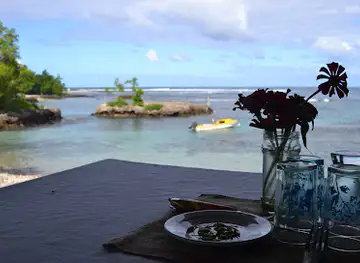
Lenakel Sea View Restaurant
Discover culinary delights with breathtaking ocean views at Lenakel Sea View Restaurant - an unforgettable dining experience in Vanuatu.

Chez Leah Restaurant
Discover authentic Vanuatu cuisine at Chez Leah Restaurant in Tanna Port Resolution – where flavor meets breathtaking views.

Chicken and Chips
Experience the best of local cuisine at Chicken and Chips in Lenakel – where delicious flavors meet vibrant culture.

Tanna Eco Venture
Experience authentic Vanuatuan cuisine at Tanna Eco Venture—where sustainability meets exceptional flavors amidst stunning natural beauty.

Best bars in Lenakel
Top-rated picks
Best Bars

Lenakel Sea View Restaurant
Experience the perfect blend of breathtaking ocean views and delicious local cuisine at Lenakel Sea View Restaurant in Vanuatu.

Sunset Bungalows
Experience serene relaxation and breathtaking sunsets at Sunset Bungalows, your perfect retreat in Lenakel, Vanuatu.

Will Smith Kava Bar
Discover the authentic taste of Vanuatu at Will Smith Kava Bar in Lenakel, where tradition meets vibrant social culture.

Lenakel Habour View Resturant
Experience the perfect blend of stunning ocean views and local flavors at Lenakel Harbour View Restaurant, a must-visit dining destination in Vanuatu.

Best nightclubs in Lenakel
Top-rated picks
Best Nightclubs

Banyan Beach Bar
Experience the vibrant atmosphere of Banyan Beach Bar in Port Vila, where stunning ocean views meet delicious cocktails and lively entertainment.

The Retreat Seaside Sports Bar & Resort
Experience vibrant dining, sports entertainment, and family-friendly fun at The Retreat Seaside Sports Bar & Resort in Port Vila, Vanuatu.

Stone Lounge
Experience the vibrant nightlife at Stone Lounge, Port Vila's premier cocktail bar serving exquisite drinks amidst a tropical paradise.

Kava Lounge
Discover the vibrant nightlife of Vanuatu at Kava Lounge, where tradition meets relaxation in the heart of Port Vila.

Best shops in Lenakel
Top-rated picks
Best Shops

Sunset Bungalows
Discover tranquility and stunning ocean views at Sunset Bungalows, the perfect escape in Lenakel, Vanuatu.

Lenakel Market
Discover the vibrant Lenakel Market, a cultural gem in Vanuatu where local life, crafts, and flavors come alive in a colorful shopping experience.
Edmond Store
Discover the heart of Tanna at Edmond Store, your go-to convenience store for essentials and local treasures in Lowanatom.
Boulanger
Savor the flavors of Lowanatom at Boulanger, a charming bakery offering artisanal pastries and local delights.

Explore Lenakel on the Map
A handpicked selection of must-see spots in Lenakel, mapped for you.
Lenakel Essentials
-
Lenakel is located on Tanna Island in Vanuatu. The nearest airport is Tanna Airport (Whitegrass Airport), which is about a 30-minute drive from Lenakel. Flights to Tanna Airport are available from Bauerfield International Airport in Port Vila, the capital of Vanuatu. Once you arrive at Tanna Airport, you can take a taxi or arrange for a transfer through your accommodation to reach Lenakel.
-
Transportation options in Lenakel include taxis, minibuses, and trucks that serve as public transportation. Renting a vehicle is also an option, though the roads can be challenging, especially during the rainy season. Walking is feasible within the town itself. For trips to more remote areas or tourist attractions, hiring a local guide with a vehicle is recommended.
-
The official currency in Vanuatu is the Vanuatu Vatu (VUV). Credit cards are accepted in some hotels and larger restaurants, but it is advisable to carry cash, especially for smaller establishments and markets. ATMs are available in Lenakel, but it's wise to bring enough cash from Port Vila in case the ATMs are out of service.
-
Lenakel is generally safe for tourists. However, standard travel precautions should be taken. Avoid walking alone at night in unfamiliar areas and keep an eye on your belongings in crowded places. There are no specific high-crime areas targeting tourists, but staying vigilant is always a good practice.
-
In case of emergency, dial 112 for immediate assistance. There is a police station and medical facilities in Lenakel. It is strongly recommended to have travel insurance that covers medical emergencies. For minor health issues, there are pharmacies in the town where you can purchase basic medications.
-
Fashion: Do dress modestly, especially when visiting local villages and religious sites. Avoid wearing revealing clothing. Religion: Do show respect for local customs and traditions. Always ask for permission before entering a village or taking photos. Public Transport: Do be respectful and patient, as public transport can be informal and slow. Don't eat or drink on public transport. Greetings: Do greet people with a friendly 'hello' or the local greeting 'Halo'. A handshake is also common. Eating & Drinking: Do try local foods and accept food and drink offerings graciously. Don't refuse hospitality, as it may be considered impolite.
-
To experience Lenakel like a local, visit the local markets where you can buy fresh produce and traditional goods. Engage with locals, as they are often friendly and willing to share stories about the island's history and culture. Don't miss the opportunity to visit the Yasur Volcano, one of the most accessible active volcanoes in the world. For an authentic experience, consider participating in a traditional kava ceremony.
When is the best time to visit Lenakel?
Useful Local Phrases for Lenakel
You don't need to speak the language perfectly. Even learning a few simple words can make conversations warmer—and locals usually appreciate the effort.
— Eve

Here are the phrases I use most often in Lenakel. Try a few—you'll be surprised how far they go! 😊
❤️
-
- HelloNem
[nem] - GoodbyeTata
[tata] - YesIo
[yo] - NoTalema
[ta-le-ma] - Please/You're welcomeTangis
[tan-gis] - Thank youTankiu
[tan-kiu] - Excuse me/SorrySori
[so-ri] - How are you?Yufala i stap gut?
[yoo-fa-la ee stap goot] - Fine. And you?Mi stap gut. Sapos yu?
[mee stap goot. sa-pos yoo] - Do you speak English?Yu save toktok long Inglish?
[yoo sa-vey tok-tok long ing-glish] - I don't understandMi no save
[mee no sa-vey]
- HelloNem
-
- I'd like to see the menu, pleaseMi wantem lukluk long menu, plis
[mee wan-tem look-look long men-oo, plees] - I don't eat meatMi no kakae mit
[mee no ka-kai meet] - Cheers!Yufala drink gud
[yoo-fa-la drink good] - I would like to pay, pleaseMi wantem pei, plis
[mee wan-tem pay, plees]
- I'd like to see the menu, pleaseMi wantem lukluk long menu, plis
-
- Help!Helpem mi!
[help-em mee] - Go away!Go we!
[go way] - Call the Police!Kolim Polis!
[ko-lim po-lis] - Call a doctor!Kolim dokta!
[ko-lim dok-ta] - I'm lostMi las
[mee las] - I'm illMi sik
[mee sick]
- Help!Helpem mi!
-
- I'd like to buy...Mi wantem bae...
[mee wan-tem buy] - I'm just lookingMi jas lukluk
[mee jas look-look] - How much is it?Hao moa?
[how more] - That's too expensiveTaem ia plante
[time ee-a plan-te] - Can you lower the price?Yu save katdaon pres?
[yoo sa-vey kat-down press]
- I'd like to buy...Mi wantem bae...
-
- What time is it?Hao taem nao?
[how time now] - It's one o'clockTaem ia wan
[time ee-a one] - Half past (10)Haef past (10)
[half past] - MorningMornin
[mor-nin] - AfternoonAftanun
[af-ta-noon] - EveningIvinin
[ee-vee-neen] - YesterdayDei ya
[day ya] - TodayTude
[tood] - TomorrowTamora
[ta-mo-ra] - 1Wan
[wan] - 2Tu
[too] - 3Tri
[tree] - 4Fo
[foh] - 5Faev
[fayv] - 6Siks
[siks] - 7Seven
[sev-en] - 8Eit
[ate] - 9Nain
[nayn] - 10Ten
[ten]
- What time is it?Hao taem nao?
-
- Where's a/the...?Wea...?
[way-a] - What's the address?Hao nom nomia?
[how nome nome-ee-a] - Can you show me (on the map)?Yu save soem mi long map?
[yoo sa-vey som mee long map] - When's the next (bus)?Hao long taim wea bus blong haed?
[how long time way-a bus belong head] - A ticket (to ....)Wan tikit (long ....)
[wan ticket long]
- Where's a/the...?Wea...?
History of Lenakel
-
Long before European explorers set their eyes on the shores of Vanuatu, the island of Tanna, where Lenakel is located, was home to the Melanesian people. Archaeological evidence suggests that the first settlers arrived around 3,000 years ago, bringing with them a rich tapestry of cultural practices and traditions. These early communities were adept at fishing, farming, and navigating the seas, laying the groundwork for the vibrant culture that persists to this day.
-
The 18th century marked the arrival of European explorers, with Captain James Cook being one of the first to document his visit to Tanna in 1774. However, it wasn't until the 19th century that significant European influence took hold. Missionaries from the Presbyterian Church arrived in the mid-1800s, establishing missions and schools. Their presence brought about profound changes to the social and cultural fabric of Lenakel, as they introduced Christianity and Western education to the local population.
-
In the late 19th and early 20th centuries, Vanuatu—then known as the New Hebrides—came under joint British and French colonial rule, a unique arrangement known as the Condominium. This period saw increased infrastructure development in Lenakel, including the construction of administrative buildings and the establishment of trade routes. However, the dual administration often led to bureaucratic complexities and challenges for the local population.
-
During World War II, Lenakel and the surrounding areas of Tanna gained strategic importance due to their location in the South Pacific. Allied forces established military bases and airstrips on the island, which played a crucial role in the Pacific theater. The war brought both hardship and modernization to Lenakel, as the presence of foreign troops introduced new technologies and economic opportunities.
-
Vanuatu gained independence from colonial rule on July 30, 1980. This newfound autonomy ushered in an era of national pride and development. Lenakel, as one of the key towns on Tanna, has since seen various modernization projects aimed at improving infrastructure, healthcare, and education. Despite these advancements, the community has managed to retain much of its traditional culture and practices, making it a unique blend of the old and the new.
-
Lenakel is a hub of cultural activity, with numerous festivals and events that celebrate the island's heritage. The Yam Festival, for example, is a significant event that marks the harvest season with traditional dances, songs, and rituals. Kava ceremonies are another important aspect of life in Lenakel, providing a social and spiritual anchor for the community. These cultural practices offer a glimpse into the deep-rooted traditions that continue to thrive in modern times.
Cities near Lenakel
The closest cities to Lenakel, if you have time for more than one stop.


Your all‑in‑one travel companion app
Explore expert travel guides, compare and book tours, experiences, hotels, and more—all from the palm of your hand. Download now for seamless trip planning wherever your wanderlust takes you.


Lenakel in Photos
Browse through our photo collection highlighting the charm and character of the destination.


Lenakel: The Heartbeat of Tanna Island
Welcome to Lenakel, the bustling hub of Tanna Island in Vanuatu. This charming port town is the perfect gateway to explore the island's wonders, where traditional customs meet the natural beauty of the Pacific. As a visitor, you will find a warm welcome from the local Ni-Vanuatu people, who are eager to share their rich culture and hospitality. Lenakel is the main commercial center of Tanna, and you will find a variety of shops, markets, and services here. The town's main market is a vibrant place, filled with local produce, handmade crafts, and the rhythm of island life. Don't miss the chance to taste some fresh tropical fruits or buy a unique souvenir. A short trip from Lenakel will take you to some of Tanna's most stunning attractions. A visit to the active Mount Yasur volcano is a must-do, offering an unforgettable experience as you stand at the edge of its fiery crater. Nearby, you can explore traditional villages where time seems to stand still, and learn about the island's unique customs and lifestyle. For nature lovers, the pristine beaches and lush rainforests provide endless opportunities for adventure and relaxation.
Explore More of Tanna Island

Looking beyond Lenakel? Discover Tanna Island for broader travel guides, local hot-spots, and regional highlights.
Explore Tanna IslandExplore More of Vanuatu

Looking beyond Lenakel? Discover Vanuatu for broader travel guides, local hot-spots, and regional highlights.
Explore Vanuatu