

Free La Foa Travel Guide & Mobile App
Plan your La Foa trip with Evendo. Get free guides to top attractions, restaurants, hotels, and bars. Web access or download the mobile app.


La Foa, New Caledonia: explore west-coast landscapes, Kanak culture, river country, Ouano Lagoon and historic sites on Grande Terre near Noumea.
A Rural West-Coast Setting
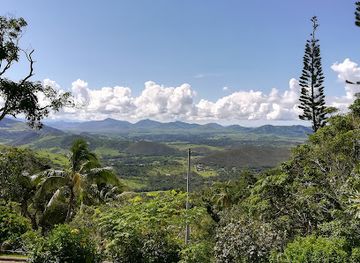
La Foa lies on the west coast of Grande Terre, New Caledonia’s main island, roughly two hours by road from Nouméa. The small town serves as a practical and cultural centre for a broad rural commune shaped by pasture, river plains, low wooded hills and the nearby lagoon. Its atmosphere is distinctly different from the capital: roads are quieter, distances feel more spacious and daily life remains closely connected with farming, fishing and the land.Read more about La Foa
River, Lagoon and Countryside
Culture and Local Life
When is the best time to visit La Foa?
Best: July–September · 23–25°C| Month | High (°C) | Rainfall (mm) |
|---|---|---|
| January | 30 | 228 |
| February | 30 | 231 |
| March | 30 | 205 |
| April | 28 | 163 |
| May | 26 | 130 |
| June | 24 | 104 |
| July (best) | 23 | 96 |
| August (best) | 24 | 95 |
| September (best) | 25 | 106 |
| October | 27 | 140 |
| November | 29 | 174 |
| December | 30 | 206 |
Getting to and around La Foa
How to get there
Transportation
Best attractions in La Foa
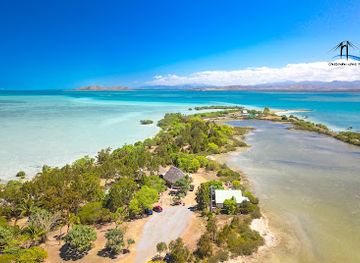
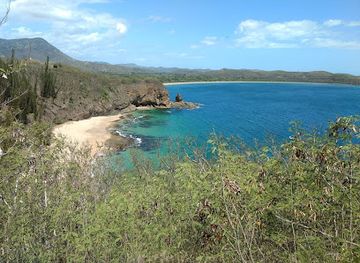
La Foa’s attractions are spread across a rural landscape rather than concentrated in a dense historic centre. The town provides an introduction to west-coast life, while the La Foa River and surrounding plains offer quiet scenery and opportunities for unhurried exploration. Coastal Ouano, within the commune, brings beaches, mangroves and lagoon views, with conditions changing according to tide and weather. The historic Pont de La Foa is an evocative reminder of the roads and infrastructure that connected colonial settlements across Grande Terre. Nearby Fort Teremba in Moindou presents the region’s penal and military history through preserved buildings and interpretive displays, while Farino and the Parc des Grandes Fougères provide access to a very different, forested environment a short drive inland. During the annual La Foa Film Festival, the town itself becomes a cultural attraction, with screenings and discussions giving the small commune an international outlook.
-
Tourist attraction
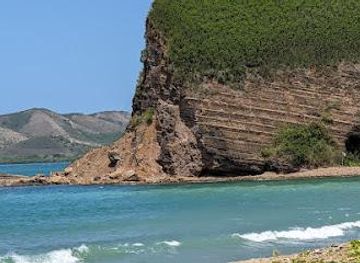
Bonhomme de Bourail (rock formation)
Explore the captivating Bonhomme de Bourail, a stunning rock formation in New Caledonia rich in culture and natural beauty, perfect for adventurers and nature lovers.
59 min drive · 39 km from city centre
-
Beach
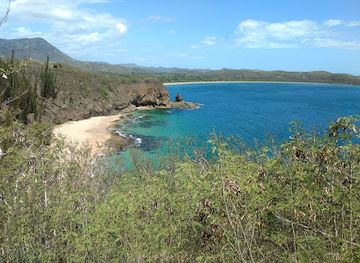
Plage de la Roche Percée
Discover the breathtaking beauty of Plage de la Roche Percée, New Caledonia's premier beach destination for relaxation, adventure, and stunning scenery.
58 min drive · 38 km from city centre
-
Japanese
Caledonian Wake Park - PackRide
Experience the thrill of wakeboarding while indulging in authentic Japanese cuisine at Caledonian Wake Park in La Foa, New Caledonia.
35 min drive · 15 km from city centre
-
Museum
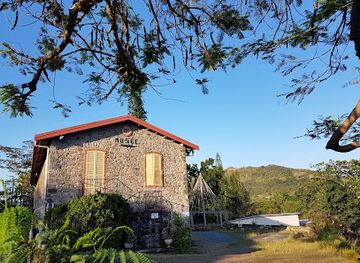
Musee De Bourail
Explore the captivating history and cultural heritage of New Caledonia at the Musée de Bourail, a must-visit destination for every traveler.
57 min drive · 37 km from city centre
Best landmarks in La Foa
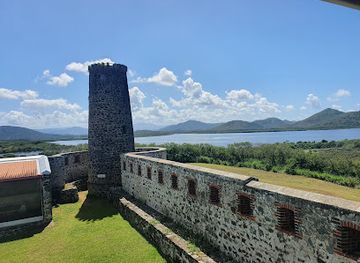
The most expressive landmarks around La Foa reveal the region’s infrastructure, colonial history and rural identity. The Pont de La Foa, an old metal bridge associated with the development of west-coast transport, evokes the engineering networks that linked settlements across Grande Terre. In nearby Moindou, Fort Teremba is the major historical landmark: its military buildings, prison-era remains and coastal setting illuminate the French penal administration and the conflicts that accompanied colonisation. Within the wider landscape, the river and open plains are themselves defining features, showing how cattle raising and agriculture shaped the commune. Local churches, civic buildings and community spaces are modest rather than monumental, but they help convey the scale and continuity of a rural New Caledonian settlement.
-
National park
Parc provincial des Grandes Fougères
Explore the enchanting landscapes and biodiversity of Parc Provincial des Grandes Fougères in New Caledonia, a haven for nature lovers and adventure seekers.
31 min drive · 11 km from city centre
-
Historical landmark
Fort Teremba
Explore the rich history and stunning architecture of Fort Teremba, a significant historical landmark in New Caledonia offering a glimpse into colonial life.
31 min drive · 11 km from city centre
-
Tourist attraction
Bonhomme de Bourail (rock formation)
Discover the stunning Bonhomme de Bourail rock formation in New Caledonia, a must-see tourist attraction offering breathtaking views and rich cultural heritage.
59 min drive · 39 km from city centre
-
Lodge
Lodge Terre de Soleil
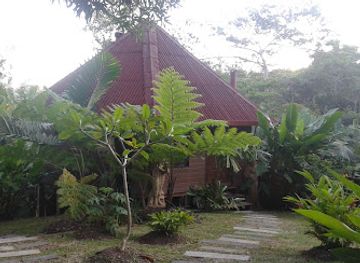
Discover the serene beauty of Lodge Terre de Soleil in Farino, New Caledonia, where comfort meets nature for an unforgettable retreat.
30 min drive · 10 km from city centre
Explore La Foa on the map
Plan your La Foa trip on one map. See where the top attractions, landmarks, restaurants, bars and hotels are, find what's near where you're staying, and book hotels and experiences in a few clicks.
Best hotels in La Foa
Best restaurants in La Foa
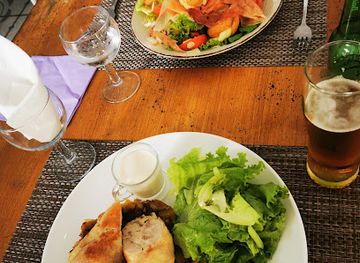
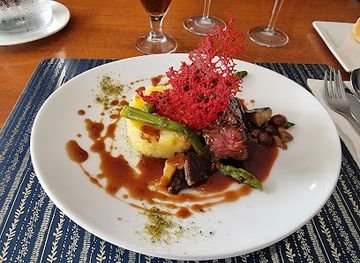
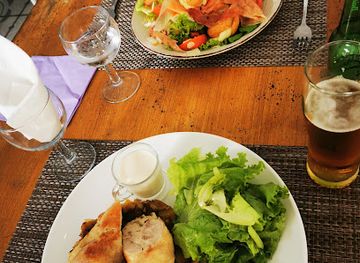
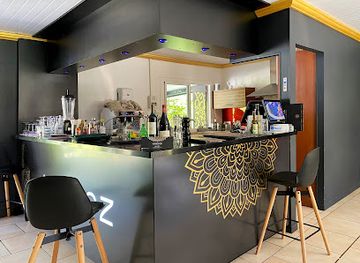
Dining in La Foa reflects the practical character of New Caledonia’s west coast, with a small selection of cafés, casual restaurants, accommodation-based meals and places serving visitors travelling through the region. Menus may draw on French culinary habits, Pacific ingredients and the produce of nearby farms, with seafood, grilled meats, rice, fresh vegetables and tropical fruit appearing more often than elaborate urban gastronomy. The local ranching tradition is particularly visible in the prominence of beef and hearty country cooking. Around the coast, fish and lagoon produce influence the food culture, although availability varies with season and supply. Small markets, farm stalls and community events can offer a more direct taste of local produce, while visitors should expect fewer late-night dining choices than in Nouméa and plan meals around rural opening patterns.
-
Restaurant
Ô soleil de la Foa
Discover exquisite local cuisine at Ô soleil de la Foa - where culinary artistry meets breathtaking scenery in La Foa.
5 min drive · 1.7 km from city centre
-
Restaurant
L’Osmoz
Experience the exquisite flavors of New Caledonia at L’Osmoz - where culinary artistry meets local charm.
17 min walk · 1.3 km from city centre
-
Restaurant
la table du banian
Experience exquisite New Caledonian cuisine at La Table du Banian – where local flavors meet exceptional service in La Foa.
13 min drive · 4.2 km from city centre
-
Restaurant
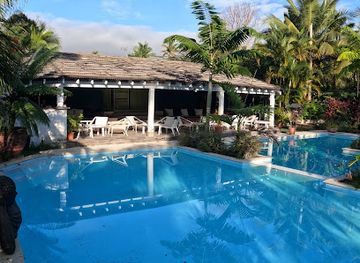
Naina Park Resort
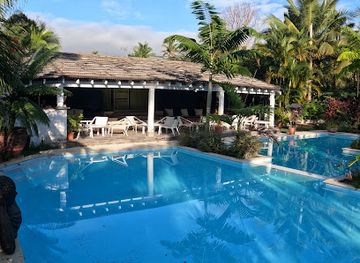
Discover tranquility at Naina Park Resort in La Foa - your ultimate getaway for relaxation and adventure amidst breathtaking New Caledonian landscapes.
16 min walk · 1.3 km from city centre

Best bars in La Foa
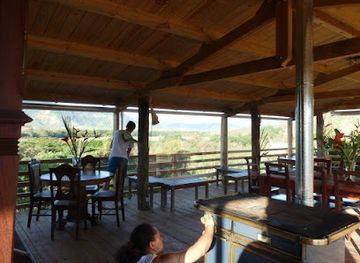
La Foa has a modest evening scene rather than a concentration of nightclubs. Social life centres on cafés, restaurants, accommodation venues and community events, with evenings generally quieter once the day’s road travel and outdoor activities are over. The La Foa Film Festival brings screenings, conversations and a temporary cultural buzz to the town, making cinema a more distinctive evening experience than clubbing. Local events may also include music, dancing or communal gatherings, but programmes vary and should be checked locally. Visitors staying outside the centre will find the surroundings especially quiet after dark, so evening plans are best arranged around known venues or festival activities, with care taken on unlit rural roads.
-
Restaurant
Ô soleil de la Foa
Experience exquisite New Caledonian cuisine at Ô Soleil de la Foa, where local flavors and warm hospitality create unforgettable dining moments.
5 min drive · 1.7 km from city centre
-
Restaurant
L’Osmoz
Experience the vibrant flavors of New Caledonia at L’Osmoz, a culinary haven in La Foa offering exquisite local dishes and a warm atmosphere.
17 min walk · 1.3 km from city centre
-
Restaurant
la table du banian
Experience the culinary treasures of New Caledonia at La Table du Banian, where fresh ingredients meet delightful flavors in a stunning setting.
13 min drive · 4.2 km from city centre
-
Bar
Naina Park Resort
Discover tranquility and adventure at Naina Park Resort, where New Caledonia's beauty meets exceptional hospitality and culinary delights.
16 min walk · 1.3 km from city centre
Best nightclubs in La Foa
La Foa has a modest evening scene rather than a concentration of nightclubs. Social life centres on cafés, restaurants, accommodation venues and community events, with evenings generally quieter once the day’s road travel and outdoor activities are over. The La Foa Film Festival brings screenings, conversations and a temporary cultural buzz to the town, making cinema a more distinctive evening experience than clubbing. Local events may also include music, dancing or communal gatherings, but programmes vary and should be checked locally. Visitors staying outside the centre will find the surroundings especially quiet after dark, so evening plans are best arranged around known venues or festival activities, with care taken on unlit rural roads.
-
Bar
Naina Park Resort
Discover the serene beauty and vibrant atmosphere of Naina Park Resort in La Foa, New Caledonia, your perfect getaway for relaxation and adventure.
16 min walk · 1.3 km from city centre
-
Movie theater
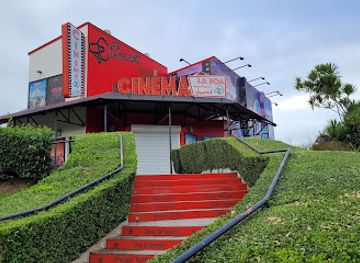
Cinéma De La Foa
Discover the charm of Cinéma De La Foa, La Foa's premier movie theater featuring a diverse selection of films in an intimate setting.
17 min walk · 1.4 km from city centre
-
Bar
L’Open Space - Nakamal
Discover the vibrant nightlife at L’Open Space - Nakamal, a bar in La Foa, New Caledonia, offering refreshing drinks and a lively atmosphere.
11 min drive · 3.8 km from city centre
-
School
La P'tite Troupe De La Foa
Discover the vibrant culture of New Caledonia at La P'tite Troupe De La Foa, a unique school celebrating local traditions and arts.
6 min drive · 2.1 km from city centre

Best shops in La Foa
Shopping in La Foa is practical and locally focused, with small shops supplying everyday needs rather than a large concentration of boutiques or department stores. Periodic markets, community events and farm stalls may offer seasonal fruit, vegetables, preserves and other produce from the west-coast countryside. Visitors may also encounter locally made crafts, woven goods, shell work or regional souvenirs, although selection and availability vary by event and season. The town is a useful place to purchase provisions before travelling to Ouano, Moindou or forest areas, where retail services become more limited. Larger clothes, electronics and specialist shopping are better found in Nouméa, while buying directly from artisans or producers, where available, provides a more meaningful connection with the rural economy and Kanak and Pacific cultural traditions.
-
Store
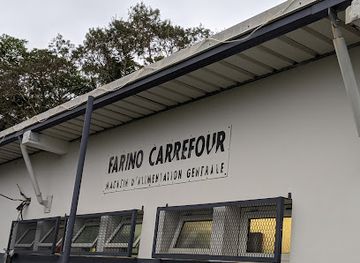
Farino Carrefour - Magasin d'Alimentation Générale
Discover a delightful range of local and imported products at Farino Carrefour, your go-to grocery store in New Caledonia.
21 min drive · 7.1 km from city centre
-
Grocery store
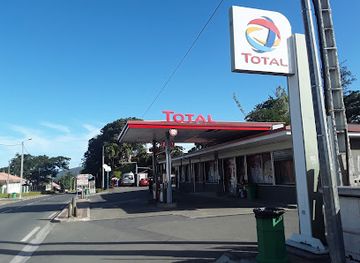
Station Total (La Foa) - Chez Danny
Discover fresh local produce and unique New Caledonian specialties at Station Total in La Foa, your ultimate grocery shopping destination.
17 min walk · 1.4 km from city centre
-
Gun shop
Armes Chasses Traditions LA FOA
Discover the unique charm of Armes Chasses Traditions LA FOA, an essential stop for firearm enthusiasts in La Foa, New Caledonia.
18 min walk · 1.4 km from city centre
-
Women's clothing store
Arti Show NC
Explore the vibrant fashion scene at Arti Show NC, offering trendy women's clothing, unique accessories, and thrift treasures in La Foa, New Caledonia.
5 min drive · 1.6 km from city centre

Get your free copy of our complete guide to La Foa, delivered straight to you.
Everything on this page, from attractions and restaurants to essentials and local phrases, in one PDF you can read offline, print or share.
Already have an account? Sign in
Your La Foa guide is ready.
We'll send it to · Not you? Sign out

Getting your guide ready…
We are putting together a fresh copy of the La Foa guide. This can take up to a minute.
This can take a few moments. If your browser asks, choose Allow so the download can start. You'll find the guide in your Downloads folder.
Nothing happened? Download it again
Sorry, the guide is taking longer than usual. Please try again in a minute, or get it by email instead.
La Foa essentials
Currency and Payment
Safety
Emergency Situations
Do's and Don'ts
Local Tips
From Eve
Local phrases worth knowing
You don't need to get them perfect. A few words go a long way, and locals appreciate the effort.
Basics
| English | Local | Say it |
|---|---|---|
| Hello | Bozo | [Boh-zoh] |
| Goodbye | Kanee | [Kah-nee] |
| Yes | Oui | [Wee] |
| No | Non | [Nohn] |
| Please/You're welcome | S'il vous plaît/De rien | [Seel voo pleh/Dee ree-ehn] |
| Thank you | Merci | [Mehr-see] |
| Excuse me/Sorry | Pardon/Desolé | [Pahr-dohn/Deh-soh-leh] |
| How are you? | Ça va? | [Sah vah?] |
| Fine. And you? | Ça va bien. Et vous? | [Sah vah byen. Ay voo?] |
| Do you speak English? | Parlez-vous anglais? | [Pahr-leh voo ahn-glay?] |
| I don't understand | Je ne comprends pas | [Zhuh nuh kohm-prahnd pah] |
Eating & Drinking
| English | Local | Say it |
|---|---|---|
| I'd like to see the menu, please | Je voudrais voir le menu, s'il vous plaît | [Zhuh voo-dreh vwar luh meh-noo, seel voo pleh] |
| I don't eat meat | Je ne mange pas de viande | [Zhuh nuh mahnj pah duh vee-ahnd] |
| Cheers! | Santé! | [Sahn-tay] |
| I would like to pay, please | Je voudrais payer, s'il vous plaît | [Zhuh voo-dreh pay-eh, seel voo pleh] |
Emergencies
| English | Local | Say it |
|---|---|---|
| Help! | Au secours! | [Oh seh-koor] |
| Go away! | Allez-vous-en! | [Ah-leh vooz-ahn] |
| Call the Police! | Appelez la Police! | [Ah-peh-leh lah Poh-lees] |
| Call a doctor! | Appelez un médecin! | [Ah-peh-leh uh meh-deh-sahn] |
| I'm lost | Je suis perdu | [Zhuh swee pair-doo] |
| I'm ill | Je suis malade | [Zhuh swee mah-lahd] |
Shopping
| English | Local | Say it |
|---|---|---|
| I'd like to buy... | Je voudrais acheter... | [Zhuh voo-dreh ah-shet-ay] |
| I'm just looking | Je regarde juste | [Zhuh ruh-gahrd joo-st] |
| How much is it? | Combien ça coûte? | [Kohm-byen sah koot] |
| That's too expensive | C'est trop cher | [Say troh shehr] |
| Can you lower the price? | Pouvez-vous baisser le prix? | [Poo-veh voo bay-say luh pree] |
Time & Numbers
| English | Local | Say it |
|---|---|---|
| What time is it? | Quelle heure est-il? | [Kell uh-r eh-teel] |
| It's one o'clock | Il est une heure | [Eel eh-t un uh-r] |
| Half past (10) | Dix heures et demi | [Dee-ss uh-r eh dehm-ee] |
| Morning | Matin | [Mah-tahn] |
| Afternoon | Après-midi | [Ah-pray-mee-dee] |
| Evening | Soir | [Swah-r] |
| Yesterday | Hier | [Yehr] |
| Today | Aujourd'hui | [Oh-zhoor-dwee] |
| Tomorrow | Demain | [Deh-mahn] |
| 1 | Un | [Oon] |
| 2 | Deux | [Duh] |
| 3 | Trois | [Trwah] |
| 4 | Quatre | [Kah-truh] |
| 5 | Cinq | [Sank] |
| 6 | Six | [Seese] |
| 7 | Sept | [Set] |
| 8 | Huit | [Wheet] |
| 9 | Neuf | [Nuhf] |
| 10 | Dix | [Dee-ss] |
Transport & Directions
| English | Local | Say it |
|---|---|---|
| Where's a/the...? | Où est un/le...? | [Oo eh oon/luh] |
| What's the address? | Quelle est l'adresse? | [Kell eh lah-dress] |
| Can you show me (on the map)? | Pouvez-vous me montrer (sur la carte)? | [Poo-veh voo muh mohn-tray (soor lah kart)] |
| When's the next (bus)? | Quand est le prochain (bus)? | [Kahnd eh luh proh-shang (bus)] |
| A ticket (to ....) | Un billet (pour ....) | [Oon bee-yay (poor)] |
History of La Foa
Kanak Country Before Colonisation
The La Foa area forms part of the traditional country of Kanak communities whose relationships with rivers, forests, coastlines and pasturelands long predate European settlement. Social organisation, customary authority and knowledge of the land continue to shape the wider region, although colonial administration and later economic development profoundly changed access to territory. Much of the west coast was subsequently used for ranching and agricultural production, creating a cultural landscape in which Indigenous heritage and settler history remain closely connected.
European Settlement on the West Coast
French colonisation expanded across Grande Terre during the second half of the nineteenth century, bringing administrators, missionaries, settlers and the penal system into growing contact with Kanak communities. La Foa developed as a rural settlement and transport point within this changing west-coast economy. The surrounding plains were suited to cattle and agriculture, while roads and administrative services gradually connected the area with Nouméa and other colonial centres. The town’s later identity was therefore shaped less by dense urban growth than by its role within a dispersed farming district.
The Colonial and Penal Frontier
The wider La Foa region was affected by the French penal administration, which used forced labour and established agricultural and industrial settlements across New Caledonia. Fort Teremba, in nearby Moindou, was created in the early 1870s as part of the colonial military and penal network. Its surviving buildings and defensive setting help explain how the administration attempted to control the west coast and support settlement. The site also reflects the coercive history of transportation and the unequal relations between colonial authorities, convicts, settlers and Kanak communities.
The 1878 Kanak Resistance
The major Kanak uprising of 1878 affected much of the west coast and exposed the violence and instability produced by colonial land seizure and administrative control. Fighting and repression reached the broader La Foa and Moindou area, while forts and military posts became instruments of colonial defence. The conflict had lasting consequences for communities, landholding and movement across Grande Terre. Its history is essential to understanding the preserved colonial sites around La Foa, which should be read alongside Kanak perspectives rather than as isolated monuments to French expansion.
A Rural Commune Takes Shape
During the late nineteenth and twentieth centuries, La Foa consolidated its role as a local service centre for farms, stations and coastal settlements. Cattle raising, agriculture and road connections remained central to the economy, while the town acquired the practical facilities expected of a small commune. The landscape visible today—open grazing country, pockets of settlement, river flats and routes leading towards the coast—owes much to this period of rural development. La Foa’s identity remained regional rather than metropolitan, with communities separated by considerable distances.
Cultural Life in Contemporary La Foa
Modern La Foa combines its rural economic base with cultural initiatives that bring wider attention to the commune. The La Foa Film Festival, established in the 1990s, has become an important annual event, presenting cinema in a setting far removed from conventional urban festival circuits. Contemporary life also reflects New Caledonia’s continuing debates about identity, customary recognition and political status. Historic sites, Kanak cultural knowledge, local agriculture and new cultural programming together give La Foa a contemporary character grounded in the layered history of Grande Terre.
La Foa in Photos
Browse through our photo collection highlighting the charm and character of the destination.
Cities near La Foa
The closest cities to La Foa, if you have time for more than one stop.
-

-

-

-


Swipe for more cities
Explore more
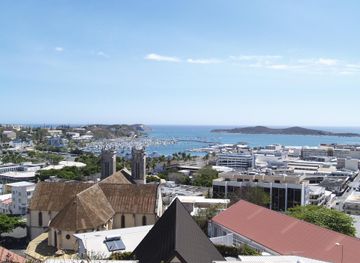
Explore more of New Caledonia
Discover New Caledonia, a captivating blend of French elegance and Pacific beauty, offering pristine beaches, vibrant culture, and unparalleled natural wonders.
Explore New Caledonia