

2-Day PRIVATE Gyeongju UNESCO Customized tour
 Gyeongju-si, KR
Highlights
- Explore ancient treasures of the Silla Kingdom
- Experience stunning views at Cheomseongdae Observatory
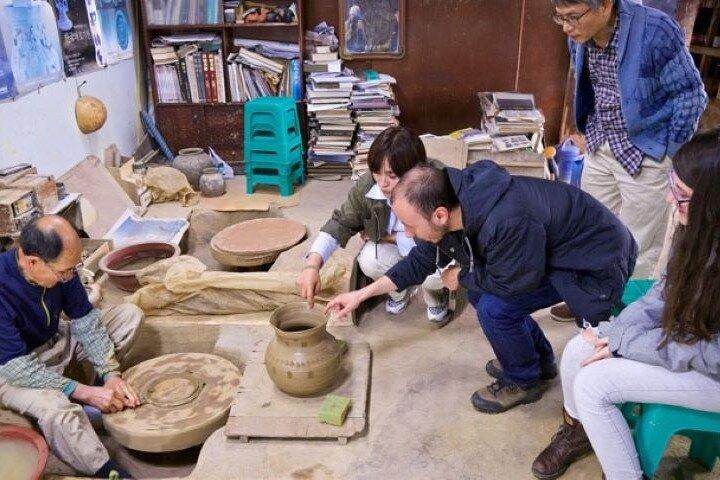
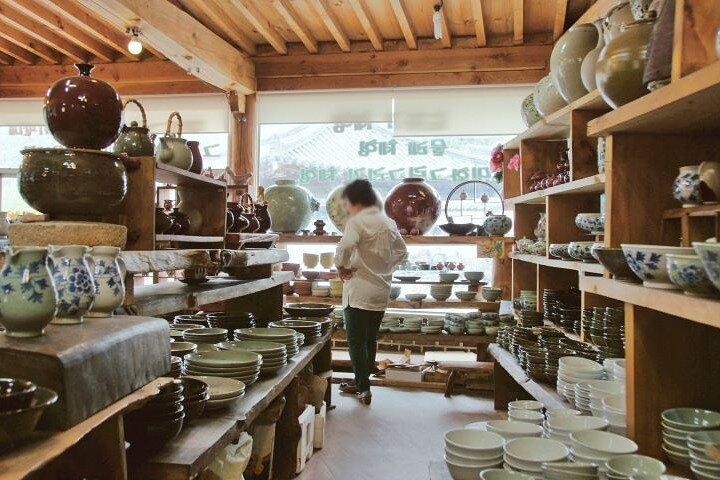
- Discover traditional crafts in Folk Craft Village
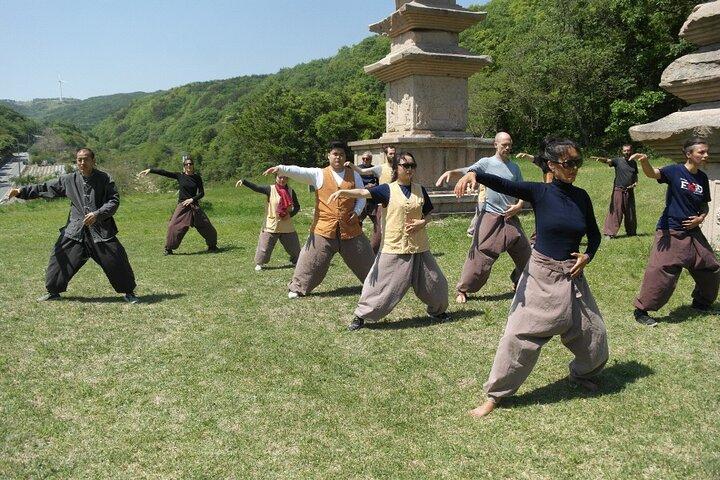
- Immerse in unique Buddhist culture at Golgulsa
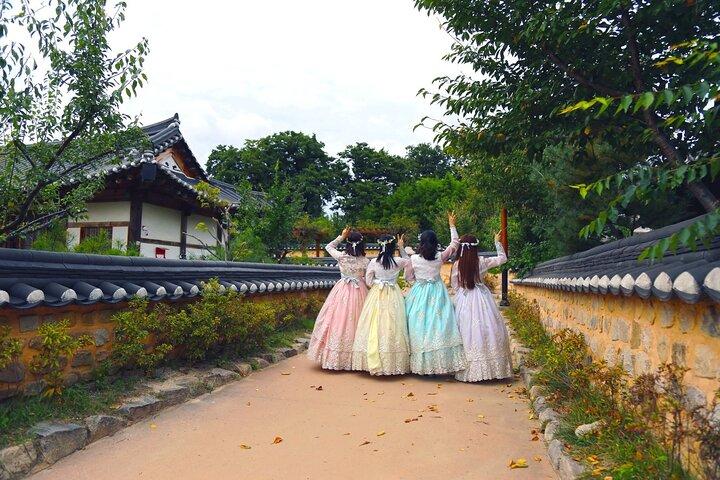
- Stroll through picturesque landscapes at Yangdong Village
-
Private transportation included
-
Free pickup and drop-off
-
Expert guide provided
-
48-hour customized tour
-
Available in Russian, Japanese, English
-
Suitable for all fitness levels
Embark on a mesmerizing 2-day journey through Gyeongju, the ancient capital of the Silla Kingdom, where history comes alive in every corner. This customized tour unveils a treasure trove of experiences, from the stunning Seokguram Grotto and the majestic Bulguksa Temple to the vibrant Gyeongju Folk Craft Village, showcasing centuries-old artisanship. Guests will stroll through the Daereungwon Tomb Complex and the enchanting Gyochon Village, exploring the rich tapestry of Korean culture and tradition. On day two, they can choose between a scenic hike along the Namsan Museum Trail or a visit to the picturesque Yangdong Folk Village, where time-honored customs flourish. With a private guide and personalized itinerary, travelers will savor local delicacies while uncovering the captivating stories of Gyeongju's past, ensuring an unforgettable exploration of this living museum.
At a Glance
-
 Free cancellation
-
 2 days
-
 Instant Confirmation
-
 Available in Russian, Japanese, English
-
 Wheelchair accessible
-
 Mobile voucher
-
 Private Tour
-
 Guided
-
 Family friendly

Explore Gyeongju's rich history and culture on a 2-day customized tour, designed for history enthusiasts and curious travelers alike.
Included
-
 Private transportationPrivate transportation
 -
OtherBusan, Gyeongju free transport service after the tour
-
OtherFree pickup and drop-off
-
OtherGuide + driver or driving guide
-
OtherEntrance decides to go to places and pay yourself on the spot
-
OtherGas + toll + parking fees
Excluded
-
 MealsMeals
 -
OtherHotel, Airbnb, Accommodation
-
Entrance feesDaereungwon Tomb KRW 3,000/per Wolji Pond KRW 3,000/per
Pickup
Check if pick-up is available from your location, you will select during checkout (providers may allow other pickup locations)

What to expect
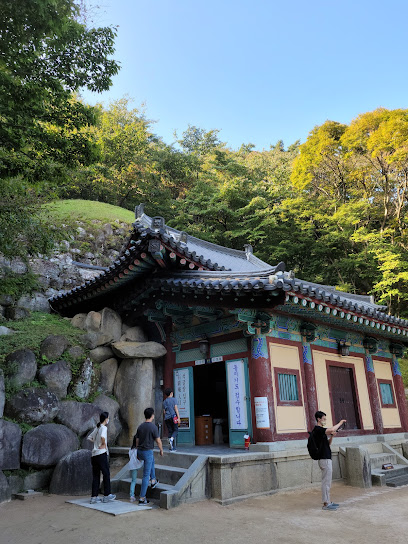
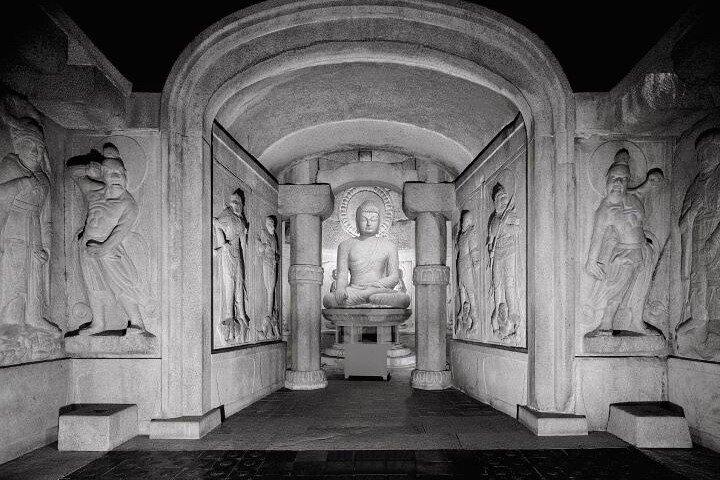
(Gyeongju UNESCO itinerary) Seokguram is an artificial grotto constructed of granite that comprises an antechamber, a corridor and a main rotunda. It enshrines a monumental statue of the Sakyamuni Buddha looking out to sea with his left hand in dhyana mudra, the mudra of concentration, and his right hand in bhumisparsa mudra, the earth-touching mudra position. Together with the portrayals of devas, bodhisattvas and disciples, sculpted in high and low relief on the surrounding walls, the statues are considered to be a masterpiece of East Asian Buddhist art. The domed ceiling of the rotunda and the entrance corridor employed an innovative construction technique that involved the use of more than 360 stone slabs.
60 minutes
 Admission Not Included
Bulguksa Temple
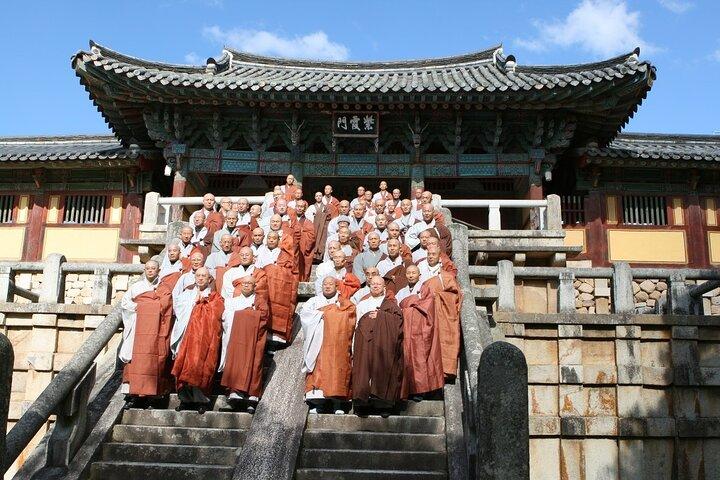
Bulguksa is a Buddhist temple complex that comprises a series of wooden buildings on raised stone terraces. The grounds of Bulguksa are divided into three areas – Birojeon (the Vairocana Buddha Hall), Daeungjeon (the Hall of Great Enlightenment) and Geungnakjeon (the Hall of Supreme Bliss). These areas and the stone terraces were designed to represent the land of Buddha. The stone terraces, bridges and the two pagodas – Seokgatap (Pagoda of Sakyamuni) and Dabotap (Pagoda of Bountiful Treasures) – facing the Daeungjeon attest to the fine masonry work of the Silla.
60 minutes
Admission Not Included
Gyeongju Folk Craft Village
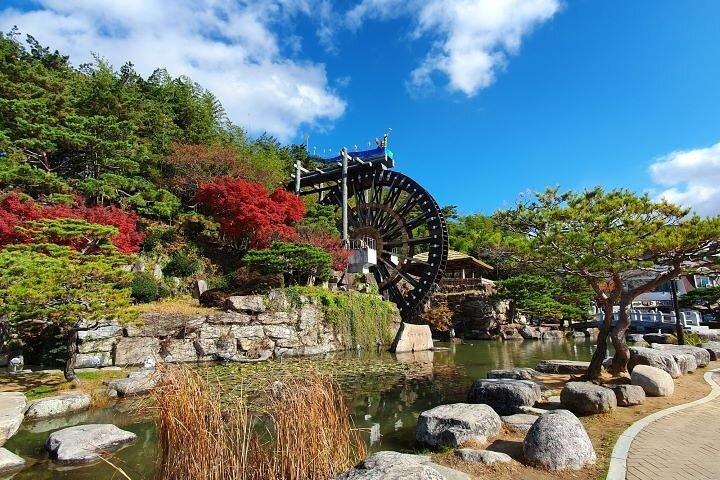
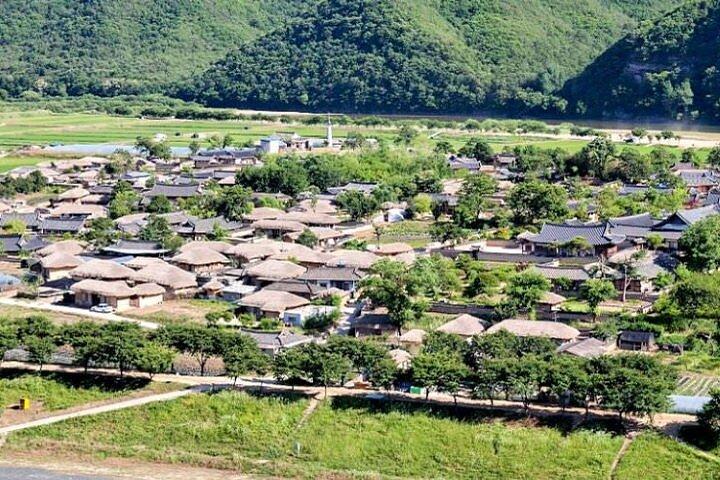
Gyeongju Folk Craft Village consists of 40 thatched and tile-roofed houses, lived in by local artisans of traditional arts and crafts skills. Various fields of crafts production including metal, pottery, timber, jewels, hanbok (Korean traditional clothes), and stone-crafts can be found in the village.
40 minutes
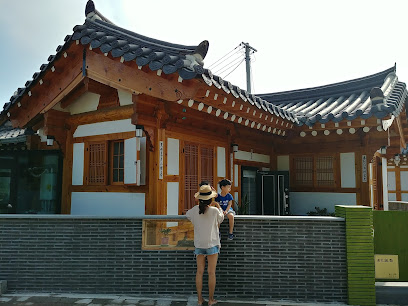
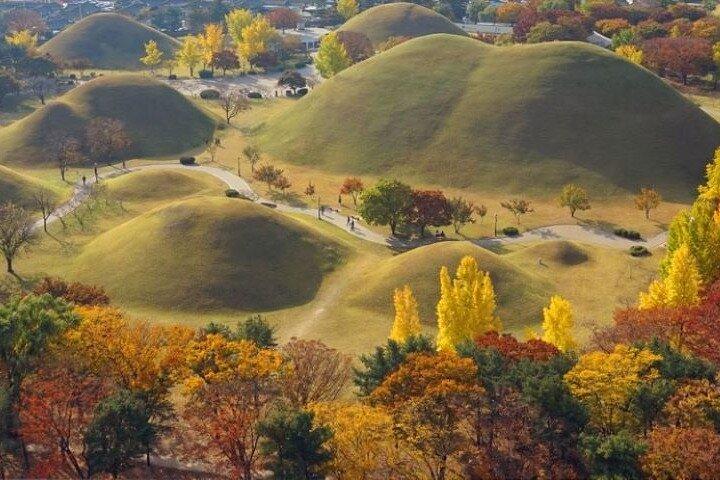
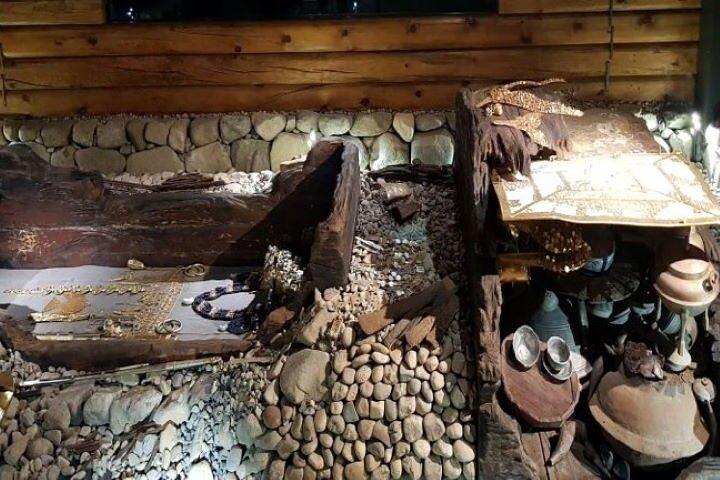
Large ancient tombs of kings and nobles of the Silla Kingdom can be seen around Gyeongju at the Daereungwon Tomb Complex. There are twenty-three large tombs located here; 13 have been excavated but only 1 (Cheonmachong - tomb of King Michu) is open to the public. The chamber of the tomb contained a lacquered wooden coffin which had burial goods placed around it. A total of 11,500 artifacts were recovered from the tomb, demonstrating the lavish lifestyle of the king. The tomb was excavated in 1973 and is believed to date probably from the fifth century.
60 minutes
Admission Not Included
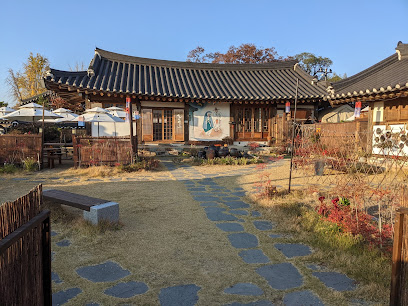
At Gyeongju Gyochon Village, visitors can see the House of the Gyeongju Choi Clan (Important Folklore Material No. 27) and try some Gyeongju Gyodong Beopju Liquor (Important Intangible Cultural Asset No. 86-3). The village centers around the Gyeongju Choi Clan, a family known to have maintained their wealth for over 12 generations, producing many important people. Visitors can learn about the lifestyle and spending habits that enabled the family to do this. The village is also home to the site of Yoseokgung, the house of Silla Princess Yoseok. Nearby attractions include Gyerim Forest, Naemulwangneung Royal Tomb, and Gyeongjuhyanggyo Local Confucian School
60 minutes
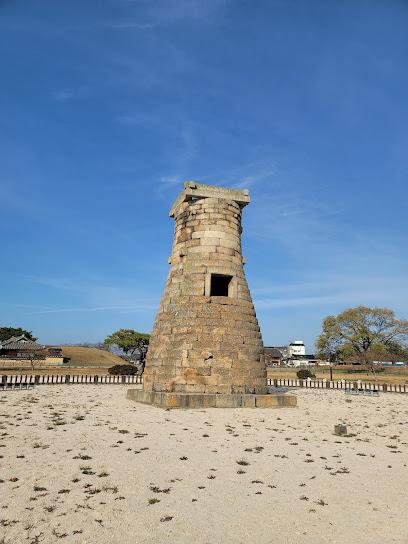
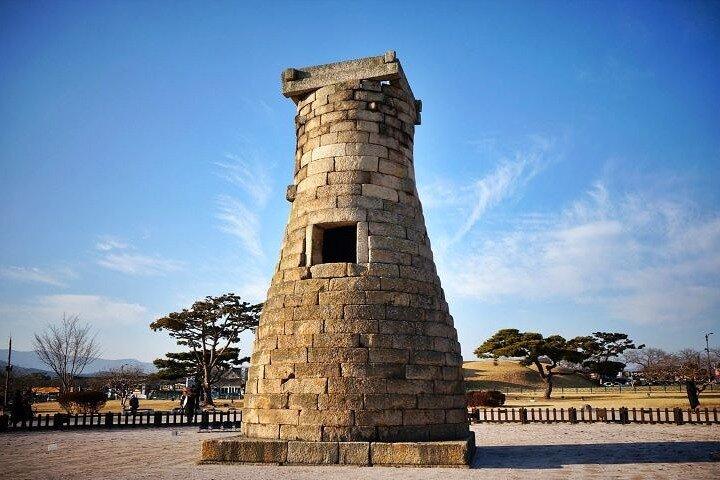
Cheomseongdae Observatory, constructed during the reign of Queen Seondeok (r. 632-647), is one of the landmark of Gyeongju. The observatory was built in a cylinder shape at approximately 9 meters in height. The observatory consists of 365 stones, symbolizing the number of days in a year. The rocks are piled in 27 layers symbolizing the 27th ruler, Queen Seondeok, and the days in a lunar month by adding the of two rock layers on top. It stands 9.17m high and the base stone on each side measures 5.35m.The Vernal Equinox, Autumnal Equinox, Winter Solstice, Summer Solstice and the 24 solar terms (also known as the astronomical solar year) were determined by observating of stars. The pavilion stone is believed to have been used as a standard of deciding directions, north, south, east and west. The 362 stones used to build Cheomseongdae represented the 362 days in a lunar year.
30 minutes
Admission Not Included
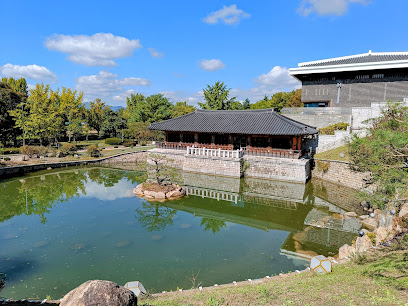
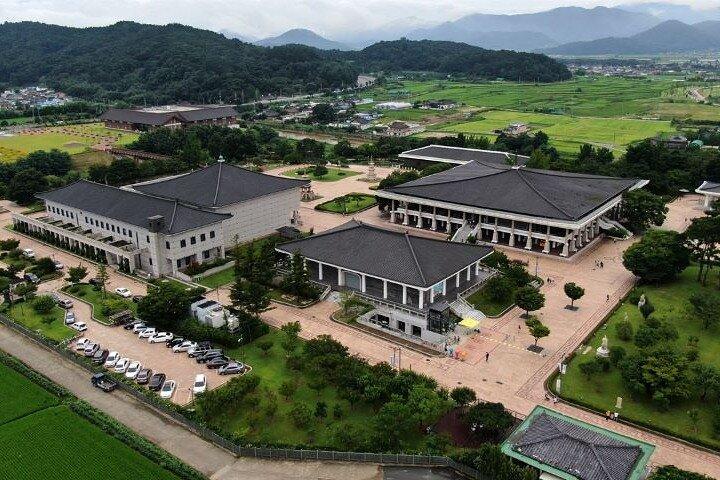
Gyeongju National Museum is loved by visitors and residents alike as it houses numerous historical and cultural artifacts of the Silla dynasty (57 BC - AD 935). The museum recently went through renovation, separating into an art gallery, historical artifacts exhibition hall, Wolji Pond exhibition hall, and a planned exhibition space. In addition to improving facilities for visitors' convenience, Gyeongju National Museum is making efforts to contribute to the community and reestablish its identity as a museum by making efforts to provide lifelong learning opportunities and improve management. As a significant cultural center, Gyeongju National Museum not only strives to preserve, exhibit, and research the rich history and culture of Silla, but also to take a leap forward to become a cultural multi-complex center by promoting international exchange opportunities, social education programs, and a variety of special exhibitions.
60 minutes
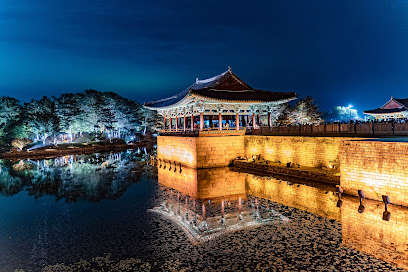
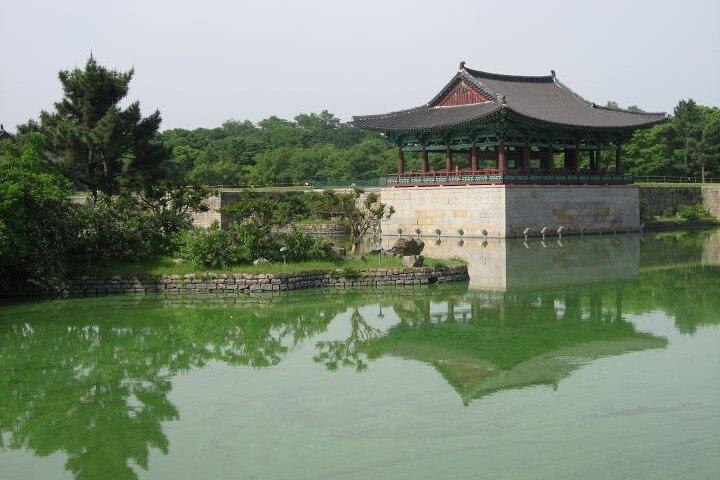
Anamji pond ( Donggung Palace and Wolji Pond ) Gyeongju Donggung Palace and Wolji Pond was a secondary palace used by the crown prince of the Silla Kingdom. It also served as a banquet site for important national events and important visitors. The pond was created in 674, during the reign of King Munmu. The pond features three small islands, and a landscape of 12 small hills to the northeast. After the fall of Silla, the site was abandoned and forgotten. The pond was referred to as "Anapji" from the Goryeo and Joseon periods and onwards. In the 1980s, a pottery fragment with the letters “Wolji” (a pond that reflects the moon) carved onto it was found, revealing the true name of the pond. After the discovery, the site was renamed to the current Donggung Palace and Wolji Pond.
60 minutes
Admission Not Included
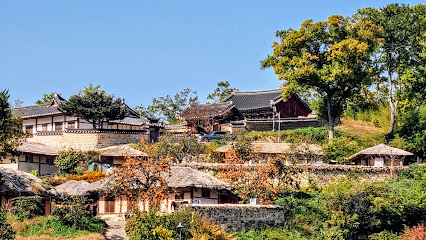
Gyeongju Yangdong Folk Village is Korea’s largest traditional village, showcasing the traditional culture of the Joseon Dynasty and the beautiful natural surroundings. Thanks to its many cultural heritages, including treasures, national treasures, and folklore materials, the entire village has been designated as a cultural heritage site. Many people have visited this village to see its wealth of cultural heritages and scenic surroundings. Charles, Prince of Wales, visited this village in 1993. Seolchangsan Mountain and its four spines of mountains can be seen beyond the village. Approximately 160 old houses and 500-year-old thatched-roof cottages are nestled within the valley. Fifty-four of these homes, are over 200 years old and have been excellently preserved in their original state, offering a rare opportunity to view a variety of unique Korean traditional houses in person.
120 minutes
Admission Not Included
The Oksan Seowon is a seowon (a private educational institution in Korea that functioned as both an academy and a Confucian shrine) Seowon is a type of local academy during the Joseon Dynasty (1392–1897). The Oksan Seowon was built in a beautiful setting in deep wood on the banks of a stream that cuts through a beautiful rock formation. The seowon is next to a small cascade in the stream that lends credence to the unwritten rule that a seowon must be built in a beautiful natural setting. The seowon, typical of all private academies, has two main buildings, one for teaching and one for ceremonies. Here at the Oksan Seowon, the building for teaching is called the Guindang, meaning “the building for the search of humaneness.” Humaneness (仁, in) is the heart of Confucianism. The Oksan Seowon has been designated included in the UNESCO inscription of the Yangdong traditional villages in 2010.
60 minutes
Bomun Lake
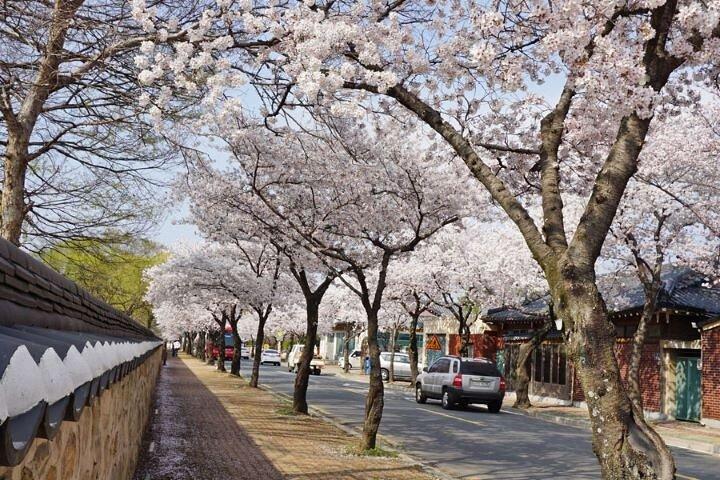
Bomun Tourist Complex is the international tourist district of Gyeongju. This tourist district is formed with Bomunho Lake at its center, located about 10 kilometers east of downtown Gyeongju. The area spans approximately 8,000 km², and contains an international-scale luxurious hotel, family-friendly condos, golf range, and pleasant walking passages that are designed to suit the diverse needs of tourists. The tourist complex attracts crowds of visitors in April, when cherry blossoms are in full bloom. The sight of cherry blossoms around Bomunho Lake and Bulguksa Temple are popular even among domestic travelers.
30 minutes
Golgulsa Temple
Golgulsa Temple (Chinese: 骨窟寺, Pronounced “Gol-gul-sa”) was established on Mt. Hamwolsan, along with Girimsa, by Master Gwangyu and his retinue who came to Korea from India about 1,500 years ago. Golgulsa Temple is the oldest grotto temple in Korea, emulating those in India. located at the foot of Hamwolsan Mountain, Golgulsa Temple houses twelve caves in a tall cliff, with a rock-carved statue of Buddha sitting at the highest point. The temple runs Templestay programs 365 days a year, and it is possible to stay for a month or even longer. Learning unique experiences at Golgulsa Temple Sunmudo is a form of moving meditation and martial art. It emphasizes the harmony of body and mind through observing one's breathing. It is a traditional Korean Buddhist martial art that traces its origins back over 1,000 years.
60 minutes
Tomb of King Munmu
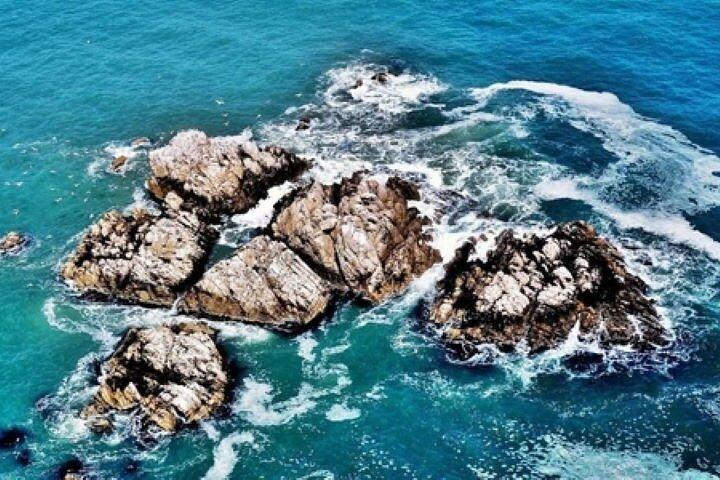
A little rocky islet approximately 200 meters from the shore at Bonggil-ri is the Tomb of King Munmu (AD 661-681), who unified the three kingdoms and became the 30th ruler of the Silla Kingdom. The king gave specific instructions to be buried in the East Sea after his death so that he would become a dragon and protect Silla from foreign invaders. The rocky island, about 200 meters in circumference, is divided by a cross-shaped waterway, forming a pool at the center, at the bottom of which is a granite stone 3.6 meters long, 2.9 meters wide, and 0.9 meters thick. Legend has it that the remains of King Munmu’s cremated body are buried under this rock. Historians still debate whether the ashes of King Munmu were scattered or stored in an urn and placed under the rock.
60 minutes
Gampo Port and Gampo Ocean Park Walk
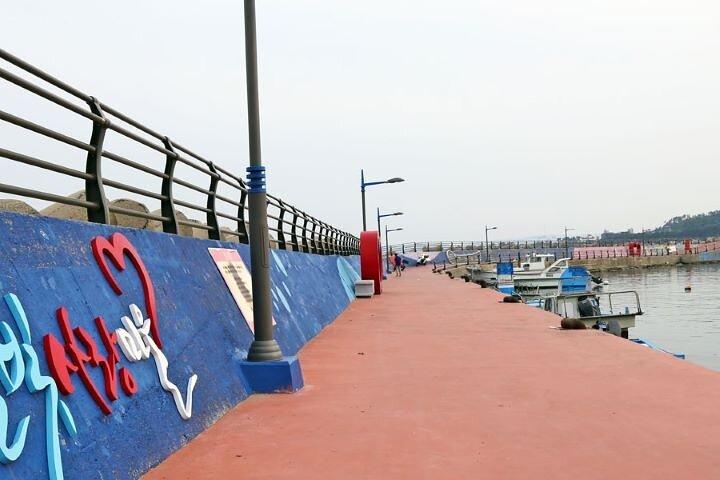
There are so many enjoyable things to do in Gampohang Port. You can be happy with a plate of raw flounder, sit on a bench in the new marine park near the seawall of Gampohang and wonder where the end of the sea would be, and also take a photo of ‘Haegukgil road’ in Gampo Kkakji Trail or the scenery of thrashing waves in the sea wind here and there from the village.
30 minutes
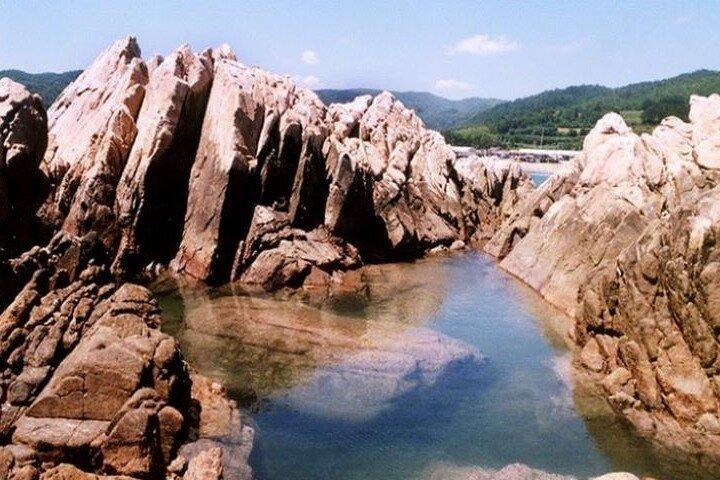
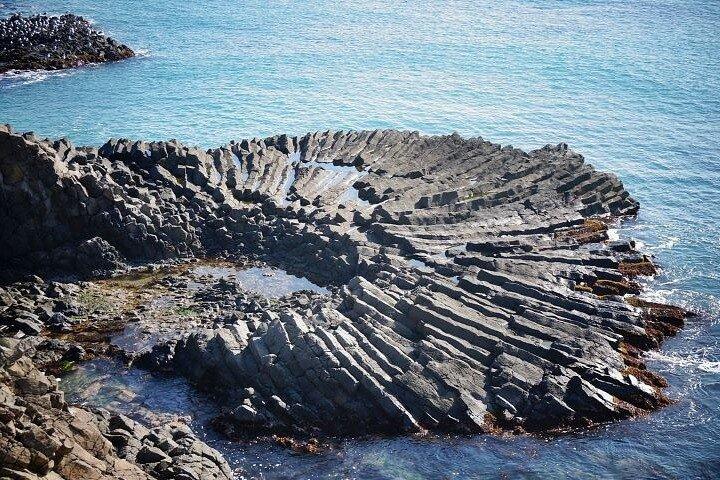
Jusangjeolli Cliff of Gangdong Hwaam Village is a columnar rock formation with cross-sections in hexagonal or triangular shapes. The jusangjeolli at the shore of Hwaam Maeul Village was created by basalt lava that erupted in the Tertiary period of the Cenozoic Era about 20 million years ago. The columnar basalt formations were created as the lava cooled and shrank into cracks. The rocks look like wood stacked horizontally or vertically en masse. The length of the columns average around 20 meters and diagonally are about 50 centimeters at the longest cross-section. Of the columnar lava formations on the East Coast, the Jusangjeolli in Hwaam is the oldest, so it is academically invaluable. Shaped in various angles, the rocks also offer a great landscape for sightseeing.
30 minutes
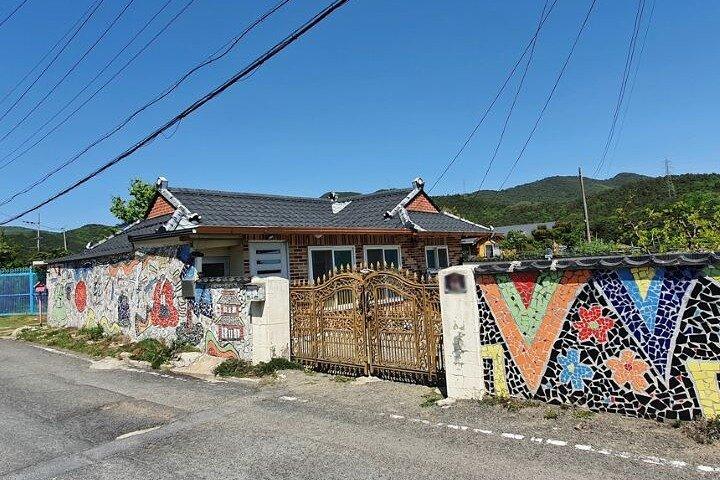
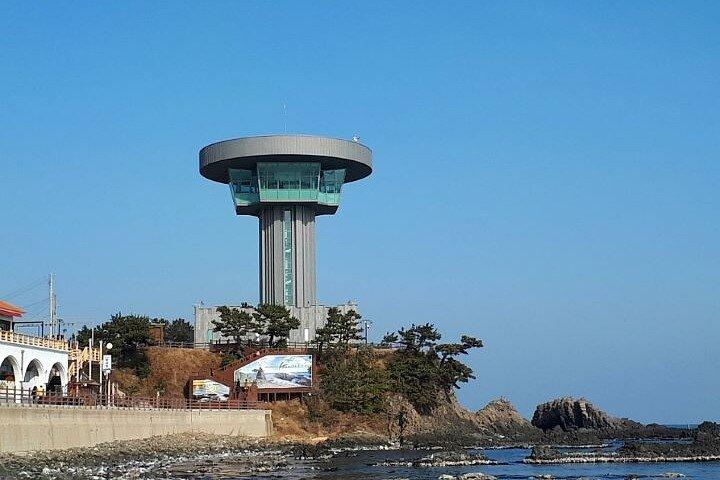
Mural Painting of Mural Village in Eupcheon Port, Gyeongju. It is suitable for viewing the high sky and the wide open blue sea. It is also a suitable season to escape from the same daily life and see the cool air and panoramic views. Why don't you walk along the streets of Jusangjeolli, where the sound of the waves seems to be ringing in your ears just by listening to the name of the mural village and the town of Eupcheon Port that harmonized with the sea of Gyeongju? - Recommend walk course - Eupcheon Port - Padangsori Road in Jusangjeolli observaroty
30 minutes
Namsan Mountain
( optional hiking itinerary ) Namsan Mountain is a veritable open-air museum, with 100 temple sites, 80 stone Buddha statues, and 60 stone pagodas scattered across the mountainside. Topographically, it features nearly 40 valleys and is divided into the Southwest Mountain, a sacred place during the Silla period, and the Southeast Mountain, where many Buddhas can be found around the valleys. Namsan Mountain is also famous for its scenic landscapes in addition to its cultural heritage. Numerous valleys, unique rock formations, and beautiful trails are abundant throughout the area. Many tourists say, “You cannot say that you know Gyeongju without hiking up Namsan Mountain.” Namsan Mountain is a place where the scenic nature and long history of the Silla Kingdom coexist, and also where the aesthetic consciousness and religious traditions of the Silla people evolved into the art form it is today.
360 minutes
The experience can be subject to change due to bad weather or unforseen circumstances. We always endeavour to give you the best possible experience.
Additional Information
-
 Infants and small children can ride in a pram or stroller
 -
Meet up point: Customers are requested on time and location and we will pick- your up in front of the exit gate with your name picker.
-
Minimum 2 people numbers apply. There is a possibility of cancellation after confirmation if there are not enough passengers to meet the requirements. In the event of this occurring, you will be offered an alternative or full refund
-
Please advise any specific dietary requirements at the time of booking
-
Please let me know your total travel luggage before arriving at the airport and train station if you can possible.
-
Public transportation options are available nearby
-
Suitable for all physical fitness levels
-
Transportation options are wheelchair accessible
-
Wheelchair accessible
What our experts say
-
 Try local Silla cuisine at Gyochon Village
 -
Visit Bomun Lake for cherry blossoms in April
-
Take a hike on Mt. Namsan for stunning views
-
Explore Yangdong Folk Village's historic homes
-
Don't miss the sunset at Wolji Pond

More About this Experience
Introduction
Embark on a transformative journey with the 2-Days Gyeongju Customized Tour, where ancient history meets vibrant culture in one of Korea's most storied cities. Known as the capital of the Silla Kingdom, Gyeongju is often referred to as a museum without walls, brimming with treasures that echo its thousand-year history. This unique tour allows travelers to create their own customized itinerary, ensuring that they explore the landmarks, traditions, and mouthwatering local cuisine that resonate most with their interests. With a knowledgeable guide and private transportation, adventurers can delve into the heart of Gyeongju, exploring its majestic temples, serene parks, and traditional villages, all while engaging with the rich tapestry of Korean heritage. Whether you're a history buff, a food lover, or simply someone seeking an unforgettable experience, this tour is the perfect way to immerse yourself in the enchanting world of Gyeongju.What to expect?
Travelers can anticipate an enriching experience filled with breathtaking sights and cultural encounters. Over the course of two days, they will visit iconic landmarks such as the stunning Seokguram Grotto and the intricately designed Bulguksa Temple, where the beauty of Buddhist architecture comes alive. The tour also includes captivating stops at the Gyeongju National Museum, showcasing artifacts from the Silla Dynasty, and the picturesque Donggung Palace and Wolji Pond, perfect for leisurely strolls. Beyond historical exploration, participants will indulge in local delicacies, immersing their taste buds in the flavors of Gyeongju's culinary heritage. The ease of customizable itineraries means that whether you're drawn to hiking the trails of Mt. Namsan or experiencing the charm of Yangdong Folk Village, every moment is tailored to your preferences, ensuring a unique adventure that resonates with you.Who is this for?
This customized tour is designed for a diverse range of travelers, making it an ideal choice for anyone with an adventurous spirit and a curiosity about history and culture. Families, couples, solo adventurers, and groups of friends will all find something to love in this immersive experience. The tour caters to all physical fitness levels, ensuring that everyone can participate fully, whether you prefer a relaxed pace or an active exploration of the region's natural beauty. Additionally, history enthusiasts will appreciate the depth of knowledge shared by the guide, while food lovers can delight in sampling local specialties throughout the journey. Whether you're a first-time visitor to Korea or a seasoned traveler looking to delve deeper into Gyeongju's rich heritage, this tour is crafted to suit a variety of interests and preferences, making it accessible and enjoyable for all.Why book this?
Booking the 2-Days Gyeongju Customized Tour offers travelers an unparalleled opportunity to explore one of Korea's most culturally significant cities with the flexibility to tailor their journey. Unlike standard tours that follow a fixed itinerary, this experience allows participants to choose their destinations and activities, ensuring that every moment is meaningful and memorable. With the added convenience of private transportation and a local guide, travelers can focus on enjoying the sights without the stress of logistics. The inclusion of insights into Gyeongju's ancient history, combined with the chance to savor authentic local cuisine, makes this tour not just a sightseeing trip but a deeply immersive cultural experience. Booking this tour means stepping into a world where the past and present coexist, creating a rich tapestry of experiences that will leave a lasting impression.Good to know
Before embarking on this unforgettable journey, travelers should keep in mind a few essential details. The tour is suitable for all ages and physical abilities, making it an inclusive experience for everyone. Participants are advised to wear comfortable shoes and clothing suitable for both historical exploration and outdoor activities, especially if they choose to hike Mt. Namsan. While entrance fees for some attractions are not included, the guide will provide assistance with any necessary payments on-site. Additionally, the tour accommodates dietary preferences, so guests should inform the organizers of any specific needs at the time of booking. With free pickup and drop-off services offered, planning your adventure is seamless and stress-free. Lastly, it's important to note that the minimum group size is two, ensuring an intimate and personalized experience.Reviews
Feedback from previous participants of the 2-Days Gyeongju Customized Tour has been overwhelmingly positive. Travelers rave about the knowledgeable guides who bring history to life with captivating stories and insights. Many applaud the flexibility of the customizable itinerary, allowing them to explore the attractions that resonate most. Guests have particularly enjoyed the delectable local cuisine, with several highlighting the unique flavors of Gyeongju's traditional dishes. The stunning sights, from the ancient temples to the serene landscapes, have left a lasting impression on many, making them eager to return. Overall, customers feel that this tour provides exceptional value, combining education, adventure, and culinary delight into one unforgettable experience.
Your all‑in‑one travel companion app
Explore expert travel guides, compare and book tours, experiences, hotels, and more—all from the palm of your hand. Download now for seamless trip planning wherever your wanderlust takes you.


This is a popular product and the date you are looking for just sold out. Next available date is
