


Everest Circuit Trek
 Phakding, NP
 100% of travellers recommend this
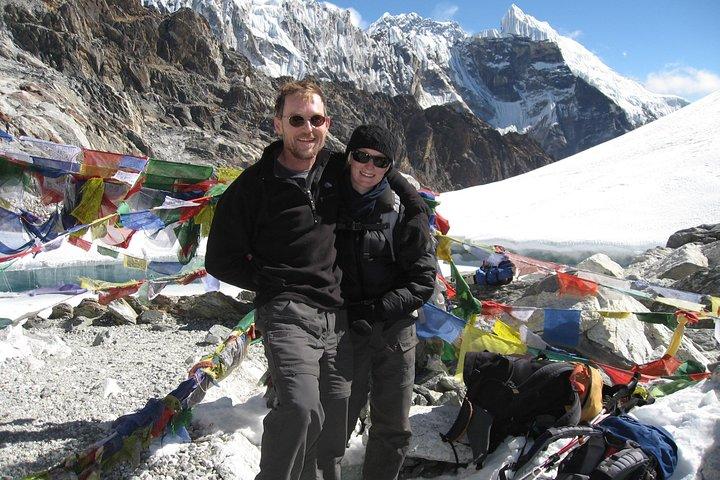
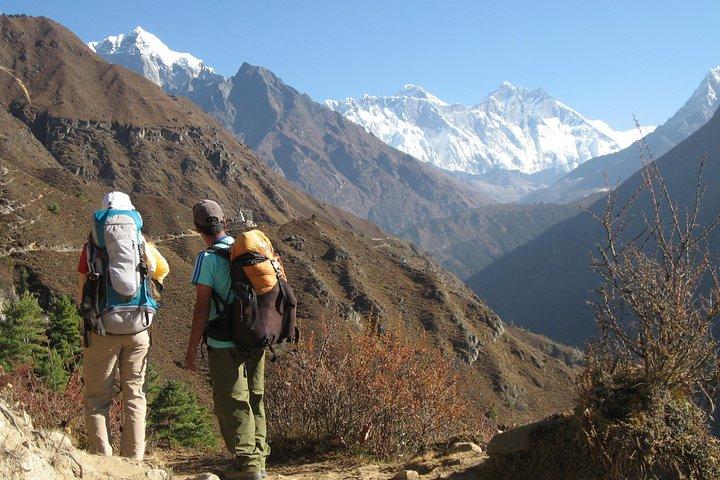
Highlights
- Breathtaking views of towering Himalayan peaks
- Cultural immersion in vibrant Kathmandu city
- Exploration of stunning turquoise glacial lakes
- Unique encounters with local Sherpa communities
- Adventurous ascent to Gokyo Ri summit
-
Duration: 22 days
-
Meals: Full board included
-
Acclimatization days included
-
Private tour with expert guide
-
Flight from Kathmandu to Lukla
-
Includes Gokyo Ri ascent
Embarking on the Everest Circuit Trek is a mesmerizing journey that beckons adventurers to the heart of the Himalayas. Travelers will immerse themselves in the vibrant culture of Kathmandu before soaring to Lukla, the gateway to this iconic trek. As they meander along the enchanting Dudh Kosi valley, the trail reveals the bustling Namche Bazaar and the breathtaking Gokyo Valley, adorned with stunning turquoise lakes and towering glaciers. A climb to Gokyo Ri offers a jaw-dropping panorama of the world's highest peaks, including Everest, Lhotse, and Makalu. With each step, they will experience the warmth of family-run lodges and the charm of local Sherpa culture. This trek promises not just physical challenges, but unforgettable moments amidst some of the most awe-inspiring scenery on Earth, making it a must-do for any passionate traveler craving adventure and beauty in equal measure.
At a Glance
-
 Free cancellation
-
 22 days
-
 Instant Confirmation
-
 Available in English
-
 Mobile voucher
-
 Private Tour
-
 Guided
-
 Family friendly

Featured Reviews

Embark on an unforgettable Everest Circuit Trek through breathtaking landscapes, rich culture, and stunning views of the world's highest peaks.
Included
-
 Lunch
Lunch -
Dinner
-
Breakfast
Excluded
-
 Other• Food (Kathmandu) - lunch and dinner, International flights from your home to home.
 -
Other• Airport taxes, car, taxi or van, visa fees.
-
Other• Medical examination (if required) and vaccination costs.
-
OtherAll bar bills, laundry, telephone calls, hot shower in the mountain, mineral water, sweet deserts,
-
OtherDelays beyond Nepal Nomad's control. Anything not specified in the Cost Includes section.
Meeting Point


End Point

What to expect
Phakding
After an early morning b/fast, we take the super flight from Kathmandu to Lukla at 2827m. The airstrip was built by Sir Edmund Hillary and the Sherpas in the mid-1960s, Flight time is about 35 minutes. We will have time to explore the village while the Sherpa crew sorts out and load the trekking equipment after landing. In the afternoon, we begin the trek by descending towards the Dudh Kosi River, where we join the main trail to Namche Bazaar, just above Chaurikharka at 2713m. The walking is easy and after passing through the small village of Ghat at 2550m, it’s a short walk to Phakding where we’ll stay overnight.
240 minutes
Kathmandu
Today we explored Kathmandu on an organized sightseeing tour. This will include a visit to the Bodhnath Stupa, one of the biggest Buddhist shrines in the world. We also visit Pashupatinath, located on the banks of the holy Bagmati River and home to the most famous Hindu temple in the country. Here we will see Hindu holy men (sadhus) and pilgrims performing ritual bathing, and occasionally, funeral pyres burning on the ghats. The cremation site here is used by the royal family and also for the simple man living next door. Your early afternoon will be free to relax in the hotel garden or visit Thamel for some curious shopping. You will be supplied with your trek departure information in the afternoon.
300 minutes
Phakding
After early morning breakfast, we take the super flight from Kathmandu to Lukla at 2827m. Flight time is about 35 minutes to the airstrip built by Sir Edmund Hillary and the Sherpas in the mid-1960s. After landing we will have time to explore the village while the Sherpa crew sort out and load the trekking equipment. In the afternoon, we begin the trek by descending towards the Dudh Kosi River, where we join the main trail to Namche Bazaar, just above Chaurikharka at 2713m. The walking is easy and after passing through the small village of Ghat at 2550m, it’s a short walk to Phakding where we’ll stay overnight.
240 minutes
Manjo
From Phakding, we cross the river and head up the valley where we’ll see porters from the south ferrying supplies to Namche. The trail is close to the river valley and is lined with beautiful blue pine and rhododendron forest that is quite spectacular in the spring months when the flowers are in bloom. We cross the Dudh Kosi at Benkar where there are tantalizing glimpses of the snow peaks Kusum Kanguru (6369m) and Thamserku (6623m). From here it is only a short walk to Monjo (2835m) where we arrive in time for lunch. We spend the night in Monjo with the afternoon free to do some exploring around the village. The day has been deliberately kept short to aid acclimatization, a very important process that’s good for the body.
240 minutes
Namche Bazaar
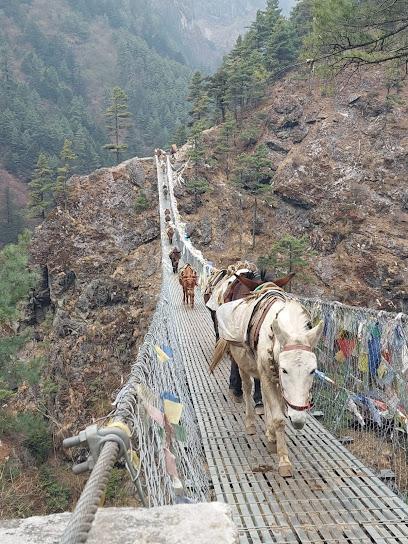
Today the walking is a little rough and includes the steep ascent to Namche Bazaar. From Monjo, it is a short walk to the entrance of the National Park before we cross the Dudh Kosi to Jorsale at 2805m. The trek continues upstream on generally flat terrain, crossing back to the right bank, to the confluence of the Bhote Kosi and Dudh Kosi rivers. It is here that we start the steep ascent to Namche Bazaar. After crossing a large and stable suspension bridge high above the river we slowly ascend at a steady pace towards Namche. There are some fantastic photographic opportunities as the peaks of Everest, Lhotse, Nuptse, Ama Dablam and Taweche (6542m) come into view for the first time. After arriving in Namche, we’ll have lunch and the afternoon is free to bargain in the shops for 'Tibetan' artifacts, or relax and marvel at the beautiful scenery. It’s your day.
420 minutes
Namche Bazaar
We remain at Namche for a second night to allow for proper acclimatization to the altitude. Namche is a prosperous village, situated in a large protected hollow. It is recommended that you take the opportunity to see both the sunrise and sunset views from the National Park Headquarters above the village. The view is stunning and offers a superb panorama of the Khumbu peaks with great views of Everest. After breakfast, there are a number of options: perhaps a walk towards Thami (3810m) above the beautiful Bhote Khola river valley, or a visit to the National Park Headquarters to see the interesting displays of Sherpa lifestyle and culture. There is also a mountaineering display and details of the park’s flora and fauna. Your guides will be on hand to offer advice and escort you on your walks.
300 minutes
The trail contours around Khumbilya's lower slopes, passing through beautiful birch forest and on to treeless, grassy slopes to a stupa (3992m) on top of a rocky ridge at Mongla. Once again the views of the mountains are magnificent. Phortse can be seen across the valley, a picturesque village set in a patchwork of stone-walled fields. From the stupa, we descend on a series of switchback trails to the Dudh Kosi River, 300m below, at Phortse Bridge.
420 minutes
Dole
Leaving Phortse Bridge, we ascend steeply at first and then contour high above the valley, enjoying excellent views of Kantega, Thamserku, and Ama Dablam (6856m). About an hour's walk from Phortse Bridge, we gain our first views of the mammoth Cho-Oyo (8153m) at the head of the valley. We are now trekking above the tree line and we pass some cascading waterfalls en route to the yak-herding settlements of Tongba (4015m) and Gayle (4050m). From here it is a short distance to Dole (4084m) where we will spend the night. After lunch, we can explore the upper Dole Valley returning via a high ridge above the lodge to enjoy fantastic views of Cho-Oyo and Gyachung Kang (7922m) to the north, and Taweche (6542m) and Cholatse (6440m) across the valley to the east.
300 minutes
Machhermo
Today it’s another short day starting with a climb out of the small Dole Valley before ascending more gradually up the Dudh Kosi valley, high above the river. The walking is easy, but we will still feel the effects of altitude on even the smallest hillock. The barren alpine scenery with only small clusters of scrub juniper is a stark contrast to the snowy white peaks and deep blue skies. After two hours, we will arrive at Luza (4360m), and after a further hour's walk, we reach our lodge at Machhermo (4465m) where you will spend the evening.
240 minutes
Gokyo Lake
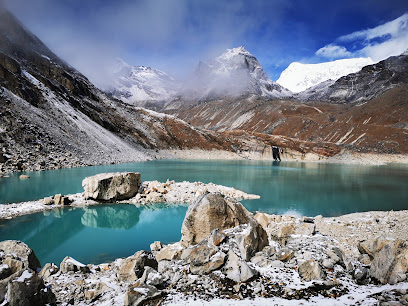
A short, steep climb leads from the Machhermo Valley onto the steep grassy slopes of the Dudh Kosi Valley. Keep an eye open for the colorful Tibetan Snow Cocks often found in this area. The valley widens as we pass through Pangka (4390m) and onto the jumbled, terminal moraines of the Ngozumpa Glacier, the largest in Nepal and the source of the Dudh Kosi River. Climbing steeply over a rocky trail we keep to the western side of the glacier to reach a small lake at the head of a wide valley; we soon pass a larger lake at Longponga (4690m) before following the lateral moraines to the third lake at Gokyo (4750m). Gokyo consists of a number of stone dwellings surrounded by stone-walled yak pastures.
240 minutes
Gokyo Ri
We will rise early for an ascent of Gokyo Peak, a straightforward but steep climb that can be tiring due to the altitude. The walk up will take just over two hours and the reward is one of the most absorbing panoramas in the Khumbu…a spectacle of immense beauty. From the rocky summit, four 8000m peaks can be seen: Everest (8848m), Cho-Oyo (8153m), Lhotse (8511m), and Makalu (8481m). Countless other towering snow peaks and rock spires fill the horizons, including Gyachung Kang (7922m) to the east of Cho-Oyo, Cholatse (6440m), Taweche (6542m), and Kangchung (6103m). In addition, there’s a bird's-eye view of the Gokyo lakes, and the huge creaking Ngozumpa Glacier now cutting halfway across the world and snaking its way down the valley far beneath.
300 minutes
 Admission Included
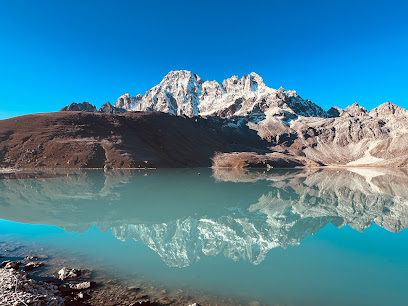
Fit and acclimatized, we leave Gokyo to cross the Ngozumpa Glacier. We descend to the second lake and drop down onto the glacier. The route across the glacier is marked by cairns and is generally quite well defined. We climb off the glacier by a small dwelling known as Thaknag and follow a shallow valley by a small Kharka village.
240 minutes
Admission Included
Early breakfast and an early start are necessary today, as not only do we have to cross Cho La, but we also have to make the long descent to reach Lobuche. Continuing up the valley, we cross a ridge and an old lateral moraine, before beginning the rocky scramble to the pass. From the pass, there are excellent views across to the Rolwaling Valley in the west and Ama Dablam to the southeast. The descent from the pass involves the crossing of a small glacier, often covered in snow but is fairly straightforward. There are excellent views of Ama Dablam and the forbidding north face of Cholatse as we descend to the pastures below.
540 minutes
Admission Included
Lobuche
The way to Lobuche contours the grassy slopes above a lake, Tshola Tsho, to join up with the main Everest trail from Pheriche and Thyangboche. The trail flattens out and follows the valley on the west side of the Khumbu Glacier to Lobuche.
300 minutes
Gorakshep
From Lobuche, we follow the broad valley running parallel to the Khumbu glacier. A gradual ascent enables us to build the slow, steady rhythm required when walking at a high altitude. When we reach the moraines of the Changri Nup Glacier, we make a series of small ascents and descents over a rocky trail lined with cairns that eventually leads to the surprising glacial sands of Gorak Shep (5160m) after about three hours.
240 minutes
Everest Base Camp Namche Bazaar
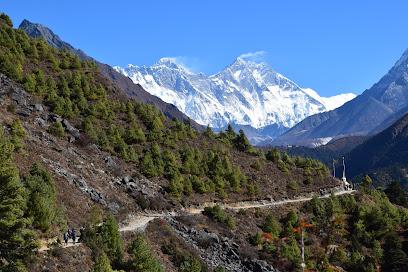
After breakfast, we set off for Everest Base Camp. The trail can sometimes be difficult to follow so keep an eye on your guides and fellow trekkers on this section. The trek to the base camp can be achieved in around three hours. If you are trekking in the popular climbing period of March to May you will almost certainly encounter yaks and porters supplying food and equipment to expeditions. From Base Camp, we do not get views of Everest but we will be able to see the notorious Everest Ice Fall. This particular area is said to be technically the hardest and most dangerous section of the mountain.
360 minutes
Pheriche
Early in the morning, we will make a steep ascent to Kala Pattar. You will need to start real slow and try to ascend at a steady rhythmic pace. Our goal, Kala Pattar, is the rocky hilltop below Pumori. It is a truly roughshod walk due to the altitude but the view from the top surpasses the wildest imagination. It will probably take a good hour and a half to reach the summit from Gorak Shep, although lower viewpoints will provide views almost as good. Pumori, Nuptse, Changtse, Ama Dablam, Taweche, Kantega and Everest surround us. About 3kms away and some 200m below, the area of Everest Base Camp can be seen in a bowl at the bottom of the Khumbu IceFall. For many trekkers, reaching Kala Patar is a very emotional experience and it is worthwhile spending as long as you can to relish this special moment that shows us the love of God for mankind. The descent back down to Gorak Shep is easy; it's then downhill most of the way, as we retrace our steps to Duglha and descend to Pheriche.
540 minutes
Chukhung
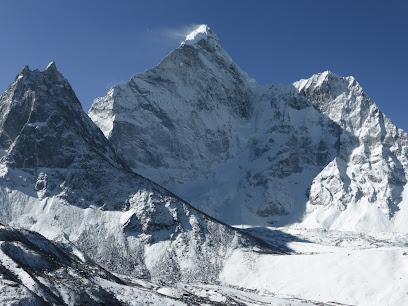
From the lodge, we head up through the village of Dingboche, following the Imja Khola Valley. The ascent is gradual, crossing small streams, through open alpine pastures with fine views of Island Peak at the head of the valley. We will reach the Chukkhung lodge in time for lunch, with the afternoon free to rest and acclimatize. If you feel energetic enough, you can head up the valley towards the old moraines that flow down from Lhotse. The views of the massive Lhotse Wall and Ama Dablam are wonderful to look at.
300 minutes
Tyangboche
After breakfast follows the Imja Khola valley and trek to Dingboche. From Dingboche, we cross the Khumbu Khola and ascend a short steep trail to the top of a small ridge for great views of the Imja valley, Ama Dablam, and Kantega. We then descend to the small settlements at Orsho and Shomare and later pass through Lower Pangboche to reach the suspension bridge over the Imja Khola River. We’ll then ascend gradually through Debuche and onto Thyangboche where we’ll spend the night.
300 minutes
Manjo
After breakfast, we descend steeply through beautiful forests of juniper, rhododendron, and fir to Phunkitenga. After a welcome break and perhaps a cup of tea we cross the Dudh Kosi and ascend to Trashing. From here the trail contours high above the valley through Shanasa and it's then a gradual walk to Namche Bazaar where we have lunch and descend to Monjo for an overnight stay.
420 minutes
Everest Base Camp
Today is our last day of trekking. It’s only a short walk along the valley before we make the final climb up to the airstrip at Lukla. We’ll have lunch at our lodge and the afternoon is free for you to wander around, relax or perhaps have a hot shower which is the best thing to do after a trek of this kind! In the evening, we’ll have a farewell dinner followed by a few celebratory drinks.
300 minutes
Flights to Lukla
We get up early in the morning, enjoy b/fast and get ready for the arrival of our aircraft for the flight back to Kathmandu. We will be met at the airport and transferred to our hotel and a soft warm bed.
35 minutes
Admission Included
The experience can be subject to change due to bad weather or unforseen circumstances. We always endeavour to give you the best possible experience.
Additional Information
-
 4-season sleeping bag (You can rent for $35 pp if you need it but has to be returned after the trek)
 -
Adjustable trekking poles
-
Airline tickets (Please make a copy and leave one at our office in KTM just in case if you need to change the date of yours)
-
Anti-infection ointments
-
At 6.30 am your Sherpa knocks on your door with a cup of good morning tea. Then it's time to have breakfast, tight up your bag pack and head off for today's trekking hiking for the next three to four hours then stop for an hour at pleasant spot along the way for a well-prepared hot lunch. Afterward, walk another three hours or so, before you stop for the over night. The evening can be spent reading or chatting with your fellow climbing and trekking crew about the trip of the day. Pack of games can be an asset to these nights; your trekking & climbing crew love teaching various Nepali card games and learning new Western games. Eventually, it's time to bed for a well deserved night
-
Band-aids
-
Binoculars
-
Cameras (Memory cards, chargers and also batteries)
-
Casual pants
-
Core Body
-
Daypack
-
Diamox (commonly prescribed as Acetazolamide) 125 or 250mg tablets for altitude sickness
-
Domestic flight luggage allowance: 15 kg
-
Down jacket & sleeping bags can be hired (USD 30 for each item for the entire trek)
-
Down jacket (Must have for mornings, nights and evenings, and for altitudes above 4,000 m; You can rent for $35 pp if you need one but has to be returned after the trek)
-
Duffel bag
-
Durable wallet/pouch for travel documents, money & passport
-
Equipment List:
-
Extra Strength Excedrin for altitude related headaches
-
Favorite snack foods (No more than 2 pounds)
-
Feet
-
Fleece jacket or pullover
-
Gaiters (For monsoon and winter)
-
General:
-
Hand
-
Headlamp
-
Heavier shell gloves
-
Heavyweight socks
-
Ibuprofen for general aches and pains
-
Immodium or Pepto bismol capsules for upset stomach or diarrhea
-
Infants are required to sit on an adult’s lap
-
It is Nepal Nomad's booking terms & conditions of joining this type of tours with us that you must be fully insured with medical, emergency rescue evacuations including trip cancellation insurance which should cover over 3000m to 6000m.
-
Itinerary designed to ensure there is plenty of times for adequate occurs as a result of acclimatization and cases of mountain sickness are rare. The common Symptoms are headaches, nausea, irregular breathing, insomnia and the swelling of fingers and glands. Treatment is to descend to a lower altitude as quickly as possible which normally results in rapid improvement and recovery.
-
Light shoes/sneakers
-
Lightweight expedition thermal bottoms
-
Lightweight expedition thermal tops
-
Liner gloves
-
Liner socks
-
Lip balm (At least SPF 20)
-
Lower Body - Legs
-
Medicines and First Aid Kits
-
Miscellaneous, but Important:
-
Neck warmer
-
Not recommended for pregnant travelers
-
Not recommended for travelers with poor cardiovascular health
-
Not recommended for travelers with spinal injuries
-
Note: Tight fitting, figure-hugging clothing can be offensive to locals, especially to women. If you find these items comfortable as a base layer, please pack something to wear on top.
-
Nylon hiking shorts
-
Optional
-
Paperback books, cards, mp3 player
-
Passport and extra passport photos (3 copies)
-
Pee bottle for men and pee funnel for woman
-
Please note our guide will carry the first-aid kit bag during the trek. However we still recommend you to bring your personalized first-aid kit as well.
-
Prior to set off we host a Pre-Trip meeting here in Kathmandu office on the 2nd day of your itinerary which starts in the evening during and introduce your trek & Climb Leader. It is an opportunity for individuals to ask questions about your trek trip as well as introduce you to one another.
-
Requires a good level of fitness and experience of mountain climbing can beneficial. These tend to be longer treks and climb with some more difficult days, some of which may involve walking at increased altitudes and more difficult terrain. There may occasionally be a longer day when negotiating the more challenging sections such as a mountain pass or viewing peak. Altitude may range up to 5000 meters.
-
Single Supplement: 200.00 USD single supplement is mandatory for single traveler booking and payable once you arrive in Nepal.
-
Soft shell and hard shell trekking pants
-
Sun hat
-
Sunglasses with UV protection
-
Sunscreen (SPF 40)
-
Synthetic sports bras (for women)
-
T-shirts (2)
-
The following gives you a general idea of the trekking equipment and clothing needed for this trek. This is a porter-supported trek. Two clients share one porter. We will supply you a trek duffel bag where you keep your heavy items and this bag is carried by the porter. You will need to bring your own daypack to be carried by you. In the daypack, you can put money, important documents, water bottle/bladder, camera, toiletries, sunscreen, notebook, etc. The weight limit for Kathmandu-Lukla-Kathmandu flights is 15 kg or 33 pounds. This is combining both the duffel bag and the daypack. If you exceed this limit, you will have to pay an additional fee. When this happens, sometimes the airline sends your bag in later flights and this can be very problematic for many reasons. So, we recommend you to pack as carefully as you can and not exceed the weight limit. You can leave your non-trekking stuff at the locker facility in the Kathmandu hotel.
-
This list is only a guide pattern. While you are required to bring everything on this list, there are numerous options, brands, and versions of each piece of equipment. Use your experience and the listed features to find the best gear for you. Some of the above equipment can be easily found in the stores in Kathmandu in a resonable prices.
-
Three meals on full board basis will be provided (Nepali, Sherpa, and Tibetan, Continental, Italian, Chinese and Indian cousins). Each day dinner and breakfast will be taken in the same lodge you spend over night but Lunch will be taken on your way to next village.
-
Toiletry kit (Be sure to include toilet paper stored in a plastic bag, hand wipes, and liquid hand sanitizer, towel, soap, etc.)
-
Travelers should have a high level of physical fitness
-
Upper Body - Head / Ears / Eyes
-
Water bottle/bladder
-
Water purification Iodine tablets
-
Water/windproof shell jacket (Preferably breathable fabric)
-
Water/windproof trousers
-
Waterproof hiking/trekking boots
-
Whilst in the mountain, accommodation options are limited so please do not expect the Ritz! Nepal Nomad use simple family run lodges, with a large sociable central dining area and a cozy chimney burning fire. Accommodations are on a twin share basis and we recommend you use your own sleeping bag. Lodges and tent in Island Peak climbing tend to have shared bathroom facilities and you may not always have access to a shower. Despite the lack of facilities, these lodges certainly have a rustic charm, most are blessed with spectacular views and being family run operations, they offer a great insight into the daily life of the Mountain people.
-
Wool or synthetic hat that cover the ears
What our experts say
-
 Explore Thamel for local souvenirs
 -
Try local Nepali dishes like Dal Bhat
-
Consider a day at Boudhanath Stupa
-
Pack snacks for energy during treks
-
Bring cash for local purchases

More About this Experience
Introduction
The Everest Circuit Trek is not just a journey; it’s an adventure that beckons the spirit of every explorer, thrill-seeker, and nature lover. Spanning an exhilarating 528 hours, this trek takes you through the heart of Nepal, where the majestic Himalayas stand tall. Starting in the bustling city of Kathmandu, this tour combines rich cultural experiences with breathtaking natural beauty. Travelers will embark on an unforgettable flight to Lukla, the gateway to the Everest region, before trekking through picturesque valleys, charming villages, and stunning glacial landscapes. The itinerary is designed to provide ample time for acclimatization, ensuring that you can immerse yourself fully in the experience. Not only will you witness the splendor of the world’s highest peaks, including Everest, Lhotse, and Makalu, but you will also indulge in delicious local cuisine and stay in cozy lodges that echo the warmth of Sherpa hospitality. Get ready to create memories that will last a lifetime!What to expect?
On the Everest Circuit Trek, adventurers can expect a well-paced trek that balances challenging ascents with serene moments of reflection. The journey begins with two vibrant days in Kathmandu, where you’ll soak in the culture and prepare for the trek ahead. As you traverse the Dudh Kosi valley and make your way to Namche Bazaar, the trail unfolds into a tapestry of lush forests and towering peaks. The gradual ascent ensures your body acclimatizes well, allowing you to relish the stunning views without feeling overwhelmed by altitude. The highlight of the trek is undoubtedly the climb up Gokyo Ri, where a panoramic view of the surrounding 8000-meter peaks will leave you breathless. Each step brings new wonders, from the turquoise lakes of Gokyo to the rustic charm of the local lodges. You can also look forward to delightful meals featuring traditional Nepali cuisine, prepared with care and served in the cozy dining areas of family-run lodges.Who is this for?
The Everest Circuit Trek is designed for those with a sense of adventure and an eagerness to explore one of the most awe-inspiring regions on Earth. While a good level of physical fitness is recommended, the trek accommodates a wide range of participants—from seasoned trekkers to enthusiastic beginners. Solo travelers, couples, and groups can all find joy in this experience, as the camaraderie of fellow trekkers and Sherpas creates a welcoming atmosphere. Whether you are looking to challenge yourself, experience the rich Sherpa culture, or simply bask in the natural beauty of the Himalayas, this trek is for everyone. It's also ideal for photographers, nature lovers, and those seeking a unique escape from the hustle and bustle of everyday life. As long as you have a sense of curiosity and a willingness to embrace the unpredictability of the mountains, you’ll find this trek rewarding and fulfilling.Why book this?
Booking the Everest Circuit Trek is not just a decision; it’s an invitation to embark on a life-changing journey. This trek stands out because it combines adventure with cultural immersion, allowing travelers to connect with the local Sherpa communities and gain insights into their way of life. The carefully crafted itinerary ensures you have enough time to acclimatize, making the experience both enjoyable and safe. With experienced guides leading the way, you’ll have the support and knowledge necessary to navigate the challenges of high-altitude trekking. Furthermore, the breathtaking views from vantage points like Gokyo Ri and Kala Patar are simply unmatched, offering vistas that will leave you in awe. This trek is a chance to escape the ordinary and step into a world where nature reigns supreme. You’ll return not just with stunning photos, but with stories of adventure, resilience, and the thrill of reaching new heights.Good to know
Before setting off on the Everest Circuit Trek, it's essential to prepare adequately. The trek requires a good level of physical fitness, and travelers with cardiovascular issues should consider their health carefully. Packing wisely is crucial—lightweight clothing, sturdy trekking boots, and essential gear like a daypack, water purification tablets, and a personalized first-aid kit will enhance your trekking experience. It’s also important to adhere to local customs, especially regarding attire, as tight-fitting clothing can be considered disrespectful. The trek includes three meals daily, showcasing the delightful flavors of Nepali cuisine, but be prepared for basic accommodation in family-run lodges. While the facilities may not be luxurious, the warmth of the local hospitality and the stunning views will more than make up for it. Lastly, keep in mind that weather conditions can change rapidly in the mountains, so flexibility and a spirit of adventure are key.Reviews
Feedback from those who have embarked on the Everest Circuit Trek is overwhelmingly positive. Trekkers rave about the breathtaking scenery, noting that the vistas from Gokyo Ri and Kala Patar are experiences that will forever be etched in their memories. Many highlight the warmth and friendliness of the Sherpa guides, who not only provide assistance but also share fascinating stories about their culture. Travelers appreciate how well-structured the itinerary is, allowing for proper acclimatization and minimizing altitude sickness, which can be a concern on such high treks. Guests often mention the delicious meals served at the lodges, praising the variety and richness of flavors. Overall, those who have completed this trek express a profound sense of achievement and personal growth, with many vowing to return and explore more of Nepal’s stunning landscapes. This trek truly leaves a lasting impact, creating bonds among fellow trekkers and inspiring a deeper appreciation for the beauty of the Himalayas.
Your all‑in‑one travel companion app
Explore expert travel guides, compare and book tours, experiences, hotels, and more—all from the palm of your hand. Download now for seamless trip planning wherever your wanderlust takes you.


This is a popular product and the date you are looking for just sold out. Next available date is
