

Krakow Kazimierz Jewish District - PRIVATE (4h)
 Kraków, PL
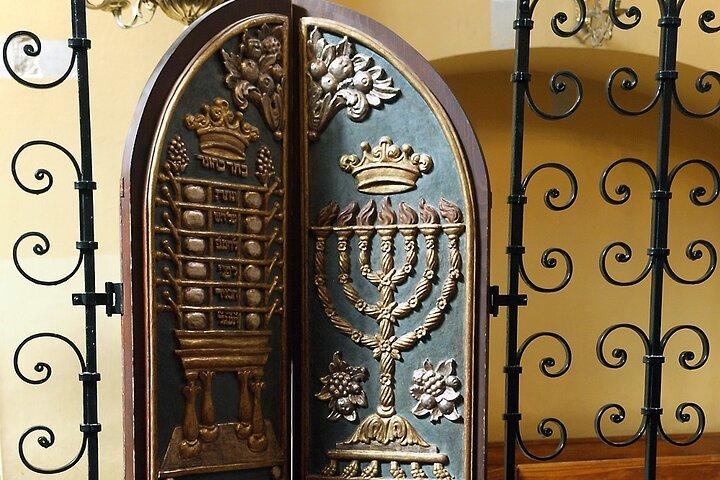
Highlights
- Private sightseeing with a local guide
- Explore the historic Old Town of Warsaw
- Visit the beautiful Lazienki Park
- See the famous monument to Frederic Chopin
- Experience Krakow's diverse and delicious culinary scene
-
Private Tour
-
Duration 4 hours
-
Professional local guide
-
Available in multiple languages
-
Hotel pickup included
-
Admission to synagogues not included
Embark on a private half-day walking tour in Krakow with a local guide and immerse yourself in the rich history and culture of this captivating city. Your guide will meet you at your hotel and take you on a sightseeing adventure, starting with a visit to the UNESCO World Heritage Site of the Old Town. Explore the Royal Castle, Krasinski Palace, Supreme Court building, and the monument dedicated to the Warsaw Uprising of 1944. Then, discover Lazienki Park, home to the famous Frederic Chopin monument. Take a moment to relax in the beautiful rose garden before returning to your hotel. With a duration of 240 minutes, this tour will bring the history of Krakow to life and leave you with unforgettable memories.
At a Glance
-
 Free cancellation
-
 4 hours
-
 Instant Confirmation
-
 Available in Polish, French, Spanish; Castilian, German, Russian, Portuguese, English, Italian
-
 Mobile voucher
-
 Private Tour
-
 Guided
-
 Family friendly

Explore Krakow's Kazimierz Jewish District with a private guide for a personalized and in-depth experience of its rich history and culture.
Included
-
 Professional local guide
Excluded
-
 Gratuities
 -
Entrance fees


What to expect
Kazmierz The Former Jewish District
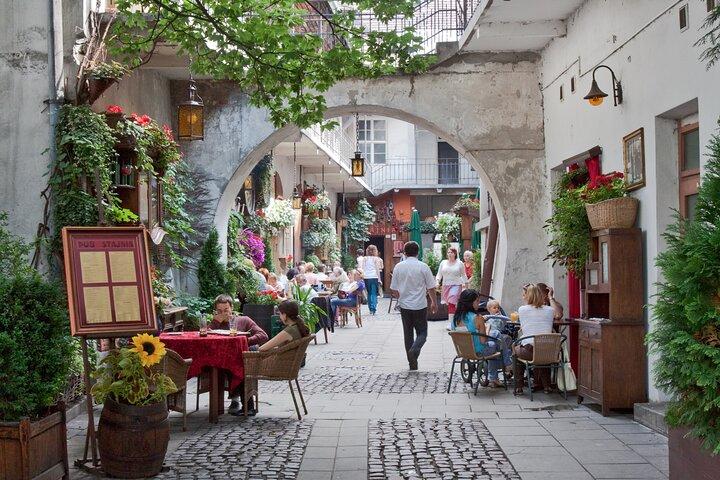
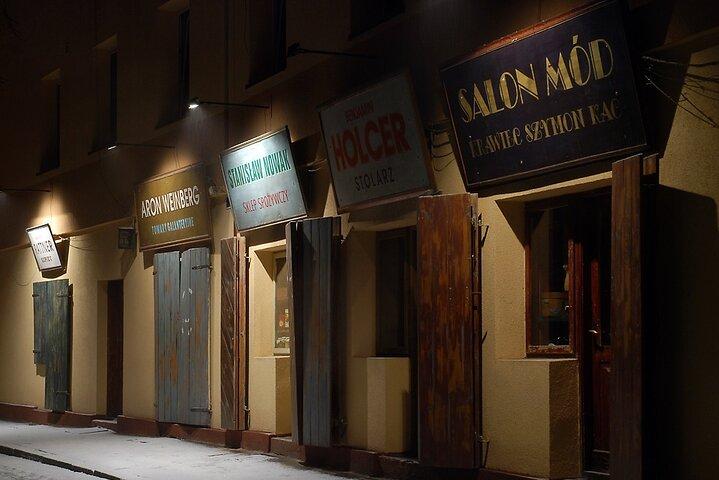
Another historical municipality in the outskirts of Krakow, Kazimierz, is now one of the city's most attractive districts. Dotted with old buildings which give a special ambience to the area, Kazimierz was home to the larger part of the Jewish population of Krakow tilll 1939. Here, we find the famous Remuh Synagogue and the Alte Schule,Poland's oldest synagogue, today an important museum of the district. Worth a visit is also the Temple founded by the local Association of Progressive Jews and the Wolf Popper synagogue.
30 minutes
Oskar Schindler's Enamel Factory
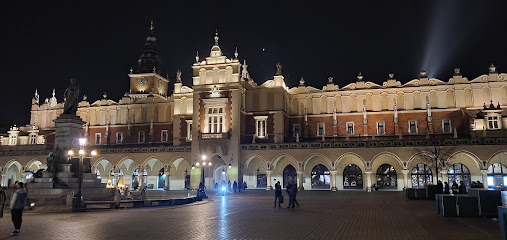
The factory at Lipowa street was launched two years before the Second World War. In the autumn of 1939 it was confiscated from three Jewish owners and taken over by a Sudeten German, Oskar Schindler (1908–74), a member of the NDSAP and most probably a collaborator of the Abwehr. Thanks to his extensive network of connections, the businessman won plenty of commissions, both civilian (pots, spoons, et cetera) and military (including mess kits, and later also ammunition shells) for his Deutsche Emailwarenfabrik commonly known as Emalia, which earned him a fair revenue. Schindler employed Jews initially for economic reasons as they provided a cheap labour force. Most probably the establishment of the ghetto and the subsequent brutal deportations made the businessman aware that as a director of a prospering factory, he had an opportunity to help these people.
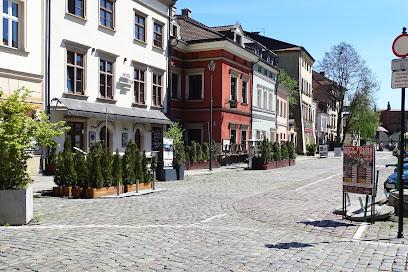
Rising up around it was a plethora of synagogues, Jewish schools, academies, and institutions. For centuries, it was one of the most important Jewish cultural and spiritual centres in Europe. This is where the famous scholar and rector of the Talmudic Academy, Moses Isserles known as Remuh, lived in the 16th century. Jews from all over the world come on pilgrimages to his grave, a site that abounds in legends. In the following century, the learned Rabbi Natan Spira studied the Kabbalah in the attic of the synagogue at 22 Szeroka Street by a small candle. The candle burnt out in 1633 and the famous Kabbalist died, of exhaustion as rumour had it.
15 minutes
Judaica - Jewish Cultural Center
On November 24th, 1993, under the auspices of the Judaica Foundation, the Jewish Cultural Centre was opened. The idea to create it was a public initiative of people concerned about protecting the Jewish cultural legacy in Poland, promoting this legacy among young generations, and preserving the memory of Jewish participation in and contribution to the Polish history. All these goals are pursued in hope that they will foster a harmonious development of Polish-Jewish relations and support the efforts to build an open democratic society. As laid down in the Statute of the Judaica Foundation, the Jewish Cultural Centre is open to all: its programmes are addressed to Jewish and non-Jewish populace, both Polish and foreign.
Tempel Synagogue
Tempel synagogue was erected in the years 1860-1862 in the round-arch style based on Ignacy Hercok' design. During several decades it was repeatedly expanded. The specificity of the progressive scheme of the Tempel Synagogue was the fact that the sermons were delivered once a week in Polish and German interchangeably. During World War II, the synagogue was turned into a warehouse, but the interior did not sustain as severe damage as other temples. The set of 36 stained-glass windows on the ground floor and the first floor, mainly with floral and geometric patterns, is both beautiful and unique. Many of the windows have retained signatures of their founders. The interior of the synagogue decorated in the Moorish style was thoroughly renovated in the years 1987-2000. Between 2006 and 2008, the Jewish Community Centre of Krakow was added to the back of the synagogue on the initiative of HRH the Prince of Wales.
15 minutes
 Admission Not Included
Kupa Synagogue (Synagoga Kupa)
The synagogue was built in the 1640s from the monies of the Kahal, which is why it is called Kupa, as the word means “fund”. In the 19th century it was repeatedly extended: first in the wake of the construction of Miodowa street. At that time a garden was designed between the street and the synagogue wall, and a storeyed wing and a balcony were built leading to the women’s area. Conservation and renewal works were also carried out between the two world wars. The interior was decorated with new paintings, and the entire building was surrounded with decorative fencing. During the German occupation the synagogue was devastated. The bimah (the raised roofed podium in the centre of the synagogue) was entirely destroyed, and so was the platform with stairs and kantor’s pulpit in front of the Aron Kodesh; the movable furnishing was also lost.
15 minutes
Admission Not Included
Synagoga Izaaka Jakubowicza
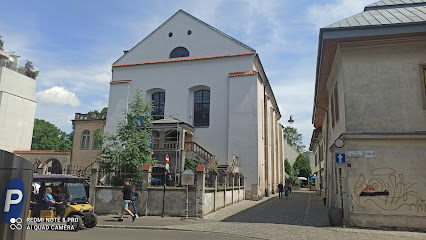
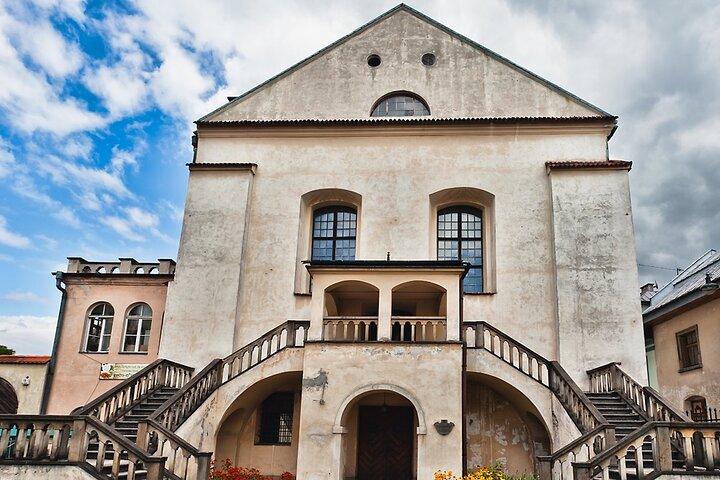
The Synagogue of Isaac son of Jacob was founded by Izaak Jakubowicz (Ajzyk Jekeles), an elder of the Kazimierz Kahal, in the 1530s. The construction was completed in the 1540s to produce not only the largest of the Kazimierz synagogues but also the most lavishly furnished. The spacious interior is decorated with stucco and polychrome decorations under a vaulted ceiling. It incorporates a high hall for men and a women’s section connected to the main hall through semi-circular arcades. The external staircase leading to the women’s section received its contemporary guise in 1924. The large square fronting the synagogue used to be a fish market until the Second World War: a frequently photographed, characteristic element in the townscape of the Jewish district. After the war, the building long remained derelict, and only after a thorough renovation early in the 1990s was the synagogue made available to visitors.
15 minutes
Admission Not Included
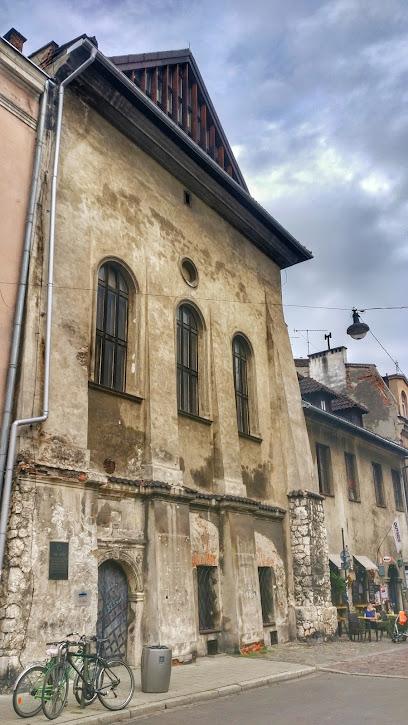
The High Synagogue was built as the third synagogue in the Jewish town of Kazimierz, after the Old Synagogue and the Remuh Synagogue. It was erected after 1556, but no later than 1563. The name of the synagogue comes from the fact that its prayer hall was located on the first floor of the building. This atypical placement of the prayer house was a result of security concerns: the synagogue stood next to a gate to the Jewish town, which was a particularly crowded place, full of street noise and in very close proximity to Christian buildings at the time. The eastern section of the building probably contained shops from the very beginning of the synagogue's existence. At the end of the 1880s, men's and women's prayer sections were created on the first floor of a building adjoining the synagogue from the west, and added to the temple. The fate of the synagogue during World War II and in its aftermath was not documented.
15 minutes
Admission Not Included
Old Synagogue
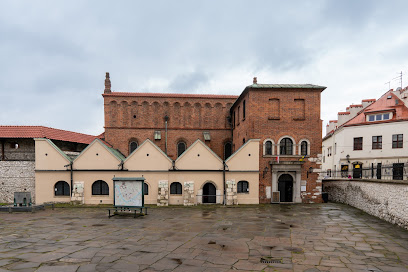
The Old Synagogue is the oldest monument of Jewish sacral architecture preserved in Poland. Built in the the 15th century as a two-aisle hall with a cross-ribbed vault supported by two pillars and covered by a gable roof, in terms of architectural style it draws upon the Gothic synagogues in Worms, Regensburg and Prague. In 1570, it was converted by a builder from Florence, Matteo Gucci. Its walls were crowned with an attic, used for the first time in the architecture of synagogues in Poland. Between 1550 and 1650, it was extended, one by one, with a porch, two prayer rooms for women and a house for the community council, known as kahal. Together with the kahal house, the synagogue formed a religious and administrative centre of the Jewish community in Kazimierz. In late 1944, its vault collapsed, maybe destroyed deliberately. In 1956-59, it was restored, and at the same time adapted to function as a museum.
15 minutes
Admission Not Included
Remuh Synagogue (Synagoga Remuh)
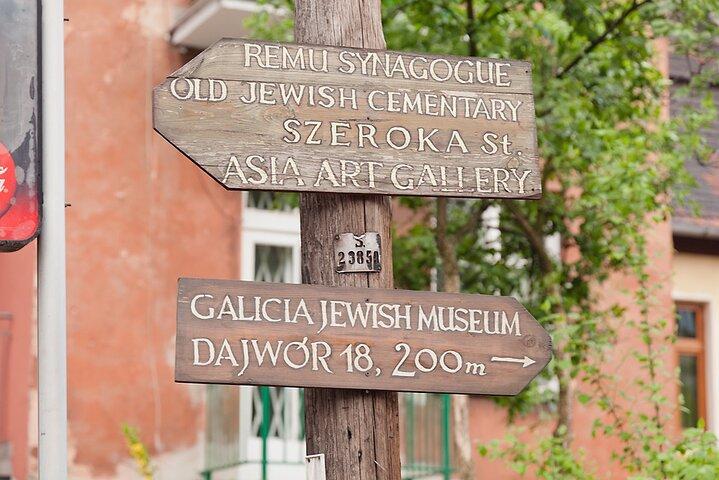
The Remuh Synagogue and its adjoining cemetery is enclosed with five streets: Szeroka, Miodowa, Jakuba, Ciemna and Lewkowa. It is a unique complex of Jewish architecture and religious art dating back to the mid-16th century, functioning as a centre of the religious life of Jews in today's Kraków. The synagogue holds services on Saturdays and holidays and the cemetery is visited by religious Jews from all over the world who wish to pray by the graves of well-known Kraków rabbis, scholars and outstanding community seniors. The old cemetery was mostly visited by pilgrims on the anniversary of the death of the most famous Polish rabbi, Moses Isserles (1525-1572), also known as "The Rema", falling on the 18th Ijar (April/May) of the Jewish calendar. This second oldest synagogue in the Jewish Kazimierz district, initially called the "New Synagogue", was erected in 1553 by Israel ben Josef, grandchild of Moses Auerbach of Regensburg and father of Moses Isserles.
15 minutes
Admission Not Included
Kazimierz
From the budget milk bars, slow food restaurants, food trucks, and high end dining Kraków is the place to be. Named the European Capital of Gastronomic Culture 2019, Kraków promises to satisfy any tastes, especially those seeking traditional and regional flavors. As far as the entertainment goes, Kraków is home to countless venues and establishments offering a wide range of experiences from refined to casual.
20 minutes
Royal Łazienki Park
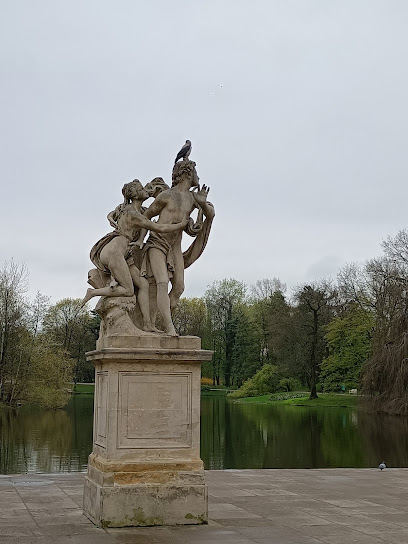
where you see the famous monument to Frederic Chopin
20 minutes
The experience can be subject to change due to bad weather or unforseen circumstances. We always endeavour to give you the best possible experience.
Additional Information
-
 Infants and small children can ride in a pram or stroller
 -
Public transportation options are available nearby
-
Suitable for all physical fitness levels
What our experts say
-
 Try lunch at Hamsa, a local favorite.
 -
Visit the Old Synagogue, a must-see museum.
-
Explore the street art around Kazimierz.
-
Check out the food stalls on Szeroka Street.
-
Don't miss the vibrant nightlife in Kazimierz.

More About this Experience
Introduction
Experience the rich history and vibrant culture of Krakow with a Private Half-Day Walking Tour led by a knowledgeable local guide. This exclusive sightseeing adventure offers a unique opportunity to explore the captivating city of Warsaw, Poland's capital. From the UNESCO World Heritage Site of the Old Town to the picturesque Lazienki Park, this tour will take you on a journey through the city's past and present.What to Expect?
During this private walking tour, you can expect to immerse yourself in the beauty and charm of Krakow. Your expert guide will lead you through the city's must-see attractions, providing fascinating insights into its history, culture, and significance. As you stroll through the cobbled streets of the Old Town, you'll encounter architectural wonders like the Royal Castle and Krasinski Palace. The tour also includes a visit to Lazienki Park, where you can relax amidst the stunning natural beauty and admire the famous monument to Frederic Chopin.Who is this for?
This private walking tour is perfect for anyone who wants to delve deep into the history and culture of Krakow. Whether you're a history enthusiast, a culture lover, or simply a curious traveler, this tour will cater to your interests. The knowledgeable guide will ensure that the experience is tailored to your specific preferences and needs. This tour is suitable for individuals, couples, families, and small groups, making it an inclusive experience for all.Why Book This?
By booking this private walking tour, you'll gain exclusive access to a local guide who possesses extensive knowledge about Krakow. Their expertise and passion for the city will bring its history and culture to life, allowing you to truly understand and appreciate its significance. This personalized experience ensures that you can explore at your own pace, ask questions, and engage in meaningful conversations with your guide. With their insider insights and recommendations, you'll discover hidden gems and uncover the lesser-known stories that make Krakow truly unique.Good to Know
During the tour, you'll have the opportunity to visit several synagogues in Krakow. Please note that the cost of entry to these synagogues is not included in the tour price. The itinerary also includes a visit to Lazienki Park, where you can take a break and enjoy the serene atmosphere. Comfortable walking shoes and weather-appropriate clothing are recommended for this tour, as you'll be exploring the city on foot. Make sure to bring a camera to capture the beautiful sights and memories of your Krakow adventure.Reviews
Previous participants of this private walking tour have praised the expertise and enthusiasm of their local guide. They have commended the personalized nature of the experience, noting that it allowed them to delve deeper into the history and culture of Krakow. Travelers have also appreciated the opportunity to visit the synagogues and Lazienki Park, describing them as unique and memorable highlights of the tour. Overall, customers have expressed high levels of satisfaction with the tour's performance, praising its organization, informative nature, and the engaging storytelling of the guide.


This is a popular product and the date you are looking for just sold out. Next available date is
