

Johannesburg Soweto Highlights Tour
 Johannesburg, ZA
 91% of travellers recommend this
Highlights
- Rich History and Cultural Significance
- Vibrant nightlife and unique wildlife experiences
- Nelson Mandela's Legacy on Vilakazi Street
- Authentic experiences and community engagement
- Private transportation and all fees included
-
Private transportation included
-
Bottled water provided
-
All fees and taxes included
-
Duration: 1 to 5 hours
-
Wheelchair accessible
-
Infant seats available on request
Experience the vibrant and historical essence of Soweto with the thrilling Soweto Highlights Tour. Immerse yourself in the personal interactions and captivating stories that await you at each stop. Marvel at the iconic FNB Stadium, fondly known as the "Calabash," where historic events like Nelson Mandela's first speech after his release from prison took place. Discover the rich history of Diepkloof Park and the role it played in political violence. Explore the Chris Hani Baragwanath Hospital, the third largest hospital in the world, and learn about its impressive facilities and patient care. Feel the adrenaline rush as you bungee jump from the towering Orlando Towers, a landmark in Soweto. Visit the historic Regina Mundi Catholic Church, the largest Catholic church in South Africa, and walk Vilakazi Street, home to two Nobel Peace Prize laureates. Step into history at the Mandela House and reflect on the struggles and triumphs of Nelson Mandela. Pay tribute to the brave students of June 16, 1976 at the Hector Pieterson Museum and Memorial. With its fascinating itinerary and captivating stories, the Soweto Highlights Tour is an experience that should not be missed.
At a Glance
-
 Free cancellation
-
 1 hours
-
 Instant Confirmation
-
 Available in English
-
 Wheelchair accessible
-
 Mobile voucher
-
 Private Tour
-
 Guided
-
 Family friendly

Featured Reviews

Explore the rich history and vibrant culture of Soweto on this immersive Johannesburg Soweto Highlights Tour, led by an expert guide.
Included
-
 Private transportationPrivate transportation
 -
Bottled waterBottled water
-
In-vehicle air conditioningAir-conditioned vehicle
Excluded
-
 LunchLunch
 -
OtherMandela House Museum
Pickup
Check if pick-up is available from your location, you will select during checkout (providers may allow other pickup locations)

What to expect
FNB Stadium
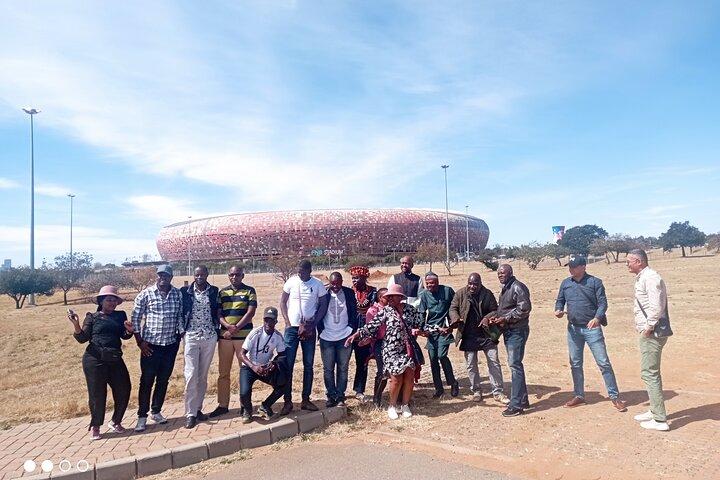
The unique design of FNB Stadium is highly regarded internationally, and is often fondly referred to as the “Calabash” or “African Pot” after being reconstructed to the tune of R3.3 billion in time for the first ever African World Cup in 2010. Previously known as Soccer City, the stadia has been the centre of historic events, starting with the first speech from former President Nelson Mandela in 1990, a few days after being released from prison where he served 27 years. The venue has hosted the biggest sports and music events this country has ever seen, including the opening and closing ceremonies as well as the final of the 2010 FIFA World Cup ™. The continental Africa Cup of Nations final in 2013 was also played at the stadium 87 436-seater is the largest venue in South Africa and the country’s proud global colossal International rugby test clashes and the biggest global music superstars, including U2, Lady Gaga and Justin Bieber have also featured here to record attendances. FNB Stadium is, and has been, the go-to platform for other major events in the country, including the funeral of political activist Chris Hani in 1993 and the moving memorial service tribute to Mandela in 2013
20 minutes
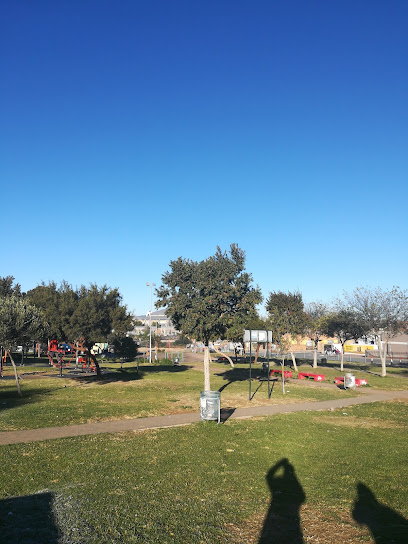
They are called “Rich Man’s Acre” by the residents because the stands here are bigger and intended as a more exclusive area... others Call it DK Diepkloof Extensions was built for middle to upper class blacks (largely professionals employed by the state, but also privately employed professionals), which were offered 100% loans for the stand and the structure as part of the government housing scheme
20 minutes
Chris Hani Baragwanath Academic Hospital
The Chris Hani Baragwanath Hospital is the 3rd largest hospital in the world, occupying around 173 acres (0.70 km2), with approximately 3'200 beds and about 6'760 staff members. The facilities are housed in 429 buildings with a total surface area of 233'795 m2. Approximately 70% of all admissions are emergencies, including approximately 160 victims of gunshot wounds per month. Accident, emergency and ambulance represent the busiest services, counting over 350 daily patients. Every year, about 150'000 inpatient and 500'000 outpatient cases are registered. The Department of Ophthalmology, the St John Eye Hospital, has 111 beds and counts about 50'000 patients per year. Approximately 60'000 patients per year are treated in the Maternity Hospital. The hospital is in the Soweto area of Johannesburg, South Africa. (Soweto was a separate municipality from 1983 to 2002, when it was amalgamated to the City of Johannesburg.) It is one of the 40 Gauteng provincial hospitals, and is financed and run by the Gauteng Provincial Health Authorities. It is a teaching hospital for the University of the Witwatersrand Medical School, along with the Charlotte Maxeke Johannesburg Academic Hospital, Helen Joseph Hospital and the Rahima Moosa Mother and Child Hospital. This site's purpose is to make the Chris Hani Baragwanath Hospital easy to find and contact and to give the visitor the most important information about it (not managed by the government). The Chris Hani Baragwanath Hospital strives to: Achieve the highest level of patient care based on sound scientific principles and administered with empathy and insight. Train our work corps to be the best equipped and motivated to serve the sick and injured. Maintain and defend truth, integrity and justice for all, at all times, to the benefit of patients, staff and the community. CEO Chris Hani Baragwanath Hospital: Dr Sandile Mfenyana The History of the Chris Hani Baragwanath Hospital The story of Bara started soon after the discovery of gold on the Witwatersrand. A young Cornish lad, John Albert Baragwanath, arrived on the gold fields to make his fortune. The surname "Baragwanath" was derived from the Welsh word "Bara", which means bread, and "gwanath" means wheat. After trying a number of projects, John Albert started a refreshment post, one day's journey by ox wagon from Johannesburg, at the point where the road to Kimberly joined the road from Vereeniging. Here was good grazing and water. Soon he had a small hostel, "The Wayside Inn", established. However, to the transport drivers, and stagecoach passengers, it was "Baragwanath's Place"or just Baragwanath. The Second World War brought many changes. As the five years of worldwide disruption and destruction unfolded, the United Kingdom and the Commonwealth had to change rapidly from appeasement politics to war effort sacrifice. In South Africa the outbreak resulted in political upheaval, change of Government, and - Baragwanath Hospital. In 1939 Britain, and the Empire, had large blacklogs in all services, including the provision of health care for military personnel. By September 1940, with hostilities escalating, and with the need for hospital and convalescent facilities becoming urgent, the Secretary of State in London formally asked the South African Government if it would provide health care facilities for Imperial troops of Middle East Command. The British War Office suggested that 2 hospitals of 1'200 beds be built in South Africa, as well as a convalescent depot of 2'000 beds. After due consideration one of these hospitals was designated for Johannesburg. In November 1941 construction started on the ground bought from the Corner House mining group, at the 8th mile stone on the Potchefstroom road, - near the place where the old Wayside Inn had been situated. The British Government ultimately paid 328'000 pounds for a hospital of 1'544 beds. After experimenting with various names, it was finally agreed that this hospital would be "The Imperial Military Hospital, Baragwanath". The situation internationally in 1941 and 1942 looked bleak for the Allies. There was thus real urgency to construct the hospital as quickly as possible. Within a remarkable 6 months the first patients could be admitted, in May 1942.
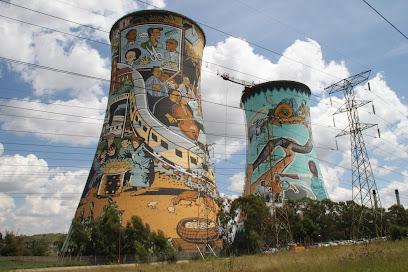
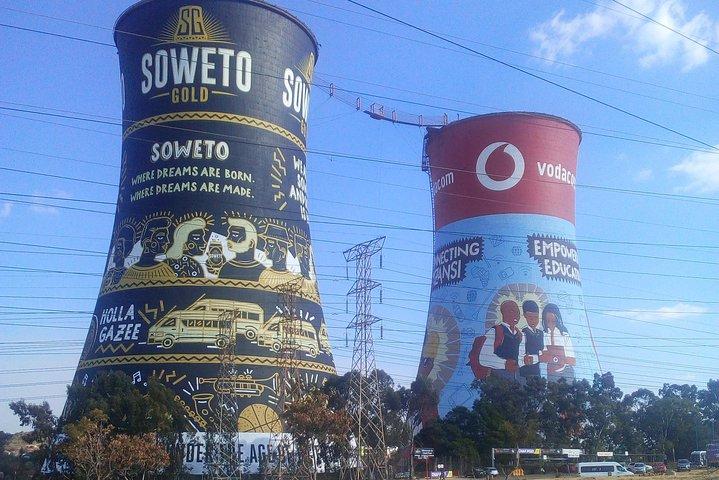
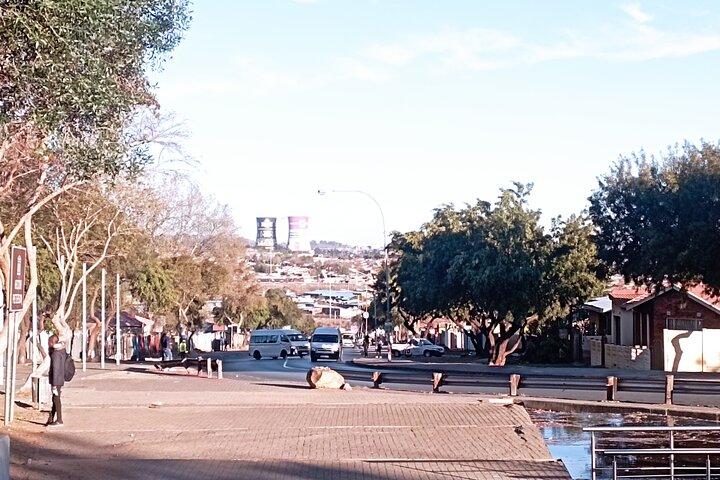
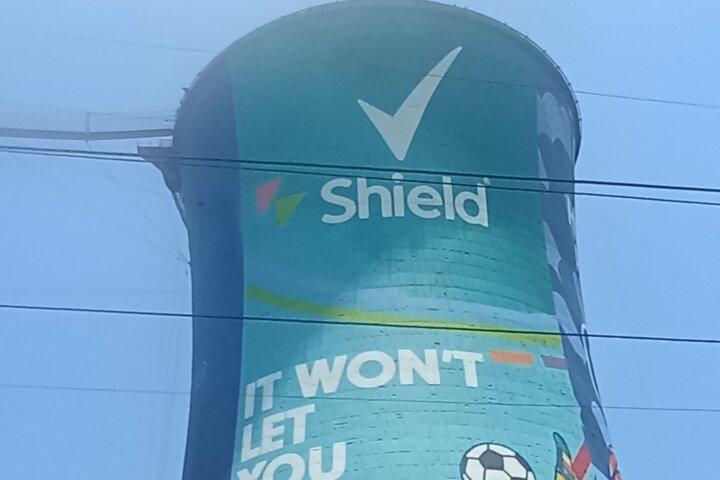
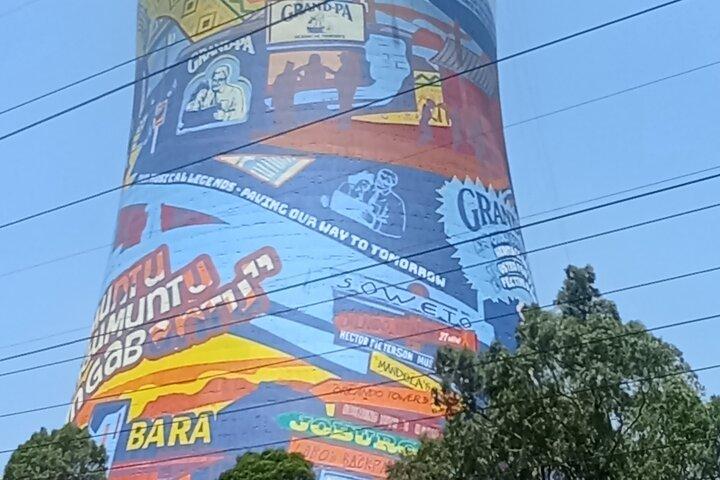
The two cooling towers are a prominent landmark in Soweto. They were built in 1951 to supplement the spray pond cooling system as this source of cooling was running at its capacity Being supplied by sewage effluent from the Klipspruit Sewage Works, the spray ponds at Orlando were the first in South Africa to make use of this ready supply of coolant liquid. Both towers are painted, one functioning as an advertising billboard and the other containing the largest mural painting in South Africa.The towers are also used for bungee and BASE jumping from a platform between the top of the two towers as well as a bungee swing into one of the towers. The tower was since used for a Fast Forward on the seventh season of The Amazing Race. Their task was for teams (Ray & Deana in particular) to walk across a suspension bridge 9 metres (30 ft) above the ground between the power station's towers. In the movie Chappie the power station is the headquarter of the protagonists, the two iconic cooling towers and the main building are decorated with typical Die Antwoord artwork History Planning for the construction of Orlando started in 1935, as the electricity demand of Johannesburg was rising faster than what could be met with the existing City Generating Station located in downtown Johannesburg. The location for the station was selected due to its proximity to water supply for coolant and railway lines for the delivery of coal. Construction started in 1939 with Merz & McLellan as consulting engineers, but completion was delayed due to the outbreak of the Second World War. The last phase of construction was completed in 1955. Until 1990 two Hunslet Austerity 0-6-0ST steam engines (Nos. 7805 Elizabeth and 7398 George) were used to move incoming coal trains through a wagon tipper at the power plant,The station was decommissioned in 1998 after 56 years of service.In 2006 work was started to transform the site of the power station into an entertainment and business centre. On 25 June 2014, the decommissioned power plant collapsed killing 1 and trapping 5 others in the rubble
20 minutes
Vilakazi Street
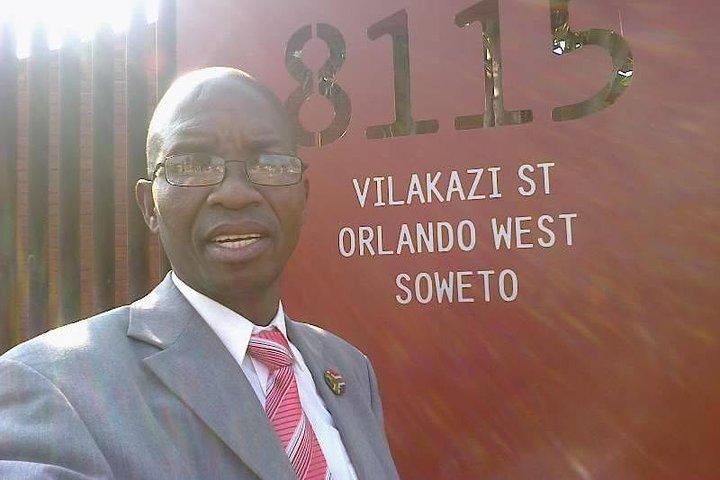
The homes of two Nobel Peace Prize laureates – South Africa’s first democratically elected president, the late Nelson Mandela, and Archbishop Emeritus Desmond Tutu – are found on Vilakazi Street. This is the only street in the world that can boast having had two Nobel Laureates as residents. Vilakazi Street is the Soweto street of the greats, named after Dr Benedict Wallet Vilakazi, a distinguished writer and educator who wrote the first poetry book published in Zulu.
30 minutes
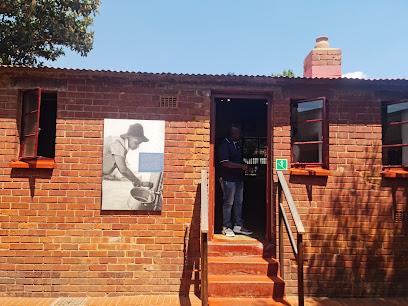
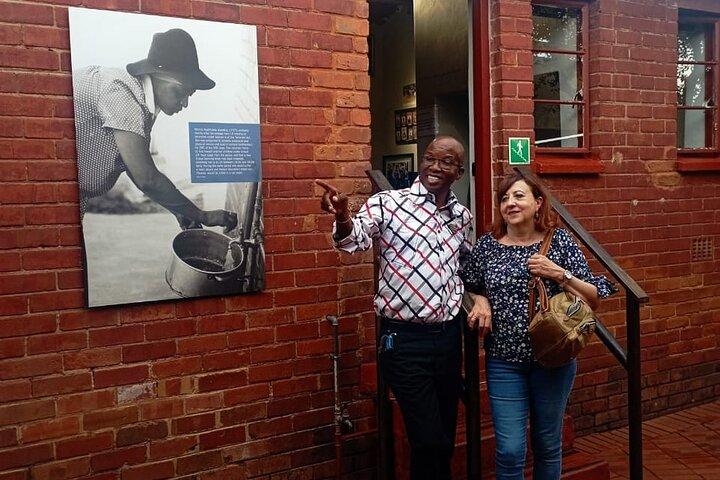
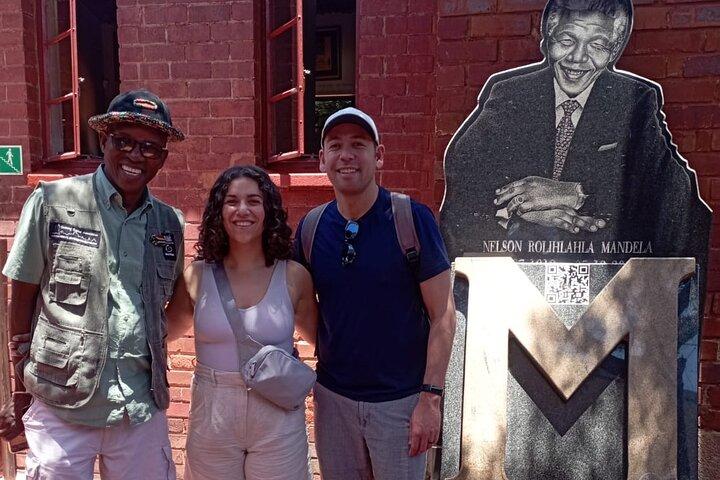
In Orlando West, Soweto, on the corner of Vilakazi and Ngakane streets, you’ll find the modest house that Nelson Mandela and his family called home from 1946 to the 1990s. Mandela lived in the house with his first wife, Evelyn Ntoko Mase, and, after his divorce, with his second wife, Winnie Madikizela-Mandela. Mandela himself didn’t spend much time at the Vilakazi Street home: his growing role in the anti-apartheid struggle drove him underground before his arrest in 1962. Madikizela-Mandela continued to live in the house with their two daughters, Zenani and Zindzi, until she was banished to the Free State town of Brandfort in 1977. Upon his release from prison in 1990, Mandela moved back to the house for a short 11 days before moving to larger and more secure premises in the Johannesburg suburb of Houghton. The Mandela family’s four-roomed Soweto home is now a museum and houses various memorabilia, artworks, awards and honorary doctorates conferred on Nelson Mandela and his family, as well as photographs of the family dating back to the 1950s. It's one of the major tourist attractions in South Africa due to its deep history and ties to Madiba's pre-presidential life
30 minutes
 Admission Included
Hector Pieterson Museum and Memorial
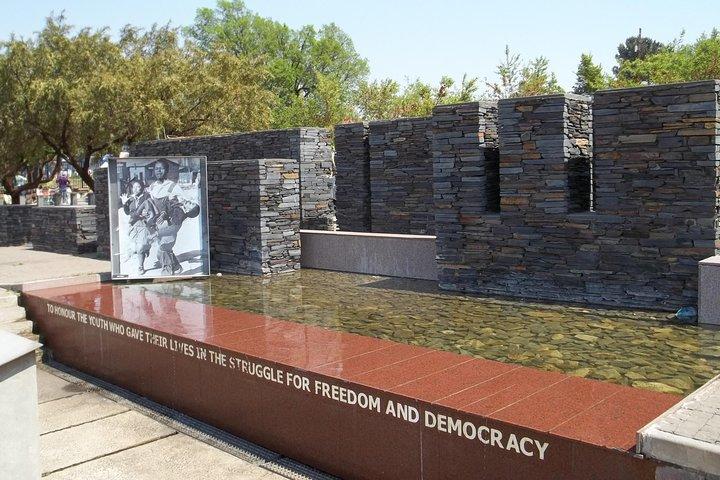
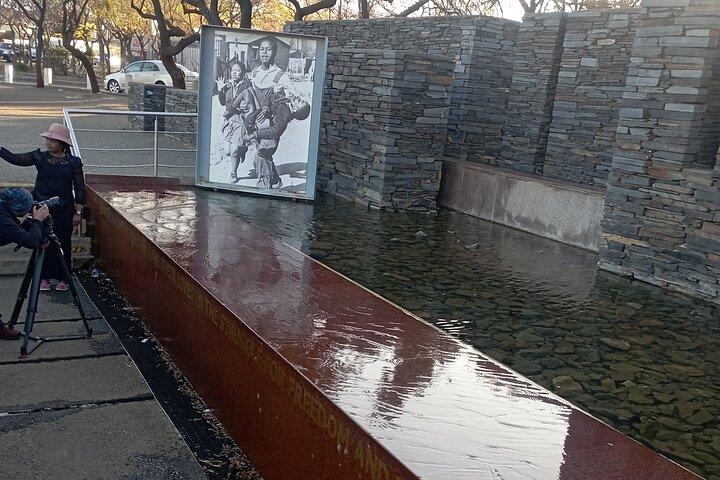
On June 16, 1976, Soweto high school students took to the streets in a peaceful protest against the mandatory use of Afrikaans as a language of instruction in black secondary schools. The students planned to meet at Orlando Stadium before marching to the regional offices of the Department of Bantu Education, where they intended to raise their grievances with the authorities. They carried placards that read, “Away with Afrikaans”, “Amandla awethu” (“Power to the people”) and “Free Azania” (“Free South Africa”), and sang the hymn Nkosi Sikelel’ iAfrika (God Bless Africa), now the basis for the national anthem of democratic South Africa.
45 minutes
 Admission Not Included
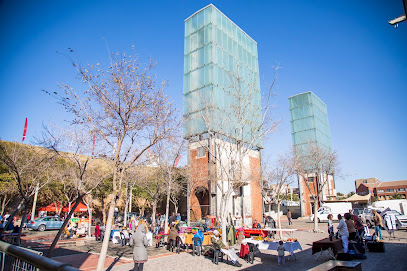
Constitution Hill is a living museum that tells the story of South Africa’s journey to democracy. The site is a former prison and military fort that bears testament to South Africa’s turbulent past and, today is home to the country’s Constitutional Court, which endorses the rights of all citizens.
30 minutes
Admission Not Included
Braamfontein
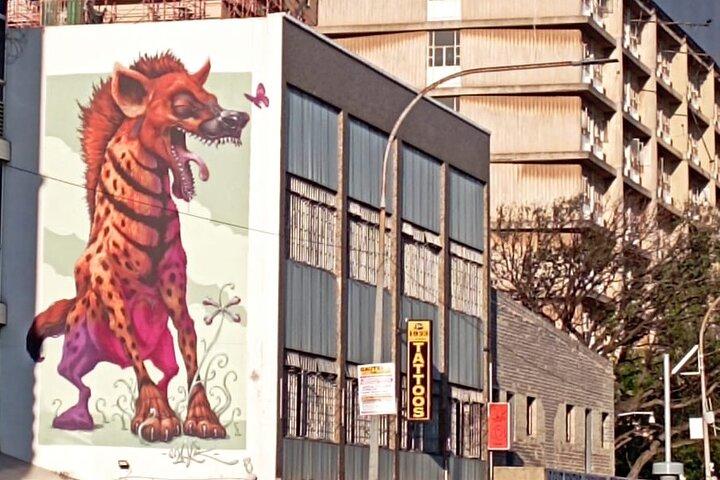
Braamfontein, located in Johannesburg, is a vibrant neighborhood that pulsates with creativity. Its streets are a canvas for artistic expression, adorned with impressive public art installations and colorful graffiti murals
20 minutes
Nelson Mandela Bridge
Paris has its Eiffel Tower, New York its Statue of Liberty, and Sydney its Harbour Bridge. Johannesburg has the largest cable-stayed bridge in southern Africa. Who else to name it after but Nelson Mandela, the man who led South Africa across the apartheid divide The 284-metre-long bridge crosses over 42 operational railway lines in linking Braamfontein and the north of Johannesburg to Newtown in the heart of the city's central business district
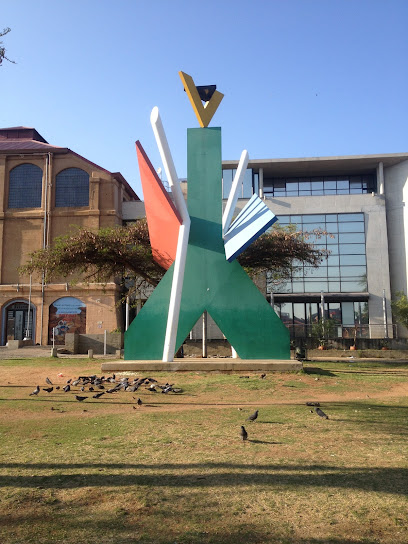
Sci-Bono is a world-class science centre that supports maths, science and technology education and offers innovative, dynamic learning experiences that contribute to building South Africa’s science, engineering and technology capacity.
Johannesburg
Built between 1927 and 1934, originally the largest of Johannesburg’s three steam-driven power stations, Turbine Hall is an iconic building in the heart of Newtown’s art and culture precinct
Greater Johannesburg
“Mandela and Tambo” read the brass plate on the door of the attorneys’ shabby offices in downtown Johannesburg. It was late 1952, four years after the National Party victory, and the two young partners of South Africa’s first black-owned law firm were busy.
10 minutes
Standard Bank Ferreira Mine Stope
In the basement of the Standard Bank headquarters in downtown Joburg, is Ferreira's mine stope, one of the very first gold prospecting sites in the city. The long forgotten mine entrance was discovered in the 1980s during the construction of the Standard Bank building and it has since been preserved as a small museum. The stope is named for Ignatius Phillip Ferreira, a farmer, soldier and later a gold prospector, who also has a city district
The experience can be subject to change due to bad weather or unforseen circumstances. We always endeavour to give you the best possible experience.
Additional Information
-
 All areas and surfaces are wheelchair accessible
 -
Infant seats available on request
-
Infants are required to sit on an adult’s lap
-
Public transportation options are available nearby
-
Specialized infant seats are available
-
Suitable for all physical fitness levels
-
Wheelchair accessible
What our experts say
-
 Visit Vilakazi Street for lunch options.
 -
Check out local art in Braamfontein.
-
Explore the Hector Pieterson Museum.
-
Bring a camera for stunning photos.
-
Wear comfortable shoes for walking.

More About this Experience
Introduction
The Soweto Highlights Tour offers a unique and immersive experience in one of South Africa's most historically significant and culturally diverse neighborhoods. This tour takes you on a journey through the vibrant streets of Soweto, where you'll discover the rich history, inspiring landmarks, and fascinating stories that have shaped the nation.What to expect?
During the Soweto Highlights Tour, you can expect to explore iconic locations such as the Orlando Stadium, where the legendary Soweto high school students gathered in 1976 to protest against the use of Afrikaans as a language of instruction. You'll also visit the Hector Pieterson Museum and Memorial, located on Khumalo Street, which commemorates the brave young student who lost his life during the protests. As you stroll through the streets, you'll witness the vibrant energy, cultural diversity, and resilience of Soweto's residents.Who is this for?
This tour is perfect for history enthusiasts, culture lovers, and anyone seeking a deeper understanding of South Africa's complex past. It is an inclusive experience that welcomes travelers of all ages and backgrounds. Whether you're a solo traveler, a couple, or a group of friends, the Soweto Highlights Tour offers a captivating exploration of Soweto's heritage.Why book this?
By booking the Soweto Highlights Tour, you'll gain valuable insights into the struggle for freedom and the triumphs of the South African people. You'll walk in the footsteps of Nobel Peace Prize laureates Nelson Mandela and Desmond Tutu, who both resided on Vilakazi Street. The tour also includes a visit to the Roman Catholic Church, also known as Regina Mundi, a significant landmark in the liberation movement. This tour provides a unique opportunity to delve into the heart and soul of Soweto, connecting with its people and their stories.Good to know
During the tour, you'll be provided with private transportation in an air-conditioned vehicle, ensuring comfort throughout your journey. Bottled water will also be provided to keep you hydrated. It's important to note that lunch, alcoholic beverages, and soda are not included in the tour, allowing you the freedom to choose dining options that suit your preferences.Reviews
Travelers who have experienced the Soweto Highlights Tour have praised its educational and eye-opening nature. They have commended the knowledgeable guides who bring the history of Soweto to life, making the tour engaging and memorable. Visitors have expressed deep appreciation for the opportunity to learn about the struggles and triumphs of the South African people, leaving them with a profound sense of respect and admiration. Overall, the Soweto Highlights Tour has received rave reviews, making it a must-visit for those seeking a meaningful and impactful travel experience.


This is a popular product and the date you are looking for just sold out. Next available date is
