
Traveling the world opens your eyes to incredible sights, sounds, and flavors. But sometimes, a simple conversation can feel like climbing a mountain when you don't speak the local language. Over the years, Liam, Maya, and I have learned a few tricks to bridge those linguistic gaps and connect with people, even without a shared vocabulary. Here’s what’s worked for us.
The Universality of Non-Verbal Communication
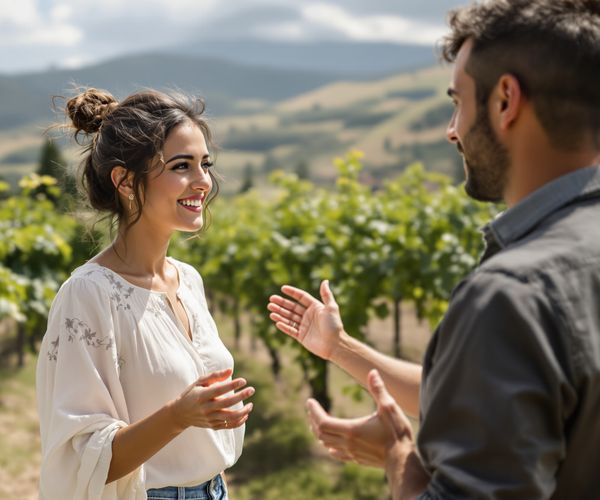
You might not realize it, but so much of communication isn't about the words we say. Facial expressions, gestures, and body language speak volumes, often transcending language barriers. A smile, a nod, or a simple point can convey understanding and goodwill.
I remember once in a small village in Italy, Liam and I were trying to ask for directions to a local winery. Our Italian was… well, let’s just say it was non-existent. After a few failed attempts with phrasebook Italian, an older woman simply pointed, smiled warmly, and waved us in the direction we needed to go. Her non-verbal cues were all we needed, and we found the most amazing little vineyard! That's the power of non-verbal communication!
A smile, in particular, is an incredibly powerful tool. It’s a universal sign of friendliness and openness. It can disarm even the most skeptical person and create an instant connection. So, when in doubt, smile!
Mastering Basic Phrases: A Bridge to Connection
While non-verbal communication is essential, making an effort to learn a few basic phrases in the local language can make a world of difference. It shows respect and a willingness to connect with the local culture.
Simple greetings like “hello” (shalom in Hebrew, bonjour in French), “thank you,” “please,” and “excuse me” are invaluable. Even if you butcher the pronunciation (which I often do!), the locals will appreciate the effort. It opens doors and creates opportunities for more meaningful interactions.
I remember when we visited a small village in the French Alps. I made an effort to use my rusty French to say “Bonjour” and “Merci” whenever possible. The shopkeepers, the waiters, even people on the street seemed more willing to engage and help us. It transformed our experience from being mere tourists to feeling like welcome guests.
Tech to the Rescue: Translation Apps and Tools
In today's world, we have incredible technology at our fingertips to help us navigate language barriers. Translation apps like Google Translate, iTranslate, and DeepL are game-changers.
These apps offer features like real-time voice translation, image translation (where you can point your camera at a sign and get an instant translation), and offline translation for when you don't have internet access. I find the real-time voice translation particularly useful for longer conversations.
Once, while traveling in Japan, we got completely lost trying to find a traditional tea house. None of us spoke Japanese, and the locals we encountered didn't speak English. Desperate, I pulled out Google Translate and used the voice translation feature to ask for directions. It wasn't perfect, but it was enough to get us pointed in the right direction. We eventually found the tea house and enjoyed a wonderful cultural experience, all thanks to a little bit of tech!
Cultural Sensitivity: Avoiding Missteps
It's not just about the words you say, but also how you say them. Understanding cultural norms related to gestures, eye contact, and personal space is crucial to avoid misunderstandings.
For example, in some cultures, direct eye contact is considered a sign of respect, while in others, it can be seen as aggressive. Similarly, gestures that are perfectly acceptable in one culture might be offensive in another. The “thumbs up” sign, for instance, is considered rude in some parts of the Middle East.
Before traveling to a new country, I always try to do some research on local customs and etiquette. I once attended a business meeting in South Korea without knowing much about their culture. I learned later that my enthusiastic handshake was considered too forward. It was a valuable lesson in the importance of cultural sensitivity. Small gestures of respect can go a long way.
The Art of Active Listening and Observation
Finally, remember the power of active listening and careful observation. Even when you don't understand the words being spoken, you can still learn a lot by paying attention to non-verbal cues, tone of voice, and the overall context of the situation.
Watch how locals interact with each other. Observe their body language and facial expressions. Try to pick up on the nuances of their communication style. This can give you valuable insights into their culture and help you better understand their perspective.
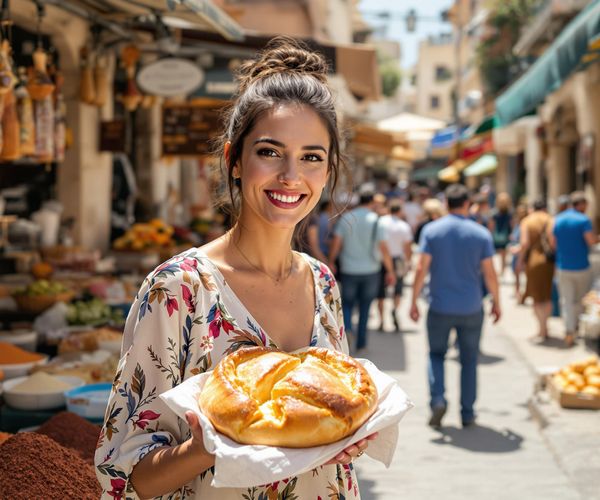
I remember being in a bustling market in Marrakech, Morocco. I didn't speak Arabic, but I watched how the vendors interacted with their customers. I noticed their hand gestures, their tone of voice, and the way they haggled over prices. By carefully observing their interactions, I was able to get a sense of the local culture and even try my hand at bargaining (with limited success, I might add!).
Ultimately, navigating language barriers is about more than just translating words. It's about being open-minded, respectful, and willing to connect with people on a human level. With a little bit of effort, a dash of technology, and a whole lot of empathy, you can turn potential communication breakdowns into opportunities for meaningful cultural exchange.
Tips for overcoming language barriers while traveling, fostering better communication and cultural understanding.