

منارههای هرات (MANAR Ha) Travel Guide
Free Guide: Discover the majestic Minarets of Herat, remnants of a glorious Timurid past, showcasing intricate Islamic architecture and Afghan heritage.


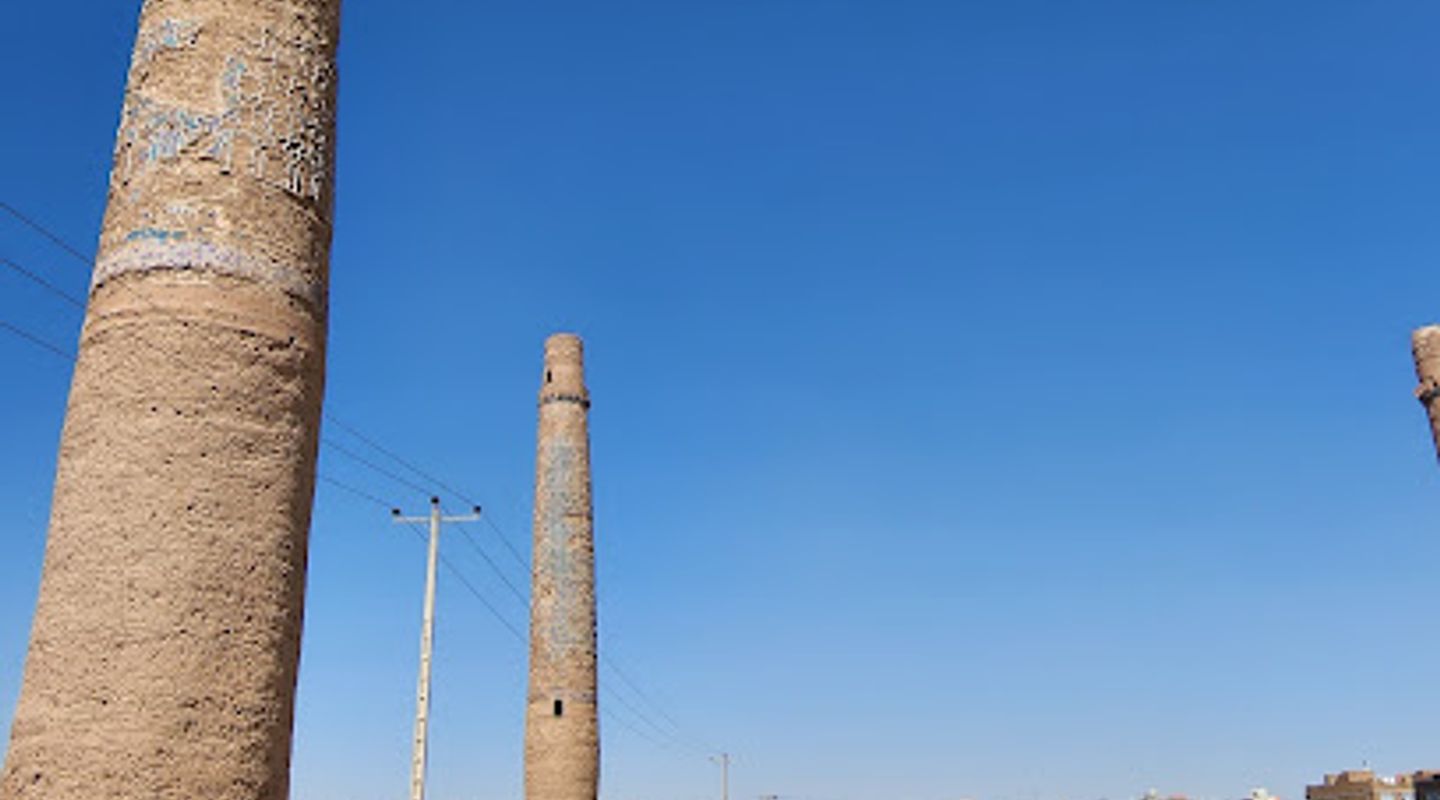
A brief summary of منارههای هرات (MANAR Ha)
Discover the majestic Minarets of Herat, remnants of a glorious Timurid past, showcasing intricate Islamic architecture and Afghan heritage.
The Minarets of Herat, remnants of the Musalla Complex, stand as testaments to the Timurid dynasty's golden age in the 15th century [5, 6]. Once part of a grand religious and educational center, these majestic structures showcase intricate Islamic architecture and the enduring spirit of Afghan heritage [6, 7].
Opening hours
- Every dayOpen 24 hours
Opening hours as listed on the venue’s Google Business Profile. Hours can change for services and special events, so check with the venue before you go.
- Address
- 955P+PG7, AH1, Herat, Afghanistan
Getting there
Walking
Taxi
Public Transport
Discover more about منارههای هرات (MANAR Ha)
Overview
The Minarets of Herat, known locally as Manar Ha, are the surviving sentinels of a once-glorious Musalla Complex [6]. This complex stands as a testament to the city's pivotal role during the Timurid dynasty [5, 6]. These majestic structures, remnants of a sprawling religious and cultural center established in the 15th century, offer a profound connection to Afghanistan's rich history and artistic heritage [6, 7].The Musalla Complex was commissioned in 1417 by Queen Gawhar Shad, the wife of Shah Rukh, a Timurid ruler, transforming Herat into a vibrant hub of intellectual and artistic activity [6, 9, 11]. The Musalla, meaning "place of prayer," was designed to be the centerpiece of this cultural renaissance, encompassing mosques, madrasas (religious schools), mausoleums, and libraries [6]. The complex was renowned for its exquisite architecture, intricate tilework, and sheer scale [6, 7].The minarets, soaring skyward, were integral to the Musalla's grandeur [6]. Originally, the complex boasted around twenty minarets, each adorned with elaborate brickwork, glazed tiles, and calligraphic inscriptions [6, 8, 11, 12]. These towering structures served not only as places for the call to prayer but also as symbols of the Timurid dynasty's power and piety [6]. They guided travelers to the city and stood as proud declarations of Herat's cultural significance [6].Over the centuries, the Musalla Complex suffered significant damage due to earthquakes, wars, and political upheavals [6, 7]. In the late 19th century, during the Second Anglo-Afghan War, much of the complex was deliberately destroyed to prevent its use as a stronghold [5, 6, 7]. Today, only five of the original minarets remain, standing as silent witnesses to Herat's tumultuous past [6]. Despite the ravages of time, these structures still evoke a sense of awe and wonder [6, 7]. The intricate brickwork, though faded in places, hints at the artistic mastery of the Timurid artisans [6]. The calligraphic inscriptions, with their Kufic script, speak of a time when Herat was a beacon of Islamic art and scholarship [8].The minarets are not only architectural marvels but also symbols of Herat's cultural identity and resilience [7]. Efforts are underway to preserve and restore the remaining minarets, with international organizations and local authorities working together to stabilize the structures and protect them from further damage [5, 7]. These efforts include repairing cracks, replacing damaged bricks, and consolidating the foundations [7]. The restoration work is being carried out with great care and sensitivity to preserve the authenticity of the minarets and their historical character [7].
Evendo Review Centre
 Google
Guest reviews
Explore منارههای هرات (MANAR Ha) on the map
A handpicked selection of must-see spots near منارههای هرات (MANAR Ha), mapped for you.
Get your free copy of our complete guide to منارههای هرات (MANAR Ha), delivered straight to you.
Everything on this page, from opening hours and how to get there to Eve’s tips and the best time to go, in one PDF you can read offline, print or share.
Already have an account? Sign in
Your منارههای هرات (MANAR Ha) guide is ready.
We'll send it to · Not you? Sign out

Getting your guide ready…
We are putting together a fresh copy of the منارههای هرات (MANAR Ha) guide. This can take up to a minute.
This can take a few moments. If your browser asks, choose Allow so the download can start. You'll find the guide in your Downloads folder.
Nothing happened? Download it again
Sorry, the guide is taking longer than usual. Please try again in a minute, or get it by email instead.
Other nearby places you may find interesting
The closest places of the same kind, if this one is not quite what you had in mind.
-
-
-
-
-


Swipe for more places
More to explore near منارههای هرات (MANAR Ha)
-
 Best experiences near منارههای هرات (MANAR Ha)
-
 Best hotels near منارههای هرات (MANAR Ha)
-
 Best landmarks near منارههای هرات (MANAR Ha)
-
 Best attractions near منارههای هرات (MANAR Ha)
-
 Best shops near منارههای هرات (MANAR Ha)
-
 Best restaurants near منارههای هرات (MANAR Ha)
-
 Best bars near منارههای هرات (MANAR Ha)


Do you manage this location?
Take control to get all the benefits, like improved information, better appearance, and stronger visibility across AI-powered discovery.
Explore more
Explore more of Farah
Discover Farah: Delve into Afghanistan's rich history, vibrant bazaars, and scenic landscapes in this hidden gem of the western region.
Explore Farah
Explore more of Afghanistan
Discover Afghanistan's rich history, stunning landscapes, and diverse cultures. From ancient cities to breathtaking nature, this Central Asian gem offers a unique travel experience.
Explore Afghanistan
