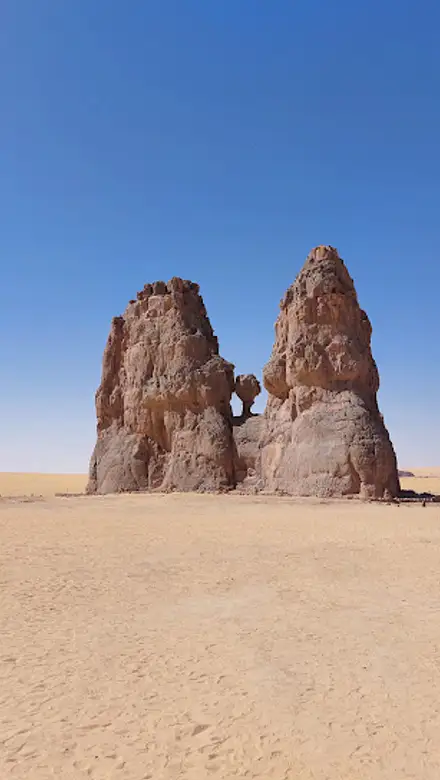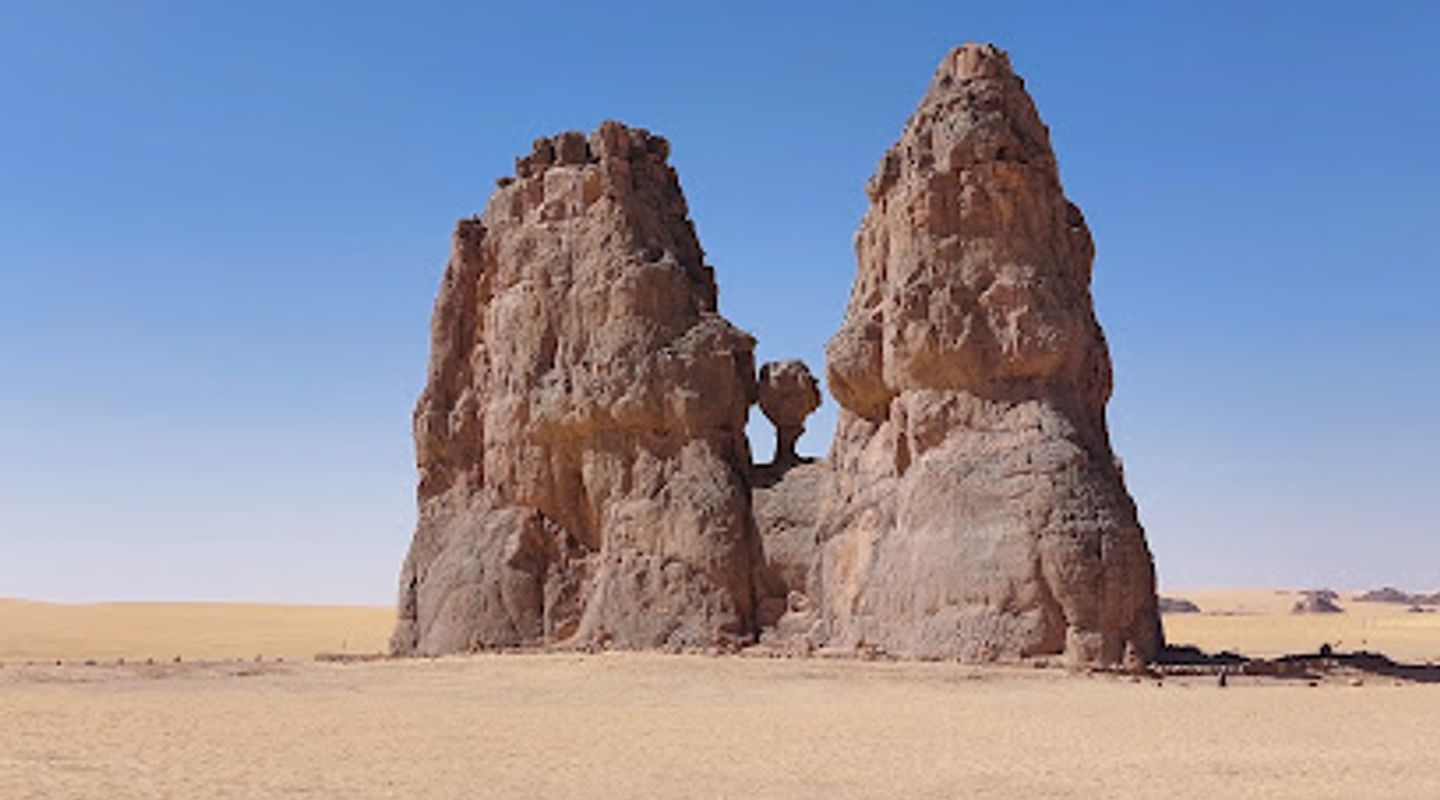
La vache qui pleure, High Plateaus Travel Guide
Discover ancient Neolithic rock art in the Sahara Desert at La Vache Qui Pleure, a historical landmark near Djanet, Algeria.
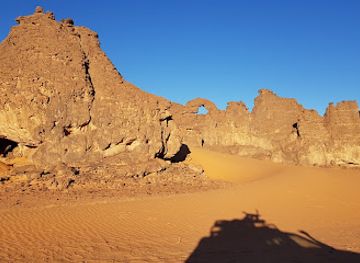
La Vache Qui Pleure, or 'The Crying Cow,' is a remarkable historical landmark near Djanet, Algeria, featuring Neolithic rock engravings dating back over 7,000 years. The site showcases a herd of cows, with one appearing to shed a tear, inspiring local legends and interpretations.
A brief summary to La vache qui pleure
- Djanet, DZ

Know before you go
Hi, I'm Eve. Here are a few practical things to know before exploring La vache qui pleure.
- Visit during the cooler months (October to April) for a more comfortable experience exploring the Sahara Desert.
- Engage a local Tuareg guide for a deeper understanding of the rock art and the surrounding landscape.
- Bring plenty of water, sun protection, and appropriate clothing for desert conditions.
Do you manage this location?
Take control to get all the benefits, like improved information, better appearance, and stronger visibility across AI-powered discovery. Learn more about listing your business on Evendo
Activate your presenceOther nearby places you may find interesting
The closest places of the same kind, if this one is not quite what you had in mind.

Explore La vache qui pleure on the Map
A handpicked selection of must-see spots near La vache qui pleure, mapped for you.
Getting There
-
Driving
From Djanet, the most common way to reach La Vache Qui Pleure is by 4x4 vehicle, as the site is located in a desert environment. Arrange transportation with a local tour operator or guide in Djanet. The drive takes approximately 1 hour, heading roughly northwest from Djanet. Be prepared for sandy and rocky terrain. The cost for a guided tour including transportation can range from 8,000 to 15,000 Algerian dinars per person, depending on the tour operator and group size.
Discover more about La vache qui pleure













Your all‑in‑one travel companion app
Explore expert travel guides, compare and book tours, experiences, hotels, and more—all from the palm of your hand. Download now for seamless trip planning wherever your wanderlust takes you.


Explore More of High Plateaus
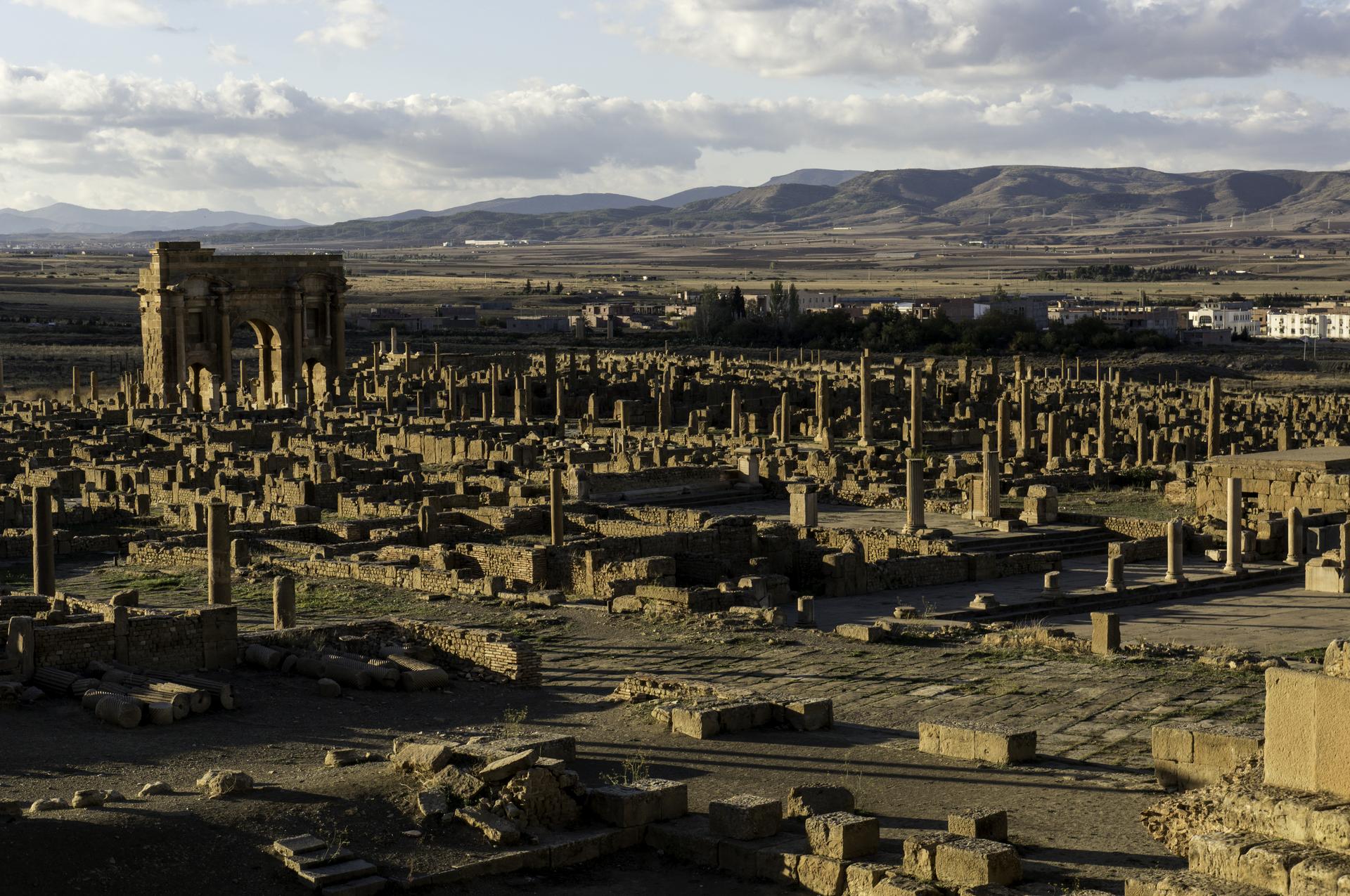
Looking beyond La vache qui pleure? Discover High Plateaus for broader travel guides, local hot-spots, and regional highlights.
Explore High Plateaus
Discover the rich history and breathtaking views of the Fortress of Ghat, a magnificent castle reflecting the essence of Libya's architectural heritage.

Explore the stunning landscapes and ancient rock art of Tassili n'Ajjer National Park, preserved by the Office National du Parc Culturel.