Saar Temple Travel Guide
Free Guide: Explore the captivating Saar Temple, a window into the ancient Dilmun civilization and Bahrain's rich history, dating back 4,000 years.


A brief summary of Saar Temple
Explore the captivating Saar Temple, a window into the ancient Dilmun civilization and Bahrain's rich history, dating back 4,000 years.
Unearth Bahrain's ancient past at Saar Temple, a captivating archaeological site revealing the secrets of the Dilmun civilization and offering a glimpse into a 4,000-year-old world. This well-preserved site offers a unique window into the lives, beliefs, and societal structures of this ancient culture.
- Address
- 5FMQ+2M2, Saar
Getting there
Public Transport
Taxi/Ride-Share
Discover more about Saar Temple
Overview
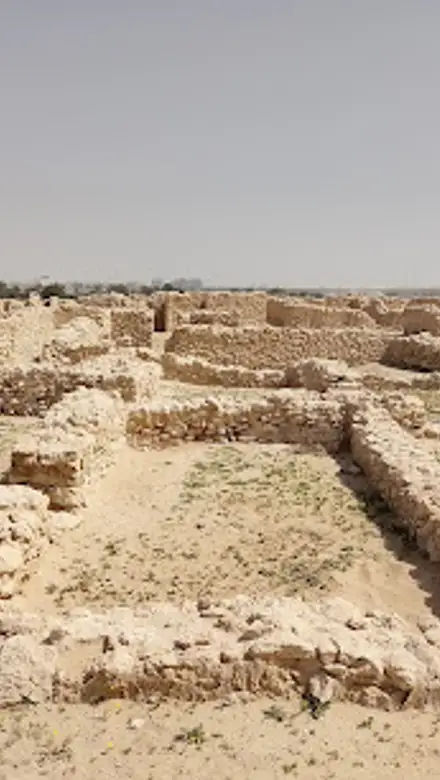
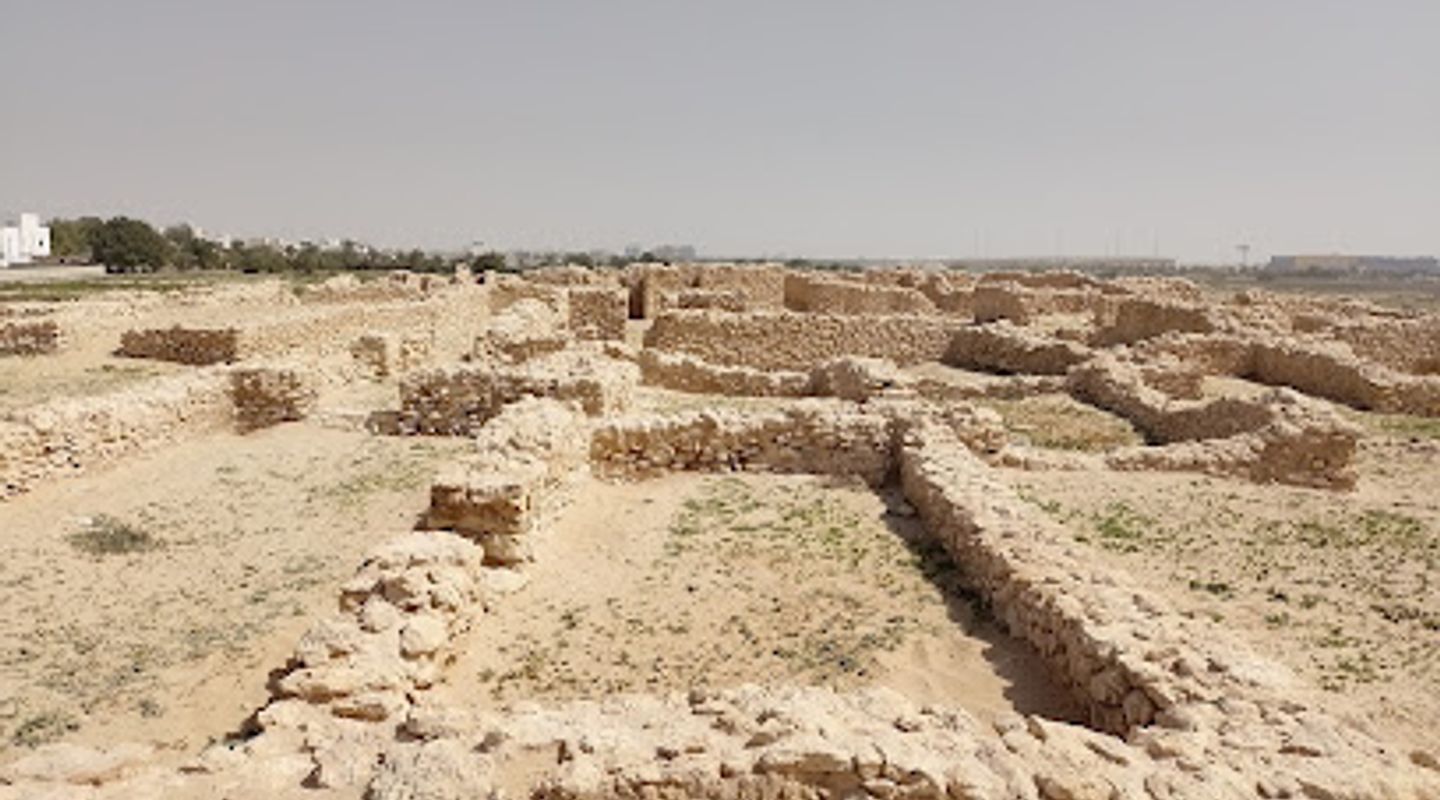
Saar Temple, located in the Northern Governorate of Bahrain, is an archaeological site that unveils the mysteries of the Dilmun civilization, which thrived in the region over 4,000 years ago. The Dilmun civilization was a major trading hub in the ancient world, connecting Mesopotamia, the Indus Valley, and other regions of the Gulf. The civilization thrived on maritime trade, agriculture, and pearl diving, accumulating wealth and influence that extended throughout the region.The Saar settlement was discovered in 1977 and subsequently excavated by archaeological expeditions, most notably the London-Bahrain Archaeological Expedition, which conducted extensive research between 1990 and 1999. These excavations revealed a sophisticated Dilmun town, complete with residential buildings, streets, alleyways, and a central temple complex. The site covers an area of approximately 2.5 hectares and offers a fascinating glimpse into the urban planning and architectural skills of the Dilmun people.The heart of the Saar Temple complex is the temple itself, constructed around 1900 BC. This sacred structure is believed to have played a significant role in the religious practices of the Dilmun civilization. Archaeologists have discovered altars for animal sacrifices and pillars that may have supported divine statues. One of the temple's most intriguing features is a triangular chamber in its corner, which some believe served as an astronomical instrument to measure the position of the sun and mark the summer solstice, potentially indicating its use in determining the Dilmun New Year.Surrounding the temple are the remains of residential buildings, offering a glimpse into the daily lives of the Dilmun people. These structures reveal insights into their domestic activities, social organization, and economic pursuits. Artifacts discovered within the households include pottery, tools, copper fishhooks, bitumen nodules, and shells from shellfish, including pearl oysters, providing evidence of the settlement’s role as a major trading center. The town, which was inhabited for roughly 200 years, consists of dozens of 2-3 room houses lined along a main street that branches into several smaller alleyways.On the southern outskirts of the site lies the town's burial complex. Otherwise known as the honeycomb cemetery for its series of neatly interconnected graves, the millennia-old necropolis was formerly the last resting place for the merchants and their family members who lived less than 500 meters away.
Evendo Review Centre
 Google
Guest reviews
Explore Saar Temple on the map
A handpicked selection of must-see spots near Saar Temple, mapped for you.
Get your free copy of our complete guide to Saar Temple, delivered straight to you.
Everything on this page, from opening hours and how to get there to Eve’s tips and the best time to go, in one PDF you can read offline, print or share.
Already have an account? Sign in
Your Saar Temple guide is ready.
We'll send it to · Not you? Sign out

Getting your guide ready…
We are putting together a fresh copy of the Saar Temple guide. This can take up to a minute.
This can take a few moments. If your browser asks, choose Allow so the download can start. You'll find the guide in your Downloads folder.
Nothing happened? Download it again
Sorry, the guide is taking longer than usual. Please try again in a minute, or get it by email instead.
Other nearby places you may find interesting
The closest places of the same kind, if this one is not quite what you had in mind.
-
-
-
-
-


Swipe for more places
More to explore near Saar Temple

 Best experiences near Saar Temple
 Best hotels near Saar Temple
 Best landmarks near Saar Temple
 Best attractions near Saar Temple
 Best shops near Saar Temple
 Best restaurants near Saar Temple
 Best bars near Saar Temple
Do you manage this location?
Take control to get all the benefits, like improved information, better appearance, and stronger visibility across AI-powered discovery.
Explore more

Explore more of Jebel Dukhan
Explore Jebel Dukhan, Bahrain's highest peak, offering stunning views, rich history, and a serene escape into nature's beauty.
Explore Jebel Dukhan
Explore more of Bahrain
Discover Bahrain, where modernity meets history, from bustling markets to ancient ruins, and from luxurious shopping to serene beaches.
Explore Bahrain