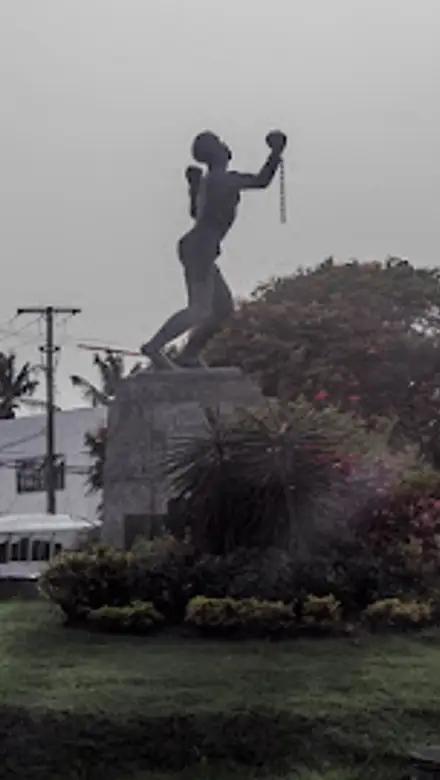
Emancipation Statue (Bussa) Roundabout, Crane Travel Guide
Free Guide: Experience the powerful Emancipation Statue in Bridgetown, Barbados, a tribute to freedom and resilience, capturing the essence of Barbadian history and culture, and honoring national hero Bussa.


A brief summary of Emancipation Statue (Bussa) Roundabout
Experience the powerful Emancipation Statue in Bridgetown, Barbados, a tribute to freedom and resilience, capturing the essence of Barbadian history and culture, and honoring national hero Bussa.
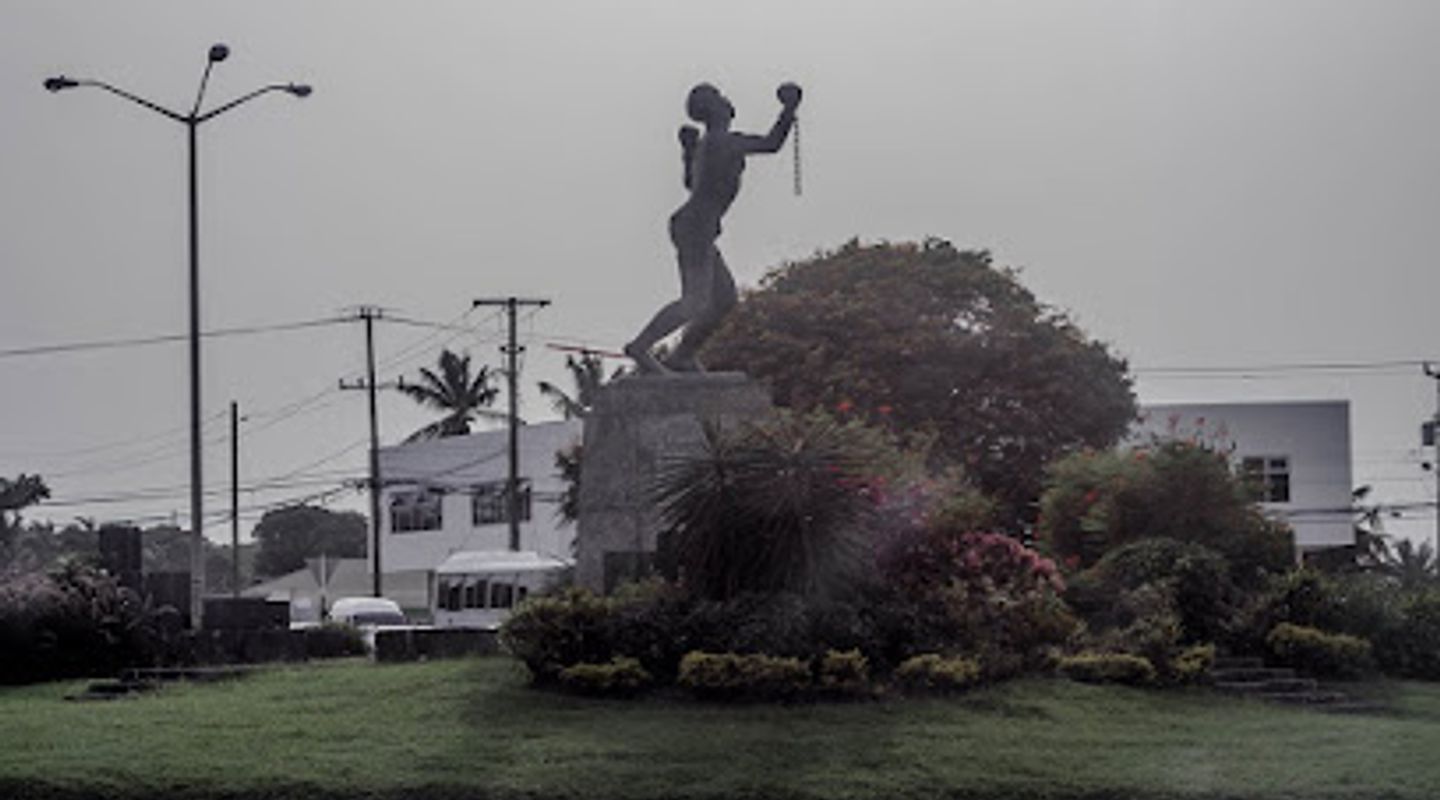
The Emancipation Statue, also known as the Bussa Statue, is a powerful monument located in Bridgetown, Barbados, at the center of the J.T.C. Ramsay roundabout. Created by Barbadian sculptor Karl Broodhagen in 1985, it commemorates the 150th anniversary of emancipation and symbolizes the breaking of the chains of slavery. The bronze statue depicts a figure representing the enslaved people rising up and breaking free, embodying the strength and resilience of those who fought for their freedom. The statue serves as a reminder of Barbados's journey towards equality and justice. Visitors can reflect on the island's history and cultural identity, making it a must-see for those seeking to understand Barbados's past. The surrounding area offers a vibrant atmosphere with local vendors and shops, providing a taste of Barbadian culture.
Opening hours
- Every dayOpen 24 hours
Opening hours as listed on the venue’s Google Business Profile. Hours can change for services and special events, so check with the venue before you go.
- Address
- Bridgetown, Saint Michael Barbados
Getting there
Public Transport
Taxi/Ride-Share
Walking
Discover more about Emancipation Statue (Bussa) Roundabout
Overview
The Emancipation Statue, more commonly known as the Bussa Statue, stands proudly at the Bussa Roundabout in Bridgetown, Barbados, serving as a potent symbol of freedom and the triumph over slavery. This imposing bronze sculpture, created by the esteemed Barbadian-Guyanese artist Karl Broodhagen, was unveiled in 1985 to commemorate the 150th anniversary of emancipation in Barbados. The statue is not specifically sculpted to be Bussa, but it is named after Bussa, a slave who inspired a revolt against the plantocracy society in Barbados in 1816. The statue depicts a figure, representing the collective enslaved people of Barbados, breaking free from chains, a visual representation of the end of slavery. The monument embodies the spirit of resistance, resilience, and the unwavering pursuit of liberty. It is a deeply moving and thought-provoking landmark that resonates with both locals and visitors alike. Located east of Bridgetown at the center of the J.T.C. Ramsay roundabout, where the ABC Highway intersects with Highway 5, the Emancipation Statue is easily accessible and prominently displayed. The roundabout itself is a bustling hub of activity, reflecting the vibrant energy of Bridgetown. The statue's location makes it a focal point for national celebrations, particularly on Emancipation Day (August 1st), when Barbadians gather to commemorate the abolition of slavery and honor Bussa's contribution to the cause. The statue is inscribed on both sides, with one side carrying the words of the chant that thousands of Barbadians hailed when slavery was officially abolished: "Lick an Lock-up Done Wid, Hurray fuh Jin-Jin [Queen Victoria]." The other side features text from the Abolition Act of 1833. These inscriptions serve as historical markers, reminding viewers of the struggles and triumphs associated with the fight for emancipation. Bussa, the man whose name is synonymous with the statue, was a key figure in Barbadian history. He led a major slave rebellion in 1816, known as Bussa's Rebellion, which aimed to overthrow the white planter class. Although the rebellion was ultimately suppressed, it had a significant impact on the historical development of Barbados and solidified Bussa's legacy as a freedom fighter. In 1998, Bussa was officially named one of the ten National Heroes of Barbados, further cementing his place in the nation's collective memory. Visiting the Emancipation Statue offers a unique opportunity to reflect on the history of slavery and its impact on Barbadian society. The monument serves as a powerful reminder of the importance of freedom, equality, and justice. It is a place for contemplation, education, and remembrance. Beyond its historical significance, the Emancipation Statue is also a work of art. Broodhagen's skillful sculpting captures the strength and determination of the figure, conveying a sense of hope and empowerment. The statue's bronze material adds to its imposing presence, ensuring that it stands as a lasting tribute to the struggle for emancipation. While visiting the Emancipation Statue, take the time to explore the surrounding area. Bridgetown offers a wealth of cultural and historical attractions, including the Barbados Museum & Historical Society, St. Michael's Cathedral, and the Garrison Savannah. Engaging with local vendors and sampling Barbadian cuisine can further enrich your experience. The Emancipation Statue is more than just a monument; it is a symbol of the indomitable human spirit and the enduring quest for freedom. It is a place where visitors can connect with the past, reflect on the present, and envision a future where equality and justice prevail. A visit to this iconic landmark is an essential part of any trip to Barbados, offering a profound and unforgettable experience. The Emancipation Statue is open 24 hours a day and is free to visit, making it accessible to all. Whether you are a history enthusiast, an art lover, or simply seeking a meaningful experience, the Emancipation Statue is sure to leave a lasting impression. Consider visiting the statue early in the morning or late in the afternoon to avoid the midday heat and enjoy a quieter atmosphere. Take your time to read the educational plaques nearby to fully appreciate the historical significance of the statue. And don't forget to bring your camera to capture the stunning monument against the backdrop of the vibrant Bridgetown streets.
Evendo Review Centre
 Google
Guest reviews
Explore Emancipation Statue (Bussa) Roundabout on the map
A handpicked selection of must-see spots near Emancipation Statue (Bussa) Roundabout, mapped for you.
Get your free copy of our complete guide to Emancipation Statue (Bussa) Roundabout, delivered straight to you.
Everything on this page, from opening hours and how to get there to Eve’s tips and the best time to go, in one PDF you can read offline, print or share.
Already have an account? Sign in
Your Emancipation Statue (Bussa) Roundabout guide is ready.
We'll send it to · Not you? Sign out

Getting your guide ready…
We are putting together a fresh copy of the Emancipation Statue (Bussa) Roundabout guide. This can take up to a minute.
This can take a few moments. If your browser asks, choose Allow so the download can start. You'll find the guide in your Downloads folder.
Nothing happened? Download it again
Sorry, the guide is taking longer than usual. Please try again in a minute, or get it by email instead.
Other nearby places you may find interesting
The closest places of the same kind, if this one is not quite what you had in mind.
-
-

-
-
-


Swipe for more places
More to explore near Emancipation Statue (Bussa) Roundabout
-
 Best experiences near Emancipation Statue (Bussa) Roundabout
-
 Best hotels near Emancipation Statue (Bussa) Roundabout
-
 Best landmarks near Emancipation Statue (Bussa) Roundabout
-
 Best attractions near Emancipation Statue (Bussa) Roundabout
-
 Best shops near Emancipation Statue (Bussa) Roundabout
-
 Best restaurants near Emancipation Statue (Bussa) Roundabout
-
 Best bars near Emancipation Statue (Bussa) Roundabout


Do you manage this location?
Take control to get all the benefits, like improved information, better appearance, and stronger visibility across AI-powered discovery.
Explore more

Explore more of Crane
Discover Crane, Barbados: a picturesque coastal village with world-class beaches, historic landmarks, and natural beauty, perfect for a relaxing and adventurous getaway.
Explore Crane
Explore more of Barbados
Discover Barbados: Pristine beaches, rich history, and vibrant culture await in this Caribbean paradise. Perfect for adventure, relaxation, and culinary delights.
Explore Barbados