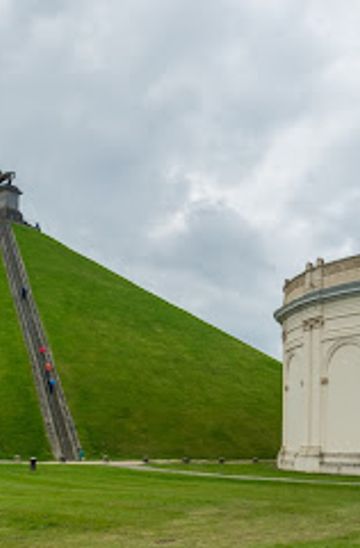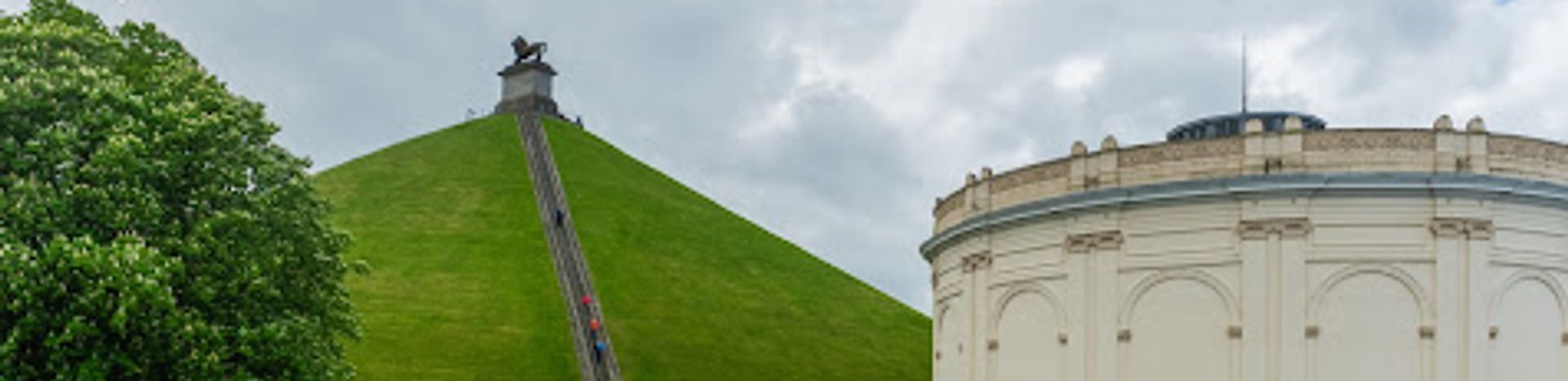
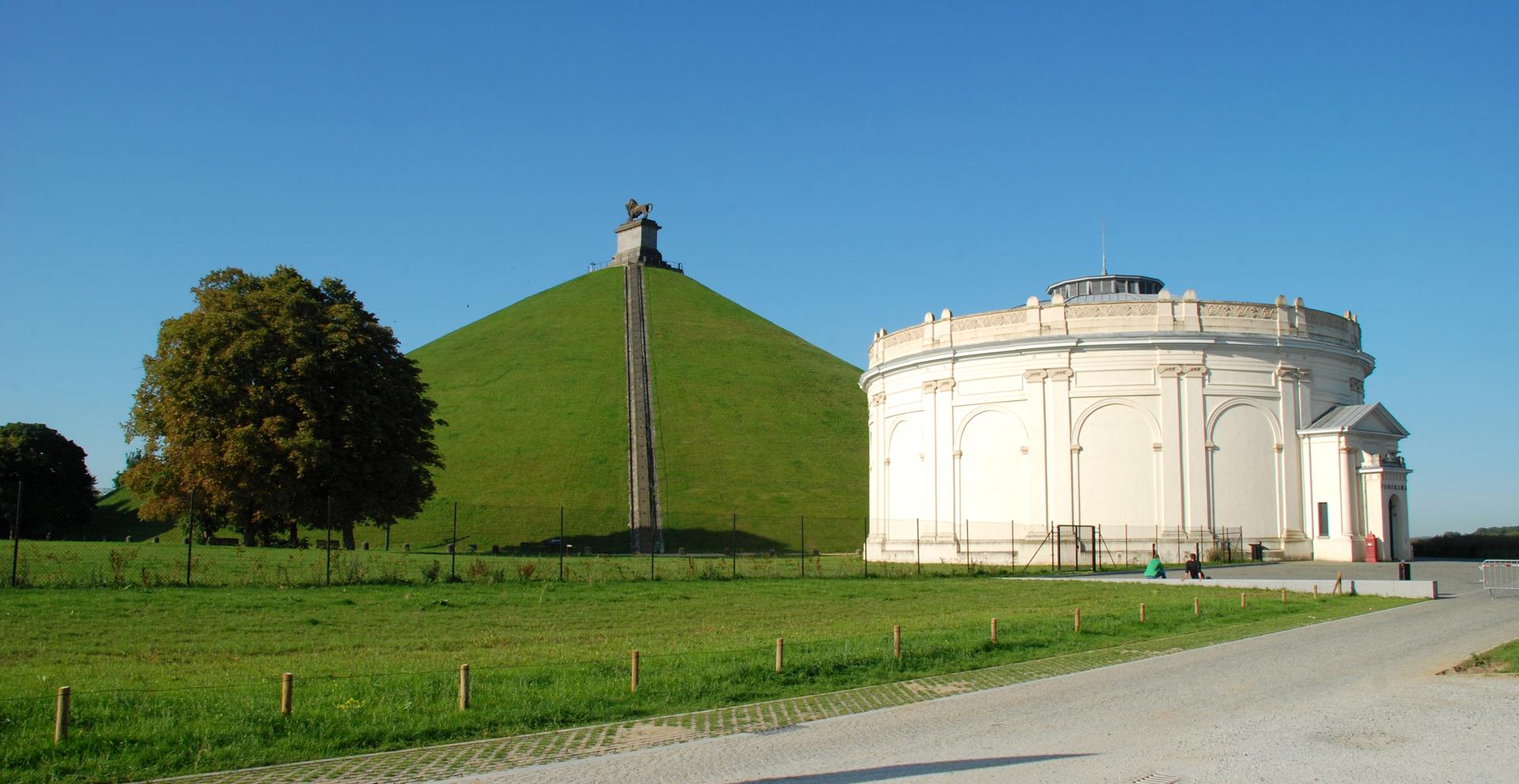
The Majestic Lion's Mound: A Tribute to History
Explore the Lion's Mound: A Historical Landmark and Scenic Viewpoint Commemorating the Battle of Waterloo.
Discover the Lion's Mound, a symbol of the historic Battle of Waterloo, with its breathtaking views and rich history. Perfect for history enthusiasts and nature lovers alike.
A brief summary to Lion's Mound
- Rte du Lion 1815, Braine-l'Alleud, 1420, BE
- Click to display
- Click to display
- Monday 9:30 am-7:30 pm
- Tuesday 9:30 am-7:30 pm
- Wednesday 9:30 am-7:30 pm
- Thursday 9:30 am-7:30 pm
- Friday 9:30 am-7:30 pm
- Saturday 9:30 am-7:30 pm
- Sunday 9:30 am-7:30 pm

Know before you go
Hi, I'm Eve. Here are a few practical things to know before exploring Lion's Mound.
- Visit early in the morning or late in the afternoon to avoid crowds and enjoy a quieter experience.
- Don’t forget your camera; the views from the top are breathtaking and perfect for photos.
- Check the weather in advance, as visibility can greatly enhance your experience at the viewpoint.
- Take your time to explore the visitor center for a deeper understanding of the Battle of Waterloo.
- Wear comfortable shoes, as you will be walking uphill and exploring the surrounding area.
Do you manage this location?
Take control to get all the benefits, like improved information, better appearance, and stronger visibility across AI-powered discovery. Learn more
Activate your presence
Getting There
-
Car
If you are driving, start on the E19 motorway towards Brussels. Take exit 24 towards Waterloo and follow the signs for N5 towards Braine-l'Alleud. Continue on N5 until you reach the roundabout. At the roundabout, take the first exit onto Rte du Lion 1815. Lion's Mound will be on your left. There is parking available near the site, but be aware that there may be a parking fee.
-
Public Transportation (Train)
Take a train from Brussels Central Station to Braine-l'Alleud station, which is approximately a 20-minute journey. Once you arrive at Braine-l'Alleud station, exit the station and walk towards the main road (Rue de la Station). From there, you can catch bus number 130 or 132 towards Waterloo. Get off at the 'Lion's Mound' stop. The bus ride takes about 10 minutes. Ensure you have a ticket before boarding, which can be purchased at the station or via the TEC app.
-
Public Transportation (Bus)
If you are in nearby towns, you can take a bus to Braine-l'Alleud. The TEC network operates various lines that connect to the area. Check the TEC website for the best route from your location. Once you arrive at Braine-l'Alleud, walk or take a short bus ride to Lion's Mound. Make sure to check the bus schedules for any changes or updates in services.
Discover more about Lion's Mound
Explore the best of what Lion's Mound has to offer













More about Walloon Brabant
Discover Walloon Brabant: A blend of history, nature, and culture in the heart of Belgium, perfect for history buffs, nature enthusiasts, and culture seekers.
Tell me more about Walloon Brabant
Discover Château de La Hulpe and the Solvay Estate: A blend of history, nature, and art in the heart of Wallonia, Belgium.

Visit the iconic Waterloo Battlefield, where history was made during Napoleon's final stand in 1815, and explore the rich heritage of this historic landmark.