

Chapada dos Guimarães National Park Travel Guide - Free Web & App
Your ultimate guide to Chapada dos Guimarães National Park. Discover top landmarks, proposed trips, and local tips. Free on the web or via the Evendo companion app.


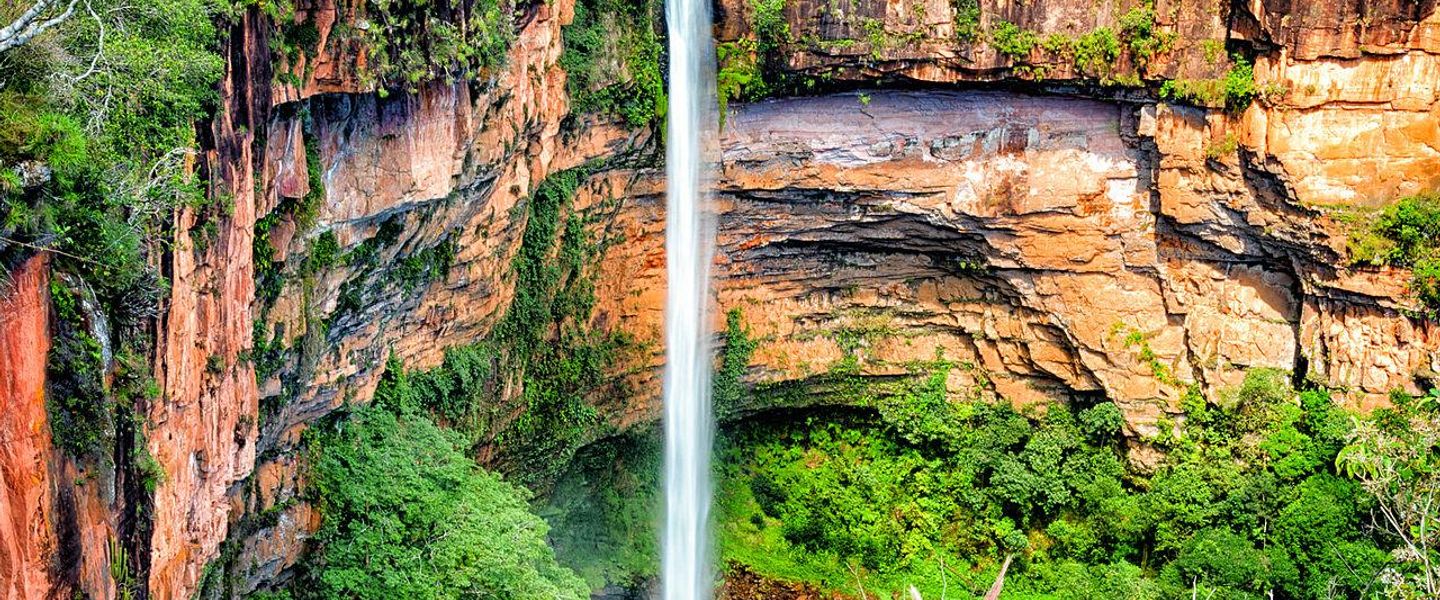


Chapada dos Guimarães National Park in Brazil pairs Cerrado cliffs, waterfalls, caves and guided hikes with distinctive geology near Cuiabá.
Sandstone Landscapes Above the Cerrado
Chapada dos Guimarães National Park occupies a dramatic upland in Mato Grosso, in Brazil's central-western interior, roughly east of Cuiabá. Its tablelands, escarpments and deeply eroded valleys form part of the Cerrado, a vast tropical savanna shaped by seasonal rain, fire and striking geological contrasts. Red and golden sandstone cliffs rise above gallery forests, grasslands and ravines, while waterfalls descend from the plateau during the wetter months. The park itself covers a broad protected landscape, but many visits are organised from the neighbouring town of Chapada dos Guimarães, whose hotels, restaurants and local guides provide the principal visitor base.Read more about Chapada dos Guimarães National Park
Waterfalls, Canyons and High Viewpoints
A Living Cultural Landscape
When is the best time to visit Chapada dos Guimarães National Park?
Best: October–December · 32°C| Month | High (°C) | Rainfall (mm) |
|---|---|---|
| January | 32 | 210 |
| February | 32 | 200 |
| March | 32 | 191 |
| April | 31 | 181 |
| May | 30 | 170 |
| June | 29 | 160 |
| July | 30 | 151 |
| August | 31 | 140 |
| September | 32 | 130 |
| October (best) | 32 | 120 |
| November (best) | 32 | 110 |
| December (best) | 32 | 101 |
Getting to and around Chapada dos Guimarães National Park
How to get there
Transportation
Best attractions in Chapada dos Guimarães National Park
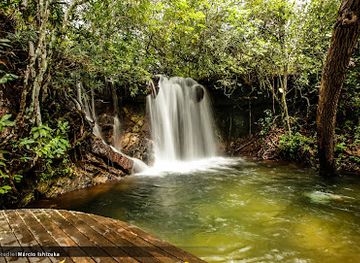
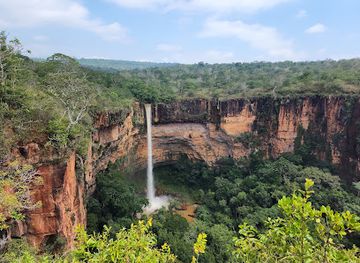
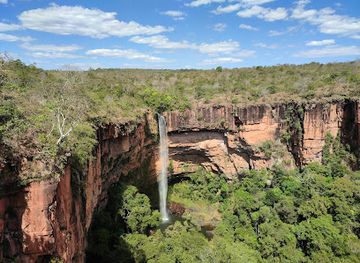
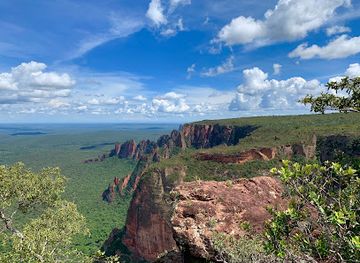
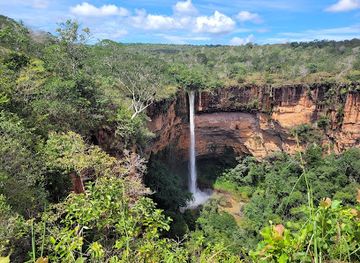
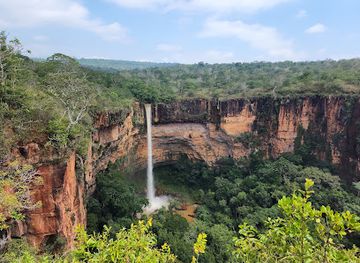
Chapada dos Guimarães National Park is best explored as a collection of distinct landscapes rather than a single loop. Véu de Noiva Waterfall is the signature sight, where the Coxipó River falls from the sandstone plateau into a broad green valley. The Portão do Inferno viewpoint, reached from the MT-251, looks into a deeply incised ravine and is one of the area's most recognisable roadside scenes. Within the protected landscape, Cidade de Pedras reveals wind- and water-shaped sandstone towers above open Cerrado, while Morro de São Jerônimo provides a demanding walking objective and wide upland views. The Circuito das Cachoeiras links a series of waterfalls and forested watercourses when access conditions permit. Rock shelters, caves, eroded walls and smaller viewpoints add geological and archaeological interest, but several locations require advance checking, authorised access or a local guide.
-
Tourist attraction
Complexo Turístico Balneário Salgadeira
Discover crystal-clear waters, scenic trails, and family fun at this revitalized natural attraction between Cuiabá and Chapada dos Guimarães.
-
Tourist attraction
Cachoeira Véu de Noiva
Witness the splendor of Chapada dos Guimarães at the iconic Cachoeira Véu de Noiva, a breathtaking waterfall framed by dramatic cliffs.
-
Tourist attraction
Valentine's waterfall
Discover the serene beauty of Valentine's Waterfall in Chapada dos Guimarães, a natural paradise offering stunning cascades and tranquil pools amidst Brazil's cerrado.
-
Tourist attraction
Cachoeira Cristal MT - Chapada Dos Guimarães/MT
Discover the emerald waters of Cachoeira Cristal in Chapada dos Guimarães, a pristine paradise for nature lovers seeking tranquility and beauty.
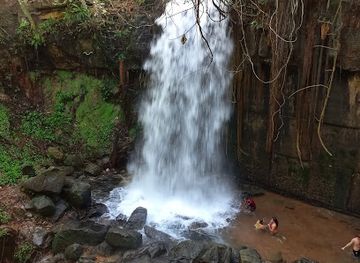
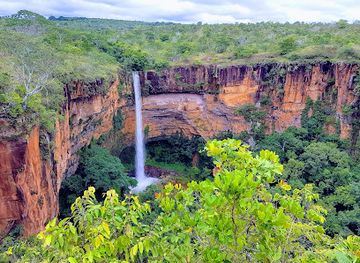
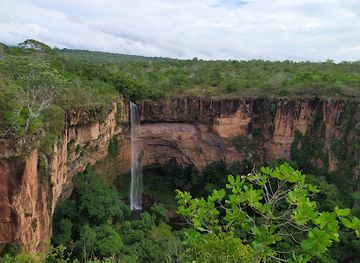
Best landmarks in Chapada dos Guimarães National Park
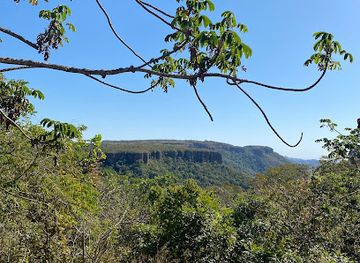
The defining landmarks of Chapada dos Guimarães are geological as much as architectural. The sandstone escarpments and pinnacles of Cidade de Pedras form a natural skyline above the Cerrado, while Morro de São Jerônimo marks the plateau with a prominent summit reached by a challenging trail. Véu de Noiva Waterfall is both a scenic landmark and an expression of the Coxipó River's descent from the uplands. At Portão do Inferno, the MT-251 passes a dramatic gorge cut into the plateau, creating one of the region's most familiar viewpoints. Rock shelters, caves and archaeological locations add evidence of long human engagement with the landscape. The historic town of Chapada dos Guimarães, including its religious and rural heritage, complements these natural features, although individual sites and routes should be checked for current protection and access arrangements.
-
Tourist attraction
Cachoeira Véu de Noiva
Experience the tranquil beauty of Cachoeira Véu de Noiva, an enchanting waterfall in Chapada dos Guimarães, Mato Grosso, perfect for nature lovers and adventure seekers.
-
Tourist attraction
Stone City
Explore Stone City in Chapada dos Guimarães: a breathtaking landscape of sculpted rocks and natural beauty.
-
Tourist attraction
Cachoeira do Pulo
Explore Cachoeira do Pulo, a breathtaking waterfall in Chapada dos Guimarães, Brazil, surrounded by lush landscapes and vibrant ecosystems.
-
Tourist attraction
Cachoeira da Prainha
Discover Cachoeira da Prainha in Chapada dos Guimarães: a serene waterfall with refreshing pools, perfect for nature lovers and adventurers alike.


Explore Chapada dos Guimarães National Park on the map
Plan your trip on one map. See where the top attractions, landmarks, restaurants and hotels are, and book hotels and experiences in a few clicks.
Best hotels in Chapada dos Guimarães National Park
Best restaurants in Chapada dos Guimarães National Park
Dining is concentrated in Chapada dos Guimarães town rather than inside the national park, where visitors should not expect a network of cafés or restaurants between attractions. Local restaurants, simple eateries, cafés and pousada kitchens commonly draw on the food traditions of Mato Grosso, including freshwater fish such as pacu and preparations associated with the region's rivers and ranching culture. Ingredients and dishes may also reflect the Cerrado, with products such as pequi appearing seasonally or according to the establishment. Cuiabá offers a broader choice of regional and Brazilian cooking before or after a park visit. Because excursions can last several hours and facilities are dispersed, carrying water and packed food is practical, while visitors should confirm whether a remote attraction has any permitted refreshment service rather than relying on it.
-
Inn
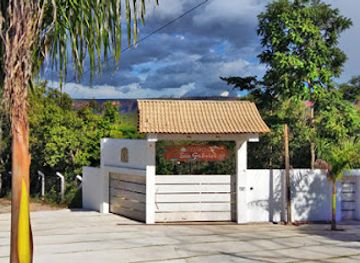
Pousada e Restaurante São Gabriel - Chapada dos Guimarães MT
Experience tranquility and local cuisine at Pousada e Restaurante São Gabriel in stunning Chapada dos Guimarães.
-
Restaurant
Restaurante Véu De Noiva
Discover the flavors of Brazil at Restaurante Véu De Noiva, nestled in the scenic Chapada dos Guimarães with stunning views and delightful local cuisine.
Best bars in Chapada dos Guimarães National Park
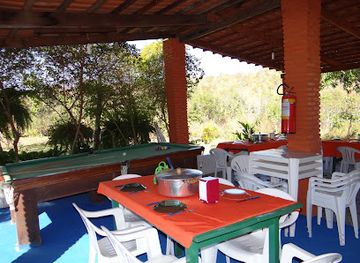
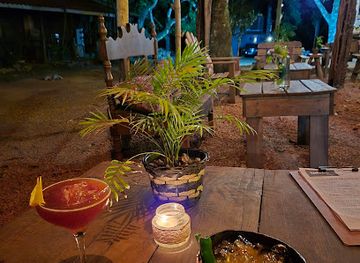
Evenings in Chapada dos Guimarães are generally quiet and centred on restaurants, cafés, pousadas and informal bars in the town rather than purpose-built nightlife. Visitors may find relaxed places for a beer, regional drink or conversation, with activity varying by season, weekends and local events. The park itself has no nightlife infrastructure, and its viewpoints and trails should be treated as daytime destinations because darkness, uneven ground and limited services complicate access. Cuiabá, outside the destination and its immediate rural landscape, provides a considerably broader choice of bars, music venues and late-night entertainment. In Chapada dos Guimarães, the evening atmosphere is more closely connected with local hospitality, food and clear-sky views than with clubs or a concentrated entertainment district.
-
Pastel
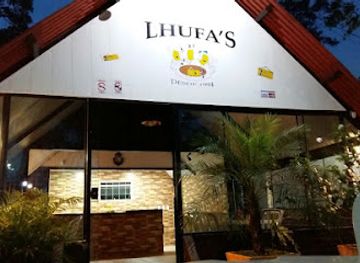
Lhufas Pastelaria - Desde 1994
Discover the authentic taste of Brazil at Lhufas Pastelaria, where delicious pastéis and a welcoming atmosphere await in Chapada dos Guimarães.
-
Bar
Paraíso das Águas antigo Bar do Paulão
Explore Paraíso das Águas antigo Bar do Paulão, where stunning views meet a vibrant atmosphere for the perfect getaway in Cuiabá.
-
Bar
Espaço Aldeia Velha
Experience the essence of Brazil at Espaço Aldeia Velha, a charming bar and guest house nestled in the stunning Chapada dos Guimarães.
-
Restaurant
João Pedro Botelho Restaurante
Discover authentic Brazilian cuisine at João Pedro Botelho Restaurante in Chapada dos Guimarães, where flavors meet breathtaking landscapes.
Best nightclubs in Chapada dos Guimarães National Park
Evenings in Chapada dos Guimarães are generally quiet and centred on restaurants, cafés, pousadas and informal bars in the town rather than purpose-built nightlife. Visitors may find relaxed places for a beer, regional drink or conversation, with activity varying by season, weekends and local events. The park itself has no nightlife infrastructure, and its viewpoints and trails should be treated as daytime destinations because darkness, uneven ground and limited services complicate access. Cuiabá, outside the destination and its immediate rural landscape, provides a considerably broader choice of bars, music venues and late-night entertainment. In Chapada dos Guimarães, the evening atmosphere is more closely connected with local hospitality, food and clear-sky views than with clubs or a concentrated entertainment district.
-
National park
Chapada dos Guimarães National Park
Discover the stunning landscapes and vibrant ecosystems of Chapada dos Guimarães National Park, a paradise for nature lovers and adventure seekers in Brazil.
-
Tourist attraction
Cachoeira Véu de Noiva
Discover the breathtaking Cachoeira Véu de Noiva in Chapada dos Guimarães, where nature’s beauty unfolds in stunning waterfalls and lush landscapes.
-
Tourist attraction
Stone City
Explore the breathtaking vistas and unique rock formations of Stone City in Chapada dos Guimarães, a must-see destination for nature lovers and adventurers.
-
Hiking area
Circuito das Cachoeiras
Explore Circuito das Cachoeiras, a breathtaking hiking area in Chapada dos Guimarães, where stunning waterfalls and lush landscapes await.
Best shops in Chapada dos Guimarães National Park
Shopping opportunities are modest and concentrated in Chapada dos Guimarães town, with everyday supplies, food products, small craft outlets and locally made souvenirs available rather than an extensive retail district. Visitors may encounter regional produce, handmade items, artwork and goods inspired by the Cerrado and Mato Grosso, although stock and opening patterns vary between businesses. Farm shops and small producers in the wider countryside can offer local food products when open to visitors, while Cuiabá provides a broader choice of supermarkets, specialist shops and regional goods. A useful approach is to buy water, snacks, sun protection and other walking essentials before entering the park area, since the viewpoints and trailheads are dispersed and should not be treated as shopping locations.
-
National park
Chapada dos Guimarães National Park
Discover the breathtaking beauty and diverse wildlife of Chapada dos Guimarães National Park, a jewel of Brazil's natural heritage.
-
Natural goods store
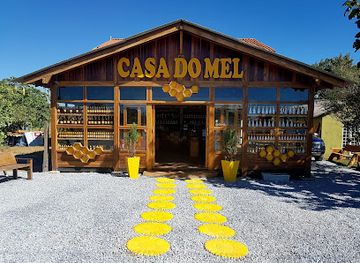
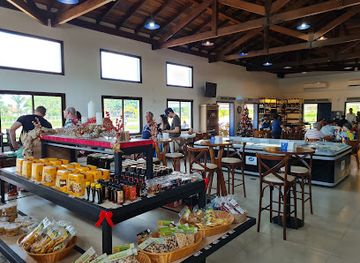
Casa Do Mel chapada
Explore Casa Do Mel Chapada, a haven for natural goods and honey lovers in the breathtaking Chapada dos Guimarães region.
-
Restaurant
Empório Guimarães
Discover the flavors of Brazil at Empório Guimarães, a unique gourmet grocery store and restaurant in Chapada dos Guimarães offering artisanal cheeses and spices.
-
Furniture store
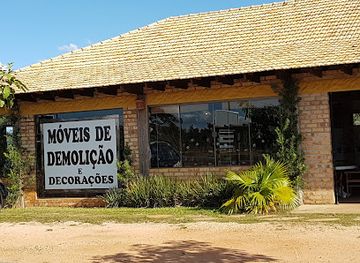
Casa Do Cerrado - Móveis Rústicos e Decorações
Explore Casa Do Cerrado, the charming furniture store in Chapada dos Guimarães, where rustic elegance meets Brazilian artistry.
Get your free copy of our complete guide to Chapada dos Guimarães National Park, delivered straight to you.
Everything on this page, from attractions and restaurants to essentials and local phrases, in one PDF you can read offline, print or share.
Already have an account? Sign in
Your Chapada dos Guimarães National Park guide is ready.
We'll send it to · Not you? Sign out

Getting your guide ready…
We are putting together a fresh copy of the Chapada dos Guimarães National Park guide. This can take up to a minute.
This can take a few moments. If your browser asks, choose Allow so the download can start. You'll find the guide in your Downloads folder.
Nothing happened? Download it again
Sorry, the guide is taking longer than usual. Please try again in a minute, or get it by email instead.
Chapada dos Guimarães National Park essentials
Currency and Payment
Safety
Emergency Situations
Do's and Don'ts
Local Tips
From Eve
Local phrases worth knowing
You don't need to get them perfect. A few words go a long way, and locals appreciate the effort.
Basics
| English | Local | Say it |
|---|---|---|
| Hello | Olá | [oh-LAH] |
| Goodbye | Adeus | [ah-DAY-oos] |
| Yes | Sim | [seem] |
| No | Não | [nah-oh] |
| Please/You're welcome | Por favor/De nada | [pohr fah-VOHR/deh NAH-dah] |
| Thank you | Obrigado | [oh-bree-GAH-doo] |
| Excuse me/Sorry | Com licença/Desculpe | [kohm lee-SEN-sah/dehs-KOOL-peh] |
| How are you? | Como você está? | [KOH-moh voh-SEY ehs-TAH] |
| Fine. And you? | Bem. E você? | [behn/eh voh-SEY] |
| Do you speak English? | Você fala inglês? | [voh-SEY FAH-lah een-GLEHSH] |
| I don't understand | Eu não entendo | [eh-oo nah-oh ehn-TEN-doo] |
Eating & Drinking
| English | Local | Say it |
|---|---|---|
| I'd like to see the menu, please | Eu gostaria de ver o cardápio, por favor | [eh-oo goh-stah-REE-ah deh vehr ooh kahr-DAH-pyoo/por fah-VOHR] |
| I don't eat meat | Eu não como carne | [eh-oo nah-oh KOH-moo KAHN-ey] |
| Cheers! | Saúde! | [sow-DEY] |
| I would like to pay, please | Eu gostaria de pagar, por favor | [eh-oo goh-stah-REE-ah deh pah-GAHR/por fah-VOHR] |
Emergencies
| English | Local | Say it |
|---|---|---|
| Help! | Ajuda! | [ah-ZHOO-dah] |
| Go away! | Vá embora! | [vah ehm-BOH-rah] |
| Call the Police! | Chame a polícia! | [SHAH-mey ah poh-LEE-see-ah] |
| Call a doctor! | Chame um médico! | [SHAH-mey oom MEH-dee-koo] |
| I'm lost | Estou perdido | [es-TOH pehr-DEE-doo] |
| I'm ill | Estou doente | [es-TOH doo-EN-tey] |
Shopping
| English | Local | Say it |
|---|---|---|
| I'd like to buy... | Eu gostaria de comprar... | [eh-oo goh-stah-REE-ah deh kohm-PRAR] |
| I'm just looking | Estou só olhando | [es-TOH soh oh-LYAN-doo] |
| How much is it? | Quanto custa? | [KWAN-too KOOS-tah] |
| That's too expensive | Isso é muito caro | [EE-soh eh MOO-ee-tooh KAH-roo] |
| Can you lower the price? | Você pode baixar o preço? | [voh-SEY POH-dey BAHY-shahr oh PREH-soh] |
Time & Numbers
| English | Local | Say it |
|---|---|---|
| What time is it? | Que horas são? | [key OR-ahs sah-oo] |
| It's one o'clock | É uma hora | [eh OO-mah OR-ah] |
| Half past (10) | Meio-dia e meia (10) | [MEY-oo JEE-ah e M-EY-ah (10)] |
| Morning | Manhã | [mah-NYAH] |
| Afternoon | Tarde | [TAHR-deh] |
| Evening | Noite | [NOY-tey] |
| Yesterday | Ontem | [ohn-TEYN] |
| Today | Hoje | [OH-zhey] |
| Tomorrow | Amanhã | [ah-mahn-YAH] |
| 1 | Um | [oom] |
| 2 | Dois | [doysh] |
| 3 | Três | [tresh] |
| 4 | Quatro | [KWAH-troh] |
| 5 | Cinco | [SEEN-koh] |
| 6 | Seis | [says] |
| 7 | Sete | [SEH-tey] |
| 8 | Oito | [OY-too] |
| 9 | Nove | [NOH-vey] |
| 10 | Dez | [deyz] |
Transport & Directions
| English | Local | Say it |
|---|---|---|
| Where's a/the...? | Onde fica...? | [ON-deh FEE-kah] |
| What's the address? | Qual é o endereço? | [kwahl eh oh en-DEH-reh-soh] |
| Can you show me (on the map)? | Você pode me mostrar (no mapa)? | [voh-SEY POH-dey mey moh-SHTRAR (noh MAH-pah)] |
| When's the next (bus)? | Quando é o próximo (ônibus)? | [KWAHN-doo eh oh PROH-ksih-moh (OH-nee-boos)] |
| A ticket (to ....) | Um bilhete (para ....) | [oom beel-YEH-tey (PAH-rah)] |
History of Chapada dos Guimarães National Park
An Ancient Sandstone Plateau
The landscapes of Chapada dos Guimarães were shaped over immense geological periods by the deposition, uplift and erosion of sandstone and related sedimentary rocks. Rain, runoff and the seasonal climate gradually carved ravines, escarpments, isolated pillars and broad valleys into the plateau. These processes explain the area's caves, rock shelters, natural walls and abrupt viewpoints, while the Cerrado vegetation reflects the distinctive soils and water patterns of Brazil's central uplands. Geological features remain one of the principal reasons the national park was created and continue to determine where trails, waterfalls and viewpoints are found.
Indigenous Presence and Rock Art
The plateau and surrounding valleys have long been used by Indigenous peoples, with archaeological evidence in the wider Chapada dos Guimarães region including rock shelters and rock art. Such sites record travel, occupation and cultural engagement with a landscape of seasonal watercourses, open savanna and forested ravines. The region is associated with the Bororo and other Indigenous histories of central Mato Grosso, although archaeological interpretation should be treated carefully rather than reduced to a single narrative. Rock art and archaeological locations are fragile, and their protection is part of the park's cultural as well as environmental purpose.
Colonial Routes and Settlement
European exploration and settlement expanded through Mato Grosso during the colonial period as expeditions, mining interests and routes into the interior connected the region with wider Portuguese America. Chapada dos Guimarães developed as a settled community linked to religious, agricultural and pastoral activity, while Cuiabá became an important regional centre. The area's old routes followed the practical geography of the plateau, valleys and watercourses. Although much of the modern visitor experience is focused on nature, the town and surrounding countryside retain reminders of a rural settlement history that predates the national park.
From Working Landscape to Protected Area
For much of its modern history, the plateau was part of a working landscape shaped by ranching, farming, roads and the gradual growth of Chapada dos Guimarães as a regional town. The economic value of the land increasingly had to be considered alongside its geological formations, waterfalls, vegetation and archaeological heritage. Chapada dos Guimarães National Park was established in 1989 to protect this combination of natural and cultural resources. The designation placed restrictions and management responsibilities around sensitive environments while preserving a large landscape for research, conservation and controlled visitation.
Conservation and Contemporary Visitation
Today the park is managed within Brazil's federal protected-area system, with visitor access shaped by environmental protection, road conditions, weather and local management arrangements. Tourism has expanded around scenic roads, viewpoints, guided hikes and waterfall circuits, particularly from Chapada dos Guimarães and Cuiabá. Conservation challenges include fire in the Cerrado, erosion on heavily used paths, protection of archaeological sites and the need to manage access to cliffs and waterways. The modern history of the destination is therefore closely tied to balancing public enjoyment with the long-term care of a vulnerable plateau landscape.
Chapada dos Guimarães National Park in Photos
Browse through our photo collection highlighting the charm and character of the destination.
Neighbouring destination travel guides
The closest destinations to Chapada dos Guimarães National Park, if you have time for more than one.
-

-

-

-

-


Swipe for more destinations
Explore more

Explore more of Chapada dos Guimarães
Discover the breathtaking beauty of Chapada dos Guimarães, a Brazilian national park known for its stunning cliffs, waterfalls, and rich biodiversity.
Explore Chapada dos Guimarães
Explore more of Brazil
Discover Brazil: a land of samba, stunning landscapes, and rich history. From the Amazon to Rio, explore diverse cultures, world-class cuisine, and vibrant festivals.
Explore Brazil