

Free Ziniaré Travel Guide & Mobile App
Plan your Ziniaré trip with Evendo. Get free guides to top attractions, restaurants, hotels, and bars. Web access or download the mobile app.


Ziniaré, Burkina Faso, reveals Mossi heritage, Sahelian landscapes, sculpture traditions and a quieter gateway to cultural sites north of Ouagadougou.
A Gateway to the Mossi Plateau
Ziniaré is a modest regional town about 35 kilometres north-east of Ouagadougou and the capital of Oubritenga Province. Set in Burkina Faso’s central plateau, it offers a slower, more local perspective on the country than the national capital, with red-earth roads, broad savannah horizons and the everyday rhythms of Mossi life. The town is also associated with Burkina Faso’s political history through its connection with former president Blaise Compaoré, who came from the area.Read more about Ziniaré
Local Life and Cultural Landscapes
Sculpture, Wildlife and the Wider Region
When is the best time to visit Ziniaré?
Best: December–February · 31–36°C| Month | High (°C) | Rainfall (mm) |
|---|---|---|
| January (best) | 31 | 0 |
| February (best) | 36 | 0 |
| March | 40 | 0 |
| April | 42 | 0 |
| May | 40 | 70 |
| June | 38 | 115 |
| July | 37 | 214 |
| August | 37 | 238 |
| September | 39 | 169 |
| October | 40 | 43 |
| November | 36 | 0 |
| December (best) | 32 | 0 |
Getting to and around Ziniaré
How to get there
Transportation
Best attractions in Ziniaré
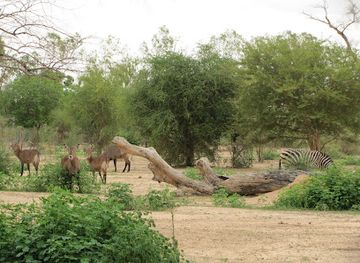
Ziniaré’s attractions are modest in scale but closely connected with the town’s regional identity. The central market is the most immediate place to observe commerce, seasonal produce, fabrics and household goods, while surrounding streets reveal the practical rhythms of a Mossi plateau town. The Parc animalier de Ziniaré has historically been the area’s best-known visitor attraction, with wildlife enclosures and landscaped grounds, although its current condition and public access should be checked locally. The town also provides a base for travelling towards Laongo, outside Ziniaré, where large granite boulders form the setting for an open-air sculpture site created through an international symposium. Nearby villages and cultivated savannah offer a quieter view of central Burkina Faso, but should be visited with trusted local guidance because road and security conditions can change. Religious buildings, market activity and provincial institutions complete the town’s sightseeing interest.
-
Animal park
Parc Animalier de Ziniaré
Discover diverse wildlife and immersive nature experiences at Parc Animalier de Ziniaré in Burkina Faso, a perfect family-friendly destination.
9 min drive · 3.1 km from city centre
-
Church of Christ
Paroisse de Guiloungou
Explore the serene Paroisse de Guiloungou in Ziniare, a charming Church of Christ steeped in local culture and spirituality.
16 min walk · 1.2 km from city centre
-
Natural history museum
Musée de l'eau
Explore the vital role of water in our ecosystem at the Musée de l'eau in Loumbila, a perfect destination for nature enthusiasts and curious travelers.
37 min drive · 17 km from city centre


Best landmarks in Ziniaré
The physical landmarks of Ziniaré are principally civic, religious and regional rather than monumental. The central market reflects the town’s role as a commercial point for Oubritenga Province, with its stalls and circulation routes providing a visible expression of local economic life. Provincial administrative buildings and the main civic spaces represent Ziniaré’s status as a regional capital, while mosques and churches reflect the religious diversity of the surrounding communities. The Parc animalier de Ziniaré is the town’s best-known named site, although its present facilities should be verified before visiting. Outside the town, the Laongo Sculpture Symposium is a significant cultural landmark in the wider region: granite outcrops have been transformed into monumental works by artists from Burkina Faso and other countries. Laongo is not a city-centre attraction, but its setting gives the surrounding plateau a distinctive artistic dimension.
-
Exhibit
Sculptures de Laongo
Discover the captivating granite sculptures of Laongo, an open-air museum showcasing African artistry and cultural heritage near Ouagadougou, Burkina Faso.
12 min walk · 0.9 km from city centre
-
Animal park
Parc Animalier de Ziniaré
Discover the magic of wildlife at Parc Animalier de Ziniaré, a serene animal park perfect for family outings and nature lovers in Burkina Faso.
9 min drive · 3.1 km from city centre
-
Church of Christ
Paroisse de Guiloungou
Discover the serene Paroisse de Guiloungou in Ziniare, a charming Church of Christ steeped in local culture and spirituality.
16 min walk · 1.2 km from city centre
-
Gym
Stade Municipale De Ziniaré
Discover the vibrant community and fitness culture at Stade Municipale De Ziniaré, a premier gym in Ziniare for both locals and tourists.
5 min drive · 1.5 km from city centre


Explore Ziniaré on the map
Plan your Ziniaré trip on one map. See where the top attractions, landmarks, restaurants, bars and hotels are, find what's near where you're staying, and book hotels and experiences in a few clicks.
Best hotels in Ziniaré
Best restaurants in Ziniaré
Dining in Ziniaré is primarily local, informal and modest in scale, with small restaurants, market stalls and roadside vendors serving filling dishes shaped by Burkina Faso’s Sahelian and West African food traditions. Tô, a firm millet or maize staple eaten with sauces, is widely associated with everyday meals, while riz gras, rice cooked with vegetables and seasoning, is common at casual eateries. Grilled chicken, often called poulet bicyclette, may appear alongside beans, rice, spicy sauces and seasonal vegetables. Street sellers offer snacks such as beignets, and sweet tea is part of the social rhythm in many places. Dolo, a traditional fermented millet drink, has cultural importance in parts of Burkina Faso, though availability and local customs vary. Dining choices are generally more limited than in Ouagadougou, and visitors should favour busy premises, eat food served hot and carry drinking water.
-
Restaurant
Jardin Du Maire De ZINIARE
Experience authentic Burkinabé flavors at Jardin Du Maire De ZINIARE in Ziniare - where delicious meals meet a vibrant atmosphere.
15 min walk · 1.2 km from city centre
-
African
Palais des Grillades de Ziniaré
Experience authentic African cuisine at Palais des Grillades de Ziniaré - where every meal tells a story.
5 min drive · 1.6 km from city centre
-
Restaurant
RESTAURANT REGAL DE ZINIARE
Experience the authentic flavors of Burkina Faso at Restaurant Regal de Zinia in Ziniare - where tradition meets taste.
1 min walk · 0.1 km from city centre
-
Restaurant
Maqui le QG
Discover authentic Burkinabé cuisine at Maqui le QG in Ziniare, where every dish tells a story of rich flavors and local traditions.
8 min drive · 2.7 km from city centre


Best bars in Ziniaré
Ziniaré has a restrained evening scene rather than a concentration of nightclubs or late-night entertainment venues. After sunset, social life centres on modest maquis—informal bars or eateries—tea stalls, neighbourhood drinking spots and conversations along the main roads. Music may come from radios or occasional local events, but the town should not be approached with expectations of Ouagadougou’s larger club and live-performance circuit. Evening meals, community gatherings and religious or family occasions are more characteristic than organised nightlife. Dolo and other drinks may be available in particular settings, although customs differ between venues and communities. Security considerations are important: visitors should avoid wandering after dark, use transport arranged through trusted local contacts and check locally which areas remain active and appropriate at night.
-
Bar
Bar dancing la BUL
Discover the lively nightlife of Ziniare at Bar Dancing la BUL, where music and culture blend for an unforgettable experience.
12 min walk · 1.0 km from city centre
-
Bar
REGAL SHOW ROOM
Experience the lively atmosphere of Ziniare at Regal Show Room, a vibrant bar perfect for enjoying local flavors and mingling with locals.
11 min walk · 0.9 km from city centre
-
Bar
Maquis Kasseto
Discover the lively ambiance and authentic flavors at Maquis Kasseto, a must-visit bar in Ziniare, Burkina Faso.
3 min walk · 0.3 km from city centre
-
Restaurant
RESTAURANT REGAL DE ZINIARE
Experience the rich flavors of Ziniare at Restaurant Regal de Ziniaire, where local cuisine meets warm hospitality in a charming setting.
1 min walk · 0.1 km from city centre


Best nightclubs in Ziniaré
Ziniaré has a restrained evening scene rather than a concentration of nightclubs or late-night entertainment venues. After sunset, social life centres on modest maquis—informal bars or eateries—tea stalls, neighbourhood drinking spots and conversations along the main roads. Music may come from radios or occasional local events, but the town should not be approached with expectations of Ouagadougou’s larger club and live-performance circuit. Evening meals, community gatherings and religious or family occasions are more characteristic than organised nightlife. Dolo and other drinks may be available in particular settings, although customs differ between venues and communities. Security considerations are important: visitors should avoid wandering after dark, use transport arranged through trusted local contacts and check locally which areas remain active and appropriate at night.
-
Bar
Bar dancing la BUL
Discover the vibrant atmosphere of Bar Dancing La BUL in Ziniare for an unforgettable night of dancing, drinks, and local culture.
12 min walk · 1.0 km from city centre
-
Bar
REGAL SHOW ROOM
Discover the vibrant nightlife at Regal Show Room, Ziniare's premier bar for refreshing drinks and lively music.
11 min walk · 0.9 km from city centre
-
Bar
Bar Dancing Panini Plus
Experience the vibrant nightlife at Bar Dancing Panini Plus in Ziniaré, where great drinks, music, and a lively atmosphere await you.
6 min walk · 0.5 km from city centre
-
 Bar
Show Rum
Experience the vibrant nightlife of Ziniaré at Show Rum, where local drinks and friendly faces create unforgettable memories.
11 min walk · 0.9 km from city centre


Best shops in Ziniaré
Shopping in Ziniaré is centred on the local market and small roadside businesses rather than on formal malls or specialised retail districts. Market stalls sell grains, vegetables, spices, clothes, household goods and practical items for surrounding farming communities, while fabrics and ready-made garments offer more distinctive souvenirs than standard tourist merchandise. Visitors may also encounter woven baskets, leather goods, carved objects or locally produced foodstuffs, although quality and availability vary and not every item is made in the immediate area. Bargaining is customary for some market purchases but should be conducted with patience and respect. For a broader selection of crafts, books, imported goods and contemporary clothing, Ouagadougou is better equipped. In Ziniaré, shopping is chiefly an opportunity to observe regional trade and buy useful, locally circulating products rather than to browse a developed visitor-oriented retail scene.
-
Produce market
Grand Marché
Discover the flavors and vibrant culture of Burkina Faso at Grand Marché in Ziniare, a bustling produce market filled with local delights.
5 min walk · 0.4 km from city centre
-
Coffee shop
Chez tantie Zena
Discover the essence of Ziniare at Chez Tantie Zena, a cozy coffee shop serving delightful brews and a taste of local culture.
11 min walk · 0.9 km from city centre
-
Cell phone store
IBRA TELECOM
Explore Ibra Telecom in Ziniare for the latest smartphones, accessories, and expert mobile services to keep you connected.
17 min drive · 5.6 km from city centre
-
Store
EL HADJ MULTI-SERVICES( EL HADJ OUSMANE GOURE)
Experience local culture and vibrant shopping at EL HADJ MULTI-SERVICES in Ziniare, a must-visit for tourists seeking authentic Burkinabé goods.
7 min walk · 0.6 km from city centre


Get your free copy of our complete guide to Ziniaré, delivered straight to you.
Everything on this page, from attractions and restaurants to essentials and local phrases, in one PDF you can read offline, print or share.
Already have an account? Sign in
Your Ziniaré guide is ready.
We'll send it to · Not you? Sign out

Getting your guide ready…
We are putting together a fresh copy of the Ziniaré guide. This can take up to a minute.
This can take a few moments. If your browser asks, choose Allow so the download can start. You'll find the guide in your Downloads folder.
Nothing happened? Download it again
Sorry, the guide is taking longer than usual. Please try again in a minute, or get it by email instead.
Ziniaré essentials
Currency and Payment
Safety
Emergency Situations
Do's and Don'ts
Local Tips
From Eve
Local phrases worth knowing
You don't need to get them perfect. A few words go a long way, and locals appreciate the effort.
Basics
| English | Local | Say it |
|---|---|---|
| Hello | Salut | [sa-LOO] |
| Goodbye | Au revoir | [oh re-VWAHR] |
| Yes | Oui | [WEE] |
| No | Non | [NOHN] |
| Please/You're welcome | S'il vous plaît/Je vous en prie | [seel voo pleh/ZHU vooz ahn pree] |
| Thank you | Merci | [MEHR-see] |
| Excuse me/Sorry | Excusez-moi/Désolé | [ex-koo-zay MWAH/day-zoh-LAY] |
| How are you? | Comment ça va? | [kohm-mahn sah vah] |
| Fine. And you? | Bien. Et toi? | [byen. ay twah] |
| Do you speak English? | Parlez-vous anglais? | [par-lay voo ahn-glay] |
| I don't understand | Je ne comprends pas | [zhuh nuh kohm-prahn pah] |
Eating & Drinking
| English | Local | Say it |
|---|---|---|
| I'd like to see the menu, please | Je voudrais voir le menu, s'il vous plaît | [zhuh voo-dray vwahr luh men-oo, seel voo pleh] |
| I don't eat meat | Je ne mange pas de viande | [zhuh nuh mahnj pah duh vyand] |
| Cheers! | Santé! | [sahn-TAY] |
| I would like to pay, please | Je voudrais payer, s'il vous plaît | [zhuh voo-dray pay-ay, seel voo pleh] |
Emergencies
| English | Local | Say it |
|---|---|---|
| Help! | Au secours! | [oh seh-KOOR] |
| Go away! | Allez-vous en! | [ah-lay vooz ahn] |
| Call the Police! | Appelez la police! | [ah-peh-lay lah poh-lees] |
| Call a doctor! | Appelez un médecin! | [ah-peh-lay uh meh-deh-sahn] |
| I'm lost | Je suis perdu | [zhuh swee pair-doo] |
| I'm ill | Je suis malade | [zhuh swee mah-lahd] |
Shopping
| English | Local | Say it |
|---|---|---|
| I'd like to buy... | Je voudrais acheter... | [zhuh voo-dray zah-shey...] |
| I'm just looking | Je regarde juste | [zhuh ruh-gahrd zheust] |
| How much is it? | Combien ça coûte? | [kohm-byen sah koot] |
| That's too expensive | C'est trop cher | [say troh shehr] |
| Can you lower the price? | Pouvez-vous baisser le prix? | [poo-vez voo beh-say luh pree] |
Time & Numbers
| English | Local | Say it |
|---|---|---|
| What time is it? | Quelle heure est-il? | [kell err ay eel] |
| It's one o'clock | Il est une heure | [eel ay oon err] |
| Half past (10) | Dix heures et demie | [dees err ay dehm-ee] |
| Morning | Matin | [mah-TAN] |
| Afternoon | Après-midi | [ah-pray mee-dee] |
| Evening | Soir | [swahr] |
| Yesterday | Hier | [yehr] |
| Today | Aujourd'hui | [oh-zhoor-DWEE] |
| Tomorrow | Demain | [deh-MAN] |
| 1 | Un | [uhn] |
| 2 | Deux | [duh] |
| 3 | Trois | [twah] |
| 4 | Quatre | [kat] |
| 5 | Cinq | [sank] |
| 6 | Six | [sees] |
| 7 | Sept | [sett] |
| 8 | Huit | [weet] |
| 9 | Neuf | [nuf] |
| 10 | Dix | [dees] |
Transport & Directions
| English | Local | Say it |
|---|---|---|
| Where's a/the...? | Où est...? | [oo ay] |
| What's the address? | Quelle est l'adresse? | [kell ay la-dress] |
| Can you show me (on the map)? | Pouvez-vous me montrer (sur la carte)? | [poo-vez voo muh mohn-tray (soor lah kart)] |
| When's the next (bus)? | Quand est le prochain (bus)? | [kahn ay luh proh-shahn (boos)] |
| A ticket (to ....) | Un billet (pour ....) | [uhn bee-yay (poor)] |
History of Ziniaré
Mossi Settlement and Regional Authority
Ziniaré developed within the historic Mossi cultural area of the central plateau, a region shaped by farming communities, local chieftaincies and the wider political influence of the Mossi kingdoms. The town’s position north-east of present-day Ouagadougou connected it with settlements and routes crossing the plateau. As elsewhere in the region, authority was organised through relationships between customary leaders, landholding communities and later administrative institutions. Although surviving evidence is more local and dispersed than monumental, the continuing importance of Mossi language, social customs and agricultural rhythms provides a direct link with this earlier landscape.
Colonial Administration in Upper Volta
During French colonial rule, the area was incorporated into the administrative system of Upper Volta, the territory created in 1919 and re-established in 1947 after a period of division between neighbouring colonies. Colonial administration introduced new territorial boundaries, taxation systems, roads and official centres, while customary authority and local farming practices continued alongside them. Ziniaré’s later role as a provincial centre grew from this layered system of local settlement and state administration rather than from large-scale industrial development.
Independence and National Change
Upper Volta became independent in 1960, later adopting the name Burkina Faso in 1984 under Thomas Sankara. Ziniaré, like many towns on the central plateau, experienced the effects of national state-building through expanded administrative services, schooling, transport links and public institutions. The period after independence also brought rapid population growth around Ouagadougou and stronger economic connections between the capital and nearby regional towns. These changes gradually gave Ziniaré a more prominent role within the surrounding province while retaining its essentially small-town character.
Ziniaré and the Compaoré Era
Ziniaré became nationally prominent through its association with Blaise Compaoré, who ruled Burkina Faso from 1987 until 2014 after the overthrow of Thomas Sankara. Compaoré’s origins in the area contributed to the town’s political visibility and to the development of public projects connected with the region. His presidency ended following mass protests in October 2014 against an attempt to alter constitutional term limits. The episode forms part of the town’s modern political context, although Ziniaré’s identity also rests on its provincial, commercial and cultural functions.
A Regional Town in Contemporary Burkina Faso
In the twenty-first century, Ziniaré has remained an administrative and commercial centre for Oubritenga Province, serving communities across a largely agricultural area. Public life is shaped by markets, schools, religious institutions, transport links and seasonal movement between town and countryside. Burkina Faso’s wider security crisis has affected travel planning throughout the country, making current local advice especially important. The town’s contemporary character is therefore defined by both continuity—Mossi cultural life and plateau agriculture—and changing pressures linked to urban growth, regional mobility and national instability.
Ziniaré in Photos
Browse through our photo collection highlighting the charm and character of the destination.
Cities near Ziniaré
The closest cities to Ziniaré, if you have time for more than one stop.
-

-

-

-
-


Swipe for more cities
Explore more

Explore more of Burkina Faso
Discover Burkina Faso: An authentic African destination with rich culture, stunning landscapes, and warm hospitality, offering a memorable and enriching travel experience.
Explore Burkina Faso