

Praia de Santa Monica Travel Guide - Free Web & App
Your ultimate guide to Praia de Santa Monica. Discover top landmarks, proposed trips, and local tips. Free on the web or via the Evendo companion app.


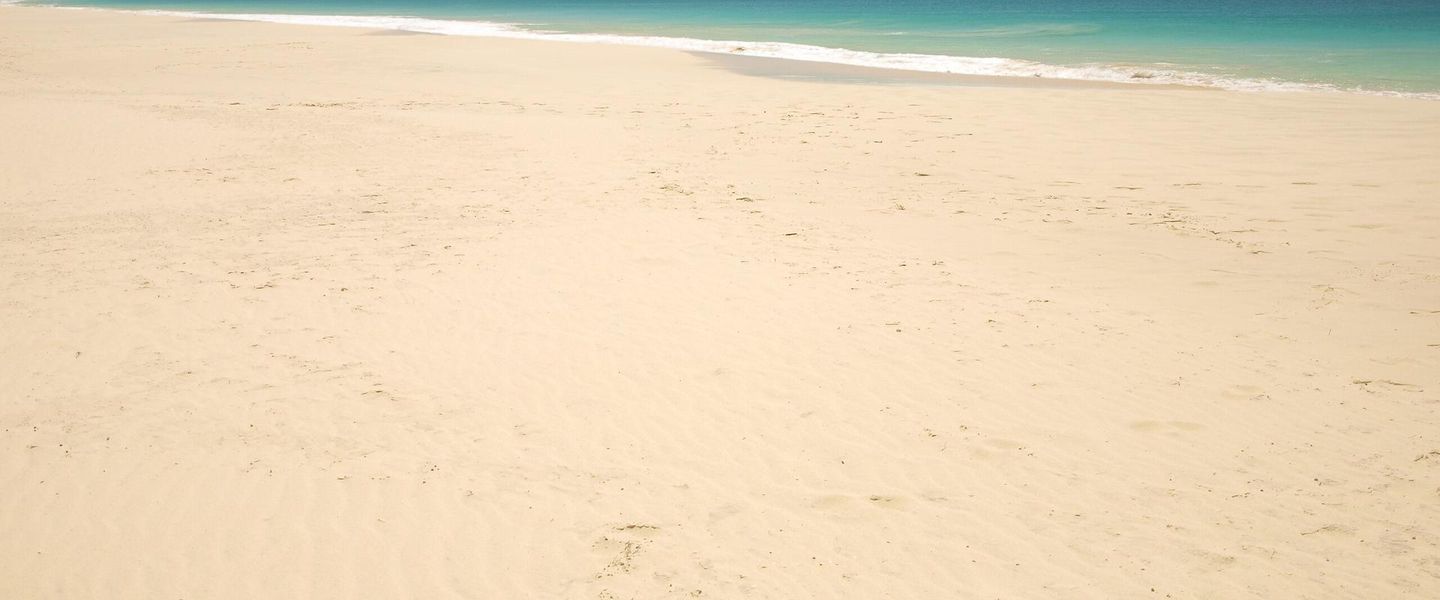


Praia de Santa Monica, Cabo Verde, offers Boa Vista’s vast Atlantic beach, dune scenery, turtle nesting habitat, quiet walks and windswept coastal landscapes.
Landscape and Atmosphere
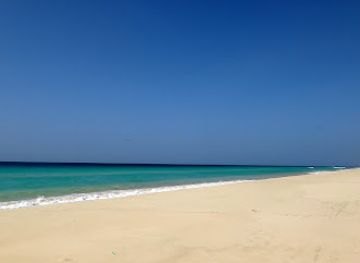
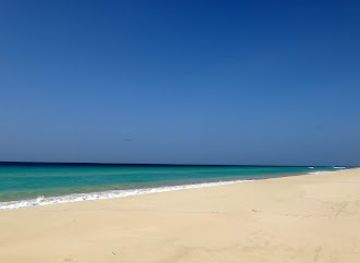
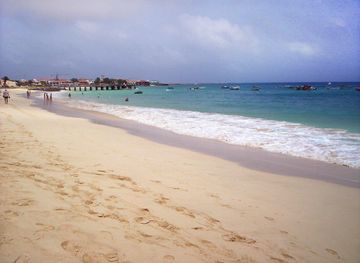
Praia de Santa Monica is a broad Atlantic beach on the south-western coast of Boa Vista, one of Cabo Verde’s Barlavento islands. Its pale sand extends for several kilometres beside an open, powerful ocean, with low dunes and an almost treeless horizon creating a sense of space that is characteristic of Boa Vista’s dry landscapes. The beach is often associated with Curralinho, the small settlement inland from this stretch of coast, although the shoreline itself has little traditional village infrastructure.Read more about Praia de Santa Monica
Wildlife and Coastal Character
Visiting Praia de Santa Monica
When is the best time to visit Praia de Santa Monica?
Best: January–March · 28–29°C| Month | High (°C) | Rainfall (mm) |
|---|---|---|
| January (best) | 28 | 0 |
| February (best) | 29 | 0 |
| March (best) | 29 | 0 |
| April | 29 | 0 |
| May | 29 | 0 |
| June | 30 | 0 |
| July | 30 | 0 |
| August | 30 | 0 |
| September | 30 | 0 |
| October | 30 | 0 |
| November | 29 | 0 |
| December | 29 | 0 |
Getting to and around Praia de Santa Monica
How to get there
Transportation
Best landmarks in Praia de Santa Monica
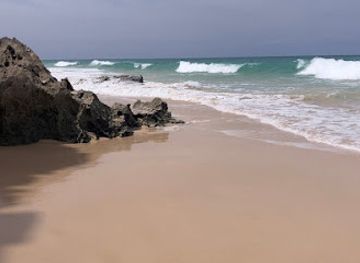
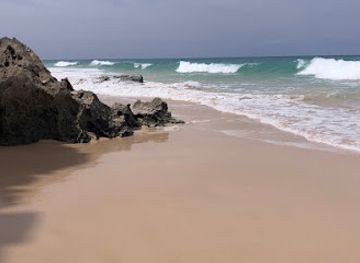
Praia de Santa Monica’s defining landmark is its long, open strand facing the Atlantic, backed by low dunes and shaped by strong wind, surf and shifting sand. Unlike a historic town, the area has few permanent architectural landmarks; its significance lies in the relationship between the immense beach and Boa Vista’s dry island landscape. The shoreline is also an important natural reference point for loggerhead turtle conservation, with nesting activity giving the coast ecological significance beyond its recreational appeal. Curralinho, inland from the beach, is a small local settlement rather than a monumental site, while Sal Rei’s historic saltworks and urban heritage belong to a different part of Boa Vista and should not be presented as attractions on the beach. The absence of dense construction, roads and commercial frontage is itself a defining characteristic, preserving wide views across an exposed coast where natural processes remain visually dominant.
-
Beach
Praia de Santa Mónica
Experience the stunning beauty and tranquil atmosphere of Praia de Santa Mónica, a top beach destination in Cape Verde for relaxation and adventure.
-
Scenic spot
Praia Santa Mónica
Experience the untouched beauty and serene ambiance of Praia Santa Mónica, a must-visit beach destination in Cabo Verde for nature lovers and adventure seekers.
-
Tourist attraction
Plage de Santa Monica
Discover the breathtaking beauty of Santa Monica Beach, an idyllic escape in Praia with stunning sands and vibrant culture, perfect for all travelers.
Explore Praia de Santa Monica on the map
Plan your trip on one map. See where the top attractions, landmarks, restaurants and hotels are, and book hotels and experiences in a few clicks.
Best hotels in Praia de Santa Monica
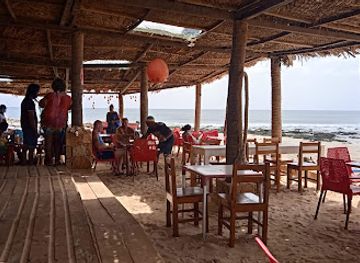
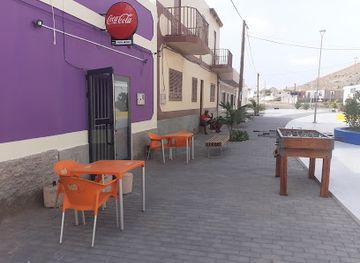
Best bars in Praia de Santa Monica
Praia de Santa Monica has no established nightlife scene and becomes a quiet, dark coastal environment after sunset, which is also when turtle-conservation rules are most important. Evening drinks and entertainment are generally found at hotels and resorts in the island’s developed accommodation areas, subject to each property’s arrangements, while Sal Rei offers the widest choice of local restaurants, cafés and informal bars. The town’s evening atmosphere is relaxed rather than comparable with a large European resort, with music and social activity often centred on hospitality venues and seasonal occasions. Travelling to the beach after dark independently is not a substitute for nightlife and can disturb nesting turtles or create navigation difficulties on remote tracks. Visitors interested in nocturnal wildlife should join an authorised conservation activity and follow the guide’s instructions.
-
Bar
Boca Beach
Explore Boca Beach in Pavoacao Velha for stunning views, vibrant nightlife, and a perfect blend of relaxation and adventure.
-
Bar
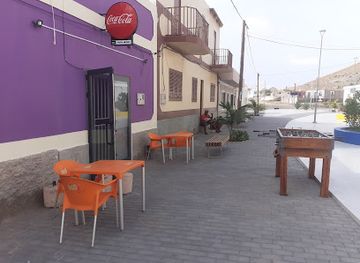
Bar/Mercearia Santo António
Discover the vibrant atmosphere of Bar/Mercearia Santo António, where local flavors and Cape Verdean hospitality create unforgettable experiences.
Best nightclubs in Praia de Santa Monica
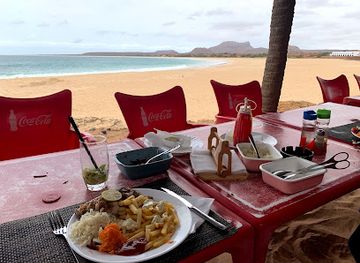
Praia de Santa Monica has no established nightlife scene and becomes a quiet, dark coastal environment after sunset, which is also when turtle-conservation rules are most important. Evening drinks and entertainment are generally found at hotels and resorts in the island’s developed accommodation areas, subject to each property’s arrangements, while Sal Rei offers the widest choice of local restaurants, cafés and informal bars. The town’s evening atmosphere is relaxed rather than comparable with a large European resort, with music and social activity often centred on hospitality venues and seasonal occasions. Travelling to the beach after dark independently is not a substitute for nightlife and can disturb nesting turtles or create navigation difficulties on remote tracks. Visitors interested in nocturnal wildlife should join an authorised conservation activity and follow the guide’s instructions.
-
Bar
Boca Beach
Explore the vibrant atmosphere and stunning natural beauty of Boca Beach in Provoacao Velha, a perfect getaway for relaxation and adventure.
-
Beach
Praia de Santa Mónica
Experience the untouched beauty of Praia de Santa Mónica, a tropical paradise in Cape Verde featuring serene beaches and vibrant marine life.
-
Scenic spot
Praia Santa Mónica
Praia Santa Mónica: A stunning beach in Cape Verde, perfect for relaxation and breathtaking sunsets.
-
Bar
Bar/Mercearia Santo António
Discover the vibrant local culture at Bar/Mercearia Santo António, a charming bar in Sal Rei offering refreshing drinks and delicious snacks.
Best shops in Praia de Santa Monica
Praia de Santa Monica has virtually no conventional shopping infrastructure, so visitors should buy practical supplies before travelling from Sal Rei, Rabil or their accommodation area. Sal Rei is Boa Vista’s main commercial centre and offers everyday shops, small markets, craft stalls and places selling locally made souvenirs, although stock and opening arrangements can vary. Cape Verdean handicrafts may include woven items, jewellery, carved objects and decorative work, while regional food products and island-themed goods are also available in settled areas. Small traders and artisans are an important part of the local visitor economy, but bargaining and purchasing should be approached respectfully, without assuming that every product is locally made. There are no dependable shops along the remote beach itself, and visitors should avoid removing shells, stones or other natural materials as souvenirs from the coastal environment.
-
Beach
Praia de Santa Mónica
Experience the pristine beauty of Praia de Santa Mónica, a serene beach paradise in Cape Verde, perfect for relaxation and adventure.
-
Scenic spot
Praia Santa Mónica
Discover the serene beauty of Praia Santa Mónica, a stunning beach destination in Cape Verde, perfect for relaxation and adventure.
Get your free copy of our complete guide to Praia de Santa Monica, delivered straight to you.
Everything on this page, from attractions and restaurants to essentials and local phrases, in one PDF you can read offline, print or share.
Already have an account? Sign in
Your Praia de Santa Monica guide is ready.
We'll send it to · Not you? Sign out

Getting your guide ready…
We are putting together a fresh copy of the Praia de Santa Monica guide. This can take up to a minute.
This can take a few moments. If your browser asks, choose Allow so the download can start. You'll find the guide in your Downloads folder.
Nothing happened? Download it again
Sorry, the guide is taking longer than usual. Please try again in a minute, or get it by email instead.
Praia de Santa Monica essentials
Currency and Payment
Safety
Emergency Situations
Do's and Don'ts
Local Tips
From Eve
Local phrases worth knowing
You don't need to get them perfect. A few words go a long way, and locals appreciate the effort.
Basics
| English | Local | Say it |
|---|---|---|
| Hello | Olá | [oh-lah] |
| Goodbye | Adeus | [ah-deh-oos] |
| Yes | Sim | [seem] |
| No | Não | [na-oo] |
| Please/You're welcome | Por favor/De nada | [por fah-vor/deh nah-dah] |
| Thank you | Obrigado/Obrigada | [oh-bree-gah-doo/oh-bree-gah-dah] |
| Excuse me/Sorry | Com licença/Desculpe | [kohm lee-sehn-sah/dehs-kool-peh] |
| How are you? | Como estás? | [koh-moh ehs-tahs] |
| Fine. And you? | Estou bem. E tu? | [eh-stoh behn/eh too] |
| Do you speak English? | Fala inglês? | [fah-lah een-glehsh] |
| I don't understand | Não entendo | [na-oo ehn-tehn-doo] |
Eating & Drinking
| English | Local | Say it |
|---|---|---|
| I'd like to see the menu, please | Gostaria de ver o menu, por favor | [goh-stah-ree-ah deh vehr ooh meh-noo/por fah-vor] |
| I don't eat meat | Não como carne | [na-oo koh-moo kahr-neh] |
| Cheers! | Saúde! | [sow-deh] |
| I would like to pay, please | Gostaria de pagar, por favor | [goh-stah-ree-ah deh pah-gahr/por fah-vor] |
Emergencies
| English | Local | Say it |
|---|---|---|
| Help! | Ajuda! | [ah-zoo-dah] |
| Go away! | Vai embora! | [vah-ee ehn-boh-rah] |
| Call the Police! | Chama a Polícia! | [shah-mah ah poh-lee-see-ah] |
| Call a doctor! | Chama um médico! | [shah-mah oom meh-dee-koo] |
| I'm lost | Estou perdido | [eh-stoh pehr-dee-doo] |
| I'm ill | Estou doente | [eh-stoh doo-ehn-teh] |
Shopping
| English | Local | Say it |
|---|---|---|
| I'd like to buy... | Quero comprar... | [keh-roh kohm-prahr] |
| I'm just looking | Estou só a ver | [eh-stoh soh ah vehr] |
| How much is it? | Quanto custa? | [kwahn-toh koosh-tah] |
| That's too expensive | Isso é muito caro | [ee-soh eh moo-ee-toh kah-roo] |
| Can you lower the price? | Pode baixar o preço? | [poh-deh bahy-shahr ooh preh-soo] |
Time & Numbers
| English | Local | Say it |
|---|---|---|
| What time is it? | Que horas são? | [keh oh-rah-s sow-ahn] |
| It's one o'clock | É uma hora | [eh oo-mah oh-rah] |
| Half past (10) | Meio-dia e meia | [meh-oh-jee-ah eh may-ah] |
| Morning | Manhã | [mah-nyah] |
| Afternoon | Tarde | [tahr-deh] |
| Evening | Noite | [noy-teh] |
| Yesterday | Ontem | [ong-tehm] |
| Today | Hoje | [oh-jeh] |
| Tomorrow | Amanhã | [ah-mahn-yah] |
| 1 | Um | [oom] |
| 2 | Dois | [doh-ees] |
| 3 | Três | [trehs] |
| 4 | Quatro | [kwah-troh] |
| 5 | Cinco | [seen-koh] |
| 6 | Seis | [say-ees] |
| 7 | Sete | [seh-teh] |
| 8 | Oito | [oy-toh] |
| 9 | Nove | [noh-veh] |
| 10 | Dez | [dehs] |
Transport & Directions
| English | Local | Say it |
|---|---|---|
| Where's a/the...? | Onde fica...? | [ohn-deh fee-kah] |
| What's the address? | Qual é o endereço? | [kwahl eh oo ehn-deh-reh-soo] |
| Can you show me (on the map)? | Pode mostrar-me (no mapa)? | [poh-deh moh-strahr-meh/noo mah-pah] |
| When's the next (bus)? | Quando é o próximo (autocarro)? | [kwahn-doo eh oo proh-see-moo/ow-toh-kah-roo] |
| A ticket (to ....) | Um bilhete (para ....) | [oom beel-yeh-teh/par-ah] |
History of Praia de Santa Monica
An Ocean-Built Island
Boa Vista is a volcanic island whose visible landscape has been shaped by later erosion, wind and the accumulation of marine sands. The south-western coast around Praia de Santa Monica is consequently low and open rather than mountainous, with dunes and wide beaches facing the Atlantic. Geological processes provide the setting for the destination’s modern identity, but they should be distinguished from the much later history of human settlement on the island.
Early Settlement and Portuguese Rule
Portuguese settlement on Boa Vista developed from the fifteenth century onwards, within the wider colonisation of the Cape Verde archipelago. The island’s dry climate limited intensive agriculture, while scattered communities depended on livestock, small-scale cultivation, fishing and the movement of goods between settlements. Sal Rei, on the north-west coast, became the principal population and administrative centre; the remote south-western shore remained largely a sparsely inhabited landscape rather than a permanent urban settlement.
Salt, Livelihoods and Island Trade
Boa Vista’s historical economy was connected to salt production, maritime exchange, fishing and pastoral activity. The island’s name is often linked with the discovery of its potential for salt, and salt works near Sal Rei became an important part of local economic history. These activities did not create a dense settlement along Praia de Santa Monica, where the exposed coast and limited freshwater helped preserve its rural character. Traditional island life was organised around small communities and practical relationships with a demanding environment.
Tourism and Turtle Conservation
The growth of air travel and resort tourism in the late twentieth and early twenty-first centuries brought Boa Vista’s beaches to an international audience. Praia de Santa Monica became one of the island’s best-known coastal landscapes, while accommodation and visitor services developed mainly in designated resort areas and around established settlements rather than as a continuous beachfront town. At the same time, conservation organisations and local initiatives increased attention to loggerhead turtle nesting, making responsible access and protection of the sandy shore an increasingly important part of the area’s contemporary heritage.
Praia de Santa Monica in Photos
Browse through our photo collection highlighting the charm and character of the destination.
Neighbouring destination travel guides
The closest destinations to Praia de Santa Monica, if you have time for more than one.
-

-

-

-
-


Swipe for more destinations
Explore more
Explore more of Cabo Verde
Discover Cabo Verde: An enchanting archipelago offering beautiful beaches, vibrant culture, and unforgettable adventures, all set against a backdrop of stunning landscapes.
Explore Cabo Verde