

Free Glendale Travel Guide & Mobile App
Plan your Glendale trip with Evendo. Get free guides to top attractions, restaurants, hotels, and bars. Web access or download the mobile app.


Glendale, California blends Armenian culture, historic architecture, mountain parks, lively shopping and easy Los Angeles access in a compact urban setting for visitors.
A City Between Hills and Los Angeles
Glendale occupies a broad valley between the Verdugo Mountains and the urban districts of Los Angeles, combining a substantial city centre with quieter residential streets and foothill landscapes. Its position makes it part of the greater Los Angeles experience, yet Glendale has a clear identity of its own: a city shaped by early twentieth-century development, Armenian immigration, Mediterranean and Middle Eastern food traditions, and an active network of parks, libraries and cultural venues. Brand Boulevard forms the principal urban spine, while the commercial centre around the Americana at Brand and Glendale Galleria presents a polished, contemporary face.Read more about Glendale
Heritage, Culture and Neighbourhood Life
Open Space and Southern Californian Light
When is the best time to visit Glendale?
Best: May–June, October · 24–27°C| Month | High (°C) | Rainfall (mm) |
|---|---|---|
| January | 19 | 79 |
| February | 21 | 78 |
| March | 22 | 71 |
| April | 23 | 23 |
| May (best) | 24 | 8 |
| June (best) | 27 | 3 |
| July | 29 | 0 |
| August | 29 | 3 |
| September | 28 | 5 |
| October (best) | 25 | 13 |
| November | 21 | 25 |
| December | 18 | 66 |
Getting to and around Glendale
How to get there
Transportation
Best attractions in Glendale
Glendale's attractions range from urban entertainment to foothill open space. The Alex Theatre anchors the cultural centre with concerts, film events and performances in a landmark cinema building, while the nearby Glendale Central Library and Brand Boulevard provide an easy introduction to civic life and local architecture. Brand Park combines gardens, walking paths and the Brand Library & Art Center, whose former estate setting gives it a distinctive atmosphere. At the city's northern edge, Deukmejian Wilderness Park offers trails through the Verdugo foothills and broad views across the Los Angeles Basin. Forest Lawn Memorial Park Glendale is known for landscaped grounds, chapels, sculpture and art associated with its garden-cemetery tradition. For a more commercial experience, the Americana at Brand and Glendale Galleria bring major retail, public spaces and dining together, while Montrose and Kenneth Village offer smaller-scale streets for browsing independent businesses.
-
Theme park
Universal Studios Hollywood
Experience the thrill of movie magic at Universal Studios Hollywood, where rides, attractions, and cinematic adventures await every visitor.
27 min drive · 9.1 km from city centre
-
 Fishing pier
Santa Monica Pier
Experience the vibrant atmosphere of Santa Monica Pier, a historic landmark offering amusement rides, dining, and stunning ocean views.
47 min drive · 27 km from city centre
-
Park
Griffith Park
Explore Griffith Park, Los Angeles: an urban paradise offering hiking, stunning views, and cultural experiences in the heart of California.
11 min drive · 3.7 km from city centre
-
Shopping mall
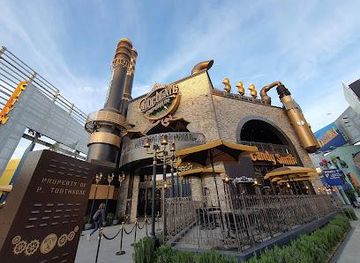
Universal CityWalk Hollywood
Experience the ultimate entertainment hub at Universal CityWalk Hollywood, where shopping, dining, and attractions create unforgettable memories.
27 min drive · 9.1 km from city centre


Best landmarks in Glendale
Glendale's landmarks reveal the city's development from foothill suburb to culturally diverse Los Angeles community. The Brand Library & Art Center occupies El Miradero, Leslie Brand's 1904 residence, whose Indo-Saracenic-inspired design makes it one of the city's most distinctive historic buildings. The Alex Theatre, opened in 1925 and later remodelled in Streamline Moderne style, remains a prominent example of Southern California's cinema and entertainment architecture. Casa Adobe de San Rafael preserves an adobe residence associated with the area's rancho-era history, while the nearby Brand Park links local heritage with the Verdugo foothills. Forest Lawn Memorial Park Glendale is a major landscaped memorial complex containing chapels, sculpture and monumental artworks. In the commercial centre, the Glendale Central Library and the civic buildings along Brand Boulevard represent the better-planned public face of twentieth-century Glendale, set against a backdrop of dense modern retail development.
-
Shopping mall
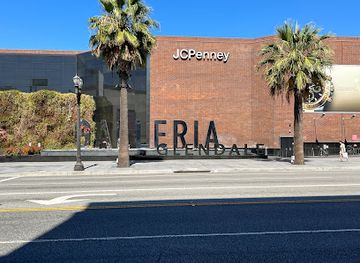
Glendale Galleria
Discover the ultimate shopping and dining experience at Glendale Galleria, where fashion, food, and fun come together in a vibrant atmosphere.
6 min walk · 0.4 km from city centre
-
Shopping mall
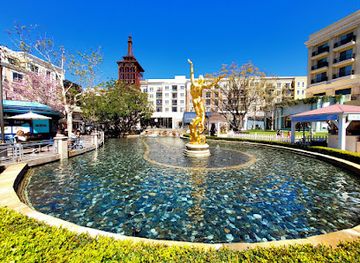
The Americana at Brand
Discover the vibrant shopping, dining, and entertainment experience at The Americana at Brand in Glendale, California—a perfect destination for tourists.
4 min walk · 0.3 km from city centre
-
Historical landmark
Hollywood Sign
Explore the legendary Hollywood Sign, a historical landmark offering breathtaking views and a glimpse into the heart of the entertainment capital of the world.
19 min drive · 6.2 km from city centre
-
Transportation service
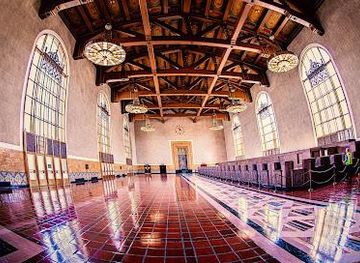
Los Angeles Union Station
Explore the architectural beauty and cultural significance of Los Angeles Union Station, a historical landmark and vibrant transportation hub in the heart of the city.
29 min drive · 9.7 km from city centre

Explore Glendale on the map
Plan your Glendale trip on one map. See where the top attractions, landmarks, restaurants, bars and hotels are, find what's near where you're staying, and book hotels and experiences in a few clicks.
Best hotels in Glendale
Best restaurants in Glendale
Glendale's food culture reflects its large Armenian American community and its wider position within Los Angeles County's diverse dining landscape. Armenian and Middle Eastern cooking appears in bakeries, cafés, grills and family-run restaurants, with dishes such as khorovats grilled meat, dolma, lahmajoun, kebabs, salads, flatbreads and rich pastries commonly represented across the local scene. Raffi's Place is associated with Persian-influenced dining, while Carousel Restaurant is known for Armenian and Middle Eastern dishes; Porto's Bakery & Cafe brings Cuban baking and café traditions to the city. Central Glendale contains much of the most concentrated restaurant activity, but Montrose and neighbouring commercial streets offer independent cafés, Mexican food, casual international dining and bakeries. Food shopping is also part of the experience, with specialist grocers and bakeries providing ingredients and prepared foods connected to the city's immigrant communities.
-
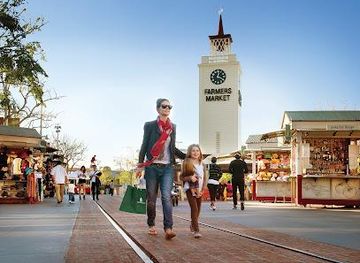
Farmers' market
The Original Farmers Market
Historic marketplace where 1934 farmers' trucks evolved into LA's iconic culinary and cultural destination.
32 min drive · 12 km from city centre
-
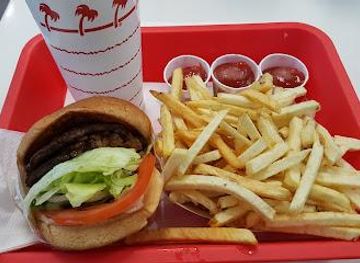
Hamburger
In-N-Out Burger
Savor California's burger legacy at this bustling In-N-Out: fresh Double-Doubles, hand-cut fries, and late-night drive-thru vibes just off the 10 Freeway in Baldwin Park.
47 min drive · 27 km from city centre
-
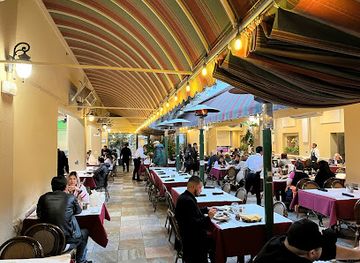
Restaurant
Raffi's Place
Experience the rich flavors of Armenian cuisine at Raffi's Place in Glendale - where tradition meets taste in every dish.
6 min walk · 0.5 km from city centre
-
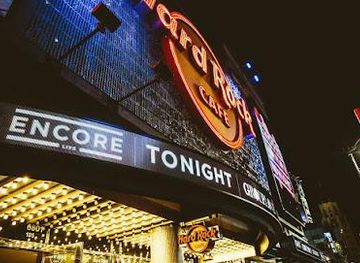
American
Hard Rock Cafe
Rock out on Hollywood Blvd with Legendary Burgers, ribs, and live tunes amid star-studded memorabilia in this iconic American diner.
27 min drive · 9.1 km from city centre
Best bars in Glendale
Glendale's evening life is more varied than club-focused, with restaurants, cafés, lounges and cultural performances forming the main after-dark options. The Alex Theatre supplies the city's most established venue for concerts, comedy, film screenings and touring performances, giving downtown Glendale a regular programme of evening activity. Around Brand Boulevard and the Americana at Brand, visitors find places for drinks, dessert and late dining in a polished commercial setting, while Montrose has a more neighbourhood-oriented selection of bars and small restaurants. Armenian restaurants and cafés are important social spaces, often providing a relaxed alternative to conventional nightlife. Glendale is not known primarily for a large nightclub district, and late-evening plans are better built around a performance, dinner, cocktails or a quiet walk through well-used commercial areas than around an extensive club circuit.
-
Bar
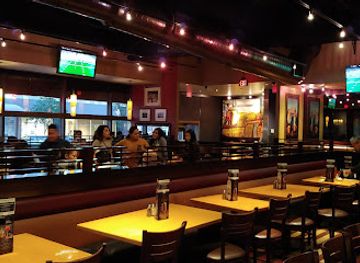
BJ's Restaurant & Brewhouse
Experience the vibrant atmosphere and diverse menu at BJ's Restaurant & Brewhouse, where exceptional food meets craft beer in Glendale, California.
6 min walk · 0.4 km from city centre
-
Bar
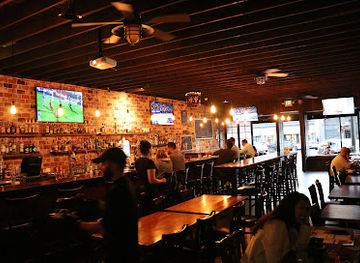
Tavern on Brand
Discover Tavern on Brand in Glendale, CA – a lively gastropub offering delightful brunches, refreshing brews, and live music in a vibrant setting.
8 min walk · 0.7 km from city centre
-
Bar
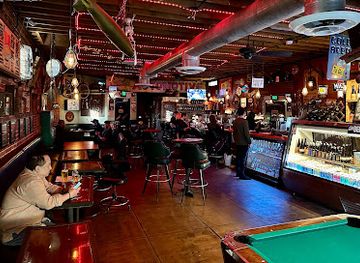
Glendale Tap
Experience the best of craft beer and pub fare at Glendale Tap, a vibrant brewpub in the heart of Glendale, California.
18 min walk · 1.4 km from city centre
-
New American
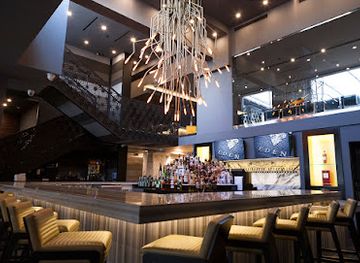
Eden On Brand
Experience the fusion of modern cuisine and a vibrant lounge atmosphere at Eden On Brand in Glendale, California.
9 min walk · 0.7 km from city centre
Best nightclubs in Glendale
Glendale's evening life is more varied than club-focused, with restaurants, cafés, lounges and cultural performances forming the main after-dark options. The Alex Theatre supplies the city's most established venue for concerts, comedy, film screenings and touring performances, giving downtown Glendale a regular programme of evening activity. Around Brand Boulevard and the Americana at Brand, visitors find places for drinks, dessert and late dining in a polished commercial setting, while Montrose has a more neighbourhood-oriented selection of bars and small restaurants. Armenian restaurants and cafés are important social spaces, often providing a relaxed alternative to conventional nightlife. Glendale is not known primarily for a large nightclub district, and late-evening plans are better built around a performance, dinner, cocktails or a quiet walk through well-used commercial areas than around an extensive club circuit.
-
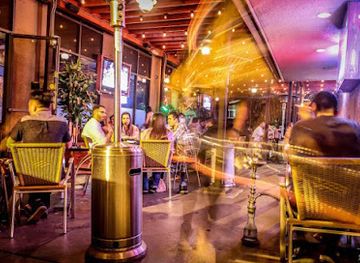
Hookah bar
Hookah Lounge
Discover the vibrant atmosphere of Glendale Hookah Lounge, where flavors and friendships come together in a unique social experience.
13 min walk · 1.0 km from city centre
-
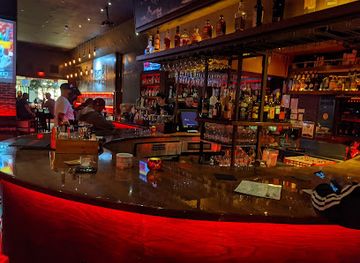
Bar
The Famous Bar
Experience the thrill of nightlife at The Famous Bar in Glendale, where cocktails, karaoke, and camaraderie come together for an unforgettable evening.
3 min walk · 0.2 km from city centre
-
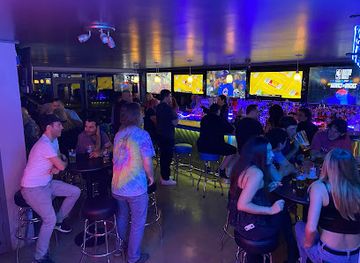
Bar
The Blue Moon Lounge
Discover The Blue Moon Lounge in Glendale, California - a lively bar with cocktails, darts, and billiards, perfect for a fun night out.
22 min drive · 7.2 km from city centre
-
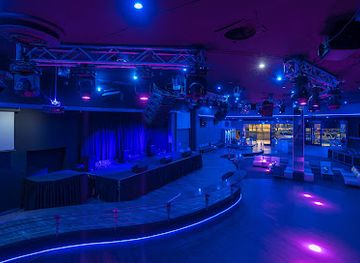
Night club
Giggles Nightclub
Dive into the vibrant nightlife at Giggles Nightclub in Glendale, CA, where music, fun, and unforgettable moments await every visitor.
9 min walk · 0.7 km from city centre
Best shops in Glendale
Shopping in Glendale ranges from large commercial complexes to independent neighbourhood streets and specialist food businesses. The Americana at Brand offers a landscaped retail and dining environment centred on major fashion, beauty and lifestyle brands, while Glendale Galleria provides a substantial enclosed shopping centre nearby. Along Brand Boulevard and surrounding downtown streets, visitors will find cafés, services and smaller retailers interspersed with larger stores. Montrose has a more local character, with independent boutiques, vintage and gift shops, salons and cafés arranged along Honolulu Avenue and nearby streets; Kenneth Village offers another small-scale browsing district. Armenian and Middle Eastern bakeries, delicatessens and grocers are especially useful for regional sweets, breads, preserves, spices and packaged foods. The most distinctive purchases are often edible or artisanal rather than conventional souvenirs, reflecting Glendale's Armenian connections and the broader craft and food culture of Southern California.
-
Shopping mall
Downtown Santa Monica
Experience the vibrant shopping, dining, and entertainment of Downtown Santa Monica, a must-visit destination along the California coast.
46 min drive · 26 km from city centre
-
Outlet mall
Citadel Outlets
Discover unbeatable deals and delightful dining at Citadel Outlets, the ultimate shopping destination in Commerce, California.
38 min drive · 18 km from city centre
-
Shopping mall
The Grove
Explore The Grove in Los Angeles for a perfect blend of shopping, dining, and entertainment in a stunning outdoor environment.
32 min drive · 12 km from city centre
-
Shopping mall
Ovation Hollywood
Discover the heart of Hollywood at Ovation Hollywood, where shopping, dining, and entertainment converge in a vibrant atmosphere.
27 min drive · 9.0 km from city centre
Get your free copy of our complete guide to Glendale, delivered straight to you.
Everything on this page, from attractions and restaurants to essentials and local phrases, in one PDF you can read offline, print or share.
Already have an account? Sign in
Your Glendale guide is ready.
We'll send it to · Not you? Sign out

Getting your guide ready…
We are putting together a fresh copy of the Glendale guide. This can take up to a minute.
This can take a few moments. If your browser asks, choose Allow so the download can start. You'll find the guide in your Downloads folder.
Nothing happened? Download it again
Sorry, the guide is taking longer than usual. Please try again in a minute, or get it by email instead.
Glendale essentials
Currency and Payment
Safety
Emergency Situations
Do's and Don'ts
Local Tips
From Eve
Local phrases worth knowing
You don't need to get them perfect. A few words go a long way, and locals appreciate the effort.
Basics
| English | Local | Say it |
|---|---|---|
| Hello | Hi | [hai] |
| Goodbye | Bye | [bai] |
| Yes | Yeah | [yeh] |
| No | Nope | [nohp] |
| Please/You're welcome | Please | [pleez] |
| Thank you | Thanks | [thaynks] |
| Excuse me/Sorry | Excuse me | [ikskyooz mee] |
| How are you? | How are you? | [hao ar yoo] |
| Fine. And you? | Good. You? | [gud yoo] |
| Do you speak English? | You speak English? | [yoo speek inglish] |
| I don't understand | I don't get it | [ai dohnt get it] |
Eating & Drinking
| English | Local | Say it |
|---|---|---|
| I'd like to see the menu, please | Menu, please | [menyoo pleez] |
| I don't eat meat | No meat | [noh meet] |
| Cheers! | Cheers! | [cheers] |
| I would like to pay, please | Check, please | [chek pleez] |
Emergencies
| English | Local | Say it |
|---|---|---|
| Help! | Help! | [help] |
| Go away! | Go away! | [gohh awey] |
| Call the Police! | Call the police! | [kawl thee puh-lease] |
| Call a doctor! | Call a doctor! | [kawl uh dohk-ter] |
| I'm lost | Lost | [lawst] |
| I'm ill | Sick | [sik] |
Shopping
| English | Local | Say it |
|---|---|---|
| I'd like to buy... | I want to buy... | [ai wawnt too by] |
| I'm just looking | Just looking | [jehst look-ing] |
| How much is it? | How much? | [hao mach] |
| That's too expensive | Too much | [too mach] |
| Can you lower the price? | Lower the price? | [loh-er the prys] |
Time & Numbers
| English | Local | Say it |
|---|---|---|
| What time is it? | What time? | [wut tyme] |
| It's one o'clock | One o'clock | [wun oh-klok] |
| Half past (10) | Half past (10) | [haff past (ten)] |
| Morning | Morning | [mawr-ning] |
| Afternoon | Afternoon | [af-ter-noon] |
| Evening | Evening | [ee-ven-ing] |
| Yesterday | Yesterday | [yes-ter-day] |
| Today | Today | [toh-day] |
| Tomorrow | Tomorrow | [toh-mor-oh] |
| 1 | One | [wun] |
| 2 | Two | [too] |
| 3 | Three | [three] |
| 4 | Four | [for] |
| 5 | Five | [fahyv] |
| 6 | Six | [siks] |
| 7 | Seven | [sev-uhn] |
| 8 | Eight | [eyt] |
| 9 | Nine | [nain] |
| 10 | Ten | [ten] |
Transport & Directions
| English | Local | Say it |
|---|---|---|
| Where's a/the...? | Where is...? | [wair iz] |
| What's the address? | Address? | [uh-dres] |
| Can you show me (on the map)? | Show me | [shoh mee] |
| When's the next (bus)? | Next bus? | [nekst buhs] |
| A ticket (to ....) | Ticket | [tik-et] |
History of Glendale
Tongva Homeland and Spanish Ranchos
Before American settlement, the Glendale area formed part of the homeland of the Tongva, whose villages, trading networks and relationship with the rivers, oak groves and foothills predated the modern city by centuries. Spanish colonisation brought the region into the orbit of Mission San Gabriel, while the Mexican period reorganised large areas of Southern California into private ranchos. Glendale developed across land associated particularly with Rancho San Rafael, a vast grant awarded during the Mexican era. Although later urban growth transformed the landscape, the valley's geography remained important: the Verdugo Mountains, seasonal waterways and accessible routes towards Los Angeles continued to shape settlement and movement.
Settlement and Incorporation
American-era settlement accelerated in the late nineteenth century as land was subdivided, roads improved and the expanding Los Angeles region attracted farmers, merchants and property developers. The community of Glendale was incorporated as a city in 1906, establishing a municipal framework for streets, services and planned growth. Early development combined residential districts with commercial corridors and civic buildings, while electric street railway connections helped link Glendale with Los Angeles and neighbouring communities. The city's broad streets and varied early housing stock reflect this period of transition, when a largely rural landscape was being incorporated into the rapidly urbanising Southern California region.
Leslie Brand and the Brand Park Estate
Industrialist Leslie Brand became one of Glendale's most influential early promoters and residents. His 1904 estate, El Miradero, was designed in an Indo-Saracenic style inspired by architecture Brand had encountered at the 1893 World's Columbian Exposition in Chicago. The building, now the Brand Library & Art Center, stands in Brand Park as a surviving expression of Glendale's early civic ambition and fascination with eclectic architecture. Brand's estate and the surrounding park helped establish the foothills as a valued part of the city's identity. After Brand's death, the property passed to the city, allowing the house and grounds to develop into a public cultural resource.
Commercial Growth and Cultural Institutions
During the first half of the twentieth century, Glendale expanded through residential construction, retail development and improved road connections across Los Angeles County. Forest Lawn Memorial Park opened in Glendale in 1906 and introduced a landscaped, garden-style approach to cemetery design, later adding chapels and monumental artworks that made the site a notable cultural landscape. The Alex Theatre opened in 1925 as a cinema and was later remodelled in the Streamline Moderne style, becoming one of the city's most recognisable entertainment buildings. These institutions, together with civic libraries and neighbourhood commercial streets, reflected Glendale's growing role as a substantial independent city within the Los Angeles metropolitan area.
Armenian Glendale and Contemporary Identity
From the late twentieth century, Glendale became a major centre of Armenian American life, shaped by migration from the Middle East, the former Soviet Union and Armenia itself, as well as by earlier Armenian communities in Southern California. Armenian businesses, churches, schools, newspapers, professional practices and restaurants became prominent features of the city, particularly around central Glendale and its surrounding neighbourhoods. This transformation added new cultural layers to an already diverse urban population without erasing earlier traditions. Contemporary Glendale is consequently defined by several overlapping histories: Indigenous and rancho landscapes, planned suburban growth, civic architecture, and a living Armenian cultural presence expressed in family businesses, food, language and community institutions.
Glendale in Photos
Browse through our photo collection highlighting the charm and character of the destination.
Cities near Glendale
The closest cities to Glendale, if you have time for more than one stop.
-

-

-

-

-


Swipe for more cities
Explore more
Explore more of California
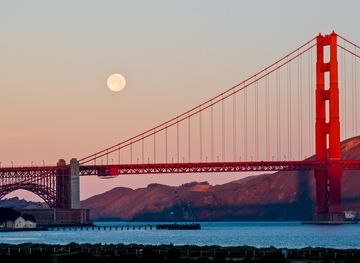
Discover California: A land of diverse landscapes, iconic cities, and endless adventures, from sun-soaked beaches to towering redwoods and vibrant cultural experiences.
Explore California