

Free Hollywood Travel Guide & Mobile App
Plan your Hollywood trip with Evendo. Get free guides to top attractions, restaurants, hotels, and bars. Web access or download the mobile app.


Hollywood, California blends film history, the Walk of Fame, landmark theatres, live music, Hollywood Hills views and lively Los Angeles culture.
Film History in the Landscape
Hollywood occupies a compact but culturally influential part of Los Angeles, stretching along the southern face of the Hollywood Hills and centred on Hollywood Boulevard. Its name became shorthand for the American film industry, although much of contemporary film and television production now takes place across the wider Los Angeles region. The district's physical landmarks still express that history: the Hollywood Walk of Fame runs along Hollywood Boulevard, the TCL Chinese Theatre preserves a tradition of theatrical premieres, and the Dolby Theatre hosts the Academy Awards. Above the streets, the Hollywood Sign marks the hills as one of the world's most recognisable cinematic landscapes.Read more about Hollywood
Boulevards, Theatres and Neighbourhood Life
Evenings in the Hillside District
When is the best time to visit Hollywood?
Best: May–June, October · 25–26°C| Month | High (°C) | Rainfall (mm) |
|---|---|---|
| January | 19 | 79 |
| February | 21 | 76 |
| March | 22 | 61 |
| April | 23 | 23 |
| May (best) | 25 | 8 |
| June (best) | 26 | 3 |
| July | 28 | 1 |
| August | 29 | 2 |
| September | 27 | 8 |
| October (best) | 25 | 20 |
| November | 21 | 37 |
| December | 19 | 68 |
Getting to and around Hollywood
How to get there
Transportation
Best attractions in Hollywood
Hollywood Boulevard remains the district's main sightseeing corridor, with the Hollywood Walk of Fame stretching past theatres, shops and entertainment venues. At the forecourt of the TCL Chinese Theatre, visitors can see the handprints and footprints of film figures set into the pavement, while the Dolby Theatre presents Hollywood's awards-season heritage through its architecture and exhibitions. The Academy Museum of Motion Pictures, south of the boulevard, explores filmmaking through costumes, technology and changing exhibitions. The Hollywood Museum occupies the historic Max Factor Building and focuses on screen history, and the Hollywood Forever Cemetery combines landscaped grounds with the graves of notable entertainment figures and seasonal cultural events. For a change of scale, Griffith Observatory and Griffith Park lie nearby in the hills, offering city views and astronomy displays, although they are separate attractions outside central Hollywood. The Capitol Records Building and the Pantages Theatre add music and performing-arts history to the district's cinematic profile.
-
Tourist attraction
Universal Studios Hollywood
Discover the thrills and magic of Universal Studios Hollywood, where movies come to life with thrilling rides and unforgettable attractions.
13 min drive · 4.3 km from city centre
-
Shopping mall
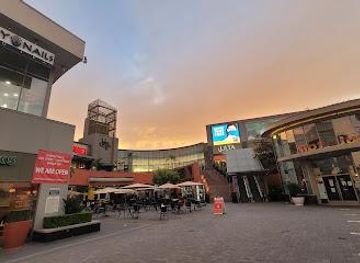
Universal CityWalk Hollywood
Discover the ultimate entertainment destination at Universal CityWalk Hollywood, filled with shops, dining, and vibrant entertainment for all ages.
12 min drive · 4.0 km from city centre
-
Art museum
Los Angeles County Museum of Art
Discover a world of art and culture at the Los Angeles County Museum of Art, featuring diverse collections and iconic installations.
13 min drive · 4.4 km from city centre
-
Art museum
Los Angeles County Museum of Art
Explore the expansive art collections and vibrant exhibitions at the Los Angeles County Museum of Art, the largest art museum in the western United States.
13 min drive · 4.4 km from city centre


Best landmarks in Hollywood
The TCL Chinese Theatre is Hollywood's most theatrical landmark, distinguished by its Chinese-inspired exterior, forecourt handprints and footprints, and long association with film premieres. Beside it, the Dolby Theatre represents the modern awards ceremony and occupies a prominent place within Ovation Hollywood. The El Capitan Theatre, an ornate cinema on Hollywood Boulevard operated by Disney, preserves the movie-palace tradition, while the Pantages Theatre on Hollywood Boulevard is a late Art Deco landmark known for major musical theatre productions. On Vine Street, the Capitol Records Building is recognisable for its stacked circular form and remains a potent symbol of the recording business. The Hollywood Roosevelt Hotel, opened in 1927, links the boulevard to the early Academy Awards. Above the neighbourhood, the Hollywood Sign is a landmark of Los Angeles's twentieth-century promotional history, though it stands on the southern slope of the Hollywood Hills rather than alongside Hollywood Boulevard.
-
Amphitheater
Hollywood Bowl
Experience the magic of live performances at the iconic Hollywood Bowl, a premier amphitheater nestled in the Hollywood Hills of Los Angeles.
17 min walk · 1.3 km from city centre
-
Observatory
Griffith Observatory
Explore the wonders of the universe at Griffith Observatory, Los Angeles' iconic landmark for astronomy and breathtaking city views.
13 min drive · 4.5 km from city centre
-
Historical landmark
Hollywood Sign
Discover the Hollywood Sign, an iconic symbol of the entertainment industry, offering breathtaking views and a rich history in the heart of Los Angeles.
13 min drive · 4.2 km from city centre
-
Movie theater
TCL Chinese Theatre
Discover the enchanting TCL Chinese Theatre, a historic Hollywood landmark where cinema and culture intertwine in a stunning architectural gem.
4 min walk · 0.3 km from city centre


Explore Hollywood on the map
Plan your Hollywood trip on one map. See where the top attractions, landmarks, restaurants, bars and hotels are, find what's near where you're staying, and book hotels and experiences in a few clicks.
Neighbourhoods in Hollywood
-

-

-


Swipe for more neighbourhoods
Best hotels in Hollywood
Best restaurants in Hollywood
Hollywood's dining scene ranges from long-established coffee shops and casual restaurants to contemporary venues in converted historic buildings. Thai Town, officially designated in East Hollywood, is the clearest expression of the area's immigrant food culture, with restaurants and specialist businesses representing regional Thai cooking, desserts and ingredients. Along Hollywood Boulevard and nearby Cahuenga Boulevard, visitors find American comfort food, Mexican cooking, modern Californian menus, Korean and other Asian cuisines, as well as cafés serving the district's all-day urban rhythm. The Farmers' Market at Hollywood & Vine offers a small-scale local produce and prepared-food experience when operating, while the wider Los Angeles street-food culture appears through tacos, food trucks and informal counters. Dining patterns are often influenced by entertainment schedules, so restaurants near theatres may become busy before performances and screenings; reservations and payment practices vary by establishment.
-
Chicken
Roscoe's Chicken & Waffles - Hollywood
Savor the iconic blend of crispy fried chicken and fluffy waffles at Roscoe's Chicken & Waffles in Hollywood - A true soul food experience.
6 min drive · 2.1 km from city centre
-
American
Hard Rock Cafe
Discover the lively ambiance of Hard Rock Cafe Hollywood - where American cuisine meets rock history on iconic Hollywood Boulevard.
5 min walk · 0.4 km from city centre
-
Asian
Yamashiro Hollywood
Experience exceptional Asian cuisine with breathtaking views at Yamashiro Hollywood – where dining meets elegance in Los Angeles.
7 min walk · 0.6 km from city centre
-
American
Musso & Frank Grill
Experience timeless elegance at Musso & Frank Grill—where classic American cuisine meets Hollywood history.
11 min walk · 0.8 km from city centre


Best bars in Hollywood
Hollywood's nightlife is concentrated around Hollywood Boulevard, Cahuenga Boulevard and nearby streets, where cocktail bars, music venues, comedy clubs and dance-oriented rooms occupy spaces associated with the entertainment industry. The Pantages Theatre and other venues provide a more formal evening through Broadway productions and touring performances, while the Hollywood Bowl, north of the main district in the Hollywood Hills, hosts concerts seasonally. Live music has a long association with Hollywood, from historic recording institutions to smaller clubs presenting rock, electronic, jazz and emerging artists. The atmosphere changes considerably by block: the Walk of Fame remains busy with visitors, whereas Cahuenga's bars and venues draw a later local and nightlife crowd. West Hollywood, although a separate city, is nearby and has its own nightlife districts, so addresses should be checked carefully when arranging transport after dark.
-
Bar
Good Times at Davey Wayne's
Experience the vibrant nostalgia of 1970s California at Good Times at Davey Wayne's, the ultimate bar destination in Hollywood, Los Angeles.
6 min drive · 1.9 km from city centre
-
Cocktail bar
Frolic Room
Experience the charm and history of The Frolic Room, a classic cocktail bar in the heart of Hollywood with expertly crafted drinks and a lively atmosphere.
5 min drive · 1.7 km from city centre
-
Bar
No Vacancy
Explore No Vacancy, a charming bar in Hollywood, known for its vintage decor, signature cocktails, and vibrant nightlife that captivates tourists and locals alike.
14 min walk · 1.1 km from city centre
-
Lounge
Next Door Lounge
Discover the essence of Hollywood nightlife at Next Door Lounge, a vibrant spot for cocktails, music, and unforgettable experiences.
14 min walk · 1.1 km from city centre


Best nightclubs in Hollywood
Hollywood's nightlife is concentrated around Hollywood Boulevard, Cahuenga Boulevard and nearby streets, where cocktail bars, music venues, comedy clubs and dance-oriented rooms occupy spaces associated with the entertainment industry. The Pantages Theatre and other venues provide a more formal evening through Broadway productions and touring performances, while the Hollywood Bowl, north of the main district in the Hollywood Hills, hosts concerts seasonally. Live music has a long association with Hollywood, from historic recording institutions to smaller clubs presenting rock, electronic, jazz and emerging artists. The atmosphere changes considerably by block: the Walk of Fame remains busy with visitors, whereas Cahuenga's bars and venues draw a later local and nightlife crowd. West Hollywood, although a separate city, is nearby and has its own nightlife districts, so addresses should be checked carefully when arranging transport after dark.
-
Night club
AVALON Hollywood & Bardot
AVALON Hollywood: Experience the Ultimate Nightlife Adventure in Los Angeles with Live Music and Vibrant Atmosphere.
5 min drive · 1.6 km from city centre
-
Night club
Boardner's by La Belle
Experience the vibrant nightlife at Boardner's by La Belle, a premier club in Hollywood known for live music, delicious food, and a lively atmosphere.
11 min walk · 0.9 km from city centre
-
Night club
The Three Clubs
Experience the vibrant nightlife of Hollywood at The Three Clubs, where live music and handcrafted cocktails create an unforgettable evening.
6 min drive · 1.9 km from city centre
-
Night club
Academy LA
Discover the ultimate nightlife experience at Academy LA, where live music, dance, and exquisite dining come together in the heart of Hollywood.
7 min drive · 2.2 km from city centre


Best shops in Hollywood
Shopping in Hollywood is centred on Hollywood Boulevard, where souvenir outlets, specialist entertainment shops, street vendors and everyday retailers occupy the stretch around the Walk of Fame. Ovation Hollywood, formerly Hollywood & Highland, combines shops and restaurants with a large public terrace offering a framed view towards the Hollywood Sign. The district is particularly associated with film posters, memorabilia, apparel and novelty gifts, though visitors should distinguish official merchandise from informal street sales. Vine Street and nearby Cahuenga Boulevard provide smaller independent businesses, while Thai Town and East Hollywood are useful for Thai groceries, ingredients, restaurants and culturally specific products. The Hollywood Farmers' Market at Hollywood & Vine, when operating, offers produce and prepared foods rather than conventional souvenirs. For broader fashion and luxury shopping, visitors generally travel to other Los Angeles districts rather than expecting Hollywood Boulevard to function as the city's principal retail avenue.
-
Shopping mall
The Grove
Discover The Grove, Los Angeles' premier shopping destination with luxury brands, delightful dining, and vibrant entertainment in a stunning outdoor setting.
10 min drive · 3.5 km from city centre
-
Shopping mall
Ovation Hollywood
Discover Ovation Hollywood: A premier shopping mall blending retail therapy, dining, and entertainment in the heart of Los Angeles.
5 min walk · 0.4 km from city centre
-
Shopping mall
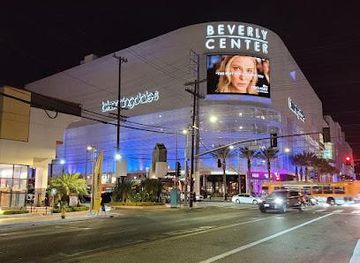
Beverly Center
Explore the luxury and diversity of shopping at Beverly Center, the ultimate retail destination in Los Angeles.
13 min drive · 4.2 km from city centre
-
Shopping mall
West Hollywood Gateway
Experience the lively shopping and dining at West Hollywood Gateway, the ultimate destination for tourists in Los Angeles.
16 min walk · 1.3 km from city centre


Get your free copy of our complete guide to Hollywood, delivered straight to you.
Everything on this page, from attractions and restaurants to essentials and local phrases, in one PDF you can read offline, print or share.
Already have an account? Sign in
Your Hollywood guide is ready.
We'll send it to · Not you? Sign out

Getting your guide ready…
We are putting together a fresh copy of the Hollywood guide. This can take up to a minute.
This can take a few moments. If your browser asks, choose Allow so the download can start. You'll find the guide in your Downloads folder.
Nothing happened? Download it again
Sorry, the guide is taking longer than usual. Please try again in a minute, or get it by email instead.
Hollywood essentials
Currency and Payment
Safety
Emergency Situations
Do's and Don'ts
Local Tips
From Eve
Local phrases worth knowing
You don't need to get them perfect. A few words go a long way, and locals appreciate the effort.
Basics
| English | Local | Say it |
|---|---|---|
| Hello | Hey | [hey] |
| Goodbye | Later | [ley-ter] |
| Yes | Sure | [shoor] |
| No | Nope | [nohp] |
| Please/You're welcome | Please/No worries | [pleez/no wuhr-eez] |
| Thank you | Thanks | [thanks] |
| Excuse me/Sorry | Sorry | [sor-ee] |
| How are you? | What's up? | [wuts up] |
| Fine. And you? | Good. You? | [good. yoo] |
| Do you speak English? | You speak English? | [yoo speek ing-glish] |
| I don't understand | I don't get it | [eye dohnt get it] |
Eating & Drinking
| English | Local | Say it |
|---|---|---|
| I'd like to see the menu, please | Can I see the menu? | [kan eye see the men-yoo] |
| I don't eat meat | I'm vegetarian | [eye'm vet-ee-tair-ee-an] |
| Cheers! | Cheers! | [cheers] |
| I would like to pay, please | Can I pay now? | [kan eye pay now] |
Emergencies
| English | Local | Say it |
|---|---|---|
| Help! | Help! | [help] |
| Go away! | Get lost! | [get lost] |
| Call the Police! | Call the cops! | [kol the kahps] |
| Call a doctor! | Get a doctor! | [get uh dok-tur] |
| I'm lost | I'm lost | [eye'm lost] |
| I'm ill | I'm sick | [eye'm sik] |
Shopping
| English | Local | Say it |
|---|---|---|
| I'd like to buy... | I wanna buy... | [eye wah-nuh buy] |
| I'm just looking | Just browsing | [just brow-zing] |
| How much is it? | How much? | [how much] |
| That's too expensive | That's pricey | [thats prye-see] |
| Can you lower the price? | Can you do a deal? | [kan yoo doh uh deel] |
Time & Numbers
| English | Local | Say it |
|---|---|---|
| What time is it? | What's the time? | [wuts the time] |
| It's one o'clock | It's one | [its wuhn] |
| Half past (10) | Half ten | [haf ten] |
| Morning | Morning | [morn-ing] |
| Afternoon | Afternoon | [af-ter-noon] |
| Evening | Evening | [ee-ven-ing] |
| Yesterday | Yesterday | [yess-tur-day] |
| Today | Today | [toh-day] |
| Tomorrow | Tomorrow | [toh-mor-row] |
| 1 | One | [wuhn] |
| 2 | Two | [too] |
| 3 | Three | [three] |
| 4 | Four | [for] |
| 5 | Five | [fahyv] |
| 6 | Six | [siks] |
| 7 | Seven | [sev-uhn] |
| 8 | Eight | [eyt] |
| 9 | Nine | [nayn] |
| 10 | Ten | [ten] |
Transport & Directions
| English | Local | Say it |
|---|---|---|
| Where's a/the...? | Where's the...? | [wheres the] |
| What's the address? | What's the address? | [whats the address] |
| Can you show me (on the map)? | Can you show me (on the map)? | [kan yoo show mee on the map] |
| When's the next (bus)? | When's the next (bus)? | [whens the nekst bus] |
| A ticket (to ....) | A ticket (to ....) | [uh tik-it to] |
History of Hollywood
Tongva Land Before Hollywood
The area now called Hollywood lies within the ancestral homeland of the Tongva, the Indigenous people whose villages and trade networks occupied much of the Los Angeles Basin. Spanish expeditions and the establishment of Mission San Gabriel Arcángel in 1771 brought colonial rule, followed by the displacement and disruption of Indigenous communities under the mission system and later Mexican and American governments. The region's early landscape consisted of hills, oak woodland, seasonal streams and agricultural land rather than an urban district. Understanding this earlier history places Hollywood within the much older cultural geography of the basin, where Indigenous presence long predates the streets, theatres and studios associated with the modern name.
From Rural Settlement to Suburb
Hollywood developed as a residential and agricultural settlement in the late nineteenth century. Harvey Henderson Wilcox and his wife, Daeida, are commonly associated with the planned community established in the 1880s, while the name Hollywood was adopted during that period. The settlement was incorporated as a municipality in 1903 and annexed by Los Angeles in 1910, partly to secure a dependable water supply. Early Hollywood was known for orchards, vineyards and a mild climate rather than cinema. Streets such as Hollywood Boulevard and Vine Street later became central to the district's identity, but the area's initial growth reflected Los Angeles's wider transformation from scattered settlements into an expanding metropolitan city.
The Motion-Picture Industry Arrives
Film companies began moving to Southern California in the early twentieth century, attracted by varied scenery, sunlight, available land and distance from the patent restrictions associated with filmmaking on the United States east coast. Hollywood's name became increasingly linked with production during the 1910s, although studios were also established in other parts of Los Angeles and nearby communities. The rise of feature films, star culture and vertically organised studio businesses during the 1920s made the district an international symbol of cinema. The development of grand cinemas and commercial boulevards transformed Hollywood's streetscape, while the film industry's workers, migrants and businesses helped make Los Angeles a major centre of American popular culture.
Boulevard Landmarks and Radio Age
Hollywood's public identity expanded beyond film during the interwar period through radio, music and spectacular entertainment venues. The Hollywood Roosevelt Hotel opened in 1927, the same year as the first Academy Awards ceremony, held there in 1929. Grauman's Chinese Theatre opened on Hollywood Boulevard in 1927, followed by the El Capitan Theatre in 1926 as a major movie palace. The Capitol Records Building, completed in 1956, expressed the district's continuing importance to the recording industry with its distinctive circular design. These institutions helped establish Hollywood Boulevard as a place where the professional industries of entertainment became visible to visitors through premieres, broadcasts, concerts and architectural landmarks.
Decline, Preservation and Renewal
In the later twentieth century, changing retail patterns, suburban development and the relocation of many production activities weakened Hollywood's commercial centre. Historic theatres and buildings faced neglect, while the boulevard acquired a less polished reputation than the glamour of classic cinema suggested. Preservation campaigns, investment in public spaces and the revival of entertainment venues gradually altered the district. The Hollywood Walk of Fame, begun in 1960, became both a civic monument and a major tourist attraction. The restoration of theatres such as the Pantages and El Capitan, alongside the opening of the Hollywood & Highland complex in 2001, contributed to renewed visitor activity without returning film production itself to the concentration of Hollywood's studio era.
Hollywood in Contemporary Los Angeles
Modern Hollywood remains a neighbourhood of Los Angeles rather than an independent city, and its identity now combines heritage tourism with an active residential, commercial and entertainment life. Film and television production continues across the metropolitan region, while Hollywood hosts concerts, premieres, museums, nightlife and cultural businesses. Thai Town, designated in 2000 as the first Thai Town in the United States, reflects the area's immigrant histories and changing social geography. The Hollywood Sign, protected within the hills above the city, represents an earlier era of land promotion but has become a wider emblem of Los Angeles. Contemporary Hollywood is therefore shaped as much by migration, preservation and urban redevelopment as by the studio mythology attached to its name.
Hollywood in Photos
Browse through our photo collection highlighting the charm and character of the destination.
Cities near Hollywood
The closest cities to Hollywood, if you have time for more than one stop.
-

-

-

-

-


Swipe for more cities
Explore more
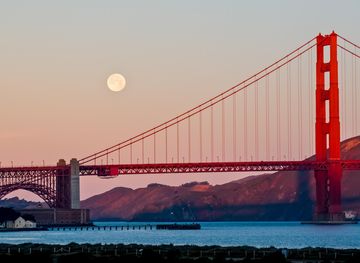
Explore more of California
Discover California: A land of diverse landscapes, iconic cities, and endless adventures, from sun-soaked beaches to towering redwoods and vibrant cultural experiences.
Explore California