

Free Pasadena Travel Guide & Mobile App
Plan your Pasadena trip with Evendo. Get free guides to top attractions, restaurants, hotels, and bars. Web access or download the mobile app.


Pasadena, California, pairs Rose Parade heritage with Craftsman architecture, acclaimed museums, leafy avenues, mountain views and lively Old Pasadena culture.
Architecture and Setting
Pasadena occupies the broad plain below the San Gabriel Mountains, northeast of central Los Angeles, with a character shaped by leafy residential streets, cultural institutions and a celebrated architectural legacy. Its most distinctive neighbourhood is Old Pasadena, where restored commercial blocks, arcades and courtyards occupy the city's original business district. Nearby, the Central District and Playhouse Village combine historic buildings with cafés, galleries, independent shops and theatres. Pasadena is especially associated with the American Craftsman movement: the Gamble House and tours of other surviving residences reveal the warm timber, built-in furniture and practical artistry that defined early twentieth-century Californian design.Read more about Pasadena
Museums and Cultural Life
Seasonal Traditions
When is the best time to visit Pasadena?
Best: May–June, October · 24–26°C| Month | High (°C) | Rainfall (mm) |
|---|---|---|
| January | 17 | 60 |
| February | 19 | 51 |
| March | 20 | 51 |
| April | 22 | 25 |
| May (best) | 24 | 11 |
| June (best) | 26 | 3 |
| July | 29 | 1 |
| August | 29 | 1 |
| September | 28 | 7 |
| October (best) | 24 | 20 |
| November | 20 | 30 |
| December | 18 | 58 |
Getting to and around Pasadena
How to get there
Transportation
Best attractions in Pasadena
Pasadena's attractions range from major art collections to carefully preserved neighbourhoods and outdoor spaces. The Norton Simon Museum brings European paintings and Asian sculpture together around a tranquil sculpture garden, while the Pacific Asia Museum examines the art and cultures of Asia and the Pacific in the heart of the city. At the Gamble House, guided visits reveal the craftsmanship of a landmark Greene and Greene residence. Old Pasadena offers a contrasting experience, with restored commercial architecture, arcades, courtyards, independent shops and restaurants spread across several walkable blocks. The Pasadena Museum of History provides local context, and Kidspace Children's Museum occupies a hands-on setting near the Rose Bowl. The Rose Bowl itself is a destination for sport and events, while the Arroyo Seco and nearby foothill paths introduce the landscape that has long shaped Pasadena's identity.
-
Botanical garden
Descanso Gardens
Discover a serene escape at Descanso Gardens: Explore diverse botanical collections, art, and family-friendly activities in a beautiful urban oasis.
24 min drive · 8.1 km from city centre
-
Tourist attraction
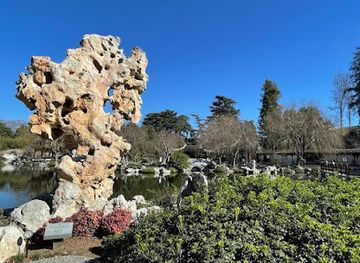
The Huntington Library, Art Museum, and Botanical Gardens
Discover art, literature, and botanical wonders at The Huntington, a cultural oasis in San Marino, California. A must-see destination near Pasadena.
12 min drive · 4.1 km from city centre
-
Stadium
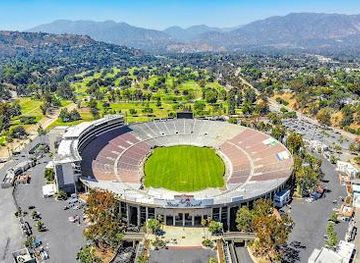
Rose Bowl Stadium
Experience history at Pasadena's Rose Bowl Stadium, home to legendary games, concerts, and events since 1922. A National Historic Landmark.
8 min drive · 2.7 km from city centre
-
Book store
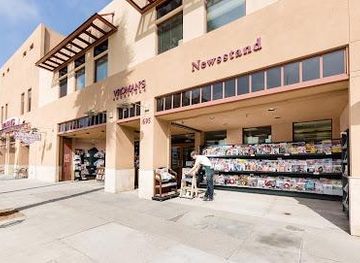
Vroman's Bookstore
Discover a literary treasure in Pasadena at Vroman's Bookstore, Southern California's oldest independent bookstore since 1894.
5 min drive · 1.6 km from city centre
Best landmarks in Pasadena
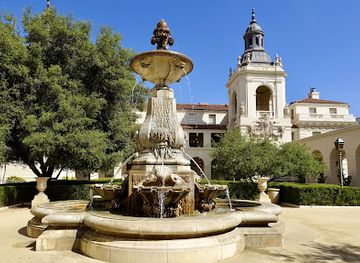
The Gamble House is Pasadena's defining architectural landmark, a carefully integrated Greene and Greene residence whose exposed timber, art glass and built-in furnishings embody the American Craftsman ideal. Pasadena City Hall, completed in 1927, presents a formal Mediterranean-influenced civic design organised around a domed central structure and courtyard. The Colorado Street Bridge, opened in 1913, crosses the Arroyo Seco with an elegant concrete form and remains one of the city's most recognisable engineering works. The Rose Bowl, built in the Arroyo Seco in 1922, is both a major sports venue and a symbol of Pasadena's Tournament of Roses tradition. All Saints Church and Pasadena Civic Auditorium add important religious and civic dimensions, while the historic commercial buildings of Old Pasadena document the city's transformation from early town centre to restored urban district.
-
Children's museum
Kidspace Children's Museum
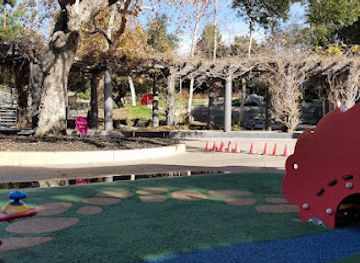
Explore creativity and learning at Kidspace Children's Museum, Pasadena's premier destination for interactive family fun and educational adventures.
8 min drive · 2.5 km from city centre
-
Visitor center
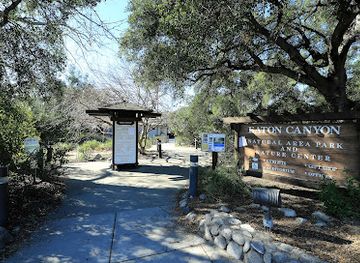
Eaton Canyon Nature Center
Experience the natural beauty of Eaton Canyon Nature Center, a serene oasis featuring trails, exhibits, and wildlife in the heart of Pasadena, California.
13 min drive · 4.2 km from city centre
-
Historical landmark
Old Pasadena
Explore Old Pasadena, a blend of history and modernity, where charming streets meet vibrant shopping, dining, and cultural experiences.
6 min drive · 2.0 km from city centre
-
Garden
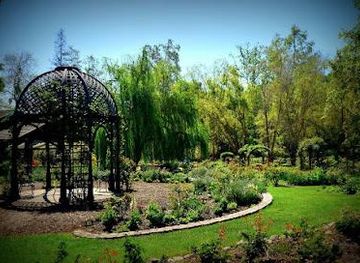
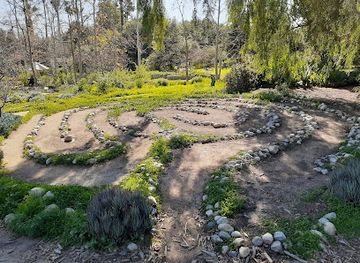
Arlington Garden in Pasadena
Discover the enchanting beauty of Arlington Garden in Pasadena, a serene haven of nature perfect for relaxation and exploration.
12 min drive · 3.9 km from city centre
Explore Pasadena on the map
Plan your Pasadena trip on one map. See where the top attractions, landmarks, restaurants, bars and hotels are, find what's near where you're staying, and book hotels and experiences in a few clicks.
Neighbourhoods in Pasadena
-

-


Swipe for more neighbourhoods
Best hotels in Pasadena
Best restaurants in Pasadena
Pasadena's dining scene reflects Southern California's cultural breadth and the city's distinct neighbourhoods. Old Pasadena is dense with restaurants, cafés, bakeries and bars in restored historic buildings, while Colorado Boulevard, Lake Avenue and the Playhouse District provide further concentrations of dining. Mexican, Latin American, Asian, Mediterranean and contemporary Californian cooking sit alongside familiar American formats, with menus often making use of seasonal produce and the region's long-standing citrus-growing tradition. Coffee shops and casual breakfast spots are particularly characteristic of the city's daytime rhythm, and farmers' markets provide opportunities to see the produce-driven culture associated with the wider Los Angeles area. Pasadena also has a substantial Chinese and broader Asian dining presence, especially in the San Gabriel Valley nearby, though those communities belong to neighbouring cities rather than Pasadena itself.
-
American
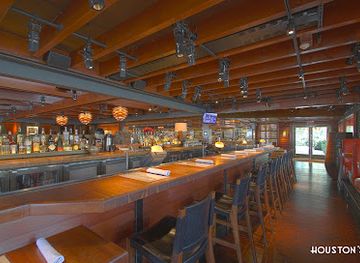
Houston's
Discover the exquisite flavors of American cuisine at Houston's in Pasadena – where tradition meets innovation.
7 min drive · 2.4 km from city centre
-
Italian
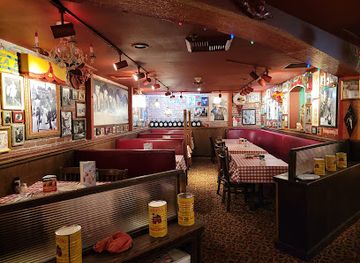
Buca di Beppo Italian Restaurant
Experience authentic Italian cuisine at Buca di Beppo in Pasadena - where every meal feels like a family gathering.
7 min drive · 2.2 km from city centre
-
American
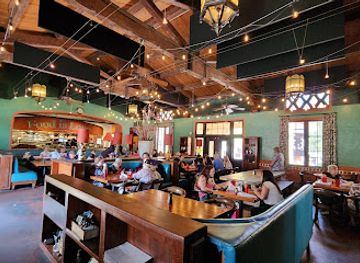
The Luggage Room Pizzeria & La Grande Orange
Discover delightful American and Californian flavors at The Luggage Room Pizzeria & La Grande Orange in Pasadena - perfect for brunch or dinner!
7 min drive · 2.3 km from city centre
-
New American
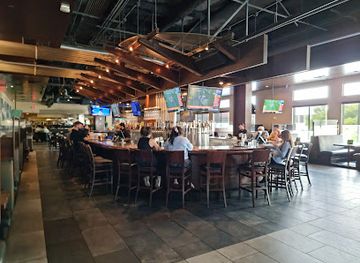
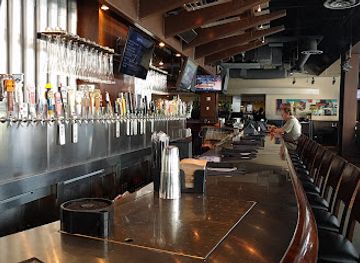
Yard House
Discover Yard House in Pasadena: where American cuisine meets an extensive selection of craft beers in a vibrant gastropub setting.
5 min drive · 1.7 km from city centre
Best bars in Pasadena
Pasadena's evenings are more varied than its reputation as a residential city might suggest, though nightlife is generally measured rather than club-led. Old Pasadena has the greatest concentration of cocktail bars, pubs, wine bars and late-opening restaurants, while the Playhouse District attracts theatre audiences and smaller evening venues. Live performances at the Pasadena Playhouse, Pasadena Civic Auditorium and other arts institutions give the city a strong culture of planned entertainment, and outdoor concerts or community events may animate spaces around the Rose Bowl and Memorial Park at suitable times of year. The city's bars tend to favour conversation, food and drinks over large dance floors, with the liveliest atmosphere often found on weekends and during major events. Travel between districts by rideshare or taxi is practical after late performances, as the city is spread out and public transport service is more limited at night.
-
Bar
Yard House
Explore Yard House in Pasadena, where vibrant New American cuisine meets an extensive selection of craft beers in a lively sports bar atmosphere.
5 min drive · 1.7 km from city centre
-
Bar
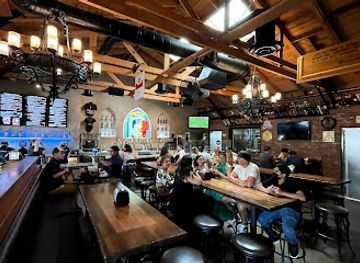
Congregation Brewery & Cocina - Pasadena
Discover a vibrant dining experience at Congregation Brewery & Cocina in Pasadena, blending craft beer with delicious Mexican dishes for all occasions.
7 min drive · 2.5 km from city centre
-
Sports bar
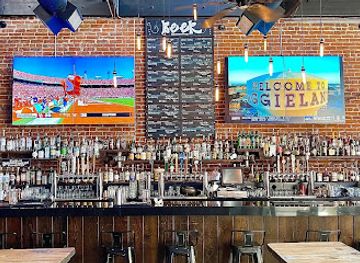
Kings Row Gastropub
Discover the perfect blend of gourmet cuisine and sports excitement at Kings Row Gastropub in Old Pasadena.
6 min drive · 2.0 km from city centre
-
Pub
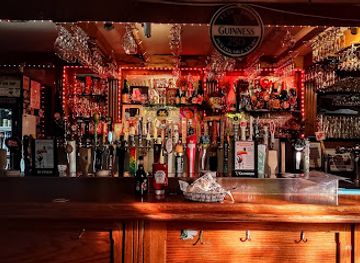
Lucky Baldwins Pub
Discover the lively atmosphere and authentic British cuisine at Lucky Baldwins Pub, a must-visit spot in Pasadena's Old Town.
6 min drive · 2.0 km from city centre
Best nightclubs in Pasadena
Pasadena's evenings are more varied than its reputation as a residential city might suggest, though nightlife is generally measured rather than club-led. Old Pasadena has the greatest concentration of cocktail bars, pubs, wine bars and late-opening restaurants, while the Playhouse District attracts theatre audiences and smaller evening venues. Live performances at the Pasadena Playhouse, Pasadena Civic Auditorium and other arts institutions give the city a strong culture of planned entertainment, and outdoor concerts or community events may animate spaces around the Rose Bowl and Memorial Park at suitable times of year. The city's bars tend to favour conversation, food and drinks over large dance floors, with the liveliest atmosphere often found on weekends and during major events. Travel between districts by rideshare or taxi is practical after late performances, as the city is spread out and public transport service is more limited at night.
-
Night club
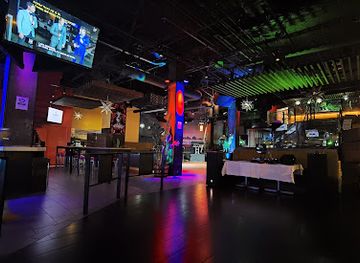
Ixtapa Cantina & Lounge
Discover the lively atmosphere of Ixtapa Cantina & Lounge, a premier destination for nightlife, live music, and delicious Mexican cuisine in Pasadena.
6 min drive · 1.9 km from city centre
-
Bar
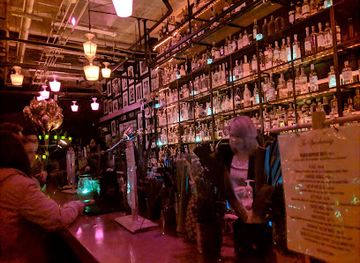
The Speakeasy
Experience the charm of the Prohibition era at The Speakeasy in Pasadena, where exceptional cocktails and a lively atmosphere await.
6 min drive · 1.9 km from city centre
-
New American
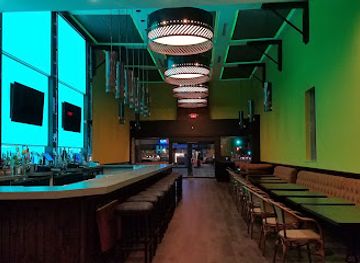
The Mixx
Experience the vibrant combination of New American cuisine and live music at The Mixx in Pasadena, where every night is a celebration of flavor and fun.
5 min drive · 1.7 km from city centre
-
Bar
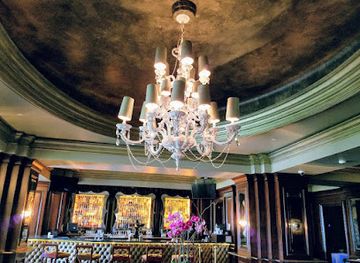
The Tap Room
Experience the charm and vibrant atmosphere of The Tap Room in Pasadena, offering crafted cocktails and a lively social scene.
13 min drive · 4.5 km from city centre
Best shops in Pasadena
Shopping in Pasadena is concentrated chiefly in Old Pasadena, where historic commercial blocks contain independent boutiques, design shops, bookshops, galleries, jewellers, cafés and national retailers without losing the area's architectural character. Colorado Boulevard and the Playhouse District offer further small businesses, while Lake Avenue has a more polished selection of fashion, beauty and homeware stores. Local farmers' markets provide seasonal fruit, vegetables, baked goods and prepared foods, reflecting the agricultural traditions of Southern California rather than a single Pasadena craft industry. Visitors interested in design can find objects and furnishings influenced by the region's Craftsman heritage, while museum shops at institutions such as the Norton Simon Museum and Pacific Asia Museum offer art books, prints and culturally themed gifts. Old Pasadena is particularly convenient for combining shopping with walking, dining and historic streetscapes.
-
Shopping mall
The Shops On Lake Avenue
Explore The Shops On Lake Avenue in Pasadena, where shopping, dining, and local culture come together for an unforgettable experience.
7 min drive · 2.3 km from city centre
-
Gift shop
Vroman's Bookstore
Explore Vroman's Bookstore in Pasadena for an unforgettable experience filled with books, gifts, and local culture.
5 min drive · 1.6 km from city centre
-
Shopping mall
The Paseo
Experience shopping like never before at The Paseo in Pasadena, where upscale boutiques meet exquisite dining in a stunning outdoor setting.
5 min drive · 1.8 km from city centre
-
Shopping mall
Hastings Village
Discover the charm of Hastings Village, a shopping mall in Pasadena, California, offering diverse stores and delightful dining experiences.
16 min drive · 5.3 km from city centre
Get your free copy of our complete guide to Pasadena, delivered straight to you.
Everything on this page, from attractions and restaurants to essentials and local phrases, in one PDF you can read offline, print or share.
Already have an account? Sign in
Your Pasadena guide is ready.
We'll send it to · Not you? Sign out

Getting your guide ready…
We are putting together a fresh copy of the Pasadena guide. This can take up to a minute.
This can take a few moments. If your browser asks, choose Allow so the download can start. You'll find the guide in your Downloads folder.
Nothing happened? Download it again
Sorry, the guide is taking longer than usual. Please try again in a minute, or get it by email instead.
Pasadena essentials
Currency and Payment
Safety
Emergency Situations
Do's and Don'ts
Local Tips
From Eve
Local phrases worth knowing
You don't need to get them perfect. A few words go a long way, and locals appreciate the effort.
Basics
| English | Local | Say it |
|---|---|---|
| Hello | Hey | [hey] |
| Goodbye | Later | [lay-ter] |
| Yes | Yeah | [yah] |
| No | Nah | [nah] |
| Please/You're welcome | Please/No worries | [pleez/no wor-eez] |
| Thank you | Thanks | [thanks] |
| Excuse me/Sorry | Excuse me/My bad | [ex-kyooz me/my bad] |
| How are you? | How's it going? | [hows it go-in?] |
| Fine. And you? | Good. You? | [good. yoo?] |
| Do you speak English? | You speak English? | [yoo speak ing-lish?] |
| I don't understand | I don't get it | [I don't get it] |
Eating & Drinking
| English | Local | Say it |
|---|---|---|
| I'd like to see the menu, please | Can I see the menu? | [kan I see the menu?] |
| I don't eat meat | I'm vegetarian | [im ve-juh-tair-ee-an] |
| Cheers! | Cheers! | [cheers] |
| I would like to pay, please | I'll pay now, thanks | [I'll pay now, thanks] |
Emergencies
| English | Local | Say it |
|---|---|---|
| Help! | Help! | [help!] |
| Go away! | Get lost! | [get lost!] |
| Call the Police! | Call the cops! | [call the cops!] |
| Call a doctor! | Call a doc! | [call a doc!] |
| I'm lost | I'm lost | [I'm lost] |
| I'm ill | I'm sick | [I'm sick] |
Shopping
| English | Local | Say it |
|---|---|---|
| I'd like to buy... | I wanna buy... | [I wanna buy...] |
| I'm just looking | Just browsing | [just brows-ing] |
| How much is it? | How much does it cost? | [how much duz it cost?] |
| That's too expensive | That's pricey | [that's pry-see] |
| Can you lower the price? | Can you give a discount? | [kan yoo giv a dis-kownt?] |
Time & Numbers
| English | Local | Say it |
|---|---|---|
| What time is it? | What's the time? | [whats the time?] |
| It's one o'clock | It's one | [its one] |
| Half past (10) | Ten thirty | [ten thur-tee] |
| Morning | Morning | [morning] |
| Afternoon | Afternoon | [after-noon] |
| Evening | Evening | [ee-ve-ning] |
| Yesterday | Yesterday | [yes-ter-day] |
| Today | Today | [to-day] |
| Tomorrow | Tomorrow | [to-mor-row] |
| 1 | One | [wun] |
| 2 | Two | [too] |
| 3 | Three | [three] |
| 4 | Four | [four] |
| 5 | Five | [five] |
| 6 | Six | [six] |
| 7 | Seven | [sev-en] |
| 8 | Eight | [ayt] |
| 9 | Nine | [nine] |
| 10 | Ten | [ten] |
Transport & Directions
| English | Local | Say it |
|---|---|---|
| Where's a/the...? | Where's the...? | [wheres the...?] |
| What's the address? | What's the address? | [whats the address?] |
| Can you show me (on the map)? | Can you show me (on the map)? | [kan yoo show me (on the map)?] |
| When's the next (bus)? | When's the next (bus)? | [whens the next (bus)?] |
| A ticket (to ....) | A ticket (to ....) | [A ticket (to ....)] |
History of Pasadena
Indigenous Lands and Early Settlement
The Pasadena area lies within the traditional homeland of the Tongva, an Indigenous people whose villages and seasonal activities extended across the Los Angeles Basin and the San Gabriel Valley. Spanish expeditions travelled through the region in the eighteenth century, and Mission San Gabriel Arcángel, founded nearby in 1771, became a major institution of colonial settlement, landholding and forced Indigenous labour. After Mexican independence, the area formed part of the Rancho San Pasqual land grant, awarded in 1835 to Manuel Garfias. Small-scale agriculture and ranching preceded the arrival of the American town, while Indigenous communities continued to experience profound disruption through missionisation, land loss and the political changes that followed California's incorporation into the United States.
The Founding of Pasadena
The modern city began to take shape in the 1870s, when the Indiana Colony, a group of settlers associated with the San Gabriel Valley, established an agricultural community in the area. The name Pasadena, derived from a Chippewa word meaning 'crown of the valley', was adopted in 1875. Irrigation and a favourable climate encouraged orange groves, vineyards and other crops, while the arrival of the railway made the settlement more accessible to visitors and investors. Pasadena incorporated in 1886 and soon developed from a rural colony into a planned town. Its broad streets, civic ambitions and proximity to the mountains helped establish the foundation for the distinctive urban landscape visible today.
Railways, Tourism and Civic Growth
Rail connections in the late nineteenth century transformed Pasadena into a winter resort and a desirable destination for visitors from colder parts of the United States. Hotels, churches, schools and substantial residences appeared as the population expanded, and the city cultivated an image of health, refinement and outdoor living. The completion of the Mount Lowe Railway in 1893 created a celebrated mountain excursion from Pasadena into the San Gabriel range, although the railway later suffered from fires, floods and financial difficulties before closing in 1938. Commercial development concentrated along streets such as Colorado Boulevard, while Pasadena's growing institutions gave the city a cultural and educational role within the region.
Craftsman Architecture and the Arts
Between the 1890s and the 1920s, Pasadena became an important centre of the American Arts and Crafts movement. Architects Charles and Henry Greene created highly influential residences, including the Gamble House, whose timber structure, joinery and integrated interiors expressed the movement's emphasis on materials and skilled workmanship. Pasadena's gardens, schools, libraries and private homes reflected the same interest in design adapted to Southern California's climate. The city's cultural life also expanded through museums, music and theatre. This period left a substantial architectural inheritance, although later redevelopment removed many historic buildings and prompted preservation campaigns that continue to shape planning and neighbourhood identity.
The Tournament of Roses Tradition
The first Tournament of Roses parade took place in 1890, organised by the Valley Hunt Club to promote Pasadena's mild winter climate. Decorated carriages developed into elaborate floral floats, and the event gradually became a nationally recognised New Year's Day tradition. The Rose Bowl stadium, completed in 1922, extended the celebration's sporting dimension and became a major venue for college football. The parade and game helped broadcast Pasadena's identity far beyond Southern California, while also reinforcing the importance of Colorado Boulevard and the Arroyo Seco in the city's civic geography. Their continuing prominence reflects both local pride and the power of seasonal spectacle in shaping urban identity.
Modern Pasadena
Pasadena grew rapidly during the twentieth century as Los Angeles expanded and Southern California's roads, universities and aerospace industries developed. The city became home to the California Institute of Technology and the Jet Propulsion Laboratory, institutions that strengthened its association with scientific research and space exploration. Freeways and suburban growth altered travel patterns, while historic districts and buildings faced pressure from redevelopment. From the late twentieth century, preservation work and the restoration of Old Pasadena's commercial core helped revive the centre as a pedestrian-oriented cultural and retail district. Contemporary Pasadena combines this renewed urban life with established residential neighbourhoods, major museums, scientific institutions and the persistent influence of its Craftsman heritage.
Pasadena in Photos
Browse through our photo collection highlighting the charm and character of the destination.
Cities near Pasadena
The closest cities to Pasadena, if you have time for more than one stop.
-

-

-

-

-


Swipe for more cities
Explore more
Explore more of California
Discover California: A land of diverse landscapes, iconic cities, and endless adventures, from sun-soaked beaches to towering redwoods and vibrant cultural experiences.
Explore California