

Hollywood Boulevard (Hollywood) Travel Guide - Free
Explore Hollywood Boulevard in Hollywood with Evendo's free guide. Find the best shops, historic streets, restaurants, and gems on web or mobile.


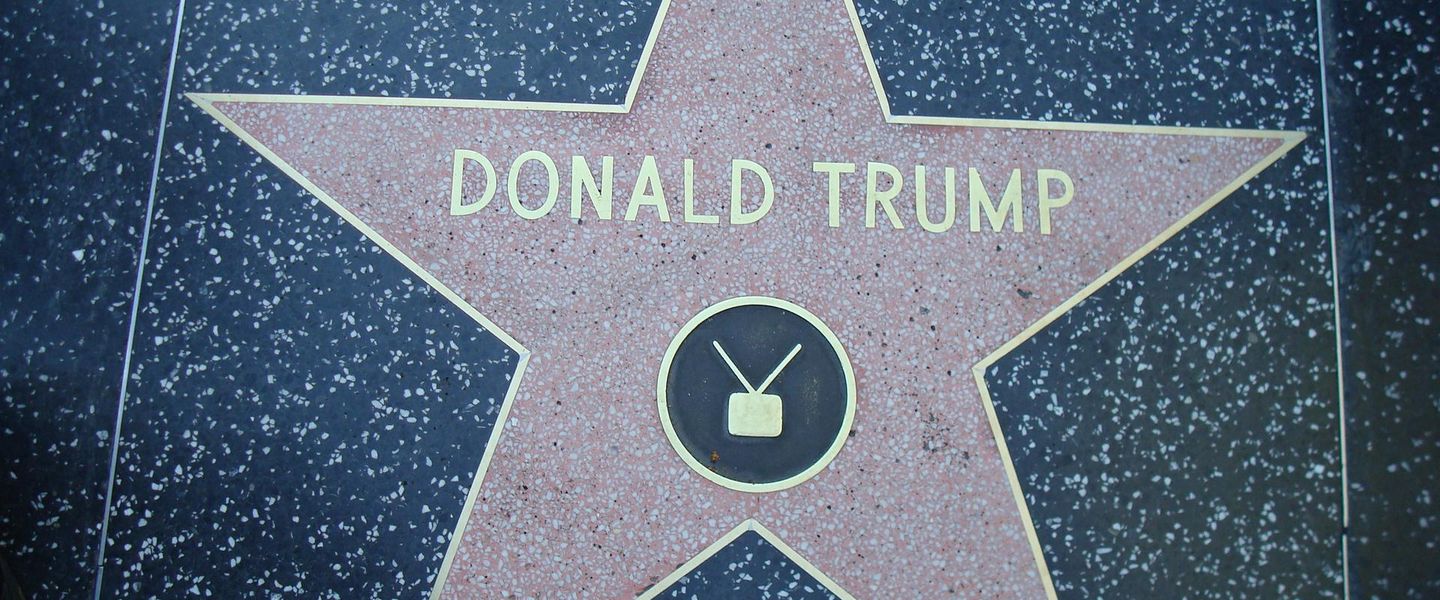


Hollywood Boulevard in Los Angeles traces cinema history through the Walk of Fame, landmark theatres, museums, restaurants and nightlife in California.
The Boulevard and Its Setting
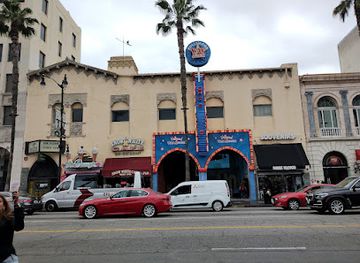
Hollywood Boulevard is the public stage of Hollywood, the Los Angeles district whose name became shorthand for the American film industry. In geographical terms, Hollywood is not a separate incorporated city: it is a neighbourhood within the City of Los Angeles, in California. The boulevard runs east-west through its commercial core, linking the busy Hollywood/Highland area with Hollywood/Vine and continuing east towards Hollywood/Western. Its famous central stretch is framed by theatres, hotels, restaurants, museums, cinemas and shops, while side streets quickly reveal apartment buildings, production offices and quieter residential blocks.Read more about Hollywood Boulevard
Film History in the Streets
Street Life and Everyday Hollywood
Best attractions in Hollywood Boulevard
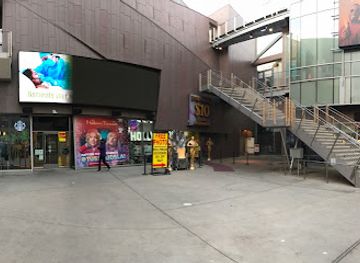
The central attractions of Hollywood Boulevard are concentrated between Highland Avenue and Vine Street, where the Hollywood Walk of Fame turns an ordinary pavement into a public archive of entertainment history. TCL Chinese Theatre combines a grand historic cinema façade with the courtyard's handprints and footprints, while the Dolby Theatre hosts major performances and the Academy Awards. Opposite them, Ovation Hollywood provides elevated views towards the Hollywood Sign and a large collection of retail and dining spaces. The El Capitan Theatre offers a continuing movie-palace experience, and the Hollywood Museum, housed in the former Max Factor Building, explores costumes, props and studio-era history. Further east, the Hollywood Roosevelt adds hotel history and architectural atmosphere. The attractions are close enough to connect on foot, but the boulevard remains a working traffic route rather than a pedestrian-only heritage quarter.
-
 Wax museum
Hollywood Wax Museum
Discover the iconic Hollywood Wax Museum, where lifelike wax figures of your favorite stars await in a fun and interactive setting.
3 min walk · 0.2 km from neighbourhood centre
-
Tourist attraction
Ripley's Believe It or Not!
Explore the bizarre at Ripley's Believe It or Not! in Hollywood, where reality twists and the unusual comes to life in fascinating exhibits.
2 min walk · 0.2 km from neighbourhood centre
-
Tourist attraction
Guinness World Records Museum
Discover the wonders of human achievement at the Guinness World Records Museum in Hollywood, an interactive experience filled with record-breaking exhibits.
3 min walk · 0.2 km from neighbourhood centre
-
Tourist attraction
洛杉矶星光大道
Explore the vibrant Hollywood Boulevard, home to the iconic Walk of Fame and a rich tapestry of entertainment history, dining, and shopping.
2 min walk · 0.2 km from neighbourhood centre


Best landmarks in Hollywood Boulevard
The Hollywood Walk of Fame is the boulevard's defining civic landmark, extending along Hollywood Boulevard and nearby intersecting streets with terrazzo stars honouring figures from film, television, recording, radio and live performance. TCL Chinese Theatre is significant both for its elaborate exterior and for the handprint and footprint ceremony that made its forecourt part of Hollywood mythology. The Dolby Theatre represents the modern continuation of the boulevard's awards-and-premiere tradition, while the El Capitan Theatre preserves the scale and theatrical decoration of a historic movie palace. The Hollywood Roosevelt, opened in 1927, remains an important reminder of the district's early hotel culture. Musso & Frank Grill, with its long operating history, adds a social landmark to the architectural ones, connecting dining with the boulevard's film-era identity.
-
Shopping mall
Ovation Hollywood
Discover the heart of Hollywood at Ovation Hollywood, where shopping, dining, and entertainment come together in a vibrant atmosphere.
1 min walk · 0.1 km from neighbourhood centre
-
Wax museum
Madame Tussauds Hollywood
Discover the world of fame at Madame Tussauds Hollywood, where lifelike wax figures of celebrities and interactive exhibits await your visit.
1 min walk · 0.1 km from neighbourhood centre
-
Wax museum
Hollywood Wax Museum
Immerse yourself in Hollywood's glitz and glamour at the Hollywood Wax Museum, where famous stars come to life in stunning detail.
3 min walk · 0.2 km from neighbourhood centre
-
Museum
World of Illusions Los Angeles
Explore the enchanting World of Illusions in Los Angeles, where art and reality intertwine for a whimsical adventure in the heart of Hollywood.
3 min walk · 0.3 km from neighbourhood centre


Explore Hollywood Boulevard on the map
A handpicked selection of must-see spots in Hollywood Boulevard, mapped for you.
Best hotels in Hollywood Boulevard
Best restaurants in Hollywood Boulevard
Dining on Hollywood Boulevard ranges from long-established institutions to contemporary chains and casual venues serving the heavy visitor trade. Musso & Frank Grill, established in 1919, is the area's defining historic restaurant, known for its old-school dining-room atmosphere and close association with Hollywood's studio-era mythology. Around Hollywood/Highland and Ovation Hollywood, visitors will find broad international choices, cafés, quick meals and restaurants aimed at theatre audiences. The blocks around Hollywood/Vine add further options, while nearby streets such as Cahuenga Boulevard are associated with a denser modern dining and bar scene. The boulevard is not primarily a food market district, so its culinary identity lies in its mixture of landmark restaurants, entertainment-oriented dining and everyday Los Angeles options. Menus, service styles and opening arrangements vary, particularly around major events and performances.
-
American
Hard Rock Cafe
Dine amidst rock legends at Hard Rock Cafe on Hollywood Boulevard—where great food meets iconic music history.
1 min walk · 0.1 km from neighbourhood centre
-
Asian
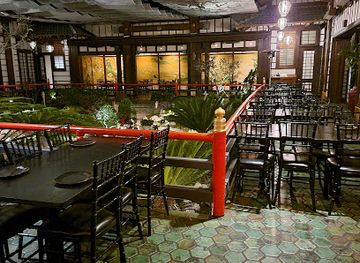
Yamashiro Hollywood
Discover the culinary artistry of Yamashiro Hollywood, where Asian flavors meet breathtaking views in an unforgettable dining experience.
6 min walk · 0.5 km from neighbourhood centre
-
American
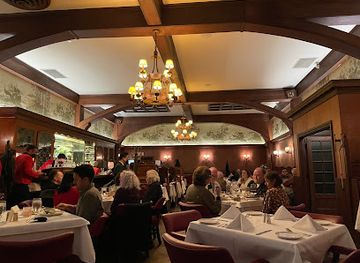
Musso & Frank Grill
Experience culinary excellence at Musso & Frank Grill - an iconic steakhouse steeped in Hollywood history.
6 min walk · 0.5 km from neighbourhood centre
-
Restaurant
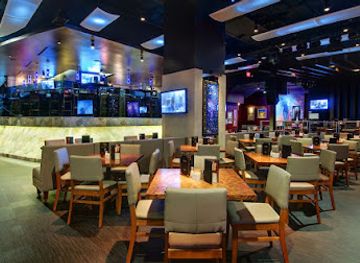
Dave & Buster's Los Angeles - Hollywood
Discover the ultimate blend of dining and gaming at Dave & Buster's Los Angeles - Hollywood, where every visit is filled with excitement and flavor.
2 min walk · 0.1 km from neighbourhood centre

Best bars in Hollywood Boulevard
Evening life on Hollywood Boulevard is shaped by theatres, cinemas, restaurants and the steady spectacle of the Walk of Fame rather than by one continuous strip of nightclubs. The Hollywood Roosevelt provides one of the area's most recognisable historic hospitality settings, while bars and late-night venues are especially concentrated on nearby Cahuenga Boulevard and around Hollywood/Vine. Theatre programmes at the Dolby Theatre, El Capitan Theatre and other nearby venues bring a different kind of night-time activity, with premieres and large events occasionally producing crowds, street closures and heightened security. Visitors should distinguish the central boulevard from the surrounding nightlife streets: the atmosphere can shift within a few blocks from busy and entertainment-led to comparatively quiet. Venue entry policies and schedules change, so evening plans need checking in advance.
-
Irish pub
Jameson's Irish Pub
Discover a lively blend of Irish tradition and Hollywood flair at Jameson's Irish Pub, a must-visit destination for food and sports lovers.
5 min walk · 0.4 km from neighbourhood centre
-
Mexican
Cabo Cantina Hollywood
Experience authentic Mexican cuisine and vibrant nightlife at Cabo Cantina Hollywood, your go-to spot in the heart of Tinseltown.
6 min walk · 0.4 km from neighbourhood centre
-
Cocktail bar
The Woods
Discover The Woods in Hollywood, where expertly crafted cocktails and a vibrant atmosphere create an unforgettable nightlife experience.
6 min walk · 0.5 km from neighbourhood centre
-
Cocktail bar
The Spare Room
Experience the vibrant nightlife of Hollywood at The Spare Room, where cocktails and bowling collide in a stylish lounge setting.
2 min walk · 0.1 km from neighbourhood centre


Best nightclubs in Hollywood Boulevard
Evening life on Hollywood Boulevard is shaped by theatres, cinemas, restaurants and the steady spectacle of the Walk of Fame rather than by one continuous strip of nightclubs. The Hollywood Roosevelt provides one of the area's most recognisable historic hospitality settings, while bars and late-night venues are especially concentrated on nearby Cahuenga Boulevard and around Hollywood/Vine. Theatre programmes at the Dolby Theatre, El Capitan Theatre and other nearby venues bring a different kind of night-time activity, with premieres and large events occasionally producing crowds, street closures and heightened security. Visitors should distinguish the central boulevard from the surrounding nightlife streets: the atmosphere can shift within a few blocks from busy and entertainment-led to comparatively quiet. Venue entry policies and schedules change, so evening plans need checking in advance.
-
Night club
Emerson Theatre
Experience the electrifying nightlife at Emerson Theatre, where world-class DJs and vibrant dance parties create unforgettable memories in Hollywood.
5 min walk · 0.4 km from neighbourhood centre
-
Night club
Teddy's
Discover the epitome of Hollywood nightlife at Teddy's, where vibrant energy meets upscale ambiance in an unforgettable club experience.
2 min walk · 0.1 km from neighbourhood centre

Best shops in Hollywood Boulevard
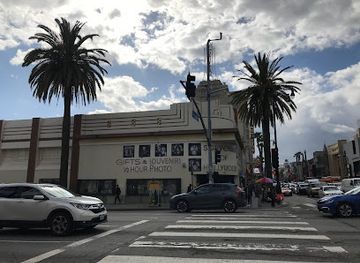
Shopping on Hollywood Boulevard is geared mainly towards visitors, entertainment and souvenirs rather than specialist local retail. Ovation Hollywood and the Hollywood/Highland complex provide the largest concentration of shops, alongside restaurants and open public spaces, while the Walk of Fame corridor contains stores selling film merchandise, clothing, memorabilia and gifts. The Hollywood Museum's shop extends the area’s fascination with costumes and screen history, and smaller retailers appear among theatres, hotels and casual dining businesses. This is not a traditional produce market or a tightly defined independent shopping quarter, and the commercial offer can feel more event-led than residential. Visitors interested in a broader Los Angeles retail experience will find more specialist stores elsewhere, but the boulevard's shops are useful for cinema-related souvenirs and for observing how the district's entertainment identity is packaged for an international audience.
-
Souvenir store
Hollywood $10 Boutique
Explore the charm of Hollywood with budget-friendly souvenirs at Hollywood $10 Boutique, where every treasure is just $10.
1 min walk · 0.1 km from neighbourhood centre
-
Souvenir store
Souvenir Stop
Explore the heart of Hollywood at Souvenir Stop, where unique memorabilia and collectibles await every traveler seeking a piece of Tinseltown.
3 min walk · 0.2 km from neighbourhood centre
-
Gift shop
Gifts of Hollywood
Explore Gifts of Hollywood for unique souvenirs and memorabilia, capturing the essence of Tinseltown in every treasure.
2 min walk · 0.1 km from neighbourhood centre
-
Upholstery shop
Paradise Hollywood
Discover unique upholstery and gifts at Paradise Hollywood, a vibrant shopping destination on the iconic Hollywood Boulevard.
3 min walk · 0.2 km from neighbourhood centre

Hollywood Boulevard essentials
Getting There
Getting Around
Safety
Emergency Situations
Do's and Don'ts
Local Tips

From Eve
Local phrases worth knowing
You don't need to get them perfect. A few words go a long way, and locals appreciate the effort.
Basics
| English | Local | Say it |
|---|---|---|
| Hello | Hey | [hey] |
| Goodbye | Later | [lay-ter] |
| Yes | Yep | [yep] |
| No | Nope | [nope] |
| Please/You're welcome | Sure thing | [sher thang] |
| Thank you | Thanks | [thanks] |
| Excuse me/Sorry | My bad | [my bad] |
| How are you? | What's up? | [wuts up] |
| Fine. And you? | Good. You? | [good. yoo] |
| Do you speak English? | You speak English? | [yoo speek ing-glish] |
| I don't understand | I don't get it | [I dont get it] |
Eating & Drinking
| English | Local | Say it |
|---|---|---|
| I'd like to see the menu, please | Let me check out the menu | [let mee chek out the menu] |
| I don't eat meat | I'm vegetarian | [I'm ve-ji-tear-ee-un] |
| Cheers! | Cheers! | [cheers] |
| I would like to pay, please | Check, please | [chek, please] |
Emergencies
| English | Local | Say it |
|---|---|---|
| Help! | Help! | [help] |
| Go away! | Get lost! | [get lost] |
| Call the Police! | Call the cops! | [call the cops] |
| Call a doctor! | Get a doctor! | [get a doctor] |
| I'm lost | I'm lost | [I'm lost] |
| I'm ill | I'm sick | [I'm sick] |
Shopping
| English | Local | Say it |
|---|---|---|
| I'd like to buy... | I wanna buy... | [I wanna buy] |
| I'm just looking | Just browsing | [just brow-zing] |
| How much is it? | How much? | [how much] |
| That's too expensive | That's pricey | [that's pry-see] |
| Can you lower the price? | Can you do a deal? | [can yoo do a deal] |
Time & Numbers
| English | Local | Say it |
|---|---|---|
| What time is it? | What's the time? | [wuts the time] |
| It's one o'clock | It's one | [its one] |
| Half past (10) | Half ten | [half ten] |
| Morning | Morning | [morning] |
| Afternoon | Afternoon | [afternoon] |
| Evening | Evening | [evening] |
| Yesterday | Yesterday | [yester-day] |
| Today | Today | [to-day] |
| Tomorrow | Tomorrow | [to-mor-row] |
| 1 | One | [wun] |
| 2 | Two | [too] |
| 3 | Three | [three] |
| 4 | Four | [four] |
| 5 | Five | [five] |
| 6 | Six | [six] |
| 7 | Seven | [seven] |
| 8 | Eight | [ate] |
| 9 | Nine | [nine] |
| 10 | Ten | [ten] |
Transport & Directions
| English | Local | Say it |
|---|---|---|
| Where's a/the...? | Where's the...? | [wheres the] |
| What's the address? | What's the address? | [whats the address] |
| Can you show me (on the map)? | Show me on the map | [show me on the map] |
| When's the next (bus)? | When's the next bus? | [whens the next bus] |
| A ticket (to ....) | A ticket to .... | [a ticket to] |
History of Hollywood Boulevard
From Ranch Land to Hollywood
The area that became Hollywood was largely rural in the nineteenth century, shaped by ranches, orchards and the routes connecting Los Angeles with the surrounding foothills. Real-estate developer Harvey Henderson Wilcox and his wife Daeida established a residential development called Hollywood in the 1880s; the name was applied to the settlement rather than originating as a film-industry label. Prospect Avenue became the district's principal east-west thoroughfare and was renamed Hollywood Boulevard after Hollywood was annexed to Los Angeles in 1910. Early development around the boulevard included homes, churches, shops and civic buildings, creating the urban framework later transformed by entertainment businesses.
The Rise of the Film District
Motion-picture production expanded in Southern California during the early twentieth century, and Hollywood Boulevard became a prominent commercial and entertainment address even as studios operated across a wider area. The opening of Grauman's Chinese Theatre in 1927, now TCL Chinese Theatre, established a ceremonial setting for premieres, while the Hollywood Roosevelt Hotel opened the same year as a fashionable gathering place for the film community. The boulevard's large theatres, hotels and retail buildings helped turn Hollywood into an internationally recognised symbol of cinema, although production itself was never confined to this single street.
The Walk of Fame Era
The Hollywood Walk of Fame was created in the late 1950s and officially completed its first phase in 1960, embedding the names of performers and entertainment figures into the boulevard's pavements. It gave visitors a ceremonial route through the district while reinforcing Hollywood's role as a place where celebrity could be publicly commemorated. During the later twentieth century, however, parts of Hollywood Boulevard experienced disinvestment, declining footfall and deteriorating buildings. Historic theatres and façades survived alongside changing retail, nightlife and residential uses, preserving a visibly layered streetscape rather than a single uninterrupted period of glamour.
Restoration and Cultural Reinvention
From the late twentieth century onwards, public and private investment reshaped the central boulevard. The restored El Capitan Theatre, the opening of the Kodak Theatre in 2001, now the Dolby Theatre, and the development of Hollywood and Highland, now Ovation Hollywood, strengthened the area as a destination for cinema, retail and large events. The Hollywood & Highland complex was later renamed Ovation Hollywood, reflecting a broader effort to move beyond a single film-centred identity. Today the boulevard combines heritage attractions, live performance, museums, restaurants, nightlife and intense visitor activity, while its surrounding blocks remain part of an ordinary Los Angeles neighbourhood.
Hollywood Boulevard in Photos
Browse through our photo collection highlighting the charm and character of the destination.
Neighbourhoods near Hollywood Boulevard
The closest neighbourhoods to Hollywood Boulevard, if you have time for more than one stop.
-

-


Swipe for more neighbourhoods
Explore more

Explore more of Hollywood
Hollywood, California blends film history, the Walk of Fame, landmark theatres, live music, Hollywood Hills views and lively Los Angeles culture.
Explore Hollywood