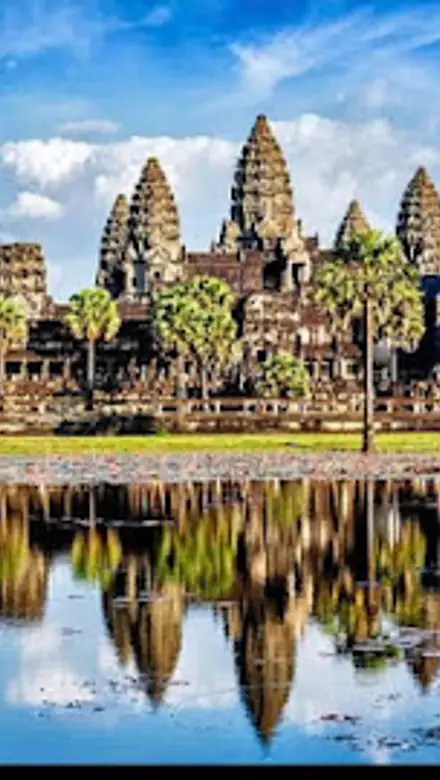
Angkor Wat, Siem Reap Travel Guide
Free Guide: Explore Angkor Wat, the largest religious monument in the world, a stunning example of Khmer architecture and a symbol of Cambodia.


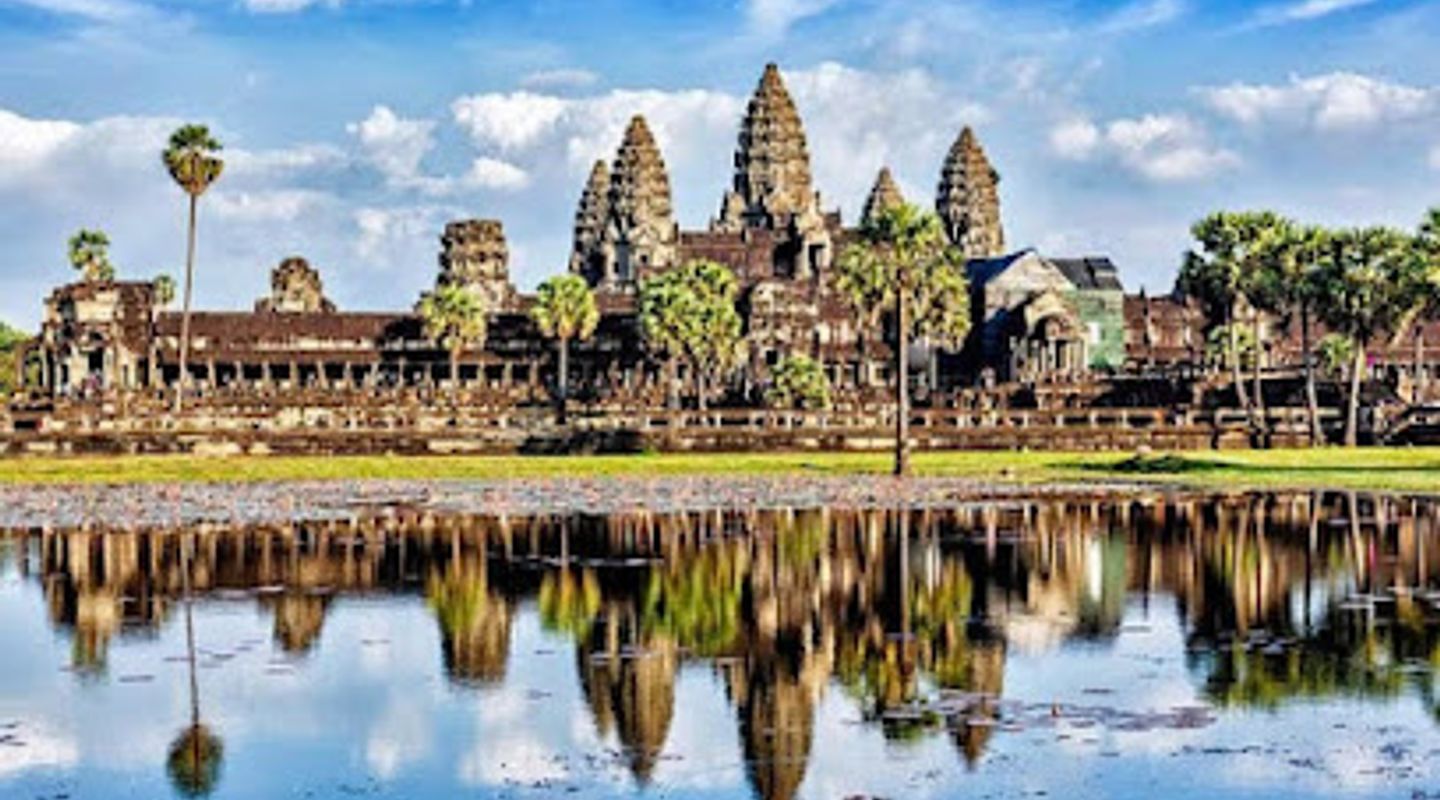
A brief summary of Angkor Wat
Explore Angkor Wat, the largest religious monument in the world, a stunning example of Khmer architecture and a symbol of Cambodia.
Angkor Wat, a UNESCO World Heritage site in Cambodia, is one of the largest religious monuments in the world. Built in the 12th century during the Khmer Empire, it stands as a stunning example of Khmer architecture, originally dedicated to the Hindu god Vishnu and later transformed into a Buddhist temple. Its intricate carvings, expansive design, and historical significance draw millions of visitors annually.
- Address
- Krong Siem Reap
Getting there
Tuk-tuk
Taxi
Discover more about Angkor Wat
Overview
Angkor Wat, meaning "City/Capital of Temples" in Khmer, is a magnificent temple complex in Cambodia, a testament to the Khmer Empire's architectural prowess and spiritual depth. Constructed in the early 12th century by King Suryavarman II, it was first dedicated to the Hindu god Vishnu, serving as the king's state temple and eventual mausoleum. The temple's design is a blend of the temple-mountain and galleried temple styles, symbolizing Mount Meru, the mythical home of the gods in both Hindu and Buddhist traditions.Covering an area of 162.6 hectares (401.8 acres), Angkor Wat is enclosed by a 3.6-kilometer outer wall and a moat stretching over 5 kilometers. This vast complex features three rectangular galleries, each elevated above the previous one, leading to a central quincunx of towers. The intricate bas-reliefs and sandstone carvings depict scenes from Hindu mythology and Khmer history, showcasing the empire's rich cultural and religious syncretism.Towards the end of the 12th century, Angkor Wat transitioned into a Buddhist temple, reflecting Cambodia's shift in religious beliefs. Despite the change, the temple retains elements of both Hindu and Buddhist artistry, symbolizing the country's diverse spiritual journey. Today, Angkor Wat stands as a symbol of Cambodia, a source of national pride, and a pilgrimage site for Buddhists. Its architectural brilliance, historical depth, and cultural significance make it a must-see destination for travelers worldwide.Visiting Angkor Wat is more than just seeing a historical site; it's an immersive experience that transports you back in time, allowing you to appreciate the grandeur of the Khmer Empire and the spiritual harmony it sought to achieve.
Evendo Review Centre
 Google
Guest reviews
Explore Angkor Wat on the map
A handpicked selection of must-see spots near Angkor Wat, mapped for you.
Get your free copy of our complete guide to Angkor Wat, delivered straight to you.
Everything on this page, from opening hours and how to get there to Eve’s tips and the best time to go, in one PDF you can read offline, print or share.
Already have an account? Sign in
Your Angkor Wat guide is ready.
We'll send it to · Not you? Sign out

Getting your guide ready…
We are putting together a fresh copy of the Angkor Wat guide. This can take up to a minute.
This can take a few moments. If your browser asks, choose Allow so the download can start. You'll find the guide in your Downloads folder.
Nothing happened? Download it again
Sorry, the guide is taking longer than usual. Please try again in a minute, or get it by email instead.
Unlock the best of Angkor Wat
Skip-the-line tickets, guided tours with entry, and walking tours of the area, booked in a few clicks.
 Tour with entry
Siem Reap: Small Circle Electric Scooter or E-Bike Tour
from $8.04 Tour with entry
Siem Reap Airport Service, Angkor Temple Tours
from $14.25 Tour with entry
Angkor Wat Sunrise Small Group Tour with Breakfast
from $18.05 Tour with entry
Angkor Wat Discovery – Small Group Tour with Local Experience
from $19.00


Other nearby places you may find interesting
The closest places of the same kind, if this one is not quite what you had in mind.
-

-
-
-
-


Swipe for more places
More to explore near Angkor Wat

 Best experiences near Angkor Wat
 Best hotels near Angkor Wat
 Best landmarks near Angkor Wat
 Best attractions near Angkor Wat
 Best shops near Angkor Wat
 Best restaurants near Angkor Wat
 Best bars near Angkor Wat
Do you manage this location?
Take control to get all the benefits, like improved information, better appearance, and stronger visibility across AI-powered discovery.
Explore more

Explore more of Siem Reap
Discover Siem Reap, the gateway to Angkor Wat, where ancient temples, vibrant markets, and cultural experiences create an unforgettable adventure in Cambodia.
Explore Siem Reap
Explore more of Cambodia
Discover Cambodia: From the ancient wonders of Angkor Wat to the vibrant streets of Phnom Penh, immerse yourself in a land of history, culture, and natural beauty.
Explore Cambodia