

Angkor Wat Travel Guide
Free Guide: Explore Angkor Wat, the magnificent 'City of Temples,' a UNESCO World Heritage Site and a symbol of Khmer architectural genius.


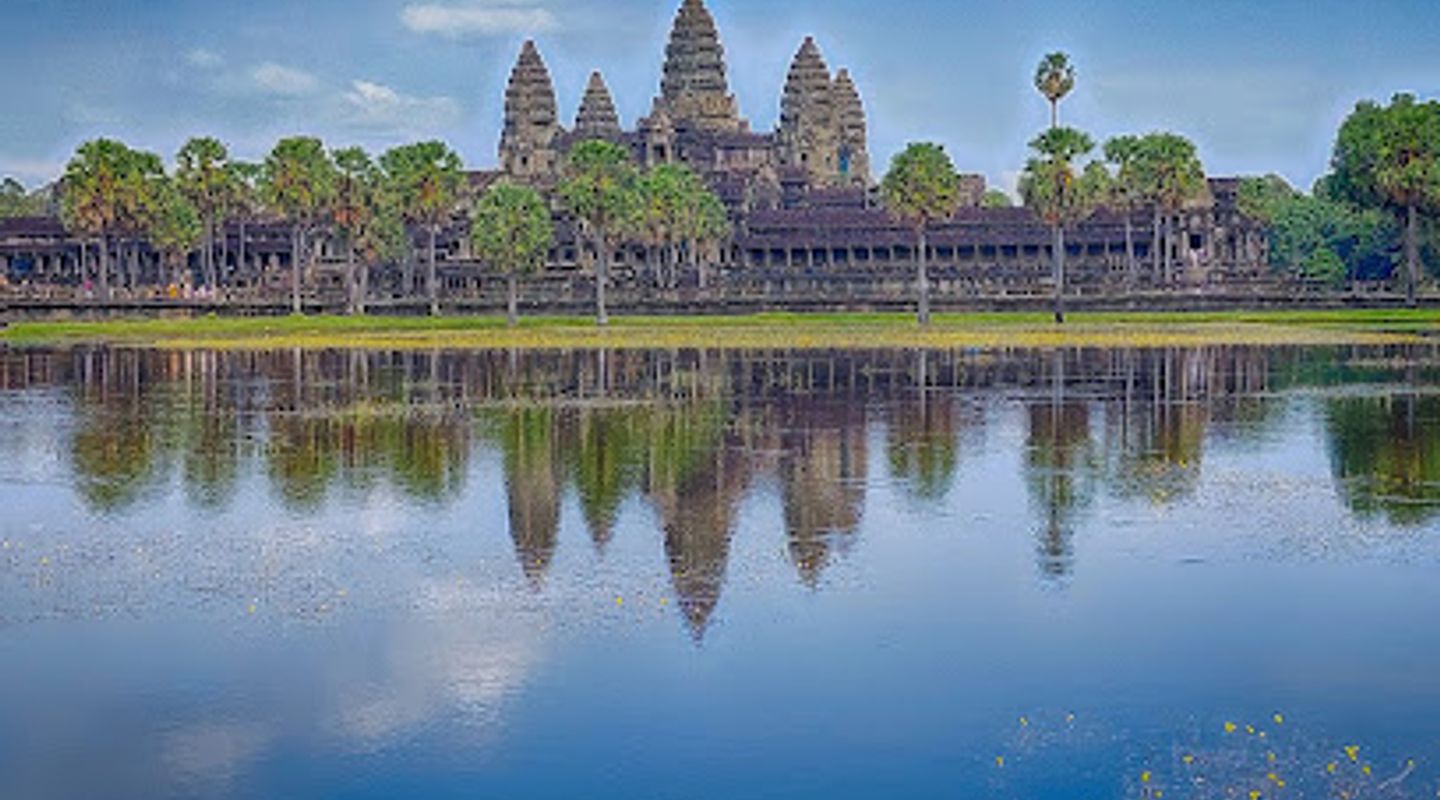
A brief summary of Angkor Wat
Explore Angkor Wat, the magnificent 'City of Temples,' a UNESCO World Heritage Site and a symbol of Khmer architectural genius.
Angkor Wat, a UNESCO World Heritage site in Cambodia, is one of the largest religious monuments in the world. Built in the 12th century during the reign of King Suryavarman II, it stands as a stunning example of Khmer architecture, originally dedicated to the Hindu god Vishnu and later transformed into a Buddhist temple.
- Address
- Krong Siem Reap
Getting there
Tuk-tuk
Taxi
Bicycle
Discover more about Angkor Wat
Overview
Angkor Wat, meaning "City of Temples" in Khmer, is a sprawling temple complex that covers over 400 acres. Constructed in the 12th century (approximately 1116-1150 CE) by Khmer King Suryavarman II, it was first dedicated to the Hindu god Vishnu, reflecting the king's faith. By the end of the 12th century, it transitioned into a Buddhist temple.The temple's design is deeply symbolic, representing Mount Meru, the sacred mountain believed to be the home of the gods in both Hindu and Buddhist traditions. The five towers of Angkor Wat mirror the five peaks of Mount Meru, while the surrounding walls symbolize the mountain ranges, and the moat represents the cosmic ocean. The complex is enclosed by an outer wall stretching 3.6 kilometers (2.2 miles), within which lie three rectangular galleries, each elevated above the last.Angkor Wat is renowned for its intricate bas-relief carvings, which depict scenes from Hindu mythology, including the epic story of the Churning of the Ocean of Milk. These carvings, extending over 1,200 square meters, provide valuable insights into ancient Khmer beliefs and artistic skills.Unlike many ancient sites, Angkor Wat was never truly abandoned, though it did experience periods of disuse and disrepair. In the 16th century, it was re-established as a Buddhist site. The temple's importance was re-ignited in the 19th century when French explorer Henri Mouhot described it as “grander than anything left to us by Greece or Rome”. Today, Angkor Wat is a symbol of Cambodia, prominently featured on the national flag and attracting thousands of visitors each year. It stands as a testament to the rich history, architectural prowess, and cultural significance of the Khmer civilization.Visitors should dress respectfully, covering shoulders and knees.
Evendo Review Centre
 Google
Guest reviews
Explore Angkor Wat on the map
A handpicked selection of must-see spots near Angkor Wat, mapped for you.
Get your free copy of our complete guide to Angkor Wat, delivered straight to you.
Everything on this page, from opening hours and how to get there to Eve’s tips and the best time to go, in one PDF you can read offline, print or share.
Already have an account? Sign in
Your Angkor Wat guide is ready.
We'll send it to · Not you? Sign out

Getting your guide ready…
We are putting together a fresh copy of the Angkor Wat guide. This can take up to a minute.
This can take a few moments. If your browser asks, choose Allow so the download can start. You'll find the guide in your Downloads folder.
Nothing happened? Download it again
Sorry, the guide is taking longer than usual. Please try again in a minute, or get it by email instead.
Unlock the best of Angkor Wat
Skip-the-line tickets, guided tours with entry, and walking tours of the area, booked in a few clicks.
 Tour with entry
Siem Reap: Small Circle Electric Scooter or E-Bike Tour
from $8.04 Tour with entry
Siem Reap Airport Service, Angkor Temple Tours
from $14.25 Tour with entry
Angkor Wat Sunrise Small Group Tour with Breakfast
from $18.05 Tour with entry
Angkor Wat Discovery – Small Group Tour with Local Experience
from $19.00


Other nearby places you may find interesting
The closest places of the same kind, if this one is not quite what you had in mind.
-
-
-
-
-


Swipe for more places
More to explore near Angkor Wat

 Best experiences near Angkor Wat
 Best hotels near Angkor Wat
 Best landmarks near Angkor Wat
 Best attractions near Angkor Wat
 Best shops near Angkor Wat
 Best restaurants near Angkor Wat
 Best bars near Angkor Wat
Do you manage this location?
Take control to get all the benefits, like improved information, better appearance, and stronger visibility across AI-powered discovery.
Explore more

Explore more of Takeo
Discover Takeo, Cambodia's hidden gem, where ancient history meets serene landscapes and authentic cultural experiences await.
Explore Takeo
Explore more of Cambodia
Discover Cambodia: From the ancient wonders of Angkor Wat to the vibrant streets of Phnom Penh, immerse yourself in a land of history, culture, and natural beauty.
Explore Cambodia
