

Free Garoua Travel Guide & Mobile App
Plan your Garoua trip with Evendo. Get free guides to top attractions, restaurants, hotels, and bars. Web access or download the mobile app.


Garoua, Cameroon’s northern riverside city, pairs Fulani heritage, lively markets, Benue landscapes and access to Bénoué National Park for wildlife.
A Benue River City
Garoua lies in northern Cameroon beside the broad Benue River, where seasonal floodplains, dry savannah and low wooded hills shape the surrounding landscape. As the capital of the North Region, it serves as an important commercial and administrative centre, with a distinctly northern atmosphere that differs from the humid cities of the south. The river remains central to the city's identity, while roads and regional connections make Garoua a practical base for exploring the wider savannah country.Read more about Garoua
Fulani Heritage and Urban Life
From City Excursions to Wildlife Country
When is the best time to visit Garoua?
Best: December–February · 26–29°C| Month | High (°C) | Rainfall (mm) |
|---|---|---|
| January (best) | 26 | 0 |
| February (best) | 29 | 0 |
| March | 31 | 1 |
| April | 33 | 1 |
| May | 33 | 8 |
| June | 32 | 50 |
| July | 31 | 148 |
| August | 32 | 123 |
| September | 32 | 53 |
| October | 33 | 11 |
| November | 33 | 2 |
| December (best) | 29 | 0 |
Getting to and around Garoua
How to get there
Transportation
Best attractions in Garoua
Garoua’s principal attractions reveal the character of northern Cameroon through its river setting, traditional authority and commercial life. The Lamido’s Palace is an important point of reference for understanding the city’s Fulani heritage, although access and photography should be approached respectfully. Nearby, the Grand Mosque contributes a strong architectural and religious presence to the urban centre. Garoua Central Market offers a close view of everyday commerce, with stalls selling grains, fabrics, household goods, leather items and regional produce. Along the Benue River, seasonal landscapes and busy local activity provide a contrasting experience to the streets and markets, though visitors should seek local advice about safe access. For a wider natural attraction, the Bénoué National Park lies outside the city to the south and is reached as a regional excursion rather than a Garoua neighbourhood. Its savannah scenery, river habitats and wildlife make it the area's leading organised nature experience.
-
Zoo
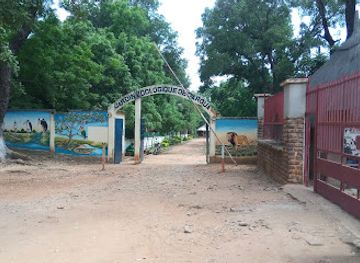
Garoua Zoological Garden
Explore the vibrant wildlife and natural beauty at Garoua Zoological Garden, a premier zoo destination in Cameroon for families and nature lovers.
16 min walk · 1.3 km from city centre
-
Garden
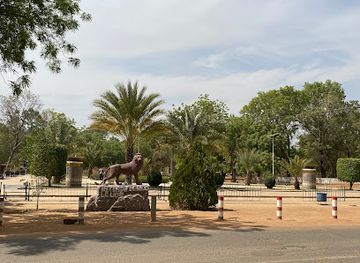
Square Président Biya
Discover tranquility and natural beauty at Square Président Biya, the lush garden oasis in Garoua, Cameroon, perfect for relaxation and cultural experiences.
7 min drive · 2.2 km from city centre
-
Botanical garden
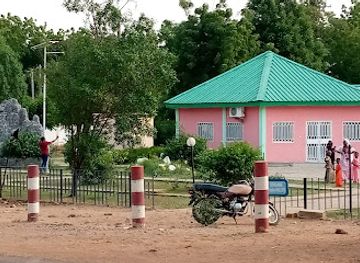
Public Garden
Discover the lush beauty and tranquility of Garoua's Public Garden, a botanical haven perfect for relaxation and exploration amidst nature.
7 min drive · 2.2 km from city centre
-
Tourist attraction
Carrefour Kanadi
Explore the vibrant Carrefour Kanadi in Garoua, a cultural hub offering local crafts, delicious food, and a taste of Cameroonian life.
12 min drive · 3.9 km from city centre
Best landmarks in Garoua
Garoua’s most significant landmarks express the meeting of traditional authority, Islam, civic administration and river-based urban development. The Lamido’s Palace is associated with the city’s long-standing lamidate and the continuing social importance of traditional leadership in northern Cameroon. The Grand Mosque is a prominent religious landmark and a visual reminder of Islam’s deep roots in the region; non-worshippers should observe access and photography etiquette. The Benue River is a natural landmark rather than a monument, but its course has influenced Garoua’s settlement, commerce and regional identity for generations. The central market represents the city’s continuing role as a trading centre, linking urban consumers with agricultural and pastoral economies. Government buildings, broad roads and older commercial quarters reflect the administrative expansion that accompanied colonial rule and later regional development.
-
Restaurant
Caïman village
Experience authentic Cameroonian cuisine in a welcoming atmosphere at Caïman Village in Garoua.
7 min drive · 2.5 km from city centre
-
 Mosque
Grande Mosquée de Laïndé Garoua
Discover the spiritual essence and architectural beauty of the Grande Mosquée de Laïndé in Garoua, Cameroon's cultural heart.
16 min drive · 5.3 km from city centre

Explore Garoua on the map
Plan your Garoua trip on one map. See where the top attractions, landmarks, restaurants, bars and hotels are, find what's near where you're staying, and book hotels and experiences in a few clicks.
Best hotels in Garoua
Best restaurants in Garoua
Garoua’s food culture reflects the savannah environment, Fulani traditions and the trading links of the Benue basin. Meals commonly draw on millet, sorghum, maize, rice, beans, vegetables and grilled meat, while couscous de mil and sauces provide familiar staples in northern Cameroon. Street stalls and modest eateries serve brochettes, grilled chicken, fried snacks and porridge, and northern specialities such as kilishi—spiced, dried meat—may appear in markets and specialist food shops. Lait caillé, a fermented milk drink associated with Fulani pastoral culture, is also part of the region’s culinary identity. Restaurants and cafés are concentrated around the central commercial areas, with French, Cameroonian and broader regional influences represented. Food markets provide the most direct view of local ingredients, while visitors should choose busy, well-kept establishments and take sensible care with unboiled water and raw foods.
-
Brasserie
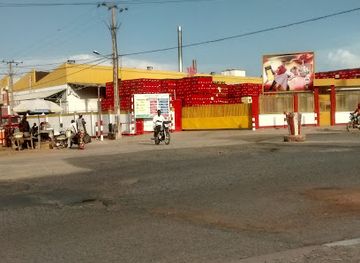
Brasseries
Experience authentic Cameroonian flavors at Brasseries in Garoua - where local cuisine meets warm hospitality.
8 min walk · 0.6 km from city centre
-
Restaurant
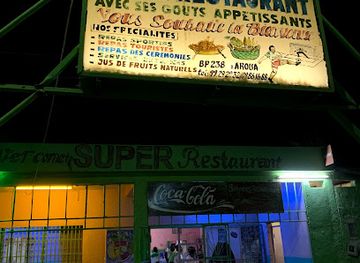
Super Restaurant
Experience authentic Cameroonian cuisine at Super Restaurant in Garoua - where every dish tells a story.
10 min walk · 0.8 km from city centre
-
Restaurant
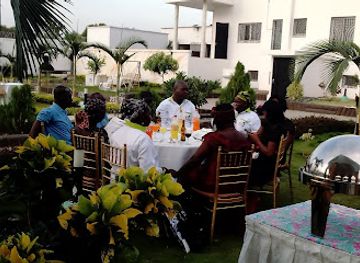
Shalom City Hotel - Le Restaurant
Experience exquisite dining at Shalom City Hotel - Le Restaurant in Garoua, where local flavors meet international cuisine in a cozy atmosphere.
9 min drive · 2.8 km from city centre
-
Restaurant
Restaurant Platinium
Discover exquisite flavors at Restaurant Platinium in Garoua – where every dish tells a story of culinary excellence.
9 min drive · 2.9 km from city centre

Best bars in Garoua
Garoua has a modest, locally oriented evening scene rather than the extensive club culture found in Cameroon’s largest cities. After sunset, cafés, informal drinking spots and small restaurants become social meeting places, particularly around established commercial streets and hotel areas. Beer, soft drinks and grilled food are common features, while televised football and conversation often matter as much as music. Some venues offer recorded music or occasional live entertainment, but opening patterns and atmosphere can change, so current local information is more useful than relying on fixed listings. Religious and family life remain important parts of the city’s rhythm, and visitors should dress and behave discreetly in public areas. Travel after dark is best arranged with trusted taxis or accommodation staff, especially when moving beyond the central districts.
-
Bar
chateau bar
Discover the cozy charm of Chateau Bar in Garoua, where local flavors and a welcoming atmosphere await every traveler.
9 min drive · 2.9 km from city centre
-
Bar
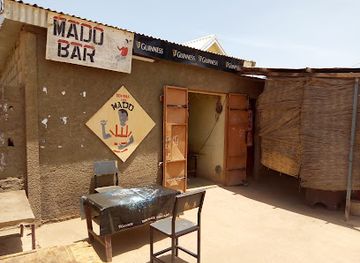
Mado Bar
Experience the vibrant nightlife of Garoua at Mado Bar, where local flavor and refreshing drinks meet in an inviting atmosphere.
12 min drive · 4.0 km from city centre
-
Bar
Safarie Clubs Garoua
Discover the vibrant nightlife at Safarie Clubs Garoua, where local culture meets a lively bar atmosphere for an unforgettable experience.
8 min drive · 2.6 km from city centre
-
Bar
GRILLAGE BAR
Experience the vibrant nightlife at Grillage Bar in Garoua, where local culture meets refreshing drinks in an inviting atmosphere.
7 min drive · 2.4 km from city centre
Best nightclubs in Garoua
Garoua has a modest, locally oriented evening scene rather than the extensive club culture found in Cameroon’s largest cities. After sunset, cafés, informal drinking spots and small restaurants become social meeting places, particularly around established commercial streets and hotel areas. Beer, soft drinks and grilled food are common features, while televised football and conversation often matter as much as music. Some venues offer recorded music or occasional live entertainment, but opening patterns and atmosphere can change, so current local information is more useful than relying on fixed listings. Religious and family life remain important parts of the city’s rhythm, and visitors should dress and behave discreetly in public areas. Travel after dark is best arranged with trusted taxis or accommodation staff, especially when moving beyond the central districts.
-
Night club
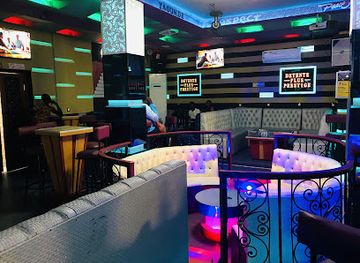
Snack bar DETENTE PLUS PRESTIGE
Dive into Garoua's vibrant nightlife at Snack Bar DETENTE PLUS PRESTIGE, a must-visit night club for unforgettable experiences.
15 min walk · 1.2 km from city centre
-
Night club
8e Dimension
Discover the ultimate nightlife experience at 8e Dimension, Garoua's premier night club, where music, dance, and culture come alive.
15 min walk · 1.2 km from city centre
-
Night club
Safaria Night Life
Discover the vibrant nightlife of Garoua at Safaria Night Life, a premier destination for dancing and entertainment.
16 min walk · 1.3 km from city centre
-
Bar
Safarie Clubs Garoua
Experience the vibrant nightlife of Garoua at Safarie Clubs, a welcoming bar perfect for relaxation and socializing.
8 min drive · 2.6 km from city centre
Best shops in Garoua
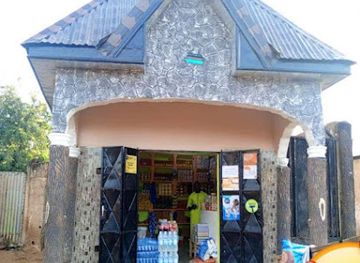
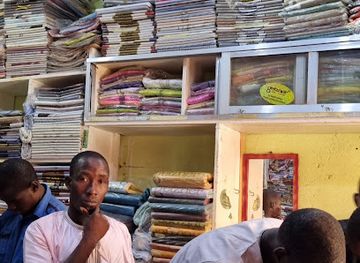
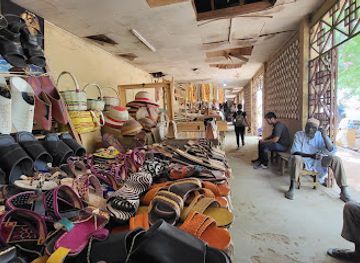
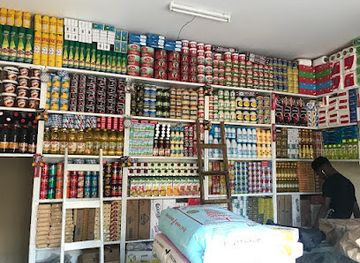
Shopping in Garoua centres on markets, street traders and practical commercial districts rather than a large formal retail sector. Garoua Central Market is the main place to encounter grains, spices, fabrics, clothing, household goods, leather products and locally traded foodstuffs, while smaller neighbourhood markets provide a less concentrated view of daily commerce. Northern Cameroon is associated with cotton and textile production, so colourful cloth and tailored garments can be distinctive purchases, alongside woven baskets, leatherwork and modest craft items when sourced responsibly. Kilishi and other dried foods may be available as regional provisions, but packaging and bringing food across borders require attention to customs rules. Bargaining can be customary in markets, whereas fixed prices are more likely in formal shops; compare quality carefully and ask before photographing merchandise or sellers.
-
Supermarket
Boutique Younousa
Explore diverse local and international products at Boutique Younousa, a vibrant supermarket in Garoua, Cameroon, perfect for all your shopping needs.
8 min drive · 2.6 km from city centre
-
Clothing store
Boutique DG
Explore unique fashion finds at Boutique DG in Garoua, where local culture meets stylish apparel for every traveler.
10 min walk · 0.8 km from city centre
-
African goods store
Centre Artisanal
Explore the Centre Artisanal in Garoua for an authentic taste of African craftsmanship and local culture amidst vibrant displays and friendly artisans.
8 min walk · 0.6 km from city centre
-
Supermarket
Boutique youssaou
Discover local flavors and essential goods at Boutique Youssaou, a vibrant supermarket in Garoua, Cameroon.
10 min drive · 3.3 km from city centre
Get your free copy of our complete guide to Garoua, delivered straight to you.
Everything on this page, from attractions and restaurants to essentials and local phrases, in one PDF you can read offline, print or share.
Already have an account? Sign in
Your Garoua guide is ready.
We'll send it to · Not you? Sign out

Getting your guide ready…
We are putting together a fresh copy of the Garoua guide. This can take up to a minute.
This can take a few moments. If your browser asks, choose Allow so the download can start. You'll find the guide in your Downloads folder.
Nothing happened? Download it again
Sorry, the guide is taking longer than usual. Please try again in a minute, or get it by email instead.
Garoua essentials
Currency and Payment
Safety
Emergency Situations
Do's and Don'ts
Local Tips
From Eve
Local phrases worth knowing
You don't need to get them perfect. A few words go a long way, and locals appreciate the effort.
Basics
| English | Local | Say it |
|---|---|---|
| Hello | Sannu | [San-nu] |
| Goodbye | Sannu da zuwa | [San-nu da zu-wa] |
| Yes | Eh | [Eh] |
| No | A'a | [A'a] |
| Please/You're welcome | Don Allah | [Don Al-lah] |
| Thank you | Na gode | [Na go-de] |
| Excuse me/Sorry | Samu da kai | [Sa-mu da kai] |
| How are you? | Ina kwana? | [I-na kwa-na?] |
| Fine. And you? | Lafiya. Idan kana? | [La-fi-ya. I-dan ka-na?] |
| Do you speak English? | Ka iya fada Turanci? | [Ka i-ya fa-da Tu-ran-ci?] |
| I don't understand | Ban fahimci ba | [Ban fa-him-ci ba] |
Eating & Drinking
| English | Local | Say it |
|---|---|---|
| I'd like to see the menu, please | Zan duba menu, don Allah | [Zan du-ba me-nu, don Al-lah] |
| I don't eat meat | Ban taho nama ba | [Ban ta-ho na-ma ba] |
| Cheers! | A kai! | [A kai!] |
| I would like to pay, please | Zan yi sa'a, don Allah | [Zan yi sa-a, don Al-lah] |
Emergencies
| English | Local | Say it |
|---|---|---|
| Help! | Mai kyau! | [Mai kya-u!] |
| Go away! | Zama kasa! | [Za-ma ka-sa!] |
| Call the Police! | Kar da sojoji! | [Kar da so-jo-ji!] |
| Call a doctor! | Kar da dokinta! | [Kar da do-kin-ta!] |
| I'm lost | Na yi kama | [Na yi ka-ma] |
| I'm ill | Na fi dadi | [Na fi da-di] |
Shopping
| English | Local | Say it |
|---|---|---|
| I'd like to buy... | Zan sayi... | [Zan sa-yi...] |
| I'm just looking | Na zama nuna | [Na za-ma nu-na] |
| How much is it? | Yi ta yadda? | [Yi ta yad-da?] |
| That's too expensive | Wannan ya fi kwantar da | [Wan-nan ya fi kwan-tar da] |
| Can you lower the price? | Ka iya sake fasa? | [Ka i-ya sa-ke fa-sa?] |
Time & Numbers
| English | Local | Say it |
|---|---|---|
| What time is it? | Yan gwaninka ce? | [Yan gwa-nin-ka ce?] |
| It's one o'clock | Yi da kudu | [Yi da ku-du] |
| Half past (10) | Da rabi | [Da ra-bi] |
| Morning | Rana | [Ra-na] |
| Afternoon | Yamma | [Yam-ma] |
| Evening | Yamma tafi | [Yam-ma ta-fi] |
| Yesterday | Jibi | [Ji-bi] |
| Today | Yau | [Yau] |
| Tomorrow | Gobe | [Go-be] |
| 1 | Daya | [Da-ya] |
| 2 | Bi | [Bi] |
| 3 | Uku | [U-ku] |
| 4 | Hudu | [Hu-du] |
| 5 | Biya | [Bi-ya] |
| 6 | Shida | [Shi-da] |
| 7 | Bakwai | [Ba-kwa-i] |
| 8 | Takwas | [Tak-was] |
| 9 | Tara | [Ta-ra] |
| 10 | Goma | [Go-ma] |
Transport & Directions
| English | Local | Say it |
|---|---|---|
| Where's a/the...? | Ina akwai...? | [I-na ak-wai...?] |
| What's the address? | Yi ya adireshi? | [Yi ya a-di-re-shi?] |
| Can you show me (on the map)? | Ka iya nuna min (a cikin rubutu)? | [Ka i-ya nu-na min (a ci-kin ru-bu-tu)?] |
| When's the next (bus)? | A lokacin bus na gaba? | [A lo-ka-cin bus na ga-ba?] |
| A ticket (to ....) | Karar aikata (zuwa ....) | [Ka-rar ai-ka-ta (zu-wa ....)] |
History of Garoua
Benue River Settlements
Garoua developed in a region shaped by the Benue River, whose seasonal waters supported movement, fishing, farming and exchange across northern Cameroon. The river connected communities in the wider Benue basin with routes leading towards present-day Nigeria, helping goods and people circulate through the savannah. Settlement patterns were influenced by access to water, fertile floodplain soils and established local societies rather than by a single foundation date. The river also gave the emerging town an economic role that extended beyond its immediate surroundings. Although modern roads and administrative institutions have changed the character of commerce, Garoua's location beside the Benue remains one of the clearest explanations for its continuing regional importance.
The Fulani Lamidate
During the nineteenth century, Fulani political and religious influence expanded across much of northern Cameroon, and Garoua became associated with a lamidate, a traditional polity governed by a lamido. The institution combined political authority, customary leadership and Islamic legitimacy, while local populations and neighbouring communities continued to contribute to the region's social and cultural life. The lamidate helped organise relations between settlements, manage trade and maintain authority across a territory shaped by pastoral and agricultural economies. The Lamido’s Palace in Garoua represents the continuing visibility of this tradition, although the modern state now governs civic administration. Fulani language, clothing, Islamic practice and pastoral culture remain important elements of the city's identity.
German and French Rule
Cameroon became a German colony in 1884, bringing the Garoua area into a colonial system that sought political control, taxation and access to commercial routes. After Germany's defeat in the First World War, Cameroon was divided between French and British administrations under League of Nations mandates. Garoua fell within the French-administered sphere, and colonial rule gradually strengthened administrative structures, road links and commercial connections with other northern centres. These changes altered existing systems of authority without erasing them: traditional leaders continued to hold social significance while colonial officials controlled the formal administration. The period also intensified the movement of goods and labour through the Benue region.
Independence and Regional Growth
Cameroon gained independence in 1960 in the territory administered by France, while the southern part of British Cameroons joined the federation in 1961. Garoua subsequently expanded as a government and trading centre serving northern Cameroon. Public administration, schools, roads, cotton production and livestock commerce contributed to urban growth, while migration from surrounding communities increased the city's social diversity. Its position within the North Region gave Garoua an important role in coordinating services and trade across a large, predominantly savannah territory. The city’s modern identity therefore reflects both inherited traditional institutions and the civic infrastructure developed during the post-independence period.
Garoua in Contemporary Cameroon
Today Garoua is the capital of Cameroon's North Region and a major urban centre between the northern savannah and the Benue basin. Its economy is linked to regional commerce, agriculture, livestock, cotton and public administration, while the nearby Bénoué National Park gives it wider significance for conservation and wildlife tourism. Contemporary Garoua is marked by the coexistence of mosques, churches, markets, government offices and neighbourhoods shaped by several ethnic and linguistic communities. Seasonal rainfall, heat and changing road conditions continue to influence work and travel. The city’s present character is thus grounded in its river setting, Fulani heritage, commercial role and position within northern Cameroon's expanding urban network.
Garoua in Photos
Browse through our photo collection highlighting the charm and character of the destination.
Cities near Garoua
The closest cities to Garoua, if you have time for more than one stop.
-

-
-

-

-


Swipe for more cities
Explore more

Explore more of Cameroon
Discover Cameroon: A Land of Diverse Landscapes, Rich Cultural Heritage, and Unforgettable Adventures in the Heart of Africa.
Explore Cameroon