

Saint-Roch (Quebec City) Travel Guide - Free
Explore Saint-Roch in Quebec City with Evendo's free guide. Find the best shops, historic streets, restaurants, and gems on web or mobile.


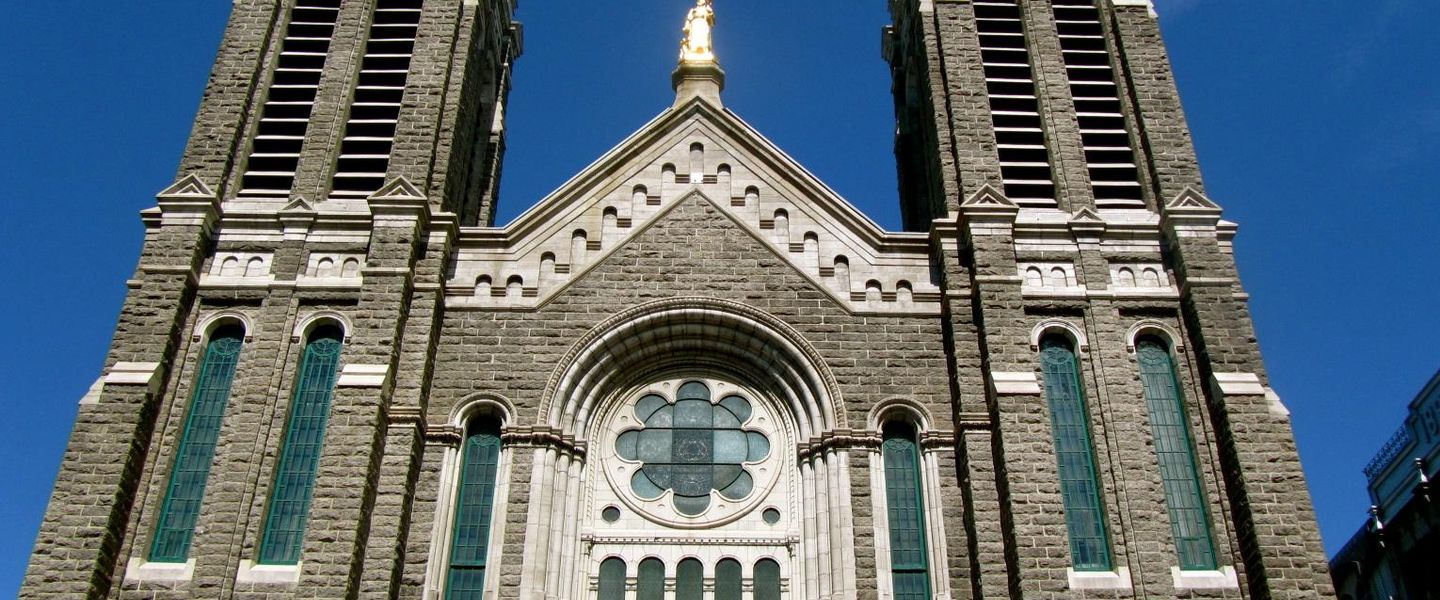


Saint-Roch in Quebec City pairs Saint-Joseph’s shops and cafés with historic churches, creative venues, river walks and a lively urban food scene.
A Downtown Neighbourhood with a Distinct Past
Saint-Roch occupies the lower ground between Quebec City’s fortified upper town and the Saint-Charles River. Once a densely settled faubourg beyond the city walls, it developed around workshops, factories, warehouses, churches and railway connections rather than the ceremonial institutions associated with Old Quebec. Its streets still reveal that practical inheritance: nineteenth- and early twentieth-century commercial buildings stand beside converted industrial premises, compact apartment blocks and newer urban developments.Read more about Saint-Roch
Saint-Joseph Street and Everyday City Life
Arts, Food and the River
Best attractions in Saint-Roch
Saint-Roch’s attractions are woven into its streets rather than gathered in a single monumental precinct. Rue Saint-Joseph Est is the principal sightseeing walk, lined with historic commercial façades, cafés, independent shops and restaurants. The Saint-Roch church provides an important architectural and religious focal point, while the Méduse complex introduces visitors to Quebec City’s contemporary arts scene through its exhibition, performance and production spaces. Jardin Jean-Paul-L’Allier offers an open urban space close to the commercial core, and the streets leading north reach the Saint-Charles River and its landscaped paths. Gare du Palais, at the edge of the central district, is both a working transport building and a reminder of Saint-Roch’s railway history. Small details reward slower exploration: old signwork, reused industrial buildings, apartment façades and the changing views between the lower town and the slopes above.
-
Tourist attraction
Observatoire de la Capitale
Experience breathtaking views and deep historical insights at Observatoire de la Capitale in Quebec City, a must-visit tourist attraction.
12 min walk · 1.0 km from neighbourhood centre
-
Tourist attraction
A Double Tour Immersive Experiences
Experience the thrill of A Double Tour in Quebec City – an immersive amusement park and escape room center that promises excitement for all ages.
15 min walk · 1.2 km from neighbourhood centre
-
Tourist attraction
L'Îlot des Palais
Discover Quebec City's history at L'Îlot des Palais, an archaeological and history museum showcasing the region's rich cultural heritage.
7 min walk · 0.5 km from neighbourhood centre


Best landmarks in Saint-Roch
The Église Saint-Roch is the neighbourhood’s defining religious landmark, continuing a parish presence that has long anchored the faubourg and reflecting the scale of the district’s historic Catholic institutions. Gare du Palais marks Saint-Roch’s transport heritage with a substantial railway station building whose presence links the neighbourhood to the period when rail travel shaped commerce and employment. Along rue Saint-Joseph Est, continuous commercial blocks preserve the visual memory of the old shopping district, with masonry façades, upper-floor housing and adapted shopfronts. The Méduse complex is a landmark of a different kind: its significance lies in contemporary cultural production and the reuse of central urban space rather than monumental age. Jardin Jean-Paul-L’Allier and the Saint-Charles River edge add important public-space landmarks, showing how Saint-Roch’s identity extends beyond buildings to streets, gardens and the infrastructure of the lower town.
-
Park
Victoria Park
Escape to Victoria Park in Québec City: a serene urban oasis with sports, recreation, and natural beauty.
6 min drive · 2.1 km from neighbourhood centre
-
Historical landmark
Place Royale
Explore Place Royale, the birthplace of French America in Quebec City, where history, architecture, and culture converge in a charming square.
5 min walk · 0.4 km from neighbourhood centre
-
Tourist attraction
Place d'Armes
Experience the history and charm of Old Québec at Place d'Armes, a central square surrounded by iconic landmarks and vibrant culture.
2 min walk · 0.2 km from neighbourhood centre
-
Park
Jean-Paul-L'Allier Garden
Explore the tranquility of Jean-Paul-L'Allier Garden, an urban oasis in Quebec City, where nature and serenity come together for an unforgettable experience.
14 min walk · 1.1 km from neighbourhood centre


Explore Saint-Roch on the map
A handpicked selection of must-see spots in Saint-Roch, mapped for you.
Best hotels in Saint-Roch
Best restaurants in Saint-Roch
Saint-Roch has one of Quebec City’s most varied central dining scenes, with much of its activity concentrated along rue Saint-Joseph Est and the surrounding side streets. Independent cafés, bakeries and casual eateries sit beside restaurants that draw on Quebec produce, French technique, international influences and contemporary North American cooking. The district’s former commercial and working character remains visible in unfussy lunch places and neighbourhood bars, while newer venues have brought more ambitious menus to renovated premises. Craft brewing is part of the local food-and-drink culture, and cafés make the area practical for daytime wandering as well as evening meals. Visitors should distinguish Saint-Roch’s restaurants from those in Old Quebec above the hill: the atmosphere here is more mixed-use and local, with residents, workers, students and visitors sharing the same compact streets. Individual menus, opening patterns and reservations vary, so checking directly is sensible.
-
Restaurant
Restaurant Poutineville Saint-Roch
Experience gourmet poutine in Quebec City at Poutineville Saint-Roch—where tradition meets innovation in every delicious bite.
12 min walk · 0.9 km from neighbourhood centre
-
Pizza
Nina Pizza Napolitaine St-Roch
Experience authentic Italian pizza at Nina Pizza Napolitaine St-Roch - where tradition meets flavor in the heart of Quebec City.
5 min drive · 1.7 km from neighbourhood centre
-
Bistro
Le Clocher Penché
Experience authentic French cuisine at Le Clocher Penché in Quebec City - where traditional flavors meet modern flair.
5 min drive · 1.6 km from neighbourhood centre
-
Restaurant
Phil Smoked Meat
Savor authentic smoked meat sandwiches at Phil Smoked Meat in Québec City - a true taste of local tradition.
15 min walk · 1.2 km from neighbourhood centre


Best bars in Saint-Roch
After dark, Saint-Roch is one of Quebec City’s more active central districts, although its nightlife is spread through bars, breweries, restaurants and cultural venues rather than concentrated in a large club strip. Rue Saint-Joseph Est provides the main evening orientation, with places for locally brewed beer, cocktails, live music and informal drinks. La Barberie is a longstanding reference for craft beer in the neighbourhood, while venues associated with Méduse contribute performances and cultural programming when events are scheduled. Bars such as Le Knock-Out and Le Bal du Lézard are part of the district’s established evening landscape, but current opening times and programmes should be checked independently. The area remains residential, so the most considerate nightlife involves moving quietly between venues, respecting neighbours and avoiding noise outside apartment entrances. The mood is generally urban and social rather than resort-like or centred on large nightclubs.
-
Bar
MacFly Bar Arcade
Experience the ultimate fusion of gaming and nightlife at MacFly Bar Arcade in Quebec City, where every visit promises fun and excitement.
5 min drive · 1.6 km from neighbourhood centre
-
Pub
London Jack
Discover the essence of Québec City's nightlife at London Jack Pub, a vibrant venue for great food, drinks, and live music.
15 min walk · 1.2 km from neighbourhood centre
-
Pub
Pub du Parvis
Discover the heart of Québec City's culinary scene at Pub du Parvis, where local flavors and craft beers come together in a lively atmosphere.
15 min walk · 1.2 km from neighbourhood centre
-
Coffee shop
Maelstrøm Saint-Roch
Experience the best of Québec City at Maelstrøm Saint-Roch, where coffee culture meets exquisite brunches and innovative cocktails.
5 min drive · 1.5 km from neighbourhood centre


Best nightclubs in Saint-Roch
After dark, Saint-Roch is one of Quebec City’s more active central districts, although its nightlife is spread through bars, breweries, restaurants and cultural venues rather than concentrated in a large club strip. Rue Saint-Joseph Est provides the main evening orientation, with places for locally brewed beer, cocktails, live music and informal drinks. La Barberie is a longstanding reference for craft beer in the neighbourhood, while venues associated with Méduse contribute performances and cultural programming when events are scheduled. Bars such as Le Knock-Out and Le Bal du Lézard are part of the district’s established evening landscape, but current opening times and programmes should be checked independently. The area remains residential, so the most considerate nightlife involves moving quietly between venues, respecting neighbours and avoiding noise outside apartment entrances. The mood is generally urban and social rather than resort-like or centred on large nightclubs.
-
Club
Le Drague Cabaret Club
Discover the heart of Quebec City's nightlife at Le Drague Cabaret Club, a vibrant hub of entertainment and inclusivity.
9 min walk · 0.7 km from neighbourhood centre
-
Bar
L'ANTI Bar & Spectacles
Experience the vibrant nightlife of Québec City at L'ANTI Bar & Spectacles, a premier destination for live music and karaoke entertainment.
5 min drive · 1.6 km from neighbourhood centre
-
Bar
Bar Ste-Angèle
Discover Bar Ste-Angèle, a premier jazz club in Québec City offering live music, a cozy atmosphere, and a fantastic selection of drinks.
4 min walk · 0.3 km from neighbourhood centre
-
Bar
Dagobert
Discover the electrifying nightlife at Dagobert, a premier bar and nightclub in Quebec City, where dance, music, and fun collide.
13 min walk · 1.1 km from neighbourhood centre

Best shops in Saint-Roch
Shopping in Saint-Roch is centred on rue Saint-Joseph Est, a long-established commercial street where independent retailers, cafés and specialist businesses occupy renovated historic premises. The selection is more individual and urban than the chain-heavy retail corridors found in large suburban centres, with opportunities for clothing, design, books, food and locally oriented small businesses depending on the current tenant mix. J.A. Moisan, a historic grocery associated with the traditional commercial life of the street, is an especially evocative stop for visitors interested in Quebec’s retail history. The neighbourhood’s shops are best approached as part of a walk rather than as a single enclosed shopping destination: side streets reveal workshops, services and creative enterprises, while the façades themselves show how the old faubourg adapted to contemporary commerce. Stock, ownership and opening patterns change, so the experience is strongest when approached with time for browsing rather than a fixed list of purchases.
-
Gift shop
Magasin Général P L Blouin - Gift Shop - Souvenirs - Maple Syrup - Novelty T-Shirts - Record Shop
Explore Magasin Général P L Blouin, a unique gift shop in Québec City offering souvenirs, art, music, and collectibles for every traveler.
2 min walk · 0.1 km from neighbourhood centre
-
Clothing store
Urban Outfitters
Explore Urban Outfitters in Quebec City for a unique shopping experience featuring trendy clothing, beauty products, and stylish home goods.
14 min walk · 1.2 km from neighbourhood centre
-
Clothing store
Friperie BABELOU
Discover unique vintage finds at Friperie BABELOU, a charming clothing store in the heart of Québec City, perfect for fashion enthusiasts.
5 min drive · 1.5 km from neighbourhood centre
-
Gift shop
RARE & DIFFERENT - LAMPES LOTUS - JEUX - GIFT SHOP - BOUTIQUE CADEAUX
Explore RARE & DIFFERENT, a charming gift shop in Québec City offering unique collectibles, toys, and souvenirs to cherish your visit.
1 min walk · 0.1 km from neighbourhood centre


Saint-Roch essentials
Getting There
Getting Around
Safety
Emergency Situations
Do's and Don'ts
Local Tips

From Eve
Local phrases worth knowing
You don't need to get them perfect. A few words go a long way, and locals appreciate the effort.
Basics
| English | Local | Say it |
|---|---|---|
| Hello | Bonjour | [bon-zhoor] |
| Goodbye | Au revoir | [oh ruh-vwahr] |
| Yes | Oui | [wee] |
| No | Non | [nohn] |
| Please/You're welcome | S'il vous plaît/De rien | [seel voo pleh/duh ryen] |
| Thank you | Merci | [mehr-see] |
| Excuse me/Sorry | Excusez-moi/Désolé | [ehk-skew-zay mwa/dey-zoh-lay] |
| How are you? | Comment ça va? | [koh-mohn sah vah?] |
| Fine. And you? | Bien. Et toi? | [byen. ey twah?] |
| Do you speak English? | Parlez-vous anglais? | [par-lay voo ahn-glay?] |
| I don't understand | Je ne comprends pas | [zhuh nuh kohm-prahnd pah] |
Eating & Drinking
| English | Local | Say it |
|---|---|---|
| I'd like to see the menu, please | Je voudrais voir le menu, s'il vous plaît | [zhuh voo-dray vwahr luh muh-nyuh, seel voo pleh] |
| I don't eat meat | Je ne mange pas de viande | [zhuh nuh mahnj pah duh vyand] |
| Cheers! | Santé! | [sahn-tay] |
| I would like to pay, please | Je voudrais payer, s'il vous plaît | [zhuh voo-dray peh-yay, seel voo pleh] |
Emergencies
| English | Local | Say it |
|---|---|---|
| Help! | À l'aide! | [ah layd!] |
| Go away! | Allez-vous en! | [ah-lay vooz ahn!] |
| Call the Police! | Appelez la police! | [ah-peh-lay lah poh-lees!] |
| Call a doctor! | Appelez un médecin! | [ah-peh-lay uh may-duh-sahn!] |
| I'm lost | Je suis perdu(e) | [zhuh swee pair-dew(eh)] |
| I'm ill | Je suis malade | [zhuh swee mah-lahd] |
Shopping
| English | Local | Say it |
|---|---|---|
| I'd like to buy... | Je voudrais acheter... | [zhuh voo-dray ah-shuh-tay] |
| I'm just looking | Je regarde juste | [zhuh ruh-gahrd zhew-st] |
| How much is it? | Combien ça coûte? | [kohm-byen sah koot?] |
| That's too expensive | C'est trop cher | [say troh shair] |
| Can you lower the price? | Pouvez-vous baisser le prix? | [poo-veh voo beh-say luh pree?] |
Time & Numbers
| English | Local | Say it |
|---|---|---|
| What time is it? | Quelle heure est-il? | [kell uhr eh-teel?] |
| It's one o'clock | Il est une heure | [eel eh oon uhr] |
| Half past (10) | Dix heures et demie | [dees uhrz ay duh-mee] |
| Morning | Matin | [mah-tahn] |
| Afternoon | Après-midi | [ah-pray mee-dee] |
| Evening | Soir | [swahr] |
| Yesterday | Hier | [yehr] |
| Today | Aujourd'hui | [oh-zhoor-dwee] |
| Tomorrow | Demain | [duh-mahn] |
| 1 | Un | [uhn] |
| 2 | Deux | [deuh] |
| 3 | Trois | [twah] |
| 4 | Quatre | [kat-ruh] |
| 5 | Cinq | [sank] |
| 6 | Six | [sees] |
| 7 | Sept | [sept] |
| 8 | Huit | [wheat] |
| 9 | Neuf | [nuff] |
| 10 | Dix | [dees] |
Transport & Directions
| English | Local | Say it |
|---|---|---|
| Where's a/the...? | Où est...? | [oo eh...] |
| What's the address? | Quelle est l'adresse? | [kell eh lah-drehss?] |
| Can you show me (on the map)? | Pouvez-vous me montrer (sur la carte)? | [poo-veh voo muh mohn-tray (soor lah kart)?] |
| When's the next (bus)? | Quand est le prochain (bus)? | [kahn eh luh proh-shahn (buhs)?] |
| A ticket (to ....) | Un billet (pour ....) | [uhn bee-yay (poor ....)] |
History of Saint-Roch
The Faubourg Beyond the Walls
Saint-Roch grew outside the fortified upper town as one of Quebec City’s principal faubourgs, or suburbs beyond the walls. Its position between the city centre, the Saint-Charles River and routes leading towards the port encouraged settlement, craft production and commerce. The district took its name from the parish and church dedicated to Saint Roch, a Catholic protector traditionally associated with illness. Unlike the monumental upper town, the faubourg developed as a working neighbourhood of modest homes, shops, workshops and public institutions, creating the urban pattern that still distinguishes lower Saint-Roch from the historic core above it.
Industry and Commercial Expansion
During the nineteenth century, Saint-Roch became closely connected to Quebec City’s industrial and commercial growth. Its lower-lying land accommodated factories, warehouses, artisans’ premises and transport infrastructure, while rue Saint-Joseph developed as a major shopping street for residents of the faubourg. Proximity to the river and port-related activity helped the area function as a practical gateway for goods and labour. Fires and rebuilding repeatedly altered the streetscape, producing the masonry commercial blocks and institutional buildings that now sit among later additions.
Railways and a Changing City
Railway development strengthened Saint-Roch’s position as a transport and employment district, linking the lower town with routes beyond Quebec City and reinforcing the importance of Gare du Palais and nearby commercial corridors. The neighbourhood’s population and economy remained tied to manufacturing, retail and services, while the church, markets and small businesses provided local centres of community life. As road transport and suburban development reshaped the city during the twentieth century, older industries and traditional retail patterns began to lose their former importance.
Decline, Renewal and Cultural Investment
From the later twentieth century, Saint-Roch experienced industrial decline, vacant premises and population loss as employment and shopping shifted elsewhere. Public investment, rehabilitation of historic buildings and the arrival of cultural organisations gradually changed the district’s prospects. The Méduse complex became an important anchor for contemporary arts, while rue Saint-Joseph attracted new restaurants, creative businesses and specialist shops. This renewal has not erased the neighbourhood’s working-class and commercial history; instead, it has placed older housing, surviving churches and industrial traces alongside new construction and rising visitor interest.
Saint-Roch in Photos
Browse through our photo collection highlighting the charm and character of the destination.
Neighbourhoods near Saint-Roch
The closest neighbourhoods to Saint-Roch, if you have time for more than one stop.
-

-
-


Swipe for more neighbourhoods
Explore more

Explore more of Quebec City
Discover the magic of Quebec City, where French heritage, historic charm, and vibrant culture create an unforgettable travel experience.
Explore Quebec City