

Saint-Jean-Baptiste (Quebec City) Travel Guide - Free
Explore Saint-Jean-Baptiste in Quebec City with Evendo's free guide. Find the best shops, historic streets, restaurants, and gems on web or mobile.


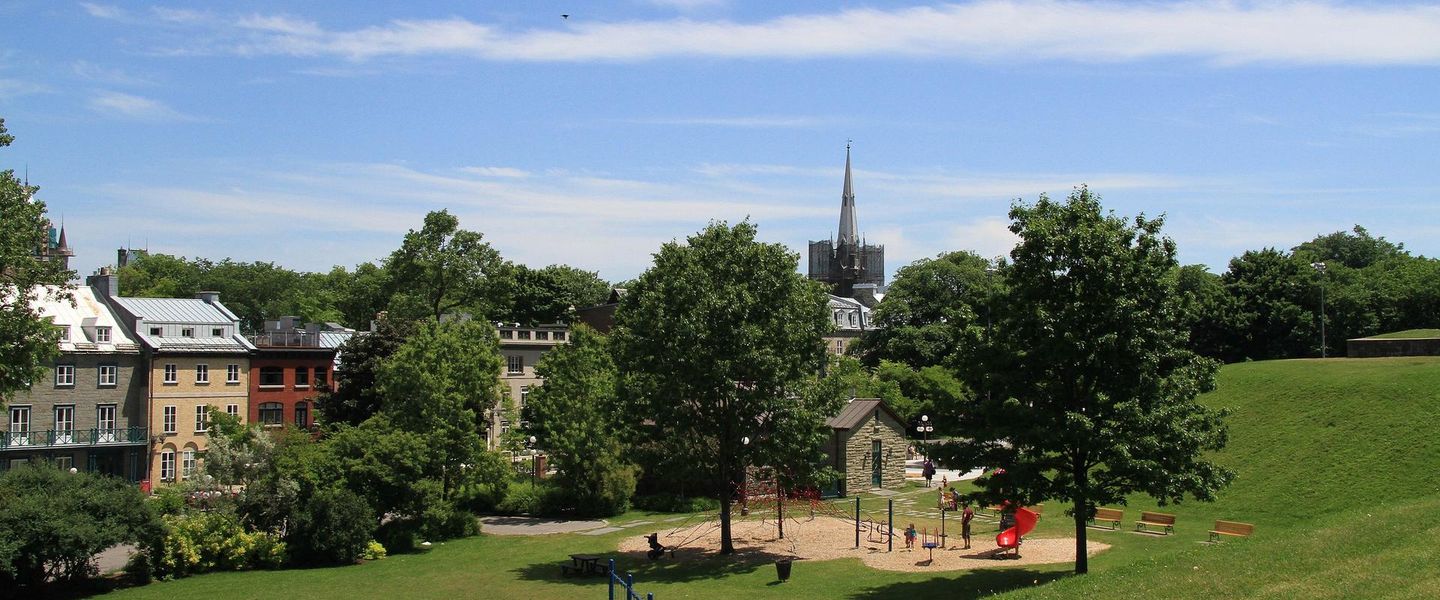


Saint-Jean-Baptiste in Quebec City blends historic faubourg streets, rue Saint-Jean boutiques, theatre, Quebecois dining, cafés and lively nightlife.
A Historic Faubourg Above Old Quebec
Saint-Jean-Baptiste occupies the lively slope immediately west of Old Quebec's fortifications, centred on rue Saint-Jean and the smaller streets that climb towards Parliament Hill and Montcalm. Its name comes from the parish and church dedicated to Saint John the Baptist, while its older identity is that of a faubourg: a built-up suburb that grew beyond the fortified city's gates. Today, it feels more local and residential than the monumental Old Town, with apartment buildings, stone façades, narrow streets and a strong concentration of independent businesses.Read more about Saint-Jean-Baptiste
Rue Saint-Jean and Everyday City Life
Francophone Culture and Evening Energy
Best attractions in Saint-Jean-Baptiste
Saint-Jean-Baptiste's main attraction is the neighbourhood itself: a walk along rue Saint-Jean moves from the historic Saint-Jean Gate and the edge of Old Quebec into a sequence of cafés, food shops, restaurants and independent retailers. Église Saint-Jean-Baptiste provides the principal architectural focus, while the surrounding streets reveal the dense scale of the former faubourg through stone façades, apartment buildings and small commercial premises. Théâtre La Bordée offers a more focused cultural experience, with a programme rooted in Quebec's francophone theatre scene. Side streets around rue d'Aiguillon and rue Saint-Olivier are rewarding for visitors interested in everyday urban architecture rather than grand monuments, and small green spaces offer occasional breathing room. The district is also a convenient walking link between the fortified city and the central neighbourhoods farther west, although its slopes make some routes more demanding.
-
Tourist attraction
The Plains of Abraham Museum
Explore the rich history of Quebec City at The Plains of Abraham Museum, where the past comes alive in a stunning natural setting.
10 min walk · 0.8 km from neighbourhood centre
-
Tourist attraction
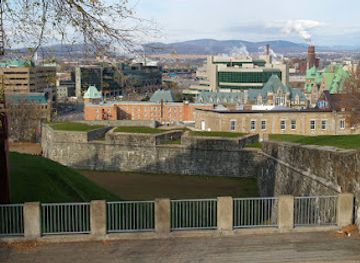
Artillery Park
Explore the rich military heritage and stunning landscapes of Artillery Park, a historical gem in Quebec City.
10 min walk · 0.8 km from neighbourhood centre


Best landmarks in Saint-Jean-Baptiste
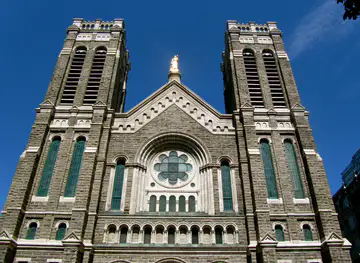
Église Saint-Jean-Baptiste is the defining landmark of the district, its large late-nineteenth-century church embodying the growth of the faubourg beyond Quebec City's walls. Its history includes serious fire damage in 1999, adding a layer of recent memory to its architectural importance; visitors should verify current access before planning an interior visit. Rue Saint-Jean itself is also a significant urban landmark, retaining the alignment of an old route while functioning as a modern commercial street. At the eastern edge, the Saint-Jean Gate marks the transition into the fortified Old Quebec, properly understood as nearby rather than part of the neighbourhood's core. Théâtre La Bordée contributes a different kind of landmark value, representing the continuing importance of francophone performance and cultural institutions in this central district.
-
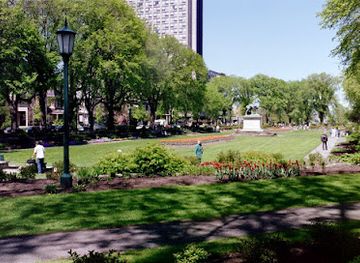
Garden
Joan of Arc Garden
Discover the beauty and history of the Joan of Arc Garden, a tranquil oasis in Quebec City dedicated to the iconic French heroine.
10 min walk · 0.8 km from neighbourhood centre
-
Park
French America Park
Explore the enchanting French America Park in Quebec City, a serene blend of nature, history, and cultural celebration.
5 min walk · 0.4 km from neighbourhood centre
-
Historical landmark
Artillery Park
Discover the rich military heritage and stunning landscapes at Artillery Park, a historical landmark in the heart of Quebec City.
10 min walk · 0.8 km from neighbourhood centre
-
Historical landmark
St. Jean Gate
Discover the charm and history of St. Jean Gate, a stunning historical landmark in Quebec City that invites you to explore its rich cultural heritage.
9 min walk · 0.7 km from neighbourhood centre


Explore Saint-Jean-Baptiste on the map
A handpicked selection of must-see spots in Saint-Jean-Baptiste, mapped for you.
Best hotels in Saint-Jean-Baptiste
Best restaurants in Saint-Jean-Baptiste
Dining in Saint-Jean-Baptiste centres on rue Saint-Jean and its adjoining streets, where the restaurant scene is unusually varied for a compact central neighbourhood. Quebecois flavours appear alongside French and broader European influences, vegetarian cooking, international dishes, bakeries, cafés and speciality food shops. Chez Boulay is associated with a modern, Nordic-influenced interpretation of ingredients from Quebec, while Bistro Hortus is known for a plant-focused approach; both illustrate the district's interest in contemporary local dining. J.A. Moisan, the long-established grocery on rue Saint-Jean, is relevant for browsing imported and regional provisions rather than simply eating a meal. Smaller establishments change over time, so the most useful strategy is to explore the commercial spine and inspect current menus. Reservations may be sensible for sought-after restaurants, particularly at busy periods, but the neighbourhood also supports casual café and takeaway stops.
-
Italian
Sapristi...bistro bar
Experience authentic Italian cuisine at Sapristi...bistro bar in Québec City – where every dish tells a story.
10 min walk · 0.8 km from neighbourhood centre
-
Crêperie
Le Billig
Discover Le Billig: A delightful crêperie in Québec City offering authentic sweet and savory crêpes made from local ingredients.
2 min walk · 0.1 km from neighbourhood centre
-
Restaurant
Le Hobbit
Experience exquisite cuisine and warm hospitality at Le Hobbit in Québec City—a culinary treasure blending bistro charm with wine bar elegance.
3 min walk · 0.3 km from neighbourhood centre
-
Fast Food
Snack Bar Saint-Jean
Experience delicious fast food at Snack Bar Saint-Jean in Québec City, offering family-friendly dining with mouth-watering hamburgers and hot dogs.
5 min walk · 0.4 km from neighbourhood centre


Best bars in Saint-Jean-Baptiste
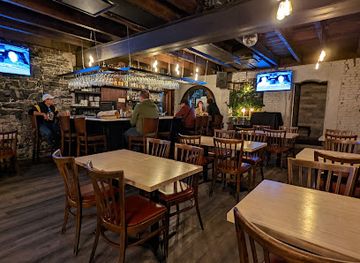
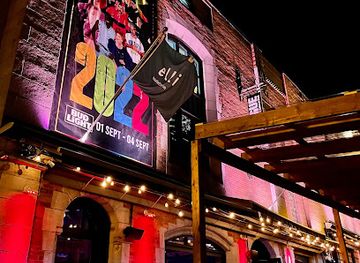
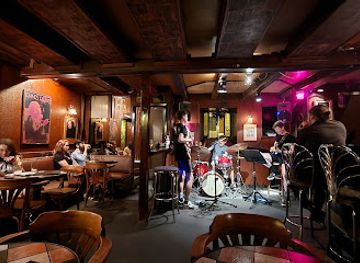
Saint-Jean-Baptiste is one of Quebec City's more reliable central areas for an evening out, though its nightlife is concentrated around bars, pubs and small venues rather than large clubs. Ninkasi du Faubourg brings beer, food and live-entertainment energy to rue Saint-Jean, while Pub Galway offers a more traditional pub setting nearby. Bars around the commercial spine range from relaxed places for conversation to busier late-evening rooms, and the district's francophone cultural life extends into theatre and music programming. The area is walkable from Old Quebec, but the uphill return towards the west can be tiring late at night, especially in winter. Noise levels vary by block: the main street is active, while the side streets are primarily residential and should be treated accordingly.
-
Bar
Le Projet - Spécialité Microbrasseries
Discover the essence of Québec's craft brewing culture at Le Projet, a vibrant brewpub in the heart of the city offering local microbrews and delicious food.
2 min walk · 0.2 km from neighbourhood centre
-
Bar
Bar Le Sacrilège
Experience the heart of Québec City at Bar Le Sacrilège, where great drinks, local culture, and unforgettable nights await.
2 min walk · 0.1 km from neighbourhood centre
-
Beer hall
Ninkasi Bar & Bistro
Discover the lively Ninkasi Bar & Bistro in Québec City, a perfect blend of craft beers, delicious cuisine, and unforgettable entertainment.
5 min walk · 0.4 km from neighbourhood centre
-
Irish pub
Pub Nelligan's
Experience the warmth of Irish hospitality at Pub Nelligan's, a vibrant pub in the heart of Québec City offering great food, drinks, and live music.
3 min walk · 0.2 km from neighbourhood centre


Best nightclubs in Saint-Jean-Baptiste
Saint-Jean-Baptiste is one of Quebec City's more reliable central areas for an evening out, though its nightlife is concentrated around bars, pubs and small venues rather than large clubs. Ninkasi du Faubourg brings beer, food and live-entertainment energy to rue Saint-Jean, while Pub Galway offers a more traditional pub setting nearby. Bars around the commercial spine range from relaxed places for conversation to busier late-evening rooms, and the district's francophone cultural life extends into theatre and music programming. The area is walkable from Old Quebec, but the uphill return towards the west can be tiring late at night, especially in winter. Noise levels vary by block: the main street is active, while the side streets are primarily residential and should be treated accordingly.
-
Beer hall
Ninkasi Bar & Bistro
Experience the essence of Quebec City at Ninkasi Bar & Bistro, where craft beers, delicious food, and vibrant karaoke nights await.
5 min walk · 0.4 km from neighbourhood centre
-
Club
Le Drague Cabaret Club
Discover the electrifying atmosphere of Le Drague Cabaret Club, Quebec City's vibrant nightlife hub featuring spectacular drag shows and unforgettable entertainment.
5 min walk · 0.4 km from neighbourhood centre
-
Bar
Bar Ste-Angèle
Discover the charm of Québec City's Bar Ste-Angèle, where live jazz, handcrafted cocktails, and a cozy atmosphere come together for unforgettable nights.
11 min walk · 0.8 km from neighbourhood centre
-
Bar
Dagobert
Discover the vibrant nightlife at Dagobert, Québec City's premier bar and nightclub, offering an unforgettable experience filled with dance and social excitement.
7 min walk · 0.6 km from neighbourhood centre
Best shops in Saint-Jean-Baptiste
Shopping in Saint-Jean-Baptiste is concentrated along rue Saint-Jean, whose independent food shops, cafés, bookshops, clothing retailers and specialist businesses give it a more local texture than a conventional enclosed shopping centre. J.A. Moisan, established in 1871, is a notable stop for regional and imported provisions and reflects the street's long commercial history. The surrounding blocks contain smaller retailers and services, with the strongest experience coming from browsing individual premises rather than searching for a single large market. Visitors interested in Quebec food culture can combine a grocery visit with bakeries and speciality shops, while the side streets offer occasional boutiques and creative businesses. Stock and businesses change, so shopping here is best approached as a street-level exploration of an active mixed residential-commercial district rather than a guaranteed catalogue of particular products.
-
Boutique
Boutique Couteaux Japonais Stay Sharp de Québec
Explore exquisite Japanese cutlery at Boutique Couteaux Japonais Stay Sharp in Quebec City, where craftsmanship meets culinary excellence.
2 min walk · 0.2 km from neighbourhood centre

Saint-Jean-Baptiste essentials
Getting There
Getting Around
Safety
Emergency Situations
Do's and Don'ts
Local Tips

From Eve
Local phrases worth knowing
You don't need to get them perfect. A few words go a long way, and locals appreciate the effort.
Basics
| English | Local | Say it |
|---|---|---|
| Hello | Bonjour | [bon-zhoor] |
| Goodbye | Au revoir | [oh re-vwar] |
| Yes | Oui | [wee] |
| No | Non | [non] |
| Please/You're welcome | S'il vous plaît/De rien | [see voo pleh/duh ryen] |
| Thank you | Merci | [mehr-see] |
| Excuse me/Sorry | Excusez-moi/Désolé | [ex-kew-zay mwah/day-zo-lay] |
| How are you? | Comment ça va? | [koh-mon sah vah] |
| Fine. And you? | Bien. Et vous? | [byen. ay voo] |
| Do you speak English? | Parlez-vous anglais? | [par-lay voo ahn-glay] |
| I don't understand | Je ne comprends pas | [zhuh nuh kohm-prahn pah] |
Eating & Drinking
| English | Local | Say it |
|---|---|---|
| I'd like to see the menu, please | Je voudrais voir le menu, s'il vous plaît | [zhuh voo-dray vwahr luh meh-noo, see voo pleh] |
| I don't eat meat | Je ne mange pas de viande | [zhuh nuh mahnj pah duh vyand] |
| Cheers! | Santé! | [sahn-tay] |
| I would like to pay, please | Je voudrais payer, s'il vous plaît | [zhuh voo-dray pay-ay, see voo pleh] |
Emergencies
| English | Local | Say it |
|---|---|---|
| Help! | Au secours! | [oh seh-koor] |
| Go away! | Allez-vous en! | [ah-lay voo zan] |
| Call the Police! | Appelez la police! | [ah-peh-lay lah poh-lees] |
| Call a doctor! | Appelez un médecin! | [ah-peh-lay uh may-deh-sahn] |
| I'm lost | Je suis perdu | [zhuh swee pair-doo] |
| I'm ill | Je suis malade | [zhuh swee mah-lahd] |
Shopping
| English | Local | Say it |
|---|---|---|
| I'd like to buy... | Je voudrais acheter... | [zhuh voo-dray ash-tay...] |
| I'm just looking | Je regarde juste | [zhuh ruh-gard zhew-st] |
| How much is it? | Combien ça coûte? | [kom-byen sah koot] |
| That's too expensive | C'est trop cher | [say troh sh-air] |
| Can you lower the price? | Pouvez-vous baisser le prix? | [poo-vez voo bay-say luh pree] |
Time & Numbers
| English | Local | Say it |
|---|---|---|
| What time is it? | Quelle heure est-il? | [kell er ay-teel] |
| It's one o'clock | Il est une heure | [eel ay tun er] |
| Half past (10) | Dix heures et demie | [deez er ay duh-mee] |
| Morning | Matin | [mah-tan] |
| Afternoon | Après-midi | [ah-pray-mee-dee] |
| Evening | Soir | [swah] |
| Yesterday | Hier | [ee-air] |
| Today | Aujourd'hui | [oh-zhoor-dwee] |
| Tomorrow | Demain | [duh-man] |
| 1 | Un | [uhn] |
| 2 | Deux | [duh] |
| 3 | Trois | [twah] |
| 4 | Quatre | [kat] |
| 5 | Cinq | [sank] |
| 6 | Six | [sees] |
| 7 | Sept | [set] |
| 8 | Huit | [wheat] |
| 9 | Neuf | [nuff] |
| 10 | Dix | [deez] |
Transport & Directions
| English | Local | Say it |
|---|---|---|
| Where's a/the...? | Où se trouve...? | [oo suh troov] |
| What's the address? | Quelle est l'adresse? | [kell ay lah-dress] |
| Can you show me (on the map)? | Pouvez-vous me montrer (sur la carte)? | [poo-vez voo muh mohn-tray (sir lah kart)] |
| When's the next (bus)? | Quand est le prochain (bus)? | [kahn ay luh proh-shahn (boos)] |
| A ticket (to ....) | Un billet (pour ....) | [uhn bee-yay (poor)] |
History of Saint-Jean-Baptiste
The Faubourg Beyond the Walls
Saint-Jean-Baptiste developed outside the fortified core of Quebec City, along the route leading west from the Saint-Jean Gate. The area was known as a faubourg, a suburban district whose growth was less constrained than that of the walled town. Farms, workshops and modest houses gradually gave way to denser urban development as Quebec expanded during the nineteenth century. The route now called rue Saint-Jean became the neighbourhood's principal commercial spine, linking the old city with roads and settlements farther west. Its position beyond the fortifications helped give the district a distinct social and architectural identity while keeping it closely connected to the city's political and commercial centre.
Parish, Church and Urban Growth
The Roman Catholic parish of Saint-Jean-Baptiste was established in the nineteenth century as population increased beyond the walls. The present Église Saint-Jean-Baptiste, built in the late nineteenth century, reflects the scale and confidence of that period's urban expansion and became a defining landmark for the surrounding streets. The parish church was damaged by a major fire in 1999, an event that reinforced the building's vulnerability and the importance of its surviving fabric. Around it, row houses, commercial premises and apartment buildings formed the dense mixed-use neighbourhood that remains characteristic of Saint-Jean-Baptiste.
A Commercial Francophone District
During the twentieth century, Saint-Jean-Baptiste consolidated its role as a francophone commercial and residential district. Rue Saint-Jean served daily needs as much as visitor interests, with food shops, cafés, services and small retailers occupying premises close to homes. The area's proximity to government buildings, Old Quebec and the growing central city brought steady foot traffic, while changing transport patterns and redevelopment altered the appearance of individual blocks. Its identity was therefore not based solely on heritage buildings: it also rested on an active local business community and the continued use of the street as an everyday urban route.
Preservation and Contemporary Culture
From the late twentieth century onwards, heritage conservation and neighbourhood activism became increasingly important as Quebec City modernised and central districts faced redevelopment pressures. The character of rue Saint-Jean and the surrounding streets was supported by the continued presence of independent businesses, historic façades and residential life. Contemporary cultural institutions, including Théâtre La Bordée, added to the district's artistic profile, while restaurants and specialist shops brought new influences without erasing its francophone foundations. Today Saint-Jean-Baptiste remains a mixed neighbourhood rather than a museum precinct, balancing older architecture, local commerce, nightlife and the practical needs of residents.
Saint-Jean-Baptiste in Photos
Browse through our photo collection highlighting the charm and character of the destination.
Neighbourhoods near Saint-Jean-Baptiste
The closest neighbourhoods to Saint-Jean-Baptiste, if you have time for more than one stop.
-

-
-


Swipe for more neighbourhoods
Explore more

Explore more of Quebec City
Discover the magic of Quebec City, where French heritage, historic charm, and vibrant culture create an unforgettable travel experience.
Explore Quebec City