

Shete Boka National Park Travel Guide - Free Web & App
Your ultimate guide to Shete Boka National Park. Discover top landmarks, proposed trips, and local tips. Free on the web or via the Evendo companion app.


Shete Boka National Park in Curaçao reveals a rugged north coast of wave-cut coves, sea caves, limestone cliffs, trails and wild Caribbean scenery.
A Coast Shaped by the Sea
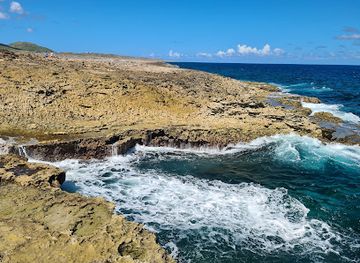
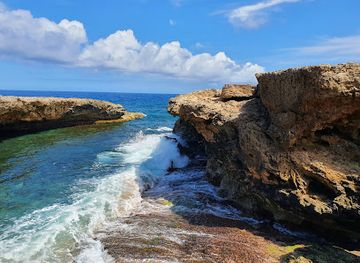
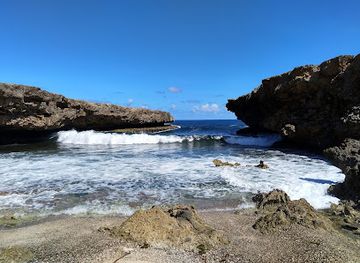
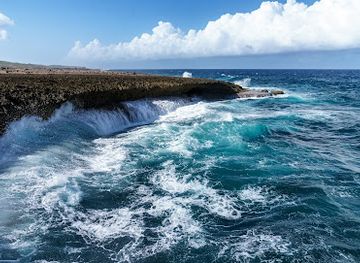
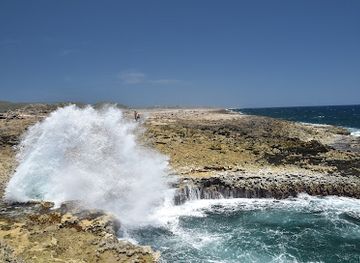
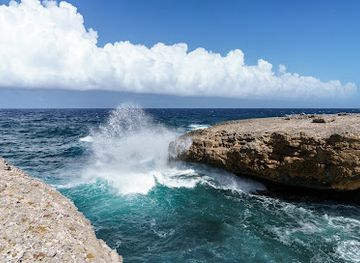
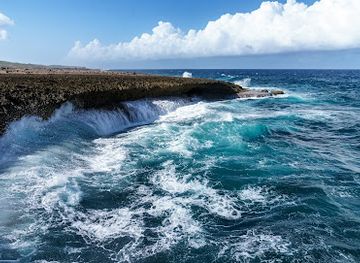
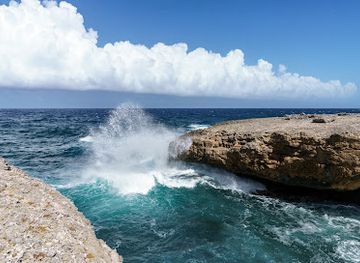
Shete Boka National Park protects roughly 10 kilometres of Curaçao’s rugged north coast, where the Caribbean Sea meets a raised limestone landscape with exceptional force. The name refers to the park’s many inlets, or bokas, and its shoreline is defined by surf-cut cliffs, narrow coves, sea caves, blowholes and broad rock terraces rather than sheltered swimming beaches. Waves surge into Boka Tabla, one of the best-known coastal features, while the force of the open sea is especially dramatic at Boka Pistol, where spray can be driven high above the rocks in suitable conditions.Read more about Shete Boka National Park
Walking Through a Protected Landscape
Beyond the Shoreline
When is the best time to visit Shete Boka National Park?
Best: January–March · 29°C| Month | High (°C) | Rainfall (mm) |
|---|---|---|
| January (best) | 29 | 61 |
| February (best) | 29 | 56 |
| March (best) | 29 | 52 |
| April | 29 | 59 |
| May | 29 | 65 |
| June | 29 | 71 |
| July | 29 | 76 |
| August | 29 | 80 |
| September | 29 | 85 |
| October | 29 | 90 |
| November | 30 | 95 |
| December | 30 | 101 |
Getting to and around Shete Boka National Park
How to get there
Transportation
Best landmarks in Shete Boka National Park
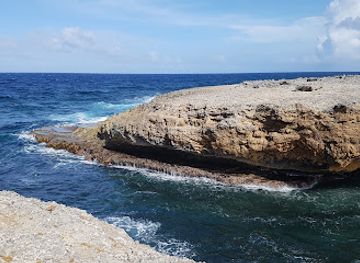
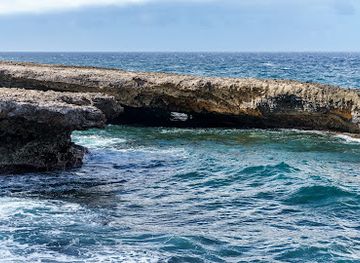
The defining landmarks of Shete Boka are natural rather than architectural. Boka Tabla is a recognisable sea cave and inlet where the northern swell enters the limestone, while Boka Pistol is named for the explosive, gunshot-like plume of water that can rise when waves are channelled through a narrow opening. Boka Wandomi and the other named bokas demonstrate how marine erosion has divided the raised coastal terrace into coves, ledges and cavities. The surrounding limestone cliffs and wave-cut platforms are important geological features as well as viewpoints, recording the long interaction between Curaçao’s uplifted land and the Caribbean Sea. Dry coastal vegetation, including cacti and low scrub, completes the park’s visual identity. Unlike Willemstad or the plantation estates of western Curaçao, Shete Boka contains few built landmarks; its significance rests on exposed geology, natural processes and the conservation of a largely open shoreline.
-
Tourist attraction
Boka Pistol
Discover the breathtaking natural beauty of Boka Pistol, where dramatic cliffs meet powerful waves in Curaçao's stunning Shete Boka National Park.
-
Tourist attraction
Boka Tabla
Experience the raw power of nature at Boka Tabla in Shete Boka National Park, where crashing waves meet dramatic underground caves and rugged coastlines.
-
Tourist attraction
Boka Wand
Explore Boka Wand in Curaçao, where dramatic cliffs meet the Caribbean Sea, creating an unforgettable natural spectacle.
-
Tourist attraction
Boka Kalki
Discover the breathtaking beauty of Boka Kalki in Curaçao, where dramatic cliffs meet the turquoise Caribbean Sea in a serene national park setting.
Explore Shete Boka National Park on the map
Plan your trip on one map. See where the top attractions, landmarks, restaurants and hotels are, and book hotels and experiences in a few clicks.
Best hotels in Shete Boka National Park
Best nightclubs in Shete Boka National Park
Shete Boka National Park has no nightlife district, bar scene or late-evening entertainment within its protected landscape. After dark, the atmosphere is defined by quiet rural surroundings and the sound of the exposed coast, although visitors should not remain in restricted areas or walk near cliffs without suitable conditions and permission. Evening drinks and traditional hospitality are more likely to be found at accommodation, restaurants and village establishments in western Curaçao, including the wider areas around Barber and Westpunt. For a broader choice of music, bars and late-night venues, Willemstad is the island’s principal centre, but it lies outside the national park and requires a substantial journey by car. Cultural events, live music and informal gatherings can be seasonal, so availability should be checked locally rather than assumed.
-
National park
Shete Boka National Park
Explore the stunning landscapes and unique wildlife of Shete Boka National Park, a must-visit national park in Curaçao.
-
Tourist attraction
Boka Pistol
Explore Boka Pistol, a breathtaking tourist attraction in Curaçao, known for its stunning landscapes, vibrant marine life, and exceptional snorkeling opportunities.
-
Tourist attraction
Boka Tabla
Explore the breathtaking cliffs and vibrant marine life at Boka Tabla, a must-visit natural attraction in Curaçao.
-
Tourist attraction
Boka Wandomi
Experience the natural beauty and tranquility of Boka Wandomi, a hidden gem in Curaçao, perfect for adventure and relaxation.
Best shops in Shete Boka National Park
Shopping opportunities are very limited within Shete Boka National Park, where the priority is conservation rather than retail development. Visitors should obtain water, snacks, sun protection and other essentials in Willemstad or in western settlements before driving to the coast. Barber and the wider Banda Abou area may provide basic provisions, while larger ranges of groceries, crafts and souvenirs are concentrated in Willemstad and the island’s principal tourism areas. Curaçao-associated purchases can include locally produced food, island-inspired artwork, handmade crafts, textiles and souvenirs reflecting the island’s Dutch-Caribbean identity, but availability differs between businesses and seasons. Farm produce and small-scale food sales may appear in rural areas without operating as permanent markets. Do not expect shopping facilities at individual bokas, and avoid removing shells, stones, plants or other natural material from the protected landscape.
-
National park
Shete Boka National Park
Explore the stunning landscapes and natural wonders of Shete Boka National Park, a breathtaking national park on the rugged coastline of Curaçao.
-
Tourist attraction
Boka Tabla
Discover the breathtaking beauty of Boka Tabla in Curaçao, where crashing waves and stunning landscapes create a natural paradise.
Get your free copy of our complete guide to Shete Boka National Park, delivered straight to you.
Everything on this page, from attractions and restaurants to essentials and local phrases, in one PDF you can read offline, print or share.
Already have an account? Sign in
Your Shete Boka National Park guide is ready.
We'll send it to · Not you? Sign out

Getting your guide ready…
We are putting together a fresh copy of the Shete Boka National Park guide. This can take up to a minute.
This can take a few moments. If your browser asks, choose Allow so the download can start. You'll find the guide in your Downloads folder.
Nothing happened? Download it again
Sorry, the guide is taking longer than usual. Please try again in a minute, or get it by email instead.
Shete Boka National Park essentials
Currency and Payment
Safety
Emergency Situations
Do's and Don'ts
Local Tips
From Eve
Local phrases worth knowing
You don't need to get them perfect. A few words go a long way, and locals appreciate the effort.
Basics
| English | Local | Say it |
|---|---|---|
| Hello | Bon dia | [Bon-dee-ah] |
| Goodbye | Ayo | [Ah-yo] |
| Yes | Si | [See] |
| No | No | [No] |
| Please/You're welcome | Por fabor | [Pour-fah-bore] |
| Thank you | Danki | [Dahn-key] |
| Excuse me/Sorry | Pardon | [Par-don] |
| How are you? | Kon ta bai? | [Kone-ta-buy] |
| Fine. And you? | Bon. I bo? | [Bone. Ee-bo] |
| Do you speak English? | Bo papia Ingles? | [Bo-pah-pee-ah-Ing-lez] |
| I don't understand | Mi no ta comprende | [Mee-no-ta-com-prain-dee] |
Eating & Drinking
| English | Local | Say it |
|---|---|---|
| I'd like to see the menu, please | Mi kier mira e menu, por fabor | [Mee-kee-er-mee-rah-eh-men-oo-pour-fah-bore] |
| I don't eat meat | Mi no kome karni | [Mee-no-koh-meh-kar-nee] |
| Cheers! | Salud! | [Sah-lood] |
| I would like to pay, please | Mi kier paga, por fabor | [Mee-kee-er-pah-gah-pour-fah-bore] |
Emergencies
| English | Local | Say it |
|---|---|---|
| Help! | Yudami! | [Yoo-dah-mee] |
| Go away! | Bai mas leu! | [Bye-mahs-lay-oo] |
| Call the Police! | Yama polis! | [Yah-mah-poh-lees] |
| Call a doctor! | Yama un dokter! | [Yah-mah-oon-dok-ter] |
| I'm lost | Mi a bira perdi | [Mee-ah-bee-rah-pair-dee] |
| I'm ill | Mi ta malu | [Mee-ta-mah-loo] |
Shopping
| English | Local | Say it |
|---|---|---|
| I'd like to buy... | Mi kier kumpra... | [Mee-kee-er-koom-prah] |
| I'm just looking | Mi ta solamente mira | [Mee-ta-soh-lah-men-teh-mee-rah] |
| How much is it? | Kuantu e kosta? | [Kwan-too-eh-kos-tah] |
| That's too expensive | Esaki ta muchu karo | [Eh-sah-kee-tah-moo-choo-kah-ro] |
| Can you lower the price? | Bo por baha e preis? | [Bo-por-bah-ha-eh-preis] |
Time & Numbers
| English | Local | Say it |
|---|---|---|
| What time is it? | Kuantu ora e ta? | [Kwan-too-or-ah-eh-tah] |
| It's one o'clock | Ta un or | [Tah-oon-or] |
| Half past (10) | Mitad di dies | [Mee-tad-dee-deez] |
| Morning | Marduga | [Mar-doo-gah] |
| Afternoon | Atardi | [Ah-tar-dee] |
| Evening | Anochi | [Ah-noh-chee] |
| Yesterday | Ayer | [Eye-er] |
| Today | Awe | [Ah-weh] |
| Tomorrow | Mañana | [Mah-nyah-na] |
| 1 | Un | [Oon] |
| 2 | Dos | [Dohs] |
| 3 | Tres | [Tress] |
| 4 | Cuatro | [Kwah-tro] |
| 5 | Cinco | [Seen-ko] |
| 6 | Seis | [Says] |
| 7 | Siete | [See-eh-teh] |
| 8 | Ocho | [Oh-cho] |
| 9 | Nueve | [Nweh-veh] |
| 10 | Diez | [Dee-ehs] |
Transport & Directions
| English | Local | Say it |
|---|---|---|
| Where's a/the...? | Unda tin un/e... | [Oon-dah-teen-oon-eh] |
| What's the address? | Kual ta e adres? | [Kwaal-tah-eh-ad-res] |
| Can you show me (on the map)? | Bo por mustra mi (riba e mapa)? | [Bo-por-moos-trah-mee-ree-bah-eh-mah-pah] |
| When's the next (bus)? | Kuantu tempu te e siguiente (bus)? | [Kwan-too-temp-oo-teh-eh-see-gwee-en-teh-boos] |
| A ticket (to ....) | Un tiki (pa ....) | [Oon-tee-kee-pah] |
History of Shete Boka National Park
Limestone Coast and Marine Erosion
Shete Boka’s physical history is geological rather than human. Curaçao is built largely from volcanic and sedimentary rocks, with raised limestone terraces forming much of the island’s northern shore. At Shete Boka, centuries of wave action have exploited cracks and weaknesses in the limestone, creating caves, inlets, overhangs and wave-cut platforms. The bokas are therefore changing coastal landforms rather than constructed features: the sea continues to enlarge openings, remove loose rock and reshape the shoreline during storms. This geological setting explains the park’s sharply contrasting scenery, from dry inland scrub to cliffs repeatedly struck by open Caribbean swells.
Early Island Communities
Long before European colonisation, Curaçao was inhabited by Indigenous communities generally associated with the Caquetío, an Arawakan-speaking people from the mainland region of present-day Venezuela. Evidence of early habitation exists elsewhere on the island, including archaeological material and rock art, although Shete Boka is principally valued today for its coastal geology and natural environment rather than a large surviving settlement. The island’s dry climate, limited freshwater and exposed northern shore would have shaped how people moved through and used the landscape. Human occupation was closely connected with the sea, seasonal resources and the more sheltered southern side of Curaçao.
Colonial Curaçao and Banda Abou
Dutch control of Curaçao began in the seventeenth century, after which the island developed as a strategic port and plantation colony. The western countryside known as Banda Abou remained more rural than Willemstad and was worked through plantations, livestock raising and small-scale agriculture. The exposed coast around Shete Boka was not transformed into a major harbour or urban settlement; its harsh surf and difficult terrain helped preserve a largely open character. Across the wider region, colonial land use left traces in plantation estates, country houses and rural settlement patterns, linking the national park to the broader cultural landscape of western Curaçao.
Protection of the Northern Shore
Modern Shete Boka is understood primarily as a protected natural landscape, established to conserve a representative stretch of Curaçao’s rugged northern coastline and its distinctive geological features. Management has supported controlled access, marked routes and interpretation while limiting the kind of intensive development found in resort areas elsewhere on the island. Conservation is especially important where visitors walk close to cliffs, caves and fragile coastal vegetation. The park’s contemporary identity reflects a wider shift in Curaçao towards safeguarding natural areas alongside historic Willemstad and the island’s cultural heritage, allowing the exposed shoreline to remain a place for observation rather than construction.
Shete Boka National Park in Photos
Browse through our photo collection highlighting the charm and character of the destination.
Neighbouring destination travel guides
The closest destinations to Shete Boka National Park, if you have time for more than one.
-

-

-

-

-


Swipe for more destinations
Explore more

Explore more of Band'abou
Band'abou, Curaçao’s western district, combines reef-fringed beaches, national parks, plantation history, hiking and quiet village life.
Explore Band'abou
Explore more of Curacao
Discover Curacao, where vibrant culture, stunning beaches, and historic charm come together to create a Caribbean paradise like no other.
Explore Curacao