Background

Varosha: A Haunting Reminder of Cyprus's Divided Past

Explore Varosha, Famagusta's abandoned ghost town: a haunting reminder of Cyprus's divided past, offering a unique glimpse into a frozen-in-time resort city.

Varosha, once a glamorous resort town and the jewel of Cyprus, stands frozen in time since the Turkish invasion of 1974. This abandoned suburb of Famagusta, also known as Maraş in Turkish, offers a unique and unsettling glimpse into a bygone era. Its deserted hotels, residential buildings, and shops remain as they were left, creating an eerie atmosphere that attracts visitors interested in dark tourism and the island's complex history. While access was restricted for decades, parts of Varosha have recently opened to the public, allowing exploration of designated areas and the beautiful beach. A visit here is a poignant experience, prompting reflection on the human cost of conflict and the passage of time. Remember to respect the rules and regulations in place, as the area remains politically sensitive and under military supervision. Exploring Varosha offers a powerful and unforgettable journey into a place where time stands still.

A brief summary to Famagusta Warosia

  • 4X44+85X, Famagusta, Βαρώσια, 99450, CY
  • Monday 12 am-12 am
  • Tuesday 12 am-12 am
  • Wednesday 12 am-12 am
  • Thursday 12 am-12 am
  • Friday 12 am-12 am
  • Saturday 12 am-12 am
  • Sunday 12 am-12 am

Local tips

  • Wear comfortable shoes, as you'll be doing a lot of walking or cycling on uneven surfaces.
  • Bring water and sun protection, as there is limited shade in the open areas.
  • Respect the rules and regulations, and avoid entering restricted areas or photographing military installations.
  • Consider renting a bicycle near the entrance to explore the open parts of the city more efficiently.
  • Visit early in the morning to avoid crowds and experience the abandoned atmosphere more intensely.
widget icon

Getting There

  • Walking

    From the center of Famagusta's Old Town, head south-east, following the main road. The walk to the Varosha entrance takes approximately 20-30 minutes. Look for signs directing you towards 'Maraş' (the Turkish name for Varosha). The entrance is located near the Dr. Fazil Küçük stadium. Admission is free.

  • Taxi/Ride-Share

    Taxis are readily available in Famagusta. A taxi ride from the city center to the Varosha entrance will take around 5-10 minutes, costing approximately €6-€10. Ensure the driver knows you want to go to the 'Maraş' entrance. Taxi fares in Famagusta have a base fee of approximately €6, with an additional charge of €1 per kilometer.

  • Public Transport

    Local buses ('dolmuş') operate in Famagusta. Check for routes heading towards Varosha or the Dr. Fazil Küçük stadium. Bus fares are relatively inexpensive. The OSEA (Famagusta District Transportation Organization) operates bus routes in the area. A single route ticket costs €2.40. Check local timetables for the most up-to-date information.

Unlock the Best of Famagusta Warosia

Buy tickets

    No tickets available

Book tours with entry

    No tours available

Book tours without entry

    No tours available

Discover more about Famagusta Warosia

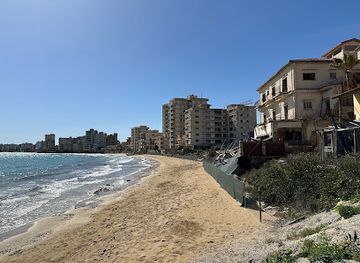
Varosha, a southern district of Famagusta, is a haunting testament to the Cyprus conflict and a place where time has stood still since 1974. Once a thriving and luxurious tourist destination, Varosha boasted pristine beaches, high-rise hotels, bustling shops, and a vibrant nightlife, attracting celebrities and holidaymakers from around the globe. It was the jewel of Cyprus, a symbol of prosperity and modernity. In its heyday, Varosha was a playground for the rich and famous, with Elizabeth Taylor, Richard Burton, and Brigitte Bardot among its frequent visitors. The town's hotels offered unparalleled luxury, and its streets were lined with boutiques, restaurants, and entertainment venues. Varosha contributed significantly to the Cypriot economy, representing 45% of the island's hotel capacity. The Bank of Cyprus once saw queues of people lining up to enter, but now it stands abandoned. However, this idyllic existence was shattered in July 1974 when Turkish troops advanced on Famagusta following a coup d'état. The Greek Cypriot residents, fearing for their lives, fled south, leaving behind their homes, businesses, and possessions, expecting to return soon. But the Turkish army fenced off the area, and Varosha became a ghost town, a forbidden zone under military control. For decades, Varosha remained abandoned, its buildings decaying, and nature reclaiming the urban landscape. The once-glittering hotels became skeletal structures, and the streets were overgrown with vegetation. The area was a stark reminder of the island's division and the human cost of conflict. The opening of Varosha was condemned by the European Parliament, but Turkey and the TRNC remained steadfast. In recent years, there have been efforts to reopen parts of Varosha to the public. In 2020, a section of the beach and some streets were opened to civilian visitors, allowing them to witness the ghost town's eerie beauty and reflect on its history. A second phase of reopening took place in mid-2021, including the reopening of a small mosque in Varosha that was to welcome worshippers once again. In May 2022, a second stretch of beach was opened to tourists and some beach holiday infrastructure was installed. Today, visitors can walk or cycle through designated areas of Varosha, observing the abandoned buildings, the overgrown streets, and the poignant remnants of a once-thriving community. The beach, once again accessible, offers a surreal experience, with the backdrop of decaying hotels creating a unique and unsettling atmosphere. You can rent a bicycle near the entrance for around 15 TL for 2 hours to explore the streets. It is important to note that Varosha remains a politically sensitive area, and visitors must adhere to certain rules and regulations. Entry into restricted areas is prohibited, and photography of military installations is forbidden. It is also crucial to respect the site's historical significance and refrain from touching or removing any objects. Visiting Varosha is a powerful and thought-provoking experience. It is a chance to witness the devastating effects of conflict, to reflect on the passage of time, and to contemplate the resilience of the human spirit. The ghost town serves as a reminder of the importance of peace and reconciliation and the need to preserve cultural heritage. While exploring Varosha, one can't help but imagine the lives that were once lived within its walls. The echoes of laughter, music, and conversation seem to linger in the air, creating a sense of both sadness and wonder. The abandoned shops, with their faded signs and empty shelves, tell stories of a vibrant commercial district. The decaying hotels, once symbols of luxury and glamour, now stand as silent witnesses to a bygone era. Varosha is more than just a ghost town; it is a living museum, a testament to history, and a reminder of the human cost of conflict. A visit to this unique and unsettling place is an experience that will stay with you long after you leave. Varosha is located just one kilometer south of Famagusta's historic walled center. The entrance to Varosha is about a mile (1.6 km) south-east of the centre of Famagusta's Old Town. The tourist entrance has the following opening times: from 8 a.m. to 5 p.m. in winter, longer in summer (up to 8 p.m., I believe). Admission is free. You are not allowed to enter any buildings for safety reasons, and have to stay on the prescribed tourist route. Photography is allowed, except at military areas and UN-staffed points. Varosha is a place where the past and present collide, where beauty and decay coexist, and where visitors can reflect on the complexities of history and the importance of peace.

Popular Experiences near Famagusta Warosia

Popular Hotels near Famagusta Warosia

Select Currency