

Старый город Фамагустп, Famagusta Travel Guide
Free Guide: Explore the Walled City of Famagusta, a Mediterranean treasure where layers of history unfold within remarkably preserved Venetian fortifications, revealing a captivating blend of cultures and architectural styles.


A brief summary of Старый город Фамагустп
Explore the Walled City of Famagusta, a Mediterranean treasure where layers of history unfold within remarkably preserved Venetian fortifications, revealing a captivating blend of cultures and architectural styles.
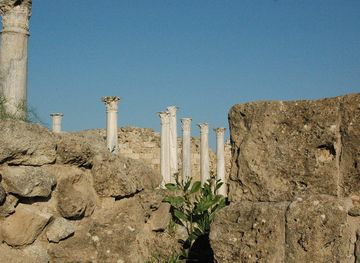
Step back in time within the imposing Venetian walls of Famagusta's Old City, a captivating open-air museum brimming with history and architectural wonders. Founded around 300 BC, Famagusta blossomed under Lusignan rule, becoming a vibrant trade hub adorned with countless churches, earning it the nickname 'the city of 365 churches'. Explore the well-preserved fortifications, wander through the atmospheric ruins of Gothic cathedrals and Ottoman mosques, and discover hidden gems around every corner. Key landmarks include the Lala Mustafa Pasha Mosque (formerly St. Nicholas Cathedral), Othello Castle, and the Venetian Palace ruins. The city's complex past, marked by Venetian, Ottoman, and British influences, creates a unique blend of cultures and architectural styles, offering a fascinating glimpse into Cyprus's rich heritage. A visit here is a journey through centuries of Mediterranean history.
- Address
- Yeşil Deniz Cd 35, Gazimağusa 99450
Getting there
Walking
Public Transport
Taxi/Ride-Share
Driving
Discover more about Старый город Фамагустп
Overview
Famagusta's Old City, encircled by remarkably intact Venetian walls, is a mesmerizing journey into the past. Founded as Arsinoe in 300 BC by Ptolemy II Philadelphus, it remained a small fishing village until the gradual decline of Salamis led to its emergence as a significant port. The turning point arrived in 1192 with the Lusignan dynasty, transforming Famagusta into a thriving town, its natural harbor and protective walls fostering trade between East and West. The 13th century witnessed an influx of Christian refugees fleeing the fall of Acre, Palestine, turning Famagusta into one of Christendom's wealthiest cities. Merchants and ship owners led lives of luxury, expressing their wealth through the construction of numerous churches, leading to its moniker, 'the district of churches'. This era saw the rise of iconic structures like the St. Nicholas Cathedral, now the Lala Mustafa Pasha Mosque, a testament to the city's layered history. In 1372, Genoa seized the port, followed by Venice in 1489, further fueling the city's commercial importance. The Venetians heavily fortified Famagusta in the 15th and 16th centuries to defend against the growing Ottoman threat. These fortifications, still largely intact, showcase the transition from medieval to early modern military architecture. The walls, averaging 30 feet thick, housed stables, armories, and tunnels, playing a crucial role in the city's defense. However, in 1570, the Ottomans besieged Famagusta, and after an 11-month resistance, the city fell. The Cathedral of St. Nicholas was converted into a mosque, and the city's character began to transform under Ottoman rule. Despite this, Famagusta retains its unique blend of architectural styles, a fusion of Gothic, Renaissance, and Ottoman influences. Today, the Old City invites exploration on foot, revealing a wealth of historical landmarks. The Lala Mustafa Pasha Mosque, with its Gothic architecture and minaret, stands as a symbol of the city's dual identity. Othello Castle, originally built in the 14th century by the Lusignans and later modified by the Venetians, offers panoramic views of the city and harbor. The castle's name is said to be inspired by Shakespeare's play, Othello, which is set in a harbor town in Cyprus. Wander along the Venetian walls, marveling at their imposing height and thickness. Explore the ruins of the Venetian Palace, once the residence of the island's governor. Discover the remnants of numerous churches, each with its own unique story to tell. The city's rich history is palpable in every stone, every arch, and every crumbling facade. Beyond the main attractions, the Old City offers hidden gems waiting to be discovered. Stroll through quiet alleyways, admire the bougainvillea-draped buildings, and soak in the atmosphere of this historic enclave. Visit the Namık Kemal Dungeon, where the Turkish nationalist poet was imprisoned. Explore the Akkule Masjid, a small Ottoman-era mosque. Discover the Twin Churches, a pair of adjacent Byzantine churches. While exploring the Old City, take time to appreciate its resilience and its ongoing evolution. Despite the scars of war and the passage of time, Famagusta remains a vibrant center of culture and commerce. The city's blend of historical significance and modern life creates a unique and unforgettable experience for visitors.
Evendo Review Centre
 Google
Guest reviews
Explore Старый город Фамагустп on the map
A handpicked selection of must-see spots near Старый город Фамагустп, mapped for you.
Get your free copy of our complete guide to Старый город Фамагустп, delivered straight to you.
Everything on this page, from opening hours and how to get there to Eve’s tips and the best time to go, in one PDF you can read offline, print or share.
Already have an account? Sign in
Your Старый город Фамагустп guide is ready.
We'll send it to · Not you? Sign out

Getting your guide ready…
We are putting together a fresh copy of the Старый город Фамагустп guide. This can take up to a minute.
This can take a few moments. If your browser asks, choose Allow so the download can start. You'll find the guide in your Downloads folder.
Nothing happened? Download it again
Sorry, the guide is taking longer than usual. Please try again in a minute, or get it by email instead.
Other nearby places you may find interesting
The closest places of the same kind, if this one is not quite what you had in mind.
-
-

-
-
-


Swipe for more places
More to explore near Старый город Фамагустп

 Best experiences near Старый город Фамагустп
 Best hotels near Старый город Фамагустп
 Best landmarks near Старый город Фамагустп
 Best attractions near Старый город Фамагустп
 Best shops near Старый город Фамагустп
 Best restaurants near Старый город Фамагустп
 Best bars near Старый город Фамагустп
Do you manage this location?
Take control to get all the benefits, like improved information, better appearance, and stronger visibility across AI-powered discovery.
Explore more
Explore more of Famagusta
Discover Famagusta: A captivating blend of ancient history, stunning architecture, and beautiful beaches on the east coast of Cyprus.
Explore Famagusta
Explore more of Cyprus
Discover Cyprus: A Mediterranean paradise with a rich tapestry of history, culture, and breathtaking landscapes, offering a perfect blend of relaxation and adventure.
Explore Cyprus
