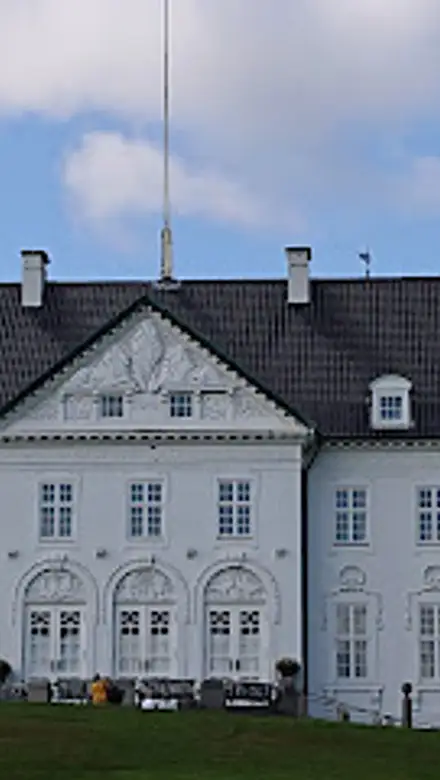
Marselisborg Castle, Aarhus Travel Guide
Free Guide: Royal summer residence above the Bay of Aarhus, framed by English-style gardens, sculptures and memorial parkland that blend Danish history with tranquil green space.


A brief summary of Marselisborg Castle
Royal summer residence above the Bay of Aarhus, framed by English-style gardens, sculptures and memorial parkland that blend Danish history with tranquil green space.
Marselisborg Palace is the Danish royal family’s elegant summer and Christmas residence on the southern edge of Aarhus. Set above the Bay of Aarhus and framed by Marselisborg Memorial Park and the surrounding forests, the early‑20th‑century palace is known less for interior visits than for its exquisite English‑style gardens, dotted with ponds, rose beds and contemporary sculptures. When the royal family is away, visitors can stroll right up near the palace and enjoy sweeping sea views in a calm, park‑like atmosphere.
On-site amenities
 Restrooms
 Seating areas
 Picnic areas
 Trash bins
 Information boards
- Address
- Kongevejen 100, 8000 Aarhus
- Phone
- Website
Getting there
City bus from Aarhus city centre
Bicycle from central Aarhus
Taxi within Aarhus
Walking from the central districts
Discover more about Marselisborg Castle
Royal retreat overlooking the Bay of Aarhus
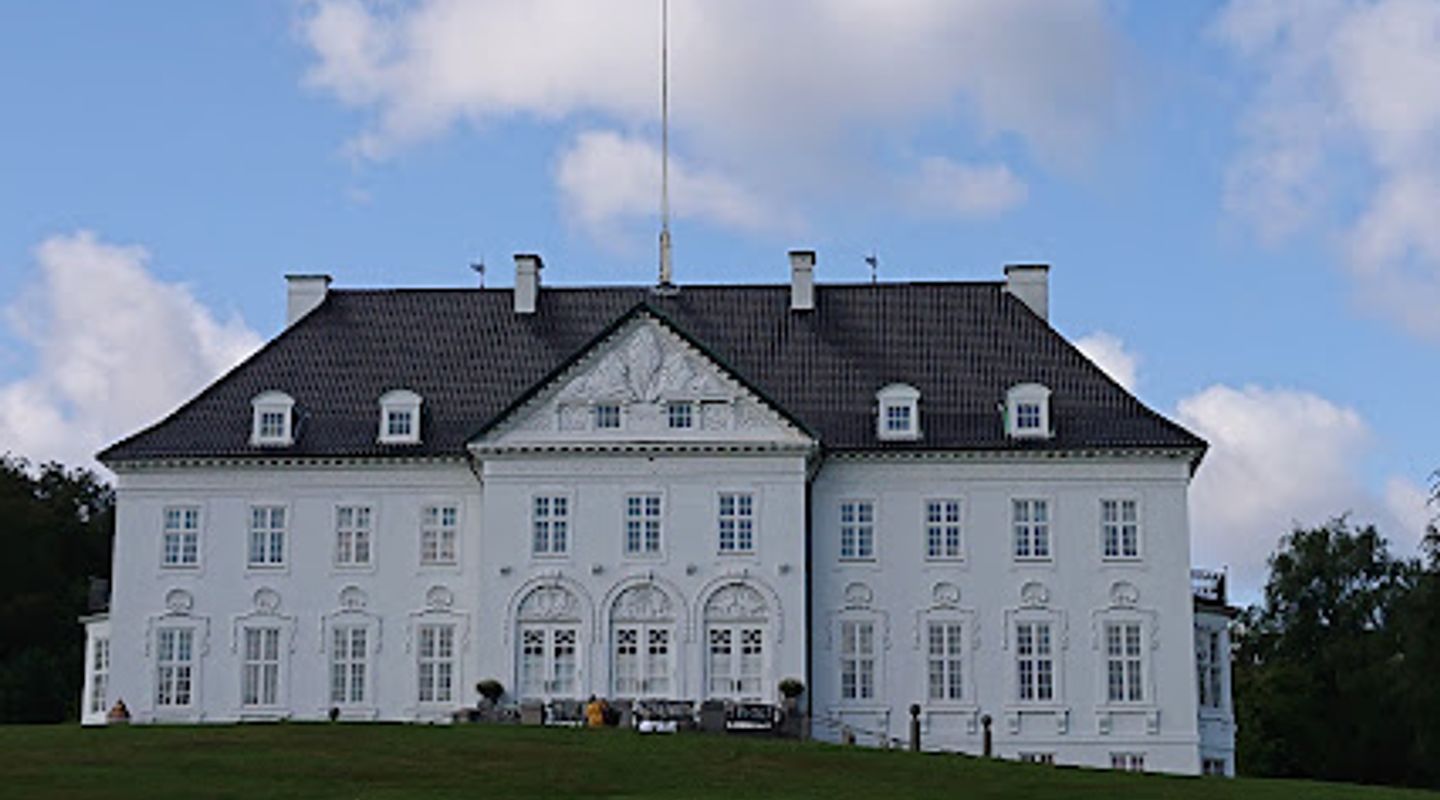
Marselisborg Palace is the official summer and Christmas residence of the Danish royal family, set on a gentle rise just south of central Aarhus with long, open views towards the Bay of Aarhus. Completed in 1902 as a "people’s wedding gift" to the future King Christian X and Queen Alexandrine, it was funded by public subscription and built on land donated by the city – a symbolic gesture binding the monarchy more closely to Jutland.Today the whitewashed palace and its neat towers feel more like a gracious country house than a fortress. When the monarch is in residence the Royal Life Guard mounts a ceremonial changing of the guard at noon, but at other times the focus shifts to the gardens and the surrounding parkland that cascade down towards the sea.
Architecture with subtle maritime character
The palace was designed by architect Hack Kampmann, one of Denmark’s leading early‑20th‑century designers, who blended sober Nordic classicism with romantic details. The main façade has a dignified, symmetrical form punctuated by small towers and steep roofs, giving the building a quietly stately silhouette against the sky.Look closely at the exterior and you will notice a playful maritime motif running through the decoration. Seagulls appear carved around window frames, seashells adorn the main door and even stylised fish are worked into the wood and stone. These details echo the palace’s coastal position and the constant presence of the bay just beyond the lawns.
English-style gardens and royal sculptures
For many visitors, the highlight is the palace garden, a carefully composed landscape in the English style that wraps around the residence. Curving paths lead past small lakes, banks of rhododendrons, herbaceous borders and a formal rose garden with pergolas that burst into colour in summer.Interspersed among the plantings are numerous sculptures and artworks, including several created by Prince Henrik, consort of Queen Margrethe II. Some pieces are abstract, others figurative, but together they turn a simple walk into an open‑air gallery. The lawned terraces, flower beds and artworks create a cultured yet relaxed setting that feels very much like a lived‑in royal retreat rather than a museum piece.
Mindeparken and the wider green landscape
Just below the palace gates lies Marselisborg Memorial Park, a broad swathe of grass, trees and memorial structures stretching towards the shoreline. The most striking feature is the First World War memorial complex commemorating Danes who died while conscripted into the German army, a sober ring of stone that invites quiet reflection.Beyond the memorial park, the landscape opens to the Bay of Aarhus, with views across the water and, on clear days, the hint of distant shores. To the south and west, the Marselisborg Forests, botanical garden and deer park extend the green belt, making this one of the city’s richest areas for walking, picnicking and informal recreation.
Visitor experience and practical expectations
The palace itself is not normally open for interior tours, so visits focus on the gardens and the surrounding parks. When the royal family is in residence, the palace garden closes to the public, but Mindeparken below remains accessible, still offering fine views of the building and the bay.Plan on a leisurely hour or two to wander the garden paths, examine sculptures, pause at the memorial and perhaps sit on the grass overlooking the water. The terrain is gently sloping but generally easy, and the atmosphere is unhurried – a mix of royal formality and everyday Danish outdoor life unfolding side by side.
A living symbol of Aarhus and the monarchy
More than a picturesque backdrop, Marselisborg Palace has become a symbol of the close relationship between Aarhus and the Danish crown. Its origin as a public gift, its ongoing role as a working royal residence and its integration into the city’s green spaces give it a distinctive character among European palaces.On days when the flags fly and the guards stand watch, you are reminded that this is still an active seat of monarchy. On quieter days, when the lawns are dotted with picnics and children explore the sculptures, it feels like a shared garden for the city – a royal home that also belongs, in spirit, to the people who helped create it.
Evendo Review Centre
 Google
Guest reviews
Best time to go
Quietest: Jan, Feb & Mar · before 8am or at 9pm
Busy times are Evendo estimates for a typical year, to help you plan. Actual crowds vary with events, school holidays and the weather.
Explore Marselisborg Castle on the map
A handpicked selection of must-see spots near Marselisborg Castle, mapped for you.
Get your free copy of our complete guide to Marselisborg Castle, delivered straight to you.
Everything on this page, from opening hours and how to get there to Eve’s tips and the best time to go, in one PDF you can read offline, print or share.
Already have an account? Sign in
Your Marselisborg Castle guide is ready.
We'll send it to · Not you? Sign out

Getting your guide ready…
We are putting together a fresh copy of the Marselisborg Castle guide. This can take up to a minute.
This can take a few moments. If your browser asks, choose Allow so the download can start. You'll find the guide in your Downloads folder.
Nothing happened? Download it again
Sorry, the guide is taking longer than usual. Please try again in a minute, or get it by email instead.
Other nearby places you may find interesting
The closest places of the same kind, if this one is not quite what you had in mind.
-
-
-
-
-


Swipe for more places
More to explore near Marselisborg Castle

 Best experiences near Marselisborg Castle
 Best hotels near Marselisborg Castle
 Best landmarks near Marselisborg Castle
 Best attractions near Marselisborg Castle
 Best shops near Marselisborg Castle
 Best restaurants near Marselisborg Castle
 Best bars near Marselisborg Castle
Do you manage this location?
Take control to get all the benefits, like improved information, better appearance, and stronger visibility across AI-powered discovery.
Explore more

Explore more of Aarhus
Discover Aarhus, Denmark's second-largest city, where ancient history meets modern culture. Explore historical sites, vibrant arts, and a thriving food scene in the City of Smiles.
Explore Aarhus
Explore more of Denmark
Discover Denmark: A perfect blend of history, modern design, and the cozy concept of hygge. Explore vibrant cities, serene landscapes, and world-class cuisine.
Explore Denmark