Møllestien, Aarhus Travel Guide
Free Guide: A tiny cobbled lane of colourful cottages and climbing roses, Møllestien is Aarhus’ most atmospheric glimpse of 19th‑century working‑class life.


A brief summary of Møllestien
A tiny cobbled lane of colourful cottages and climbing roses, Møllestien is Aarhus’ most atmospheric glimpse of 19th‑century working‑class life.
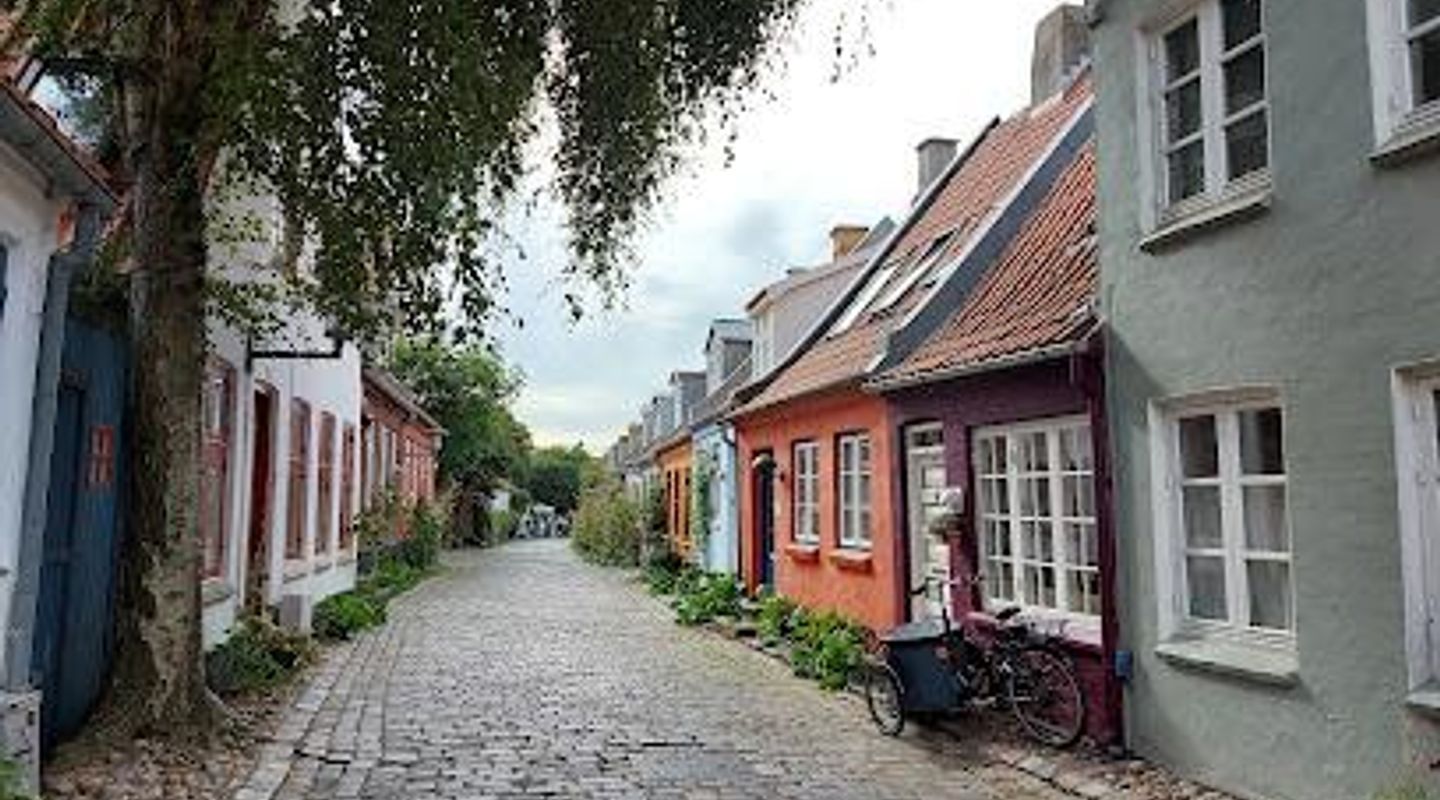
Tucked into the historic heart of Aarhus, Møllestien is a short cobblestone lane lined with low, brightly painted cottages and climbing roses. Dating back to at least the 13th century, it preserves rare 19th‑century working‑class housing in a city that has otherwise modernised. Today it feels like a tranquil village tucked inside the centre, ideal for a quiet stroll, atmospheric photos and a glimpse of everyday Danish life behind colourful facades.
On-site amenities
 Restrooms
 Drink options
 Drinking water
 Food options
 Seating areas
 Trash bins
 Information boards
- Address
- 8000 Aarhus
Getting there
Walking from Aarhus city centre
Bus from wider Aarhus districts
Light rail and train connections
Cycling within the city
Discover more about Møllestien
A quiet lane with centuries of stories
Møllestien may be a modest little street, but it carries more than 700 years of history in its cobbles. Its name, meaning “Mill Lane”, comes from the old Aarhus mill that once stood nearby, and the route itself probably emerged as part of the town’s medieval road network. For centuries this back lane remained slightly apart from the busier thoroughfares, a working corner of the city where everyday life unfolded out of the spotlight.The street once stretched further than it does today, divided into western and eastern sections that threaded through simple housing close to the river. Over time, parts of old Møllestien were demolished as Aarhus grew and modernised, leaving the surviving western stretch as a compact fragment of the historic neighbourhood. This surviving portion, however, remains remarkably intact and gives a vivid sense of how the area looked in the late 1800s.
From slum backstreet to cherished heritage
Although today Møllestien feels charming and idyllic, its past was far tougher. Through the early 20th century the tiny dwellings became associated with poverty and overcrowding, and the lane gained a reputation as one of Aarhus’ poorer quarters. Many houses lacked basic modern comforts, and as other parts of the city were upgraded, these buildings slipped into neglect.By the mid‑1900s city planners considered sweeping most of the area away. Demolition took place in sections, but the remaining houses west of Grønnegade escaped the bulldozers when a wave of new residents – including students, artists and young families – began to move in. They saw potential where others saw decay, gradually restoring the cottages, repainting facades and planting flowers and roses along the street. That slow, informal renewal is what gives Møllestien its intimate, lived‑in feel today.
Colourful cottages and cobblestone character
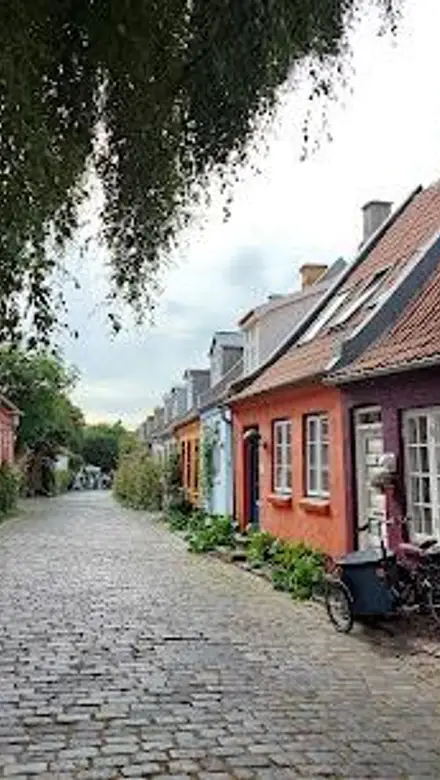
Architecturally, Møllestien is all about human scale. Most houses are single‑storey or one‑and‑a‑half‑storey cottages from roughly 1870–1885, sometimes with visible timber framing, simple rooflines and small-paned windows. What makes them stand out is the palette: soft blues, dusty pinks, mustard tones, greens and whites, each facade slightly different but together forming a cohesive ribbon of colour.In front of the houses, roses and climbers spill over fences and walls, especially lush in late spring and summer. The uneven cobblestone surface underfoot reinforces the impression of stepping back in time, and the narrowness of the street shuts out much of the city noise. Details reward close attention: hand‑painted doors, old house numbers, tiny benches outside for catching the sun, and glimpses into pocket‑sized courtyards.
A peaceful pause in the centre of Aarhus
Despite its central location, Møllestien feels like a small village lane. The soundscape is more birdsong and bicycle bells than traffic, and even on busy days in the surrounding streets, the lane itself often remains calm. It is an inviting place for a slow stroll, photography, sketching or simply pausing on a low step to soak up the atmosphere.There are no attractions in the conventional sense here – no museums, shops or cafés along the lane itself – just private homes and the quiet rhythm of everyday life. That simplicity is part of the appeal: Møllestien offers a gentle counterpoint to the cultural institutions and modern architecture elsewhere in Aarhus, reminding you that the city’s history is still lived, not only displayed.
Visiting with care and respect
Because all the houses on Møllestien are private dwellings, visiting is very much about observing respectfully from the street. It is fine to take photos and admire the colours and flowers, but it is important to keep noise low, avoid peering into windows and stay off doorsteps and stoops. Early morning and late afternoon often bring especially beautiful light along the lane, with long shadows and warm tones on the facades.A short visit of half an hour can be enough to walk both directions, notice architectural details and capture a few photographs, while a longer linger allows you to sense how the lane changes as the day moves on. Combined with nearby parks and cultural sights, Møllestien becomes a memorable small stop in a broader exploration of Aarhus’ historic core.
Evendo Review Centre
 Google
Guest reviews
Best time to go
Quietest: Jan, Feb & Mar · before 7am or from 11pm
Busy times are Evendo estimates for a typical year, to help you plan. Actual crowds vary with events, school holidays and the weather.
Explore Møllestien on the map
A handpicked selection of must-see spots near Møllestien, mapped for you.
Get your free copy of our complete guide to Møllestien, delivered straight to you.
Everything on this page, from opening hours and how to get there to Eve’s tips and the best time to go, in one PDF you can read offline, print or share.
Already have an account? Sign in
Your Møllestien guide is ready.
We'll send it to · Not you? Sign out

Getting your guide ready…
We are putting together a fresh copy of the Møllestien guide. This can take up to a minute.
This can take a few moments. If your browser asks, choose Allow so the download can start. You'll find the guide in your Downloads folder.
Nothing happened? Download it again
Sorry, the guide is taking longer than usual. Please try again in a minute, or get it by email instead.
Unlock the best of Møllestien
Skip-the-line tickets, guided tours with entry, and walking tours of the area, booked in a few clicks.





Other nearby places you may find interesting
The closest places of the same kind, if this one is not quite what you had in mind.
-
The Infinite Bridge A graceful circular pier where art, coastline and city meet, inviting endless walks above the water and wide-open views of Aarhus Bay and the forested shore.
-
Marselisborg Deer Park Free-roaming deer and wild boars in a pristine 22-hectare forest sanctuary near Aarhus.
-
Bishop's Square Historic Bishop’s Square reborn as Aarhus’ open‑air living room, framed by cathedral and theatre, where centuries of history meet everyday urban life.
-
Tivoli Friheden A historic forest-edge amusement park in Aarhus where high-thrill rides, family fun, flower festivals and seasonal events fill a green, garden-like setting.
-
Marselisborg Strand Easygoing Aarhus city beach where forested hills, open bay views and everyday Danish coastal life meet just south of the urban centre.
Swipe for more places
More to explore near Møllestien

 Best experiences near Møllestien
 Best hotels near Møllestien
 Best landmarks near Møllestien
 Best attractions near Møllestien
 Best shops near Møllestien
 Best restaurants near Møllestien
 Best bars near Møllestien
Do you manage this location?
Take control to get all the benefits, like improved information, better appearance, and stronger visibility across AI-powered discovery.
Explore more

Explore more of Aarhus
Discover Aarhus, Denmark's second-largest city, where ancient history meets modern culture. Explore historical sites, vibrant arts, and a thriving food scene in the City of Smiles.
Explore Aarhus
Explore more of Denmark
Discover Denmark: A perfect blend of history, modern design, and the cozy concept of hygge. Explore vibrant cities, serene landscapes, and world-class cuisine.
Explore Denmark