

ARoS Aarhus Art Museum, East Jutland Travel Guide
One of Northern Europe’s largest art museums, crowned by a glowing rainbow skywalk and filled with bold Danish and international art over ten dynamic floors.
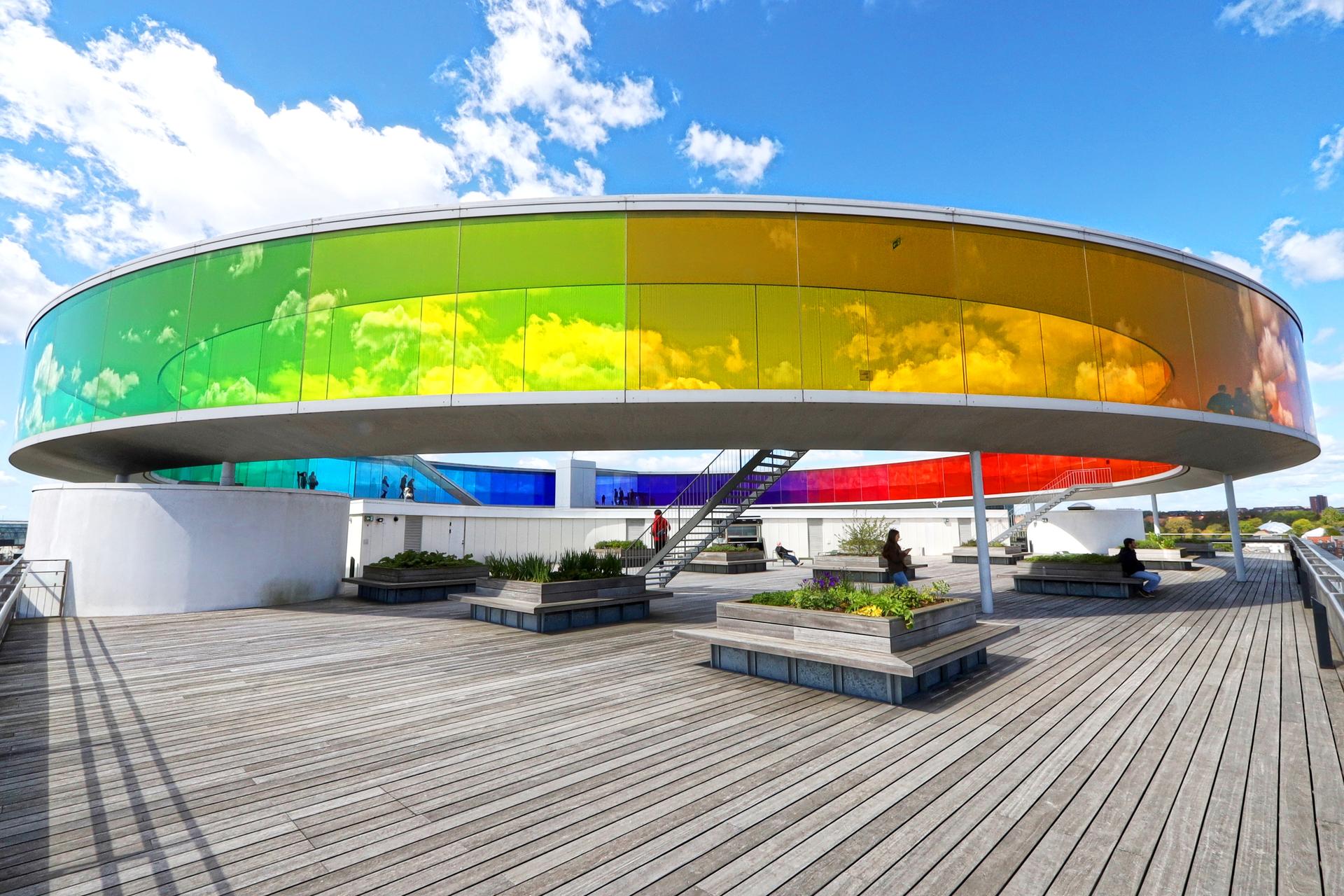
ARoS Aarhus Art Museum is one of Northern Europe’s largest art museums, rising over Aarhus with ten floors of Danish and international art and the iconic rooftop installation, Your rainbow panorama, by Olafur Eliasson. Inside, more than 8,000 works span from 18th-century painting to cutting-edge installation art, including Ron Mueck’s monumental sculpture Boy and immersive light pieces. With its striking architecture, expansive views, café, and shop, ARoS is a cultural powerhouse and a must-see highlight of Denmark’s second city.
A brief summary to ARoS Aarhus Art Museum
- Aros Allé 2, Aarhus, Aarhus C, 8000, DK
- Click to display
- Click to display
- Duration: 2.5 to 4 hours
- Mid ranged
-
 Indoor
- Mobile reception: 5 out of 5
- Tuesday 10 am-9 pm
- Wednesday 10 am-9 pm
- Thursday 10 am-9 pm
- Friday 10 am-9 pm
- Saturday 10 am-5 pm
- Sunday 10 am-5 pm

Know before you go
Hi, I'm Eve. Here are a few practical things to know before exploring ARoS Aarhus Art Museum.
- Plan at least 3–4 hours to explore; the museum has multiple floors, major installations and a rooftop panorama that all reward unhurried time.
- Head up to Your rainbow panorama in changing light—late afternoon and just before sunset often give especially dramatic city views through the colored glass.
- Check current exhibitions in advance; large temporary shows and installation projects can significantly shape which floors you prioritise during your visit.
- Use the café or orangery as a midway break point; pausing between the lower galleries and rooftop levels can help avoid art fatigue.
- Travel light if possible; the museum involves plenty of walking and stairs, even with lifts available between floors.
Do you manage this location?
Take control to get all the benefits, like improved information, better appearance, and stronger visibility across AI-powered discovery. Learn more about listing your business on Evendo
Activate your presenceOther nearby places you may find interesting
The closest places of the same kind, if this one is not quite what you had in mind.

Explore ARoS Aarhus Art Museum on the Map
A handpicked selection of must-see spots near ARoS Aarhus Art Museum, mapped for you.
Unlock the Best of ARoS Aarhus Art Museum
Buy tickets
-
No tickets available
Book tours with entry


Getting There
-
City bus from central Aarhus
From central Aarhus, several city bus lines stop within a short walk of ARoS; typical rides from the main railway station area take around 5–10 minutes depending on traffic. Single tickets on city buses generally cost about 20–30 DKK when bought via app or ticket machines. Services run frequently throughout the day, but can be less frequent late evenings and on some holidays, so check timetables if you are returning after the museum closes.
-
Walking from Aarhus H railway station
If you are already in the city centre near Aarhus H railway station, ARoS is reachable on foot in roughly 10–15 minutes at a relaxed pace. The route passes through relatively level, urban streets with paved sidewalks and pedestrian crossings. This option is suitable for most visitors with average mobility, though those using wheelchairs or pushing strollers should allow extra time for crowds and occasional gradients near the museum.
-
Bicycle within Aarhus city
Cycling is a common way to reach ARoS from neighbourhoods around Aarhus, with typical rides from inner districts taking about 5–20 minutes depending on distance. The city has an established network of bike lanes, and you can use personal bikes or local bike-share schemes, which usually cost in the range of 10–40 DKK for short rides or day access. Be aware of busy junctions during peak commuting hours and use designated racks near the museum to park your bicycle.
-
Taxi from the wider Aarhus area
Taxis offer a direct option from hotels or residential areas in and around Aarhus, with travel times from most central districts typically 5–15 minutes, and 25–40 minutes from outlying suburbs depending on traffic. Within the city, fares commonly range from about 120–250 DKK for central trips, higher from more distant areas or during late-night hours. It is advisable to confirm estimated cost with the driver in advance and to factor in potential congestion near the city centre at rush hour.
For the on-the-go comforts that matter to you
-
 Restrooms
-
 Drink Options
-
 Drinking Water
-
 Food Options
-
 Seating Areas
-
 Sheltered Areas
-
 Trash Bins
-
 Information Boards
-
 Visitor Center
Discover more about ARoS Aarhus Art Museum
A cultural beacon in the heart of Aarhus
ARoS Aarhus Art Museum anchors the cultural life of Denmark’s second city, its angular, brick-clad volume rising just off the main shopping streets and city hall. Conceived as a vertical journey through art, the building stretches over ten levels above and below ground, wrapped around a grand central atrium that feels part cathedral, part contemporary stage set. Natural light pours down through the roof, drawing you upward while glimpses into galleries on each floor promise very different visual worlds.The museum’s name nods both to Aarhus and to the Latin word for “art”, underlining its ambition to be an international hub. Since its roots in 1859, it has grown into one of Northern Europe’s largest art museums, reshaping the skyline and identity of modern Aarhus.Your rainbow panorama and the city in color
Crowning ARoS is Your rainbow panorama, Olafur Eliasson’s circular glass walkway that has become the museum’s signature. Perched on the roof like a luminous halo, the ring of colored glass segments transforms the city outside into a slowly shifting spectrum. As you walk the loop, Aarhus’ rooftops, harbor and church spires slide past in bands of red, violet, blue and green, turning a simple stroll into an artwork in motion.From inside the museum, the rainbow functions as a lantern, washing the atrium with soft color when the light is right. On clear days, the installation doubles as one of the best viewpoints in town, blurring the line between observation deck and sculpture. It is as much an experience of space and perception as it is a place for unforgettable photographs.Collections that bridge centuries and movements
Behind the museum’s sculptural shell lies a collection of more than 8,000 works, offering a broad overview of Danish art from around 1770 to today alongside international highlights. Permanent galleries trace the evolution of Nordic painting, modernism and experimental trends, placing national names next to global figures to spark fresh dialogues.An entire floor is dedicated to large-scale installation art, where sound, light and moving image are used as freely as pigment and canvas. Here, visitors can encounter pieces that surround, disorient or gently envelop them, demonstrating why ARoS has become a leading institution for immersive, multi-sensory work.Unforgettable encounters with contemporary art
Few artworks embody ARoS’ blend of playfulness and intensity better than Ron Mueck’s Boy, the towering, hyperreal sculpture of a crouching child that greets you in the vast main hall. The piece shifts between vulnerability and monumental scale, setting the tone for a museum that invites emotional as well as intellectual responses.In recent and upcoming years, ARoS has also become a destination for major international projects, including James Turrell’s ambitious Skyspace dome and large temporary exhibitions featuring both historic masters and contemporary innovators. The museum’s willingness to stage ambitious installations underscores its role as a laboratory for new ways of seeing.Spaces to linger, learn and recharge
Beyond the galleries, ARoS is designed as a place to spend unhurried hours. The café and orangery offer coffee, light meals and a moment of calm between exhibitions, often with views onto the city or the museum’s sculptural interior. The shop extends the visit with art books, design objects and prints that echo themes from current shows.Quiet corners, seating zones and wide circulation spaces make it easy to pause and process what you have seen. Families find room for strollers and curious children, while dedicated education areas and events bring in school groups, students and locals for workshops and talks.A modern landmark with evolving horizons
ARoS continues to evolve, with expansions and new commissions reinforcing its position as a flagship for art in the Aarhus region. Its location in the city center means it naturally pairs with other cultural venues, but the museum itself rewards a focused visit of several hours. Whether you come for the rainbow-topped skyline views, a single headline exhibition or a deep dive through the permanent collection, ARoS offers a layered experience that reflects the energy and openness of contemporary Danish culture.As day turns to evening, the rooftop glow and illuminated atrium transform the building into a lantern of art above the streets, reminding passersby that something imaginative is unfolding inside.












Your all‑in‑one travel companion app
Explore expert travel guides, compare and book tours, experiences, hotels, and more—all from the palm of your hand. Download now for seamless trip planning wherever your wanderlust takes you.


Explore More of East Jutland
Looking beyond ARoS Aarhus Art Museum? Discover East Jutland for broader travel guides, local hot-spots, and regional highlights.
Explore East Jutland