

Our Lady Church, Aarhus Travel Guide
Free Guide: A layered medieval church complex where a thousand‑year‑old crypt, monastic cloisters and a working parish nave trace Aarhus’ journey from Viking‑age mission to modern city.


A brief summary of Our Lady Church
A layered medieval church complex where a thousand‑year‑old crypt, monastic cloisters and a working parish nave trace Aarhus’ journey from Viking‑age mission to modern city.
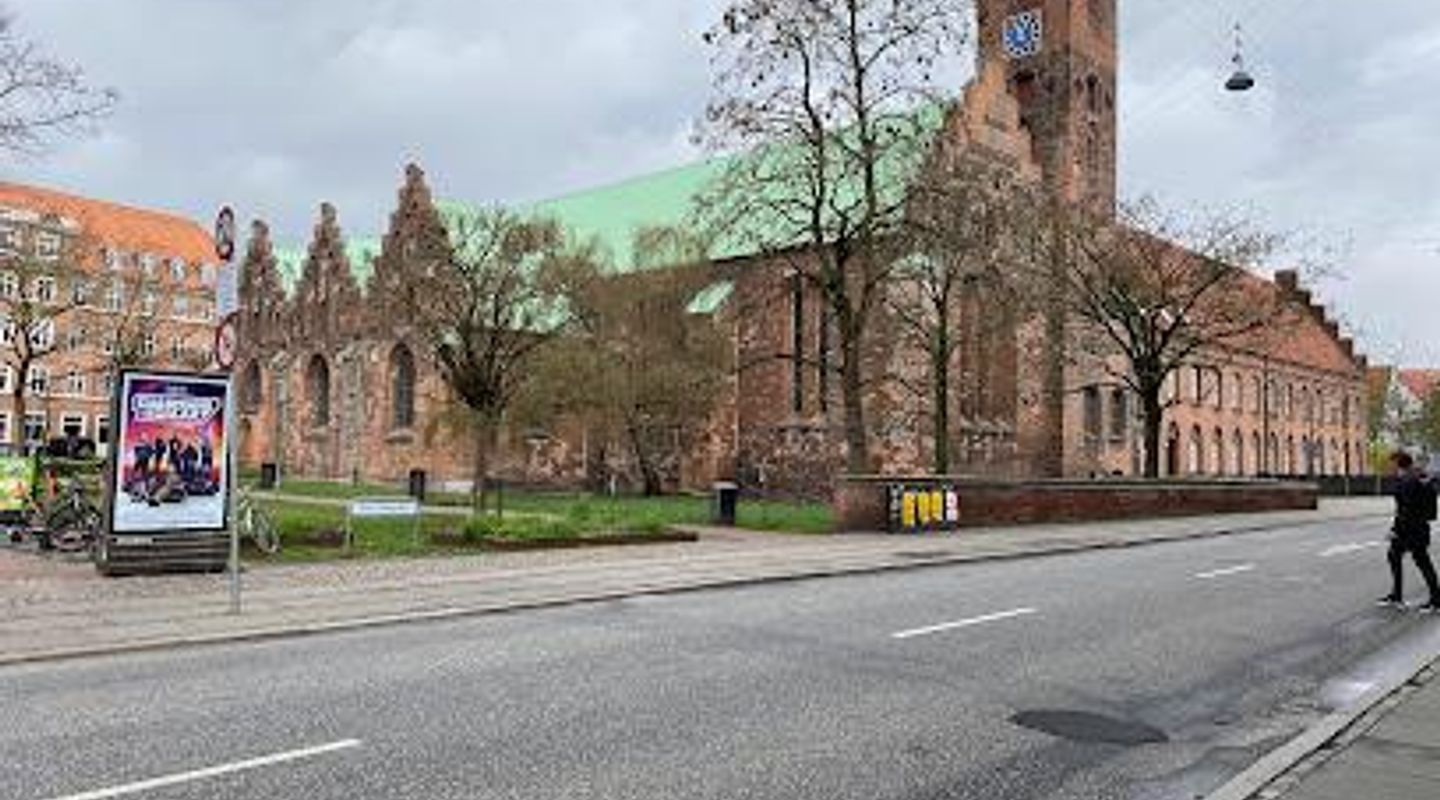
Tucked just off the busy streets of central Aarhus, the Church of Our Lady is a layered medieval complex where a working parish church, former Dominican monastery and a thousand‑year‑old crypt all coexist under one roof. Above ground, soaring brick vaults, traces of frescoes and later artistic interventions tell the story of a church reshaped from the 13th to the 16th century and beyond. Below, the atmospheric crypt from around 1060 – considered the oldest preserved vaulted room in Scandinavia – offers a rare, intimate glimpse into Denmark’s early Christian era.
On-site amenities
 Restrooms
 Seating areas
 Trash bins
 Information boards
Opening hours
- Mon10 am–4 pm
- Tue10 am–4 pm
- Wed10 am–4 pm
- Thu10 am–4 pm
- Fri10 am–4 pm
- Sat10 am–2 pm
- SunClosed
Opening hours as listed on the venue’s Google Business Profile. Hours can change for services and special events, so check with the venue before you go.
- Address
- Frue Kirkeplads 3, 8000 Aarhus
- Phone
- Website
Getting there
Walk from central Aarhus
City bus from outer districts
Train to Aarhus H and short walk
Car or taxi within Aarhus
Discover more about Our Lady Church
A quiet medieval enclave in the centre of Aarhus
Set back from Vestergade and the pedestrian bustle of Aarhus C, the Church of Our Lady feels like a self‑contained world. The main church occupies the south wing of a former Dominican monastery, its tall brick walls and tower rising above a sheltered courtyard and garden. The complex is part of the city’s historic core, only a short walk from Aarhus Cathedral, yet the mood here is more cloistered and contemplative.Stepping into the nave, you are immediately struck by the height of the Gothic vaults and the cool dimness of the interior. The space is long and relatively narrow, punctuated by simple whitewashed walls, traces of medieval frescoes, and a restrained mix of historic and modern furnishings. Light filters in softly through tall windows, picking out details in the chancel and the organ loft high above.
From Viking‑age mission church to monastic hub
The story of this site reaches back to Denmark’s Christian beginnings. Written and archaeological evidence points to a church here by the mid‑11th century, at a time when Aarhus was emerging as an episcopal centre and fortified trading town. The stone crypt below, dating from around 1060, represents that early phase and is considered Aarhus’ oldest ecclesiastical building and the oldest arched interior in Scandinavia.Around 1080 a larger stone church dedicated to Saint Nicholas was raised above the crypt, serving for a time as the town’s cathedral. In the 13th century Dominican friars arrived and developed a full priory around the church, adding wings that enclosed a cloister and gradually reshaping the building between the 1200s and 1500. After the Reformation, the monastic community was dissolved, the church was rededicated to Our Lady, and surrounding buildings were repurposed to care for the sick and poor.
The monastery and abbey church within the walls
The priory buildings still define much of what you see today. On the north side of the main nave, parts of the former monastery survive as residential wings, now adapted as housing for older residents yet still clearly monastic in layout. Brick corridors, internal courtyards and the rhythm of arched windows recall the days when black‑robed friars walked here, studying, preaching and tending to townsfolk.One of the most evocative spaces is the smaller abbey church, a side chapel area dating from the late 14th century. Its low cross‑vaulted ceiling rests on pale sandstone columns, and discreet fresco fragments from the early 1500s linger on the plaster. Later interventions include a striking modern glass mosaic window by Danish artist Per Kirkeby, adding bold colour and contemporary geometry to the otherwise muted medieval interior.
Descending into Denmark’s oldest preserved crypt
A stairway near the choir leads down into the crypt church, the true archaeological treasure of the complex. Here, beneath the later Gothic structure, you find a compact three‑aisled space supported by simple stone pillars and rounded arches, reflecting its original dedication as a Trinity church. The low ceiling, rough‑hewn masonry and sparse fittings immediately signal an older era than the church above.The crypt’s current appearance is the result of its rediscovery during 1950s renovations, when walls concealing the space were opened and the room was carefully restored. Today it serves both as a place of worship on selected Sundays and as a quiet chamber for reflection. A simple cross recalls the earliest crucifixes found in Denmark, hinting at a moment when Viking traditions and new Christian symbols overlapped.
Art, atmosphere and everyday parish life
Despite its deep history, the Church of Our Lady functions very much as a living parish church. The main nave hosts regular services, concerts and seasonal celebrations, so you may find the organ in full voice or the space filled with candlelight and choral music. At quieter times, the church welcomes visitors who move slowly through the different rooms, pausing at informational displays to trace the site’s evolution.Details reward close looking: delicate floral and figurative fresco traces emerging from beneath whitewash, late‑medieval altarpieces and furnishings, and the interplay between old brick, sandstone, and more recent liturgical design. Outside, you can often glimpse the small garden from the surrounding wall, a patch of calm greenery framed by monastic brickwork. Taken together – crypt, abbey church, priory wings and parish nave – this complex offers one of the most complete journeys through a millennium of ecclesiastical architecture anywhere in Denmark.
Evendo Review Centre
 Google
Guest reviews
Best time to go
Quietest: Jan, Feb & Mar · before 7am or from 9pm
Busy times are Evendo estimates for a typical year, to help you plan. Actual crowds vary with events, school holidays and the weather.
Explore Our Lady Church on the map
A handpicked selection of must-see spots near Our Lady Church, mapped for you.
Get your free copy of our complete guide to Our Lady Church, delivered straight to you.
Everything on this page, from opening hours and how to get there to Eve’s tips and the best time to go, in one PDF you can read offline, print or share.
Already have an account? Sign in
Your Our Lady Church guide is ready.
We'll send it to · Not you? Sign out

Getting your guide ready…
We are putting together a fresh copy of the Our Lady Church guide. This can take up to a minute.
This can take a few moments. If your browser asks, choose Allow so the download can start. You'll find the guide in your Downloads folder.
Nothing happened? Download it again
Sorry, the guide is taking longer than usual. Please try again in a minute, or get it by email instead.
Unlock the best of Our Lady Church
Skip-the-line tickets, guided tours with entry, and walking tours of the area, booked in a few clicks.





Other nearby places you may find interesting
The closest places of the same kind, if this one is not quite what you had in mind.
-
-
-
-
-


Swipe for more places
More to explore near Our Lady Church

 Best experiences near Our Lady Church
 Best hotels near Our Lady Church
 Best landmarks near Our Lady Church
 Best attractions near Our Lady Church
 Best shops near Our Lady Church
 Best restaurants near Our Lady Church
 Best bars near Our Lady Church
Do you manage this location?
Take control to get all the benefits, like improved information, better appearance, and stronger visibility across AI-powered discovery.
Explore more

Explore more of Aarhus
Discover Aarhus, Denmark's second-largest city, where ancient history meets modern culture. Explore historical sites, vibrant arts, and a thriving food scene in the City of Smiles.
Explore Aarhus
Explore more of Denmark
Discover Denmark: A perfect blend of history, modern design, and the cozy concept of hygge. Explore vibrant cities, serene landscapes, and world-class cuisine.
Explore Denmark
