Mindeparken, Aarhus Travel Guide
Free Guide: A solemn memorial park honoring fallen soldiers, framed by cherry blossoms, woodland trails, and panoramic bay views.


A brief summary of Mindeparken
A solemn memorial park honoring fallen soldiers, framed by cherry blossoms, woodland trails, and panoramic bay views.
Mindeparken (The Memorial Park) is a serene 65.9-acre park in southern Aarhus, Denmark, adjacent to Marselisborg Palace. Inaugurated in 1925 by King Christian X, it serves as both a recreational area and a solemn memorial to the 4,140 Danes who died in World War I. The park features a striking limestone monument, botanical gardens including a Japanese cherry grove and sculpture garden, woodland trails, and panoramic views across Aarhus Bay. Visitors encounter friendly deer, seasonal cherry blossoms, and diverse sections including Træsamlingen (The Tree Collection) and Rømerhaven (The Rømer Garden).
On-site amenities
 Restrooms
 Drink options
 Food options
 Seating areas
 Picnic areas
 Trash bins
 Information boards
Opening hours
- Every dayOpen 24 hours
Opening hours as listed on the venue’s Google Business Profile. Hours can change for services and special events, so check with the venue before you go.
- Address
- 8000 Aarhus
Getting there
Public Bus
Bicycle
Private Car
Walking
Discover more about Mindeparken
A Monument to Remembrance and Royal Heritage
Mindeparken stands as one of Denmark's most significant memorial sites, inaugurated in 1925 by King Christian X as a gathering place for Danish citizens living abroad. The park's centerpiece is a monumental limestone memorial erected in 1934, designed by architect Axel Ekberg and sculptor Axel Poulsen. The limestone itself carries profound historical meaning—sourced from Euville in the Meuse department of France, a major World War I battlefield. Engraved upon its walls are the names of 4,140 Danish soldiers who perished during the Great War, making it a place of deep national significance. Each November 11th, an annual ceremony honors these fallen soldiers, keeping their memory alive within the community. The memorial's acoustic properties create a unique auditory experience at its center, a phenomenon known only to few visitors.
Botanical Splendor and Seasonal Transformations
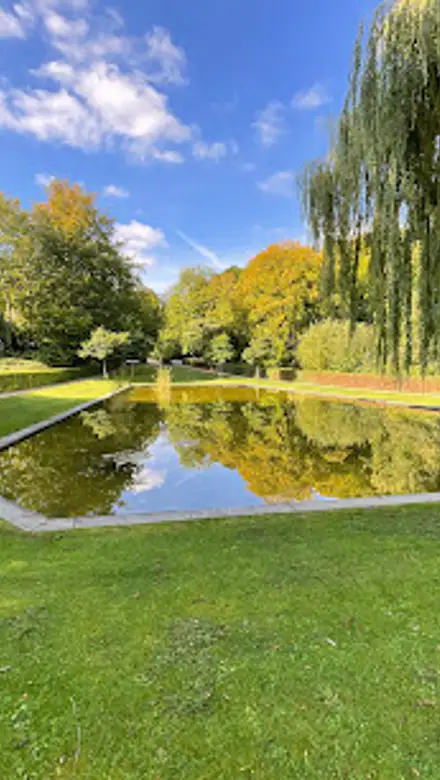
Beyond its memorial function, Mindeparken enchants visitors with carefully curated botanical collections. The park's Japanese cherry grove draws admirers each spring, when delicate blossoms transform the landscape into a sea of pink and white flowers. Rømerhaven, the Rømer Garden, combines sculpture and horticulture in an intimate setting, featuring bronze artworks including the striking sculptures Danaiden and Solhesten, complemented by mirror ponds and flowering displays. Træsamlingen (The Tree Collection) showcases diverse tree species arranged for botanical study and appreciation, creating a living classroom within the park's 65.9 acres. The park's landscape shifts dramatically with the seasons—vibrant greens in summer, golden hues in autumn, and stark beauty in winter—each offering distinct visual and sensory experiences.
Panoramic Views and Natural Escape
Situated on elevated terrain overlooking Aarhus Bay, Mindeparken offers sweeping panoramic vistas across the water and surrounding woodlands. The park's extensive lawn areas provide open spaces for contemplation and recreation, while magnificent woods create a sense of natural refuge despite proximity to the city. Visitors frequently encounter friendly deer throughout the park, adding an element of wildlife interaction to the experience. The combination of lush green spaces, mesmerizing sounds of nearby waves, and the interplay of light through ancient trees creates an almost magical atmosphere that transports visitors away from urban surroundings.
Historic Structures and Evolving Landscape
The Donbæk Houses, built in 1828 and 1850, stand as architectural reminders of the area's past, originally serving as residences for servants of Marselisborg Manor and forest workers. These structures, though often mistakenly associated with Marselisborg Palace, represent a distinct historical layer within the park. The park itself has undergone significant expansion—extended in 1939 and again in 1944—transforming from its original purpose as a venue for large gatherings into a multifaceted recreational and memorial space. A distinctive lime tree avenue adds another botanical feature to the park's diverse landscape.
Recreation and Community Gathering
Mindeparken functions as a vital recreational hub for Aarhus residents and visitors alike. The expansive lawn accommodates various activities including football, yoga, and petanque, while outdoor training facilities support calisthenics and fitness pursuits. The park's well-maintained main paths facilitate walking and cycling, making it accessible for family outings and leisurely exploration. Picnic areas invite visitors to enjoy meals outdoors during warmer months, while the playground facilities cater to children's entertainment. The park's design seamlessly integrates memorial solemnity with everyday recreational use, allowing both remembrance and celebration of life to coexist naturally within its boundaries.
Royal Connections and Contemporary Significance
Mindeparken's proximity to Marselisborg Palace, the summer residence of the Danish Royal Family, adds an additional layer of significance to the site. When the Royal Family is in residence, the changing of the guard by the Life Guard occurs daily at noon at the palace grounds. The Queen's rose garden within the palace grounds opens to the public when the Royal Family is absent, creating opportunities to experience royal heritage alongside the memorial park. This connection to Denmark's monarchy reinforces the park's status as a site of national importance, blending personal royal history with collective national memory.
Evendo Review Centre
 Google
Guest reviews
Best time to go
Quietest: Jan, Feb & Dec · before 6am or at 10pm
Busy times are Evendo estimates for a typical year, to help you plan. Actual crowds vary with events, school holidays and the weather.
Explore Mindeparken on the map
A handpicked selection of must-see spots near Mindeparken, mapped for you.
Get your free copy of our complete guide to Mindeparken, delivered straight to you.
Everything on this page, from opening hours and how to get there to Eve’s tips and the best time to go, in one PDF you can read offline, print or share.
Already have an account? Sign in
Your Mindeparken guide is ready.
We'll send it to · Not you? Sign out

Getting your guide ready…
We are putting together a fresh copy of the Mindeparken guide. This can take up to a minute.
This can take a few moments. If your browser asks, choose Allow so the download can start. You'll find the guide in your Downloads folder.
Nothing happened? Download it again
Sorry, the guide is taking longer than usual. Please try again in a minute, or get it by email instead.
Other nearby places you may find interesting
The closest places of the same kind, if this one is not quite what you had in mind.
-
-
-
-
-


Swipe for more places
More to explore near Mindeparken

 Best experiences near Mindeparken
 Best hotels near Mindeparken
 Best landmarks near Mindeparken
 Best attractions near Mindeparken
 Best shops near Mindeparken
 Best restaurants near Mindeparken
 Best bars near Mindeparken
Do you manage this location?
Take control to get all the benefits, like improved information, better appearance, and stronger visibility across AI-powered discovery.
Explore more

Explore more of Aarhus
Discover Aarhus, Denmark's second-largest city, where ancient history meets modern culture. Explore historical sites, vibrant arts, and a thriving food scene in the City of Smiles.
Explore Aarhus
Explore more of Denmark
Discover Denmark: A perfect blend of history, modern design, and the cozy concept of hygge. Explore vibrant cities, serene landscapes, and world-class cuisine.
Explore Denmark