Rosenborg Castle Travel Guide
Free Guide: A fairytale Renaissance castle in Copenhagen’s King’s Garden, where richly preserved royal interiors and the dazzling Danish Crown Jewels bring 400 years of monarchy to life.


A brief summary of Rosenborg Castle
A fairytale Renaissance castle in Copenhagen’s King’s Garden, where richly preserved royal interiors and the dazzling Danish Crown Jewels bring 400 years of monarchy to life.
Rising like a red-brick fairytale in Copenhagen’s King’s Garden, Rosenborg Castle is a richly preserved 17th‑century royal residence built by Christian IV. Inside, atmospheric suites, the famous Knights’ Hall with its coronation thrones and silver lions, and an extraordinary treasury of Danish Crown Jewels bring four centuries of monarchy to life. Combined with the surrounding gardens, it offers one of Copenhagen’s most evocative historic experiences.
On-site amenities
 Restrooms
 Drink options
 Drinking water
 Food options
 Lockers
 Seating areas
 Sheltered areas
 Trash bins
 Information boards
 Visitor centre
Opening hours
- Every day9 am–5 pm
Opening hours as listed on the venue’s Google Business Profile. Hours can change for services and special events, so check with the venue before you go.
- Address
- Øster Voldgade 4A, 1350 København
- Phone
- Website
Getting there
Metro and short walk
City bus
Bicycle
Taxi or rideshare
Discover more about Rosenborg Castle
Christian IV’s Royal Dream in Brick and Copper
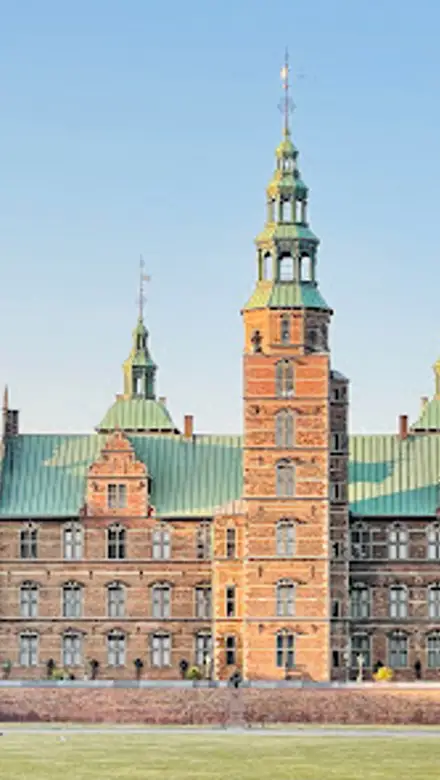
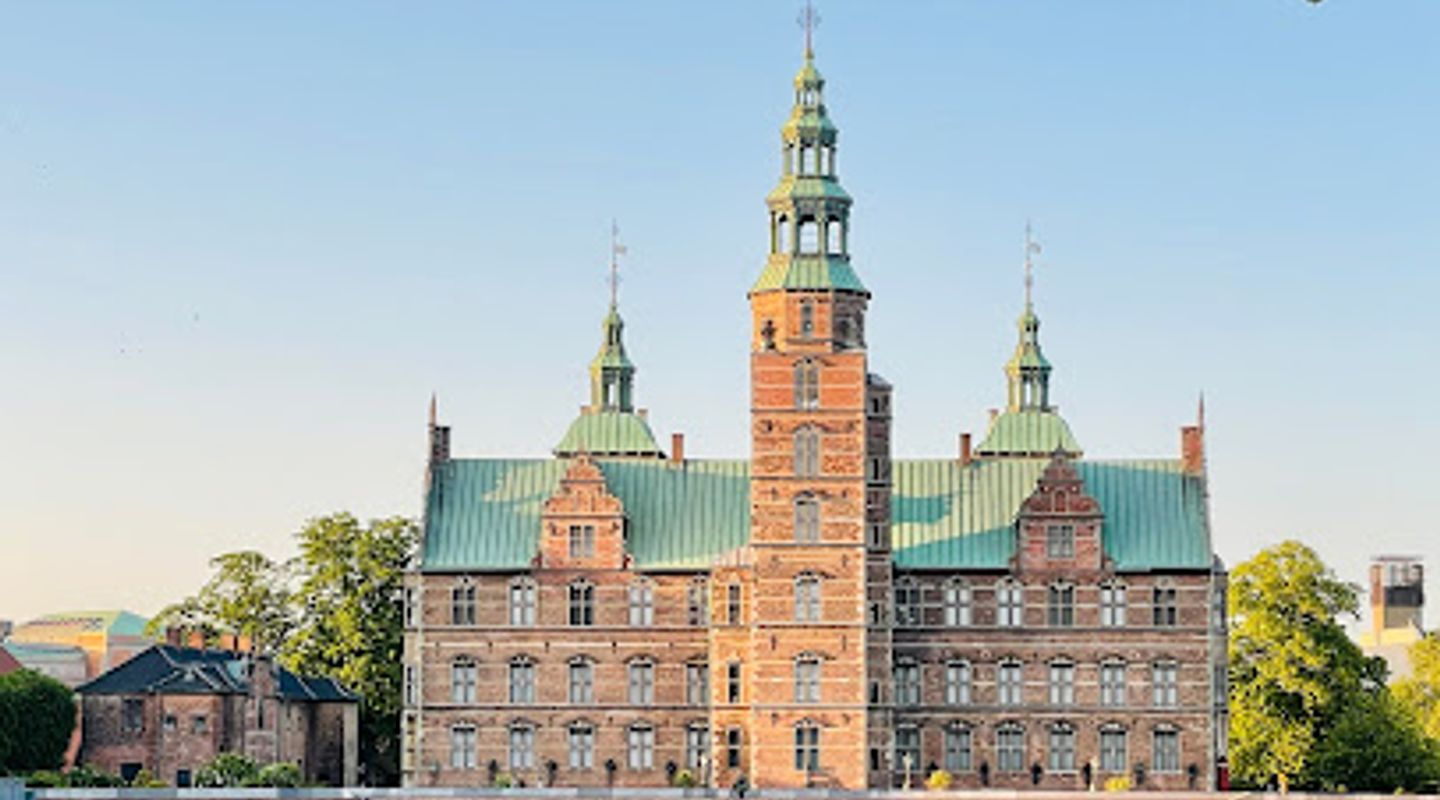
Rosenborg Castle began life in the early 1600s as King Christian IV’s pleasure palace just outside Copenhagen’s old fortifications. The red brick, stepped gables and green copper roofs are classic Danish Renaissance, but look closely and you see a personal residence rather than an austere fortress. Turrets, tall chimneys and narrow windows give the castle a storybook outline rising above the lawns of the King’s Garden.Christian IV, one of Denmark’s most ambitious monarchs, used Rosenborg both as a retreat and as a stage for royal display. He extended and embellished the building several times, and it was here that he chose to spend his final days, lying in state within its rooms. Today the exterior still tells the story of a confident maritime kingdom eager to showcase its power in stone, glass and gilded detail.
Interiors Frozen in Time
Step inside and Rosenborg feels like a series of time capsules stacked on three floors. The ground level holds the famous Winter Room, one of the best-preserved spaces from Christian IV’s day, lined with dark wood, intricate carvings and a tiny private writing closet. Moving upwards, each floor unfolds as a sequence of chambers where furniture, paintings and objects remain arranged much as they were when the castle was in royal use.Walls are crowded with portraits and battle tapestries, ceilings glow with painted decoration, and tiled stoves hint at chilly northern winters. Small tower rooms showcase delicate collections of porcelain, Flora Danica and Venetian glass, turning side spaces into miniature galleries. More intimate rooms reveal everyday life: a royal bathroom, a surprisingly simple toilet, and personal possessions that make centuries-old monarchs feel strangely close.
The Knights’ Hall and Ceremonial Splendour
At the very top, the long, luminous Knights’ Hall stretches the full length of the castle. Here you encounter Rosenborg at its most theatrical. The coronation thrones dominate the far end, the king’s chair fashioned from pale narwhal tusk with gilded figures, the queen’s shimmering in silver. Three life-size silver lions crouch on the floor as symbolic guardians, their polished surfaces reflecting the light from tall windows.Along the walls, tapestries narrate conflict between Denmark and Sweden, turning the room into a woven chronicle of 17th‑century rivalry. Marble busts, glittering chandeliers and ranks of ceremonial weapons complete the picture of a monarchy intent on projecting power. It is easy to imagine ambassadors being received here, dwarfed by the hall’s scale and splendour as they walked the checkered floor toward the thrones.
Crown Jewels in the Vaulted Treasury
Below ground, the atmosphere changes as stone stairs lead to Rosenborg’s treasury. Cool air, thick walls and subdued lighting underline the seriousness of what is kept here: the Danish Crown Jewels and Royal Regalia. Crowns studded with table-cut gemstones, enamel and gold sit in glass cases, designed not only for ceremony but also as statements of wealth drawn from global trade.Nearby, gleaming sword hilts, sceptres and orbs evoke coronations long past. The jewels themselves are arranged in sets dominated by diamonds, pearls, rubies and emeralds, the latter among the most celebrated in Europe. Around them, cases of ceremonial arms, ornate saddles and even old wine barrels flesh out the story of royal ceremony, warfare and courtly display woven through Danish history.
Stories, Portraits and the King’s Garden
Elsewhere in the castle you encounter portraits that hint at scandal and political drama, including figures tied to tumultuous 18th‑century court intrigues. These faces, painted in rich detail, complement the more formal dynastic galleries by adding a human, sometimes tragic dimension to the royal narrative.Outside, the King’s Garden frames Rosenborg with symmetrical avenues, lawns and seasonal flowerbeds. Locals use the park as an everyday green escape, but it also works as an outdoor extension of the museum. From the paths, you get some of the best views of the castle’s towers and gables, especially in soft evening light, when the building looks every bit the fairytale palace it was meant to be.
Evendo Review Centre
 Google
Guest reviews
Best time to go
Quietest: Jan, Feb & Mar · before 7am or at 8pm or at 9pm
Busy times are Evendo estimates for a typical year, to help you plan. Actual crowds vary with events, school holidays and the weather.
Explore Rosenborg Castle on the map
A handpicked selection of must-see spots near Rosenborg Castle, mapped for you.
Get your free copy of our complete guide to Rosenborg Castle, delivered straight to you.
Everything on this page, from opening hours and how to get there to Eve’s tips and the best time to go, in one PDF you can read offline, print or share.
Already have an account? Sign in
Your Rosenborg Castle guide is ready.
We'll send it to · Not you? Sign out

Getting your guide ready…
We are putting together a fresh copy of the Rosenborg Castle guide. This can take up to a minute.
This can take a few moments. If your browser asks, choose Allow so the download can start. You'll find the guide in your Downloads folder.
Nothing happened? Download it again
Sorry, the guide is taking longer than usual. Please try again in a minute, or get it by email instead.
Unlock the best of Rosenborg Castle
Skip-the-line tickets, guided tours with entry, and walking tours of the area, booked in a few clicks.
 Tour with entry
Half Day Self-Guided Audio Walking Private Tour in Copenhagen
from $14.07 Tour with entry
Copenhagen Highlights & Hidden Gems Walking Tour with Local Guide
from $32.05 Tour with entry
Copenhagen 2-hour City Highlights Bike Tour
from $35.46 Tour with entry
48-Hour Hop-on Hop-off Copenhagen Sightseeing Bus Tour
from $41.18


Other nearby places you may find interesting
The closest places of the same kind, if this one is not quite what you had in mind.
-
-
-
-
-


Swipe for more places
More to explore near Rosenborg Castle

 Best experiences near Rosenborg Castle
 Best hotels near Rosenborg Castle
 Best landmarks near Rosenborg Castle
 Best attractions near Rosenborg Castle
 Best shops near Rosenborg Castle
 Best restaurants near Rosenborg Castle
 Best bars near Rosenborg Castle
Do you manage this location?
Take control to get all the benefits, like improved information, better appearance, and stronger visibility across AI-powered discovery.
Explore more
Explore more of Copenhagen Region
Discover the Copenhagen Region: A perfect mix of historic charm and modern vibrancy, offering scenic beauty, cultural landmarks, and a high quality of life.
Explore Copenhagen Region
Explore more of Denmark
Discover Denmark: A perfect blend of history, modern design, and the cozy concept of hygge. Explore vibrant cities, serene landscapes, and world-class cuisine.
Explore Denmark