Viking Museum Travel Guide
Free Guide: Descend beneath a modern bank into the original Viking town of Aros, where excavated houses, wells and artefacts reveal Aarhus’ 1,200‑year‑old origins.


A brief summary of Viking Museum
Descend beneath a modern bank into the original Viking town of Aros, where excavated houses, wells and artefacts reveal Aarhus’ 1,200‑year‑old origins.
Hidden beneath a bank on busy Sankt Clemens Torv, the Viking Museum in Aarhus drops you straight down to the level of the original Viking settlement of Aros. This compact, atmospheric museum sits exactly where 9th‑century houses, streets and wells once stood, and displays excavated artefacts, skeletal remains, models and multimedia that bring early Aarhus to life. It is a focused, archaeology‑rich stop ideal for history lovers and curious visitors with an hour to spare.
On-site amenities
 Restrooms
 Information boards
Opening hours
- Mon10:15 am–6 pm
- Tue10:15 am–6 pm
- Wed10:15 am–6 pm
- Thu10:15 am–6 pm
- Fri10:15 am–6 pm
- Sat10:15 am–5 pm
- Sun10:15 am–5 pm
Opening hours as listed on the venue’s Google Business Profile. Hours can change for services and special events, so check with the venue before you go.
- Address
- Sankt Clemens Torv 6, 8000 Aarhus Centrum
- Phone
- Website
Getting there
On foot from central Aarhus
By city bus within Aarhus
From Aarhus Hovedbanegård by train and walk
By car or taxi within Aarhus
Discover more about Viking Museum
Buried traces of Aros beneath the modern city
The Viking Museum in Aarhus occupies a uniquely evocative spot: the basement under a busy bank on Sankt Clemens Torv, at precisely the same ground level where the Viking town of Aros once stood. As you descend the stairs, traffic noise fades and you step into the archaeological layers of a settlement founded more than 1,200 years ago. Low ceilings, exposed sections of soil and carefully lit displays make it clear that this is not a replica environment but the actual site where the past was uncovered.The museum is an outpost of the larger Moesgaard Museum, created to keep key finds in situ rather than moving everything to a distant gallery. Here you see where Viking‑Age plots were laid out along the river, and how the town grew into the nucleus of what would become Denmark’s second‑largest city. The original town centre has remained in essentially the same place since the late 8th century, a rare continuity in Scandinavia that gives this small space outsized historical importance.
Archaeological finds that tell personal stories
The heart of the museum is a collection of artefacts excavated on this very spot and around central Aarhus. Display cases hold everyday objects such as tools, iron fittings, pottery, spindle whorls and gaming pieces, revealing the routines of craftspeople, merchants and families who lived here a millennium ago. Nearby, more precious items hint at long‑distance trade and shifting power structures in the Viking world.A particularly striking feature is the presence of skeletal remains and traces of wooden constructions, including a well‑preserved framed well of the type used in the Viking Age. Seeing these in their original location rather than behind glass in a distant hall makes the period feel immediate and tangible. Replicas are used only where necessary for security reasons, allowing the focus to stay on authentic material that has not seen the light of day for centuries.
Models, soundscapes and a city under siege
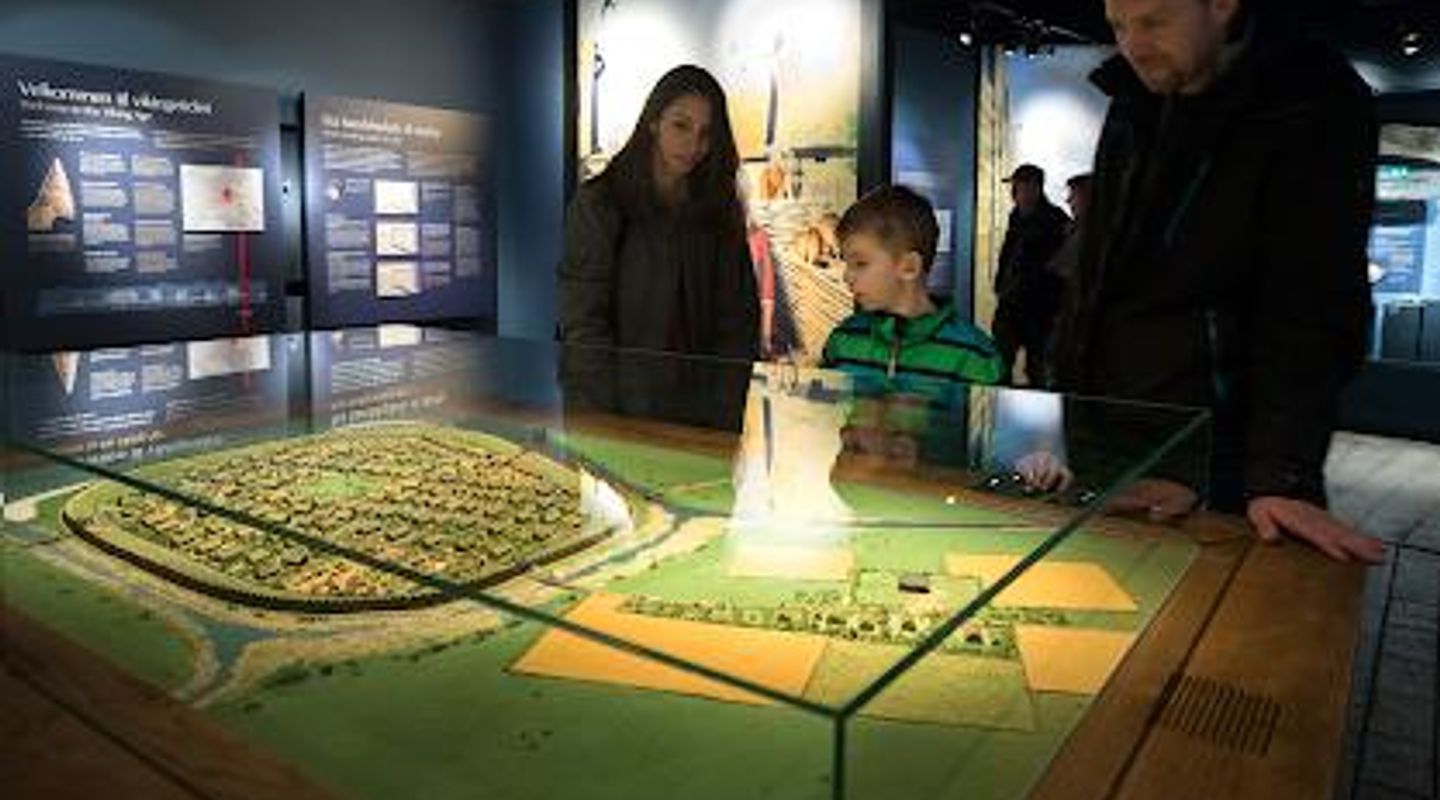
Although compact, the museum uses simple but effective media to bring its material to life. A detailed scale model shows Aarhus around the time of Harald Bluetooth, around the year 980, with ramparts, buildings and shoreline carefully reconstructed. Standing over this miniature town, you can trace streets that still exist today and see how the settlement related to the bay and surrounding landscape.Sound installations and a short animated film depicting a Viking attack on Århus add drama and context. Rather than overwhelming the exhibits, these elements help you imagine the clatter of shields on timber walls or the bustle of a trading day on the riverfront. Information panels explain how recent excavations have reshaped understanding of Aarhus’s origins, pushing its foundation further back into the late 8th century and aligning it with early urban centres such as Ribe and Hedeby.
A focused visit in an intimate setting
The museum consists essentially of a single main room and adjoining areas, so visits tend to be concise and concentrated. Many people spend about an hour exploring the displays, reading the bilingual texts and watching the animation, though those with a deep interest in archaeology may linger longer over individual finds. The atmosphere is calm and studious, with the low‑slung basement space sharpening the sense that you are standing in a carefully preserved excavation trench.Because the museum is located beneath a bank, access involves stairs and the space is not suitable for wheelchair users or those with significant mobility difficulties. Payment for admission is by card only, reflecting Denmark’s increasingly cashless culture. Children and younger visitors often engage easily with the model city and visual media, making this a practical stop for families as well as solo explorers.
Practical details and how it fits into an Aarhus day
The Viking Museum usually opens daily from mid‑morning, with extended early evening hours on weekdays and slightly later closing at weekends; it is closed on bank holidays. Admission for adults is modest by museum standards, and children under 18 enter free, making it an affordable historical highlight in the very centre of town. Precise times can vary, so it is wise to confirm current opening hours before planning a tight schedule.Given its central location on Sankt Clemens Torv, the museum slots easily into a broader day of exploring Aarhus. It pairs naturally with a walk along the river, visits to nearby churches and cultural venues, or an excursion out to Moesgaard Museum to see the wider archaeological and ethnographic collections. For anyone curious about how a modern Scandinavian city grew from a fortified Viking settlement, this modest underground museum offers one of the clearest and most atmospheric introductions available.
Evendo Review Centre
 Google
Guest reviews
Best time to go
Quietest: Jan, Feb & Nov · before 10am or from 7pm
Busy times are Evendo estimates for a typical year, to help you plan. Actual crowds vary with events, school holidays and the weather.
Explore Viking Museum on the map
A handpicked selection of must-see spots near Viking Museum, mapped for you.
Get your free copy of our complete guide to Viking Museum, delivered straight to you.
Everything on this page, from opening hours and how to get there to Eve’s tips and the best time to go, in one PDF you can read offline, print or share.
Already have an account? Sign in
Your Viking Museum guide is ready.
We'll send it to · Not you? Sign out

Getting your guide ready…
We are putting together a fresh copy of the Viking Museum guide. This can take up to a minute.
This can take a few moments. If your browser asks, choose Allow so the download can start. You'll find the guide in your Downloads folder.
Nothing happened? Download it again
Sorry, the guide is taking longer than usual. Please try again in a minute, or get it by email instead.
Unlock the best of Viking Museum
Skip-the-line tickets, guided tours with entry, and walking tours of the area, booked in a few clicks.


Other nearby places you may find interesting
The closest places of the same kind, if this one is not quite what you had in mind.
-
-
-
-
-


Swipe for more places
More to explore near Viking Museum

 Best experiences near Viking Museum

 Best hotels near Viking Museum

 Best landmarks near Viking Museum

 Best attractions near Viking Museum

 Best shops near Viking Museum

 Best restaurants near Viking Museum

 Best bars near Viking Museum
Do you manage this location?
Take control to get all the benefits, like improved information, better appearance, and stronger visibility across AI-powered discovery.
Explore more

Explore more of East Jutland
Discover East Jutland, Denmark's enchanting region blending vibrant cities, rich history, and stunning natural landscapes, perfect for every type of traveler.
Explore East Jutland
Explore more of Denmark
Discover Denmark: A perfect blend of history, modern design, and the cozy concept of hygge. Explore vibrant cities, serene landscapes, and world-class cuisine.
Explore Denmark