

Ejegod Windmill Travel Guide
Free Guide: A beautifully restored 1816 windmill on a grassy rise in northern Nykøbing Falster, pairing classic Danish milling heritage with a nostalgic little toy museum.


A brief summary of Ejegod Windmill
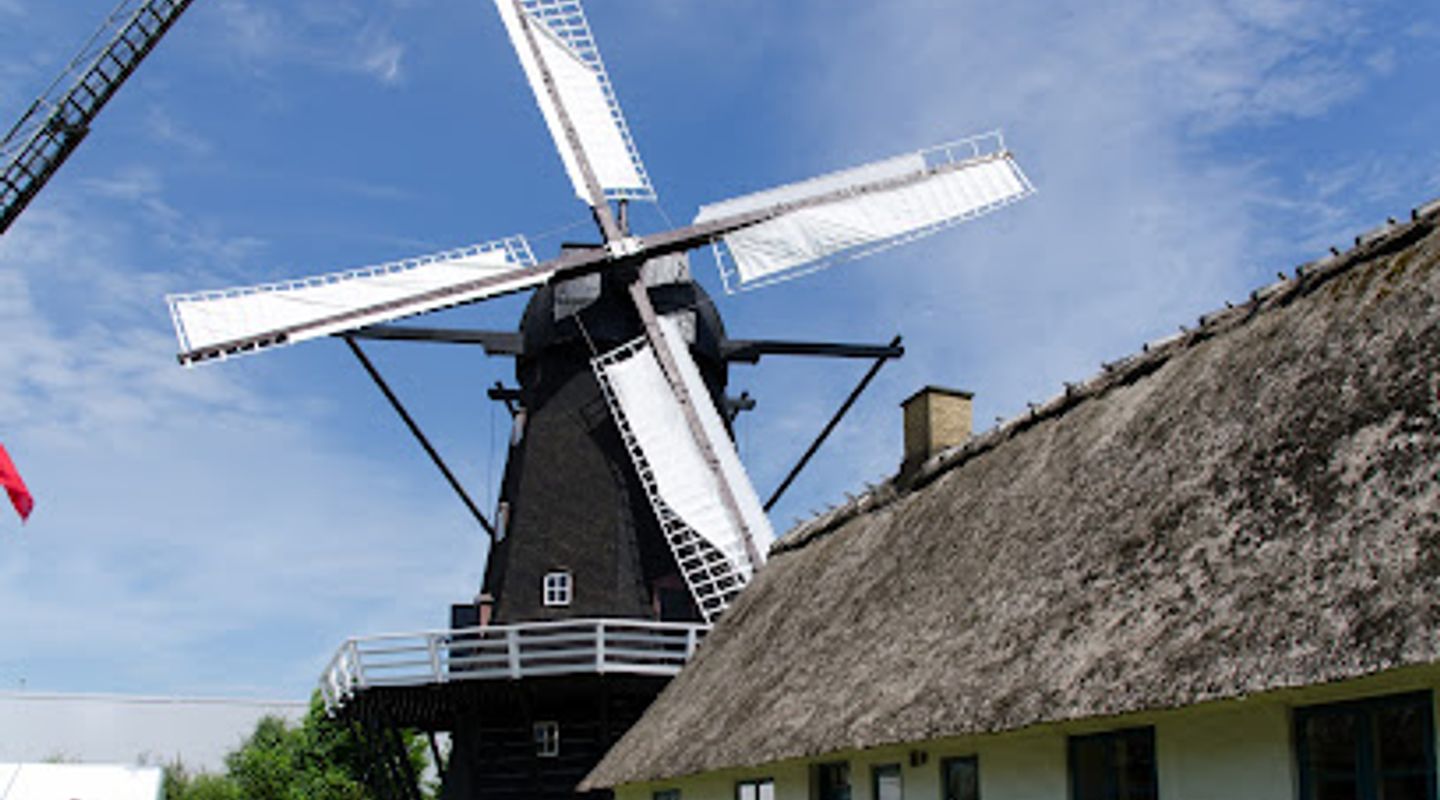
A beautifully restored 1816 windmill on a grassy rise in northern Nykøbing Falster, pairing classic Danish milling heritage with a nostalgic little toy museum.
Rising above the northern edge of Nykøbing Falster, Ejegod Windmill is a striking 1816 smock mill that anchors a small historic ensemble of mill, miller’s house and outbuildings. Carefully restored on the outside in the 2000s, it now forms a protected heritage site and atmospheric landmark, with a charming toy museum in the former mill house adding a playful layer to the story of Danish milling and everyday life on Falster.
On-site amenities
 Restrooms
 Drink options
 Drinking water
 Food options
 Seating areas
 Trash bins
 Information boards
- Address
- Ejegodvej 4, 4800 Nykøbing Falster
- Phone
- Website
Getting there
Train and bus
Local bus only
Bicycle
On foot
Discover more about Ejegod Windmill
A hillside windmill above Nykøbing Falster
Perched on Møllebakken in the northern part of Nykøbing Falster, Ejegod Windmill has watched the town slowly grow up around it since 1816. Once standing in open countryside tied to the farm of Ejegod, the octagonal mill now crowns a green rise within the urban fabric, its dark, shingled cap and long sails instantly catching the eye against the Danish sky. The setting blends small gardens, nearby houses and patches of lawn, giving the site a quietly local feel rather than that of a grand, fenced monument.From a distance the mill appears almost delicate, but up close the sturdy masonry base and timber construction tell a different story. The smock tower rests on a foundation of fieldstone and brick, with a wooden gallery circling the structure and shingles cladding both upper walls and the characteristic ogee cap. It is a textbook example of a Dutch-style windmill adapted to Danish conditions, built for efficiency yet with a certain understated elegance.
From farm workhorse to listed monument
Ejegod Windmill was commissioned in 1816 by diplomat Michael Classen for the now-vanished Ejegod farm, at a time when wind power underpinned local agriculture and trade on Falster. For decades the mill ground grain for surrounding farms, operated by tenant millers such as Jens Nicolai Jappe, who belonged to a family steeped in the milling trade. Insurance documents from the early 1800s already mention both the mill and the adjacent miller’s house, showing how important these buildings were as working assets.By the mid‑19th century, new technology began to eclipse the hillside mill. Competition from a more efficient, stream‑driven mill in Nykøbing gradually undermined its business, and operations eventually ceased. Recognising its cultural value, the local municipality took over the site in 1939, and in 1964 the windmill, miller’s house and an outhouse were formally protected as listed buildings. That status secured Ejegod as a permanent part of Denmark’s architectural and industrial heritage, even as the machinery fell silent.
Rescue, restoration and a fresh coat of shingles
Despite official protection, time was not kind to Ejegod. By the 1960s it had deteriorated badly, prompting a grassroots push to stabilise and repair the structure. Early restoration work halted the decline but did not fully solve the mill’s structural and cosmetic issues, and by the turn of the millennium another, more ambitious phase was needed. In 2002, the guild Ejegod Møllelaug assumed responsibility and embarked on a comprehensive exterior restoration.Over roughly eight years the tower received new shingles, the cap was carefully renewed and a fresh gallery wrapped once more around the octagon, restoring both the mill’s silhouette and its weather resistance. The result is what you see today: a dark‑clad, beautifully proportioned landmark that looks almost newly built from the outside while still retaining its historic fabric beneath the surface. Work on the interior is ongoing, with plans to bring the machinery closer to its former working state when funds allow.
A small toy museum with a big sense of nostalgia
Adding an unexpected twist, the old mill house at Ejegod now hosts a cosy toy museum. Established in 2009 and supported by the same guild that cares for the mill, it showcases an ever‑growing collection of dolls, model trains, games and everyday playthings spanning much of the 20th century. Instead of high‑tech exhibits, the appeal lies in shelves and display cases filled with familiar objects, from wooden toys and tin cars to board games and teddy bears.This domestic scale fits naturally with the surrounding buildings. Stepping inside, you shift from the outdoor drama of sails and sky to an intimate interior where small details matter: painted faces on dolls, worn edges on puzzle boxes, the gentle ticking of a model railway. Taken together, the windmill ensemble and the museum tell parallel stories of labour and leisure, of rural production and childhood imagination on Falster.
Experiencing the site today
Visiting Ejegod Windmill is as much about atmosphere as about formal exhibits. The cluster of buildings forms a compact courtyard around the mill, inviting you to wander slowly, trace the curve of the gallery with your eyes and notice how the sails frame glimpses of Nykøbing’s rooftops. On clear days, the light picks out the texture of the shingles and the brickwork, while clouds and wind remind you why this exposed hill was chosen for a mill in the first place.When the toy museum is open, it extends the visit beyond a simple photo stop, especially for families with children who enjoy spotting toys that parents and grandparents recognise. Even when everything is closed, the mill remains a rewarding pause on a walk or cycle through the town’s northern neighbourhoods. It stands as a tangible link between agricultural Falster and modern Guldborgsund, a compact heritage corner where history, craftsmanship and nostalgia quietly converge.
Evendo Review Centre
 Google
Guest reviews
Best time to go
Quietest: Jan, Feb & Mar · before 8am or at 8pm
Busy times are Evendo estimates for a typical year, to help you plan. Actual crowds vary with events, school holidays and the weather.
Explore Ejegod Windmill on the map
A handpicked selection of must-see spots near Ejegod Windmill, mapped for you.
Get your free copy of our complete guide to Ejegod Windmill, delivered straight to you.
Everything on this page, from opening hours and how to get there to Eve’s tips and the best time to go, in one PDF you can read offline, print or share.
Already have an account? Sign in
Your Ejegod Windmill guide is ready.
We'll send it to · Not you? Sign out

Getting your guide ready…
We are putting together a fresh copy of the Ejegod Windmill guide. This can take up to a minute.
This can take a few moments. If your browser asks, choose Allow so the download can start. You'll find the guide in your Downloads folder.
Nothing happened? Download it again
Sorry, the guide is taking longer than usual. Please try again in a minute, or get it by email instead.
Other nearby places you may find interesting
The closest places of the same kind, if this one is not quite what you had in mind.
-
-
-
-
-


Swipe for more places
More to explore near Ejegod Windmill

 Best experiences near Ejegod Windmill
 Best hotels near Ejegod Windmill
 Best landmarks near Ejegod Windmill
 Best attractions near Ejegod Windmill
 Best shops near Ejegod Windmill
 Best restaurants near Ejegod Windmill
 Best bars near Ejegod Windmill
Do you manage this location?
Take control to get all the benefits, like improved information, better appearance, and stronger visibility across AI-powered discovery.
Explore more

Explore more of Falster
Discover Falster: A blend of serene beaches, rich history, and lush landscapes in Denmark's southern island treasure.
Explore Falster
Explore more of Denmark
Discover Denmark: A perfect blend of history, modern design, and the cozy concept of hygge. Explore vibrant cities, serene landscapes, and world-class cuisine.
Explore Denmark
