Dancer's fountain, Helsingor Travel Guide
Free Guide: A graceful bronze tribute to Danish ballet tucked into a leafy corner of Helsingør, where three dancers freeze mid‑step between Kronborg Castle and the old town.


A brief summary of Dancer's fountain
A graceful bronze tribute to Danish ballet tucked into a leafy corner of Helsingør, where three dancers freeze mid‑step between Kronborg Castle and the old town.
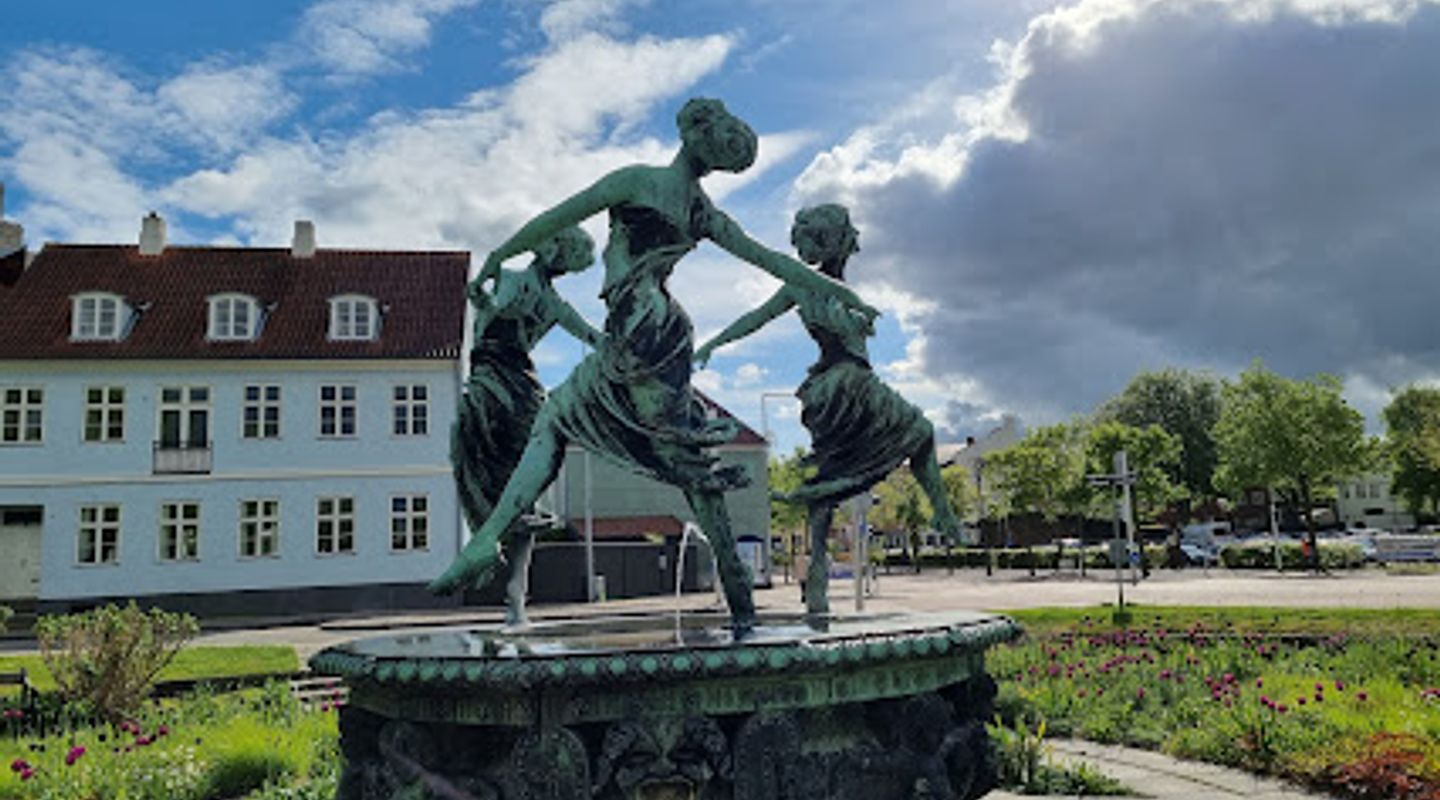
Tucked into a small garden at the corner of Allegade and Kronborgvej, the Dancer's Fountain (Danserindebrønden) is one of Helsingør’s most graceful landmarks. Created by sculptor Rudolph Tegner in 1913 and moved here from Copenhagen in the 1930s, the bronze group depicts three ballet dancers poised mid‑movement above a circular basin. Between Kronborg Castle, the harbour and the old town, this tranquil spot offers art, greenery and a quiet bench-level pause on a busy sightseeing day.
On-site amenities
 Seating areas
 Trash bins
 Information boards
Opening hours
- Every dayOpen 24 hours
Opening hours as listed on the venue’s Google Business Profile. Hours can change for services and special events, so check with the venue before you go.
- Address
- Allegade, 3000 Helsingør
- Website
Getting there
Train and short walk from Copenhagen
Local bus within Helsingør
Car or taxi from the surrounding region
Discover more about Dancer's fountain
Ballet in Bronze on a Quiet Helsingør Corner
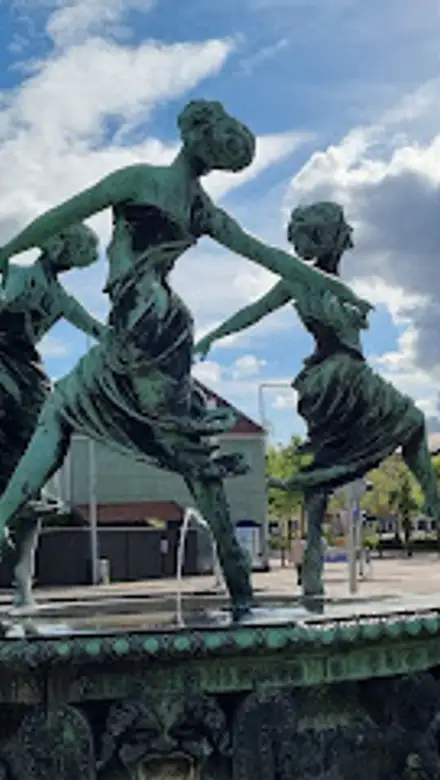
The Dancer's Fountain, or Danserindebrønden, sits in a modest green pocket where Allegade meets Kronborgvej, just a short stroll from Helsingør’s harbour and the looming walls of Kronborg Castle. At first glance it is a simple circular basin surrounded by low planting and paving. Step closer, though, and you find three young women cast in bronze, frozen at the crest of a dance step, their limbs outstretched as if still moving to an unheard orchestra.The figures stand together on a central plinth rising from the middle of the fountain bowl. Their forms are slender and athletic, with finely modelled muscles and bare feet that suggest hours of rehearsal. Despite the small footprint of the site, the composition feels airy, leaving plenty of space for light and sky to flow between arms and legs. On a still day, the basin mirrors their silhouettes, doubling the sense of motion even when the water itself is quiet.
A Royal Danish Ballet Tribute with a Travelling Past
Danserindebrønden is more than a decorative fountain: it is a tribute to early 20th‑century Danish ballet. The three dancers personify real performers from the Royal Danish Ballet, and their names are inscribed at the base: Elna (often recorded as Elna Lauesgaard or Elna Jørgen Jensen), Emilie Smith and Grethe Ditlevsen. Each figure captures a different character, from poised lyricism to playful energy, echoing the varied roles they once brought to the stage.The work was created in 1913 by sculptor Rudolph Tegner, an artist known for dramatic, often expressive figures in bronze and stone. Commissioned for a competition backed by brewer and art patron Carl Jacobsen, the fountain was first installed in the King’s Garden near Rosenborg Castle in Copenhagen. Two decades later, in the 1930s, it was relocated to Helsingør, gaining a more intimate setting among modest trees and townhouses rather than palace lawns.
Reading the Details: Movement, Water and Light
Take time to circle the fountain and notice how each dancer is choreographed in space. One tilts her head back, arm arched behind her as if catching the last note of a solo. Another twists at the waist, toes pointed, skirt swirling in invisible motion. The third leans outward, creating a diagonal that seems to pull the eye toward the surrounding town. Together they form a loose triangle, every angle carefully judged to look balanced from multiple viewpoints.When the water is running, slender jets play around the plinth and cascade gently into the basin, softening the metal with movement and sound. Even when dry, the traces of water along the bronze and stone hint at this kinetic layer, suggesting a stage where water once acted as a partner to the dancers. Sunlight picks out polished highlights on shoulders and calves, while on overcast days the figures appear moodier and more introspective.
A Pocket Park Amid Helsingør’s Cultural Neighbours
Although modest in scale, the small garden around the fountain works as a welcome pause point between larger attractions. Benches and low walls invite you to sit, while nearby trees and plantings add seasonal texture: fresh green in spring, deep shade in summer, and a carpet of leaves in autumn. The surrounding streets carry a steady but not overwhelming flow of local life, with glimpses of the harbour cranes and Kronborg’s silhouette never far away.The fountain’s location makes it easy to weave into a broader walk linking the castle ramparts, the maritime museum, the old town streets and nearby churches. Compared with these heavyweight sights, Danserindebrønden offers a more personal scale, almost like a neighbourhood secret shared with those who choose to look beyond the main postcard views.
Experiencing the Atmosphere Today
Visit in the early morning and you may find the dancers emerging from mist or soft coastal light, the square still quiet except for the rustle of leaves and distant clink of boat masts. Around midday, the space often becomes a casual lunch spot, with people resting briefly on benches as the bronze figures hold their endless pose above them. Late in the day, the low sun can throw long shadows from the dancers across the paving, elongating their forms into abstract patterns.Because the fountain is open and unfenced, there is no formal entry sequence: you simply drift in from the pavement. This accessibility adds to its charm; the artwork functions as part of everyday urban life, encountered on the way to shops, the harbour or the castle. Whether you stay for a quick photograph or linger with a sketchbook, the dancers offer a momentary connection to Denmark’s ballet heritage, captured here in metal, water and light.
Evendo Review Centre
 Google
Guest reviews
Best time to go
Quietest: Jan, Feb & Mar · before 8am or at 9pm
Busy times are Evendo estimates for a typical year, to help you plan. Actual crowds vary with events, school holidays and the weather.
Explore Dancer's fountain on the map
A handpicked selection of must-see spots near Dancer's fountain, mapped for you.
Get your free copy of our complete guide to Dancer's fountain, delivered straight to you.
Everything on this page, from opening hours and how to get there to Eve’s tips and the best time to go, in one PDF you can read offline, print or share.
Already have an account? Sign in
Your Dancer's fountain guide is ready.
We'll send it to · Not you? Sign out

Getting your guide ready…
We are putting together a fresh copy of the Dancer's fountain guide. This can take up to a minute.
This can take a few moments. If your browser asks, choose Allow so the download can start. You'll find the guide in your Downloads folder.
Nothing happened? Download it again
Sorry, the guide is taking longer than usual. Please try again in a minute, or get it by email instead.
Other nearby places you may find interesting
The closest places of the same kind, if this one is not quite what you had in mind.
-
-
-
-
-


Swipe for more places
More to explore near Dancer's fountain

 Best experiences near Dancer's fountain
 Best hotels near Dancer's fountain
 Best landmarks near Dancer's fountain
 Best attractions near Dancer's fountain
 Best shops near Dancer's fountain
 Best restaurants near Dancer's fountain
 Best bars near Dancer's fountain
Do you manage this location?
Take control to get all the benefits, like improved information, better appearance, and stronger visibility across AI-powered discovery.
Explore more

Explore more of Helsingor
Discover Helsingør, Denmark's historic coastal city, home to Kronborg Castle and a vibrant cultural scene, offering a blend of history, scenic beauty, and local charm.
Explore Helsingor
Explore more of Denmark
Discover Denmark: A perfect blend of history, modern design, and the cozy concept of hygge. Explore vibrant cities, serene landscapes, and world-class cuisine.
Explore Denmark