Background

The Black Diamond, Royal Danish Library

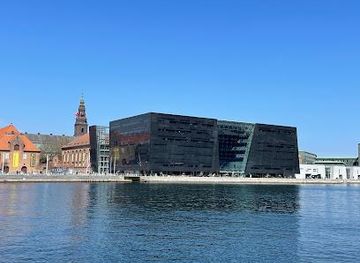
Mirrored in the waters of Copenhagen’s harbor, the Black Diamond fuses bold granite architecture, quiet reading rooms and vibrant cultural life in one striking library.

Find your perfect hotel, anywhere in the world.

When's your trip?

Who's coming?

Adult (18-90)
Min: 1 Max: 6
Add a child
At least one participant is required. Please adjust and try again.

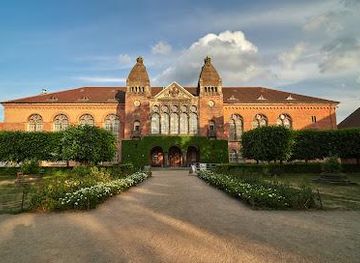
The Black Diamond is the dramatic waterfront extension of the Royal Danish Library on Søren Kierkegaards Plads in central Copenhagen. Clad in polished black granite from Zimbabwe and sliced by a luminous glass atrium, this 1999 landmark fuses cutting-edge architecture with Denmark’s literary heritage. Inside, you find reading rooms, a café overlooking the harbor, exhibition spaces, the National Museum of Photography and the Queen’s Hall concert venue, all stitched seamlessly into the historic 1906 library building behind.

A brief summary to Black Diamond

  • Søren Kierkegaards Pl. 1, Copenhagen, Indre By, 1221, DK
  • Visit website
  • Duration: 1 to 3 hours
  • Free
  • Environment icon Mixed
  • Mobile reception: 5 out of 5

Local tips

  • Plan time to ride the escalators and walk the upper balconies: the changing views of the harbor and the atrium’s sculptural curves are as rewarding as the exhibitions.
  • If you want to experience the historic side, seek out the Old Reading Room in the original 1906 library building, which you can usually access in connection with exhibition tickets.
  • Use the café as a vantage point on wet or windy days; large windows give you classic harbor views without having to be outside for long.
  • Check current exhibition and concert listings in advance if you’re interested in photography shows or performances in the Queen’s Hall.
widget icon

Getting There

  • Metro and short walk

    From central Copenhagen, take the M1 or M2 metro line to Kongens Nytorv or Christianshavn; travel time from Nørreport is around 3–5 minutes by metro plus 10–15 minutes on foot along mostly flat, paved streets. A standard single metro ticket within the city zones typically costs around 20–30 DKK. This option is suitable for most visitors, though in icy or very wet weather the harborfront section can feel exposed.

  • S-train and walking via Central Station

    If you are arriving by regional or S-train, get off at Copenhagen Central Station and continue on foot; the walk to the Black Diamond usually takes 15–20 minutes through the historic center on level pavements. Trains on the main lines are frequent throughout the day and included in standard city tickets and travel cards. This route gives you a pleasant urban approach but may be tiring for those with limited mobility.

  • City bus to Slotsholmen area

    Several inner-city bus routes serve stops around Slotsholmen and Christiansborg Palace, from where it is generally a 5–10 minute walk to the Black Diamond. Typical bus journeys within the central zones take 10–20 minutes depending on traffic, with single fares usually in the 20–30 DKK range or covered by travel cards. Buses run frequently during the day, but be prepared for short outdoor walks between the stops and the waterfront.

  • Bicycle from inner Copenhagen

    Cycling is one of the most practical ways to reach the Black Diamond from districts like Vesterbro, Nørrebro or Østerbro, with typical rides taking 10–20 minutes on dedicated bike lanes almost the entire way. You can use your own bike or a city bike rental, which often charges by the minute or hour in the range of a few dozen DKK for a short trip. The route is flat and straightforward, but strong winds along the harbor can make the final stretch more challenging.

Black Diamond location weather suitability

  • Weather icon Any Weather
  • Weather icon Rain / Wet Weather
  • Weather icon Cold Weather
  • Weather icon Mild Temperatures

Unlock the Best of Black Diamond

Buy tickets

    No tickets available

Book tours with entry

    No tours available

Book tours without entry

    No tours available

Discover more about Black Diamond

Shimmering icon on Copenhagen’s harbor edge

The Black Diamond rises from the Copenhagen waterfront like a faceted monolith, its sharp geometry and deep glossy cladding giving the impression of a jewel set against the water. Completed in 1999 as a bold extension of the Royal Danish Library, the building leans subtly over the harbor, catching light and reflections so that its surfaces shift from inky black to silver and gold throughout the day. From a distance it anchors the cultural district along the quayside, standing in deliberate contrast to the older stone façades nearby. Step closer and the details reveal themselves: the exterior is clad in thousands of square meters of “Absolute Black” granite, cut and polished in Italy from stone quarried in Zimbabwe. Each slab is heavy enough to feel monumental, yet the overall effect is surprisingly light, like a dark mirror for ripples on the harbor and the passing clouds. A broad glass wedge slices the structure open toward the water, hinting at the bright atrium within and signaling that this is not a closed archive, but a public cultural gateway.

Where cutting-edge design meets a historic library

Inside the glass wedge, a soaring atrium connects the harbor promenade directly with the inner world of the Royal Danish Library. White, undulating balconies curve around the central void, softening the hard exterior lines and echoing the movement of waves. Escalators glide diagonally through the space, giving shifting views of water, sky and the city beyond, while overhead bridges link the new building to the early 20th-century library at the rear. This link is one of the Black Diamond’s most striking qualities. As you move from the stark, sculptural new wing into the older library, you cross an invisible threshold between centuries of Danish architecture. The transition is marked by warmer materials and more traditional proportions, yet it feels continuous rather than abrupt. Ceiling art by Danish painter Per Kirkeby decorates the bridge area, adding an additional artistic layer to the architectural dialogue between past and present.

Books, concerts and exhibitions under one roof

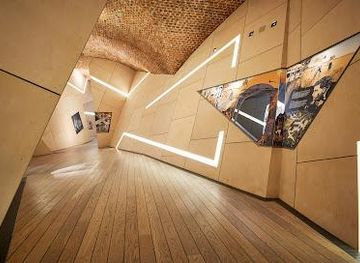
Beyond its dramatic exterior, the Black Diamond is a working cultural center with many layers of activity. It houses reading rooms for students and researchers, where long desks and individual lamps overlook either the atrium or calmer inner courtyards. Beneath the public floors, vast collections of books, manuscripts and archival material are carefully stored, supported by discreet engineering designed to protect them from vibration and moisture. Public spaces bring the library’s collections and themes to life through changing exhibitions, often focused on literature, photography, and Danish cultural history. Temporary shows might explore everything from Søren Kierkegaard’s manuscripts to contemporary visual storytelling. The building is also home to the National Museum of Photography and to the Queen’s Hall, a 600-seat concert and event venue known for its refined acoustics and sculpted wood interior, where classical music, talks and literary events share the same stage.

Harbor views, everyday life and moments of calm

Despite its monumental form, the Black Diamond is designed for everyday use as much as for grand occasions. The ground-floor café spills into the atrium, offering coffee and open sandwiches with uninterrupted views of the harborfront and the colorful buildings of Christianshavn across the water. Large windows bring in changing Nordic light, making the interior feel different on a bright summer afternoon than on a misty winter morning. On the upper levels, quiet corners appear along walkways and balconies, inviting you to pause with a book or simply watch the harbor traffic glide by. The building opens directly onto the cultural waterfront promenade, so it often becomes a natural stopping point on a walk between Christiansborg Palace, the nearby library garden and newer cultural venues to the south. Even a short visit can be as much about atmosphere and views as about the library’s collections themselves.

Subtle surprises and hidden artistic touches

Look and listen carefully and the Black Diamond reveals details that go beyond its striking silhouette. At set times, the central atrium fills with an evolving sound artwork that uses a multi-channel speaker system to create an immersive sonic landscape influenced by natural cycles. The effect transforms the space for a few minutes, turning the everyday architecture of stairs and balconies into a kind of instrument. Art appears in other places too, from discreet installations to the play of light on glass and polished stone. The building’s engineering, mostly hidden from view, makes the leaning façade and floating balconies possible while preserving a sense of effortlessness. As you explore, it becomes clear that the Black Diamond is not just a container for knowledge, but a carefully crafted experience of form, material, light and sound that reflects contemporary Danish design thinking.

A modern landmark in the cultural heart of the city

Set on Slotsholmen, close to the Danish parliament and some of Copenhagen’s most important museums, the Black Diamond forms part of a dense cluster of cultural institutions. Its role is both practical and symbolic: a place where students work daily in the reading rooms, where exhibitions interpret Denmark’s cultural heritage, and where locals and visitors alike can simply sit by the glass and watch the boats go past. Whether you come for a specific exhibition or just step in from the waterfront out of curiosity, the building offers multiple ways to experience it: as bold architecture, as a functioning national library, and as a calm indoor lookout over the harbor. That layered identity is what makes the Black Diamond one of Copenhagen’s defining contemporary landmarks.

Busiest months of the year

Busiest hours of the day

Popular Experiences near Black Diamond

Popular Hotels near Black Diamond

Select Currency