Background

Dronningholm Castle Ruin

Grassy earthworks, royal legends and lake views mark the quiet remains of one of medieval Denmark’s largest castles in the gentle landscapes of North Zealand.

3.9

Set on a low hill between Auderød and Brederød near Denmark’s largest lake, Arresø, Dronningholm Castle Ruin preserves the footprint of one of medieval Denmark’s largest fortresses. Begun by Valdemar the Great and completed around 1200 by Valdemar the Victorious, the stronghold once rose above moats and a drawbridge guarding access by land and water. Today, grassy earthworks, stone foundations and tranquil views hint at its former power, while legends of Queen Dagmar’s morning gift add a romantic note to this quiet, atmospheric corner of North Zealand.

A brief summary to Dronningholm Castle Ruin

  • Auderødvej, Frederiksværk, 3300, DK
  • +4533733373
  • Visit website
  • Duration: 0.5 to 2 hours
  • Free
  • Environment icon Outdoor
  • Mobile reception: 4 out of 5
  • Monday 12 am-12 am
  • Tuesday 12 am-12 am
  • Wednesday 12 am-12 am
  • Thursday 12 am-12 am
  • Friday 12 am-12 am
  • Saturday 12 am-12 am
  • Sunday 12 am-12 am

Local tips

  • Wear sturdy shoes; the ruin sits on uneven grassy ground with earthworks, roots and sometimes muddy patches after rain.
  • Bring water and snacks, as there are no facilities directly at the castle ruin and only limited services in the immediate countryside.
  • Combine your visit with a walk along Arresø or through nearby woodland to appreciate the strategic placement of the medieval fortress.
  • Visit in the early morning or late afternoon for softer light that makes the contours of the moat and ramparts easier to read and photograph.
widget icon

Getting There

  • Regional train and bus

    From Copenhagen, take a regional train towards Frederiksværk via Hillerød, a journey of about 1 hour to 1 hour 15 minutes with a change in Hillerød. Standard adult fares are typically in the range of 80–120 DKK one way, depending on ticket type and time of purchase. From Frederiksværk station, local buses towards Auderød or the Arresø area run on limited schedules, adding around 15–25 minutes of travel plus waiting time. Services are less frequent in the evening and on weekends, so checking timetables and planning connections carefully is essential.

  • Car from Copenhagen

    Driving from central Copenhagen to the Dronningholm area via Hillerød and Frederiksværk usually takes about 1 hour to 1 hour 20 minutes, depending on traffic. There are no road tolls on this route. Fuel costs for the return journey typically fall in the range of 120–200 DKK, depending on vehicle and prices. Parking is informal in the rural surroundings and may be on small roadside lay-bys or farm tracks, so be prepared for simple conditions and avoid blocking access for local residents or farm vehicles.

  • Cycling from Frederiksværk

    From Frederiksværk town, reaching the Dronningholm area by bicycle generally takes around 20–35 minutes each way at a relaxed pace. The route uses a mix of minor roads and country lanes with gentle gradients, suitable for moderately confident cyclists. There is no cost beyond any bike rental you might arrange in town, which commonly runs from about 100–200 DKK per day depending on the provider. Surfaces can be uneven in places and lighting is limited after dark, so a good front light and reflective clothing are advisable if returning late.

Dronningholm Castle Ruin location weather suitability

  • Weather icon Clear Skies
  • Weather icon Mild Temperatures
  • Weather icon Any Weather
  • Weather icon Cold Weather
  • Weather icon Hot Weather
  • Weather icon Windy Conditions

Unlock the Best of Dronningholm Castle Ruin

Buy tickets

    No tickets available

Book tours with entry

    No tours available

Book tours without entry

    No tours available

Discover more about Dronningholm Castle Ruin

A medieval stronghold above Denmark’s largest lake

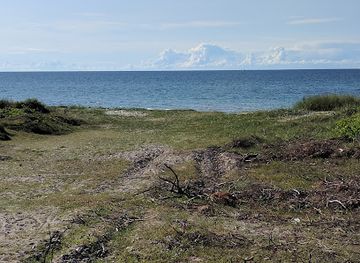
Dronningholm Castle Ruin sits on a gentle rise between Auderød and Brederød, overlooking the landscape that stretches towards Arresø, Denmark’s largest lake. In the Middle Ages this was strategic high ground, giving clear views over the flat surroundings and control of routes across North Zealand. The remaining foundations and earthworks trace the outline of a once-mighty fortress whose presence shaped this rural corner of Halsnæs. Begun under King Valdemar the Great in the 12th century and completed by his son Valdemar the Victorious around 1200, Dronningholm ranked among the largest castles in the kingdom. Built by the fjord that later became the enclosed lake of Arresø, it commanded both waterborne and overland access. The site is now peaceful and grassy, but the contours of ramparts and the platform where the main buildings stood still clearly signal a place designed for power and defense.

Moats, walls and the art of medieval defence

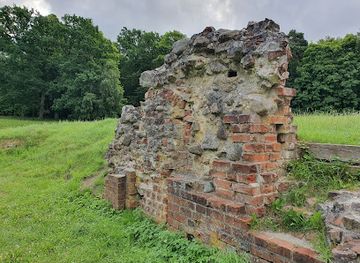
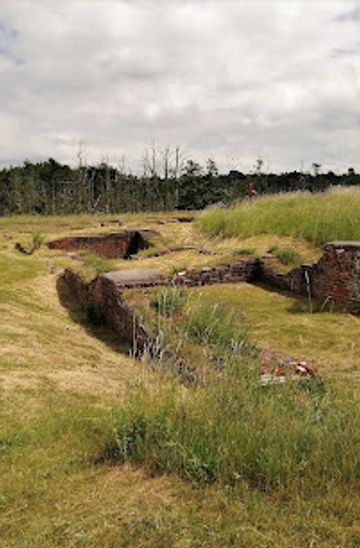
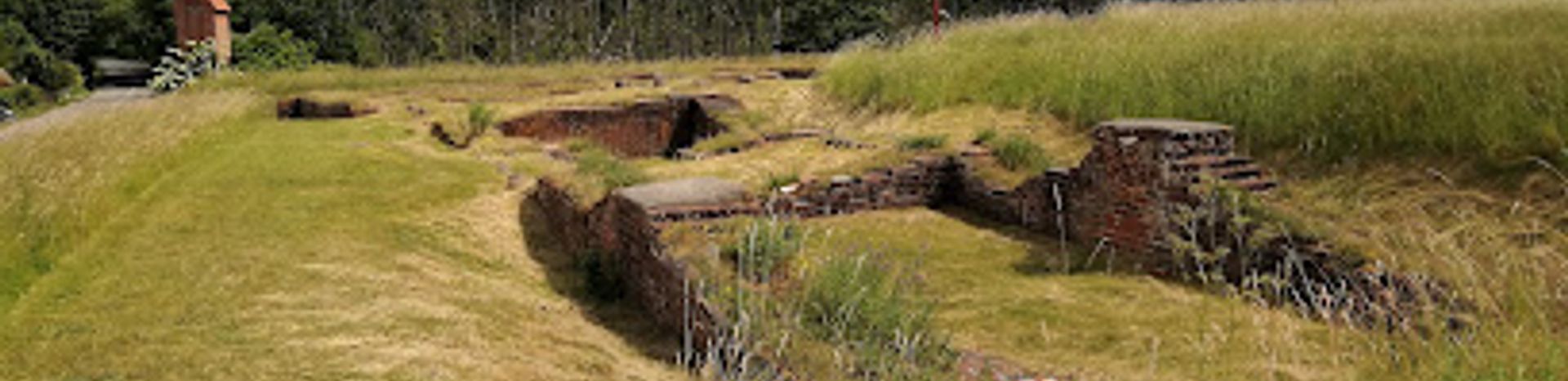
The ruins reveal Dronningholm as a textbook example of high-medieval fortification in brick and stone. Archaeological traces show that the castle was ringed by a broad moat, once filled with water, and reached via a drawbridge that could be raised against attackers. Within this protected ring, stout outer walls encircled a courtyard where the main hall, residential wings and service buildings were grouped. Though only low walls and scattered stones remain, the geometry of the earthworks allows you to imagine towers at the corners, storage vaults underfoot and timber superstructures above the masonry. On a walk around the perimeter you can still sense how the castle once rose from its watery defences, a compact cluster of buildings pulled tight behind their ramparts, visually dominating what was then a navigable approach by ship.

Queens, morning gifts and a destructive fire

Dronningholm’s name – often rendered as “Queenholm” – evokes royal associations that go beyond its founders. Later tradition tells that beloved Queen Dagmar received the castle as a morning gift, the symbolic present from a king to his new consort. Whether or not this story is strictly factual, it reflects the strong link between the site and Denmark’s medieval monarchy, and helps explain the romantic aura that still clings to the ruins. The fortress’s active life ended abruptly in 1525, when a devastating fire ravaged the buildings. Instead of being rebuilt in a new style, the castle was gradually abandoned. Stones were re-used elsewhere, timber decayed and earth slumped into the moat. By the late 16th century only fragments were left standing, and nature slowly reclaimed the site. That long decline is part of its appeal today: rather than a reconstructed monument, Dronningholm is an authentic ruin, shaped by five centuries of weather and vegetation.

A quiet landscape walk with royal echoes

Visiting Dronningholm Castle Ruin is as much about the setting as the archaeology. A simple path leads across open ground and light woodland to the low hill where the foundations lie, making the site feel like a small discovery rather than a formal museum. Birdsong, rustling leaves and distant views towards Arresø create an atmosphere of calm that contrasts with the site’s martial past. Because the walls rise only a short distance above the turf, you are free to move between them, follow the line of the former moat and step where halls and chambers once stood. The openness makes it easy to combine a stop here with a longer walk in the surrounding countryside or an exploration of other historic sites in North Zealand, from monasteries and manor houses to the nearby industrial heritage of Frederiksværk.

Protected heritage in the Kings’ North Zealand landscape

Today the ruins are protected as a scheduled ancient monument and form part of the wider historic landscape of Kings’ North Zealand, an area rich in royal hunting forests, castles and engineered waterways. Information panels in the area help place Dronningholm in this network of power and prestige, from which Danish monarchs administered lands, collected dues and controlled movement along the fjords. Despite its modest scale on the ground, the ruin rewards unhurried exploration. As you trace the lines of vanished walls and gaze across the fields and wetlands, it is easy to imagine the clatter of hooves on the drawbridge, the creak of ships’ rigging on the water and the glow of fires in the great hall. Dronningholm Castle Ruin offers a rare chance to stand inside the footprint of a major medieval fortress while enjoying the gentle rhythms of the modern Danish countryside.

Busiest months of the year

Busiest hours of the day

Popular Experiences near Dronningholm Castle Ruin

Popular Hotels near Dronningholm Castle Ruin

Select Currency