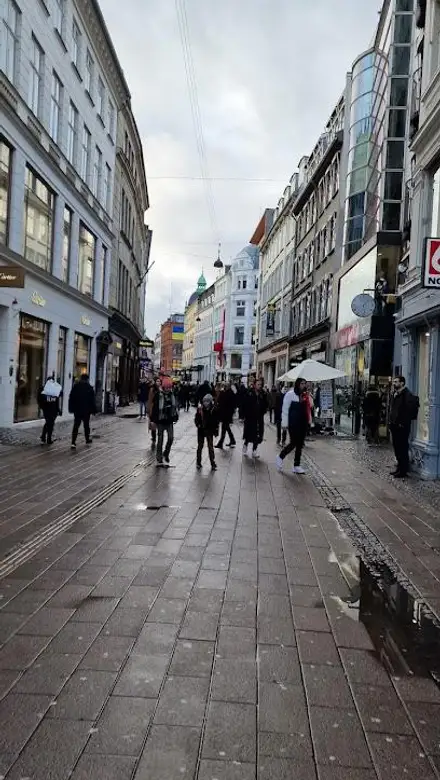
Strøget, Køge Travel Guide
Free Guide: One of Europe’s longest pedestrian streets, Strøget is Copenhagen’s car-free shopping spine, blending historic squares, designer boutiques and everyday street life.


A brief summary of Strøget
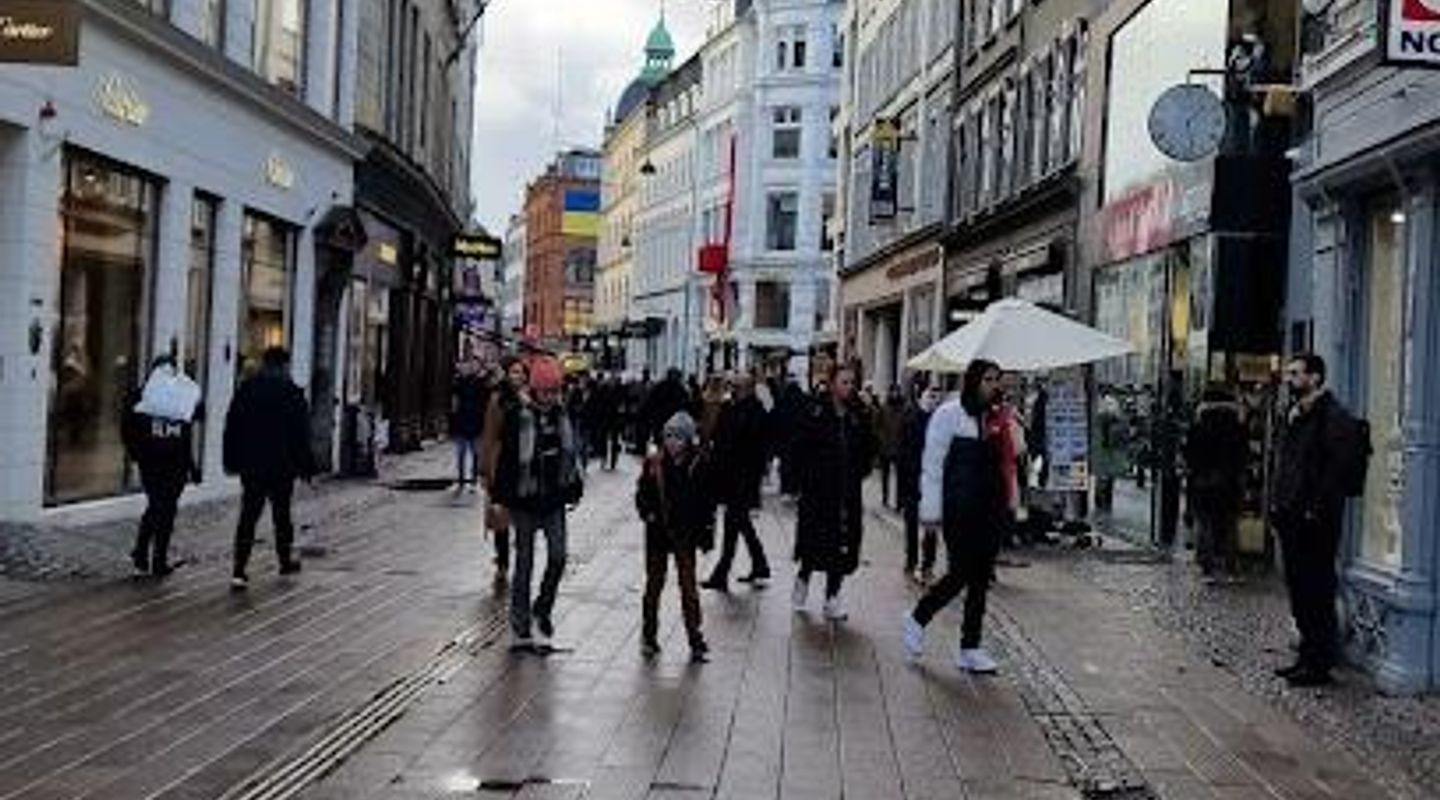
One of Europe’s longest pedestrian streets, Strøget is Copenhagen’s car-free shopping spine, blending historic squares, designer boutiques and everyday street life.
Strøget is Copenhagen’s main shopping artery and one of Europe’s longest pedestrian streets, a 1.1 km, car‑free spine running between City Hall Square and Kongens Nytorv. Lined with everything from global flagships and Danish design houses to budget chains, cafés and street performers, it doubles as an open‑air living room for the city. Historic squares, church spires and views towards Christiansborg and Nyhavn frame a stroll that blends retail therapy, people‑watching and classic Copenhagen urban life.
On-site amenities
 Restrooms
 Drink options
 Drinking water
 Food options
 Seating areas
 Sheltered areas
 Trash bins
 Information boards
 Visitor centre
- Address
- Copenhagen
Getting there
Metro
Train and Walk
Bus
Bicycle
Discover more about Strøget
A car-free boulevard through historic Copenhagen
Strøget threads through the very centre of Copenhagen, a 1.1-kilometre pedestrian street linking bustling City Hall Square in the west with elegant Kongens Nytorv in the east. Though often thought of as a single avenue, it is really a chain of streets and squares – Frederiksberggade, Nygade, Vimmelskaftet and Østergade, with Nytorv, Gammeltorv and Amagertorv fanning off – that together form a continuous, car-free route. Buildings crowd close, facades span centuries of Danish architecture, and overhead the skyline is punctuated by copper spires and bell towers.The atmosphere feels distinctly urban yet relaxed. Cyclists flow along parallel streets, while here the rhythm is set by footsteps and conversation rather than engines. This central stretch became pedestrian-only in the early 1960s, a pioneering decision that transformed choked traffic lanes into a broad public promenade. Today it is a showcase for Copenhagen’s human-scale planning, where walking is the default and street life has room to flourish.
From bold experiment to blueprint for public life
When Strøget was closed to cars in 1962 it was considered a daring move in a Nordic climate better known for wind and rain than café culture. For a trial period, traffic was banned and shopkeepers held their breath, unsure whether customers would follow. Instead of empty pavements, crowds poured in. Outdoor seating appeared, windows were thrown open and the street quickly evolved into an everyday stage for encounters, commerce and cultural life.The success of Strøget inspired a gradual expansion of Copenhagen’s pedestrian network. Over time, neighbouring streets and squares were resurfaced, planters added, lighting improved and seating multiplied. Amagertorv’s granite paving, with its artistic patterns, turned a crossroads into a civic living room. What began as an experiment became a model studied by planners around the world: proof that taking space from cars and giving it to people could boost both urban vitality and the fortunes of local businesses.
Shopping axis from budget chains to luxury labels
Strøget is best known as the city’s primary shopping street, and the mix of stores is one of its signatures. Near Kongens Nytorv, polished storefronts house international luxury labels and Scandinavian design brands, from couture fashion to fine jewellery and watches. Window displays are carefully choreographed, reflecting Copenhagen’s reputation for restrained style and craftsmanship.Closer to City Hall Square the mood shifts to a more casual high-street scene. Here you find familiar global chains, sneaker stores and fast-fashion names interspersed with souvenir shops, chocolate boutiques and lifestyle concepts. Side streets hide independent design studios and smaller Danish labels. Even for visitors who are not in a buying mood, the variety of storefronts, seasonal displays and glimpses into courtyards and arcades make the walk visually engaging.
Squares, churches and classic Copenhagen views
Between stretches of shopfronts, Strøget opens unexpectedly onto historic squares. At Gammeltorv and Nytorv, fountains play beside the city courthouse and ornate facades recall Copenhagen’s mercantile past. Amagertorv, with its characteristic paving and central Stork Fountain, feels like a natural gathering point, ringed by cafés whose outdoor tables spill into the square in milder weather.Cultural landmarks are never far away. Look up side streets to spot the tower of the Church of Our Lady, or the delicate spire of Nikolaj Church. From Amagertorv, the view extends across a canal to Christiansborg Palace, seat of the Danish parliament. At the eastern end, Kongens Nytorv frames sightlines towards the Royal Danish Theatre and the colourful harbour houses of Nyhavn, while to the west the façades of City Hall signal the entrance to Tivoli’s neighbourhood.
Street performers, seasonal moods and local rhythm
Street life is part of Strøget’s identity. Around Amagertorv and other wider sections, acrobats, buskers and magicians regularly set up informal stages. On long summer evenings the soundscape is a blend of music, conversation and the click of bicycle bells from nearby lanes. In winter the street takes on a different charm, with lights glowing against early dusk and shop windows turned into luminous tableaux.The feel of the street changes by hour and season. Mornings are calmer, with delivery bikes and locals heading to work. Afternoons bring shoppers and families, while early evenings often become prime time for people-watching from a café table. During December, festive decorations and market stalls on nearby squares add to the ambience. Yet even at its busiest, the absence of cars keeps the noise level surprisingly gentle, reinforcing the sense that Strøget is not just a shopping strip but one of Copenhagen’s main social living rooms.
Planning your visit along the pedestrian spine
Exploring Strøget is less about ticking off specific sights and more about embracing the slow progression from square to square. Many visitors choose to walk the full length, pausing at fountains, church portals or narrow alleyways that invite detours. Benches and window ledges offer informal resting spots if you need a break from walking or browsing.It is wise to be mindful of pickpockets around the busiest intersections, and of occasional shell-game scams near City Hall Square. Comfortable footwear makes the long, stone-paved stretch easier on your feet, especially if you plan to combine Strøget with nearby attractions such as Tivoli Gardens, Christiansborg Palace or Nyhavn. Whether you stay for half an hour or an entire afternoon, the street offers an efficient way to feel the rhythm of central Copenhagen in a single, unbroken line of city life.
Evendo Review Centre
 Google
Guest reviews
Best time to go
Quietest: Jan, Feb & Mar · before 7am
Busy times are Evendo estimates for a typical year, to help you plan. Actual crowds vary with events, school holidays and the weather.
Explore Strøget on the map
A handpicked selection of must-see spots near Strøget, mapped for you.
Get your free copy of our complete guide to Strøget, delivered straight to you.
Everything on this page, from opening hours and how to get there to Eve’s tips and the best time to go, in one PDF you can read offline, print or share.
Already have an account? Sign in
Your Strøget guide is ready.
We'll send it to · Not you? Sign out

Getting your guide ready…
We are putting together a fresh copy of the Strøget guide. This can take up to a minute.
This can take a few moments. If your browser asks, choose Allow so the download can start. You'll find the guide in your Downloads folder.
Nothing happened? Download it again
Sorry, the guide is taking longer than usual. Please try again in a minute, or get it by email instead.
Unlock the best of Strøget
Skip-the-line tickets, guided tours with entry, and walking tours of the area, booked in a few clicks.
 Tour with entry
A Self-Guided Nordic Exploration in Copenhagen's Hidden Hygge
from $1.05 Tour with entry
Self-Guided Tour In Copenhagen with 100 Captivating Audio Stories
from $3.17 Tour with entry
Copenhagen Walking Tour with Audioguide on Your Smartphone
from $10.61 Tour with entry
Walk with ghosts (and other creatures) through Copenhagen
from $28.50


Other nearby places you may find interesting
The closest places of the same kind, if this one is not quite what you had in mind.
-
Køge Miniby Step into Køge’s past at 1:10 scale, where hand-built model houses, harbour scenes and church spires recreate the market town of 1865 in a tranquil seaside garden.
-
Køge Museum Time‑travel through Køge’s past inside a 17th‑century merchant’s house where Viking treasures, buried secrets and a tranquil courtyard meet in one intimate museum.
-
Ølsemagle Revle A shifting sandbar of shallow lagoons, rich birdlife and wide sandy beaches, where Køge’s urban edge gives way to one of Zealand’s most evocative coastal nature reserves.
-
Solgårdsparken Romantic coastal park between Køge Bay and Tryggevælde River, where historic garden design, tranquil nature, play areas and reflective audio stories meet in one green retreat.
-
Vandkunsten - Stationspladsen A sculptural fountain anchoring Køge’s station square, where moving water, stone and light turn a busy transport hub into an inviting urban meeting place.
Swipe for more places
More to explore near Strøget

 Best experiences near Strøget
 Best hotels near Strøget
 Best landmarks near Strøget
 Best attractions near Strøget
 Best shops near Strøget
 Best restaurants near Strøget
 Best bars near Strøget
Do you manage this location?
Take control to get all the benefits, like improved information, better appearance, and stronger visibility across AI-powered discovery.
Explore more
Explore more of Køge
Explore Køge, Denmark's coastal gem, with its medieval charm, beautiful marina, and close proximity to the stunning Stevns Klint UNESCO World Heritage site.
Explore Køge
Explore more of Denmark
Discover Denmark: A perfect blend of history, modern design, and the cozy concept of hygge. Explore vibrant cities, serene landscapes, and world-class cuisine.
Explore Denmark