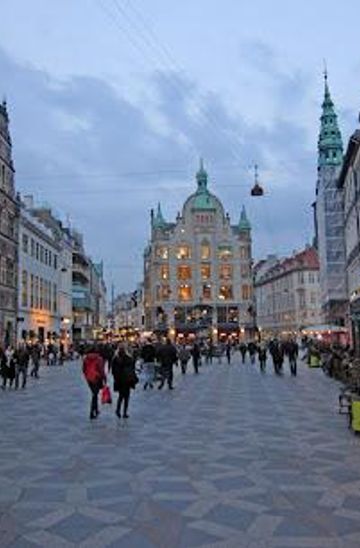
Amagertorv
Historic market square turned pedestrian showpiece, where ornate facades, the Stork Fountain and Strøget’s bustle capture the everyday theatre of Copenhagen.
Amagertorv is one of Copenhagen’s oldest and most atmospheric squares, forming the vibrant heart of the Strøget pedestrian district. Once a bustling produce market for farmers from the nearby island of Amager, today it is framed by richly ornamented Renaissance and historicist facades, flagship design stores and lively cafés. At its center stands the elegant 19th‑century Stork Fountain, a beloved meeting point and people‑watching perch amid buskers, shoppers and the steady flow of city life.
A brief summary to Amagertorv
- Copenhagen, Indre By, DK
- Duration: 0.5 to 2 hours
- Free
-
 Outdoor
- Mobile reception: 5 out of 5

Know before you go
Hi, I'm Eve. Here are a few practical things to know before exploring Amagertorv.
- Arrive early in the morning to appreciate the architecture and cobblestones before Strøget fills with shoppers and street performers.
- Look up above the shopfronts to spot Renaissance gables, copper roofs and carved dates that reveal the square’s layered history.
- Use the Stork Fountain as a meeting point and orientation marker when exploring the wider pedestrian district.
- Combine a visit with nearby historic churches, squares and design stores for a half‑day walk through central Copenhagen.
- In winter, bring warm layers—the square is quite exposed to wind, especially when you linger around the fountain or outdoor seating.
Do you manage this location?
Take control to get all the benefits, like improved information, better appearance, and stronger visibility across AI-powered discovery. Learn more
Activate your presenceOther nearby places you may find interesting
Getting There
-
Metro
From central Copenhagen, take the M1 or M2 metro line to Gammel Strand or Kongens Nytorv; both stations are roughly 5–10 minutes from the square on foot. Metro trains run every few minutes throughout the day, and a single zone ticket typically costs around 20–30 DKK. All stations and trains have level access and lifts, making this the most convenient option for travellers with luggage, strollers or wheelchairs.
-
Bus
Several city bus routes stop near the Strøget pedestrian area, from where Amagertorv is about a 5–15 minute walk depending on the stop. Buses in central Copenhagen usually run every 5–15 minutes during the day, with slightly reduced frequency in the evening. A standard ticket costs roughly 20–30 DKK and can be used across buses, metro and trains within the same zones. Note that buses cannot enter Strøget itself, so the final approach is always on foot over flat but cobbled surfaces.
-
Bicycle
Hiring a city bike is a classic way to reach Amagertorv from inner districts such as Vesterbro, Nørrebro or Østerbro, typically taking 10–20 minutes depending on distance and traffic lights. Expect to pay around 15–40 DKK per half hour for shared bikes, depending on the scheme. There are bike racks close to, but not on, the pedestrianised square; cycling is not permitted within Strøget itself, so you will need to dismount and walk the last few minutes.
-
Walking from central districts
If you are already staying in the historic centre, Amagertorv can usually be reached on foot within 10–20 minutes from many hotels and major sights. The route will lead you through mostly level streets and pedestrian zones, though surfaces are often cobbled and may feel uneven for those with mobility challenges. Walking is free and allows you to take in nearby squares, churches and shopfronts along the way.
For the on-the-go comforts that matter to you
-
 Restrooms
-
 Drink Options
-
 Drinking Water
-
 Food Options
-
 Seating Areas
-
 Sheltered Areas
-
 Trash Bins
-
 Information Boards
-
 Visitor Center
Discover more about Amagertorv
From Medieval Market Ground to City Showcase
Amagertorv has been a focal point of Copenhagen for centuries, its triangular cobbled space already marked on city maps in the Middle Ages. Farmers from nearby Amager once sailed in with carts of vegetables, meat and dairy, turning the square into the city’s premier fresh produce market. The very name joins “Amager” with “torv,” meaning square, a reminder of its trading roots.Over time, royal decrees concentrated market life here, filling the square with stalls, calls of traders and the everyday negotiations that fed the growing capital. Fires and bombardments in later centuries reshaped the surrounding streets, yet Amagertorv remained a central open space, adapting from muddy marketplace to refined urban salon as Copenhagen modernised.Architectural Jewels Framing the Cobblestones
Today Amagertorv is ringed by an exceptional ensemble of historic facades, many rebuilt or refined after 18th‑century fires. Dutch Renaissance details, copper roofs and sculpted gables lend the square its distinctive skyline. One of the most eye‑catching houses dates from the early 1600s and now hosts a celebrated porcelain flagship store, its warm brickwork, steep gables and decorative drainpipes evoking northern European mercantile wealth.Elsewhere, 19th‑century historicist buildings showcase elaborate stonework, bay windows and ornate shopfronts. Many ground floors are occupied by Danish and international design brands, creating an intriguing contrast between centuries‑old architecture and minimalist interiors. Above the shop signs, look up to see carved dates, coats of arms and tiny figurative details that reward unhurried exploration.The Stork Fountain and City Rituals
At the square’s center rises the Stork Fountain, unveiled in 1894 to mark the silver wedding anniversary of a crown prince and his consort. Three storks appear poised for flight above a tiered basin, their wings spread as water spills into the pool below. The fountain quickly became both civic ornament and informal gathering place, a natural landmark in an otherwise flat space.Over the decades, the fountain has witnessed everything from political demonstrations to impromptu celebrations. A lighthearted tradition sees newly qualified midwives dance around it, a playful nod to the storks’ symbolic association with birth. In warmer months, the fountain’s rim doubles as a resting spot for shoppers and street musicians, its gentle splash softening the hum of the city.Heart of the Strøget Pedestrian Spine
Amagertorv sits roughly at the midpoint of Strøget, the long car‑free artery that links City Hall Square with Kongens Nytorv. Here, two of the main shopping streets diverge, creating a constant swirl of movement as street performers, commuters and visitors weave between shopfronts and café terraces. The absence of traffic shifts the focus to human activity: conversations drifting across outdoor tables, the clink of cups, the rhythm of buskers.Despite the commercial energy, there are quieter pockets. Early mornings often bring soft light on the facades and the hollow tap of delivery carts across cobblestones. In the evenings, shop windows glow against darkening stone, and the square becomes a lantern‑lit corridor between historic quarters, ideal for a slow wander or a pause on a bench.Seasonal Atmosphere and Subtle Details
Amagertorv’s character changes with the time of year. In spring and summer the air carries the scent of coffee and street food, with outdoor seating spilling into the square. Autumn light sharpens the colours of brick and copper, while winter can bring festive decorations, illuminated windows and the crunch of cold stone underfoot. Whatever the season, the irregular pattern of cobbles underfoot and the gentle slope of the triangular space create a palpable sense of place.Look for small details that tell stories: dragons’ heads on drainpipes, gilded signage, or the contrast between centuries‑old brick and ultra‑modern window displays. Together, these layers of history, commerce and everyday life make Amagertorv less a single sight than a living crossroads, where Copenhagen’s past and present continuously intersect.Explore the best of what Amagertorv has to offer













More about North Zealand
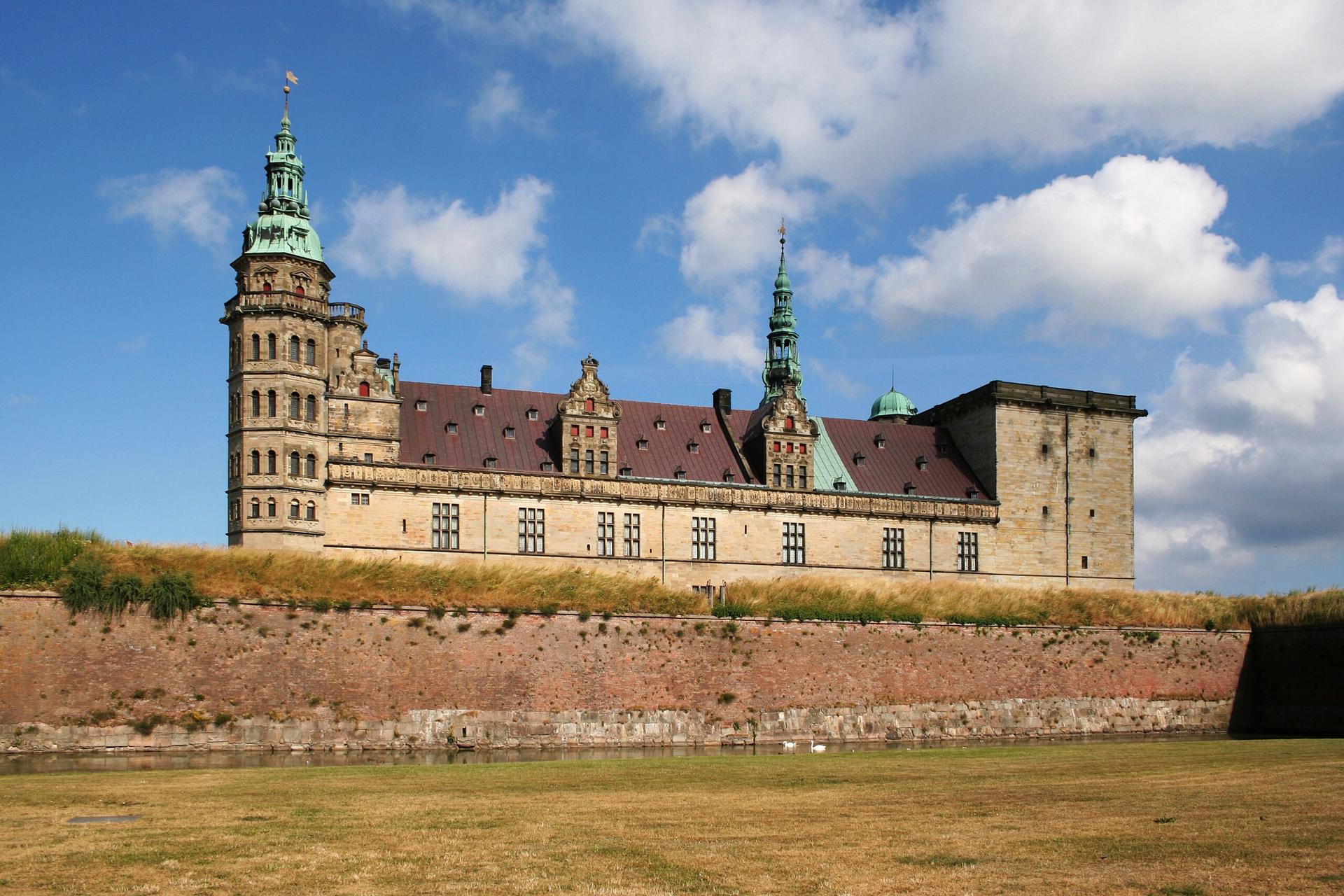
Explore North Zealand, Denmark's enchanting region of castles, beaches, and royal estates, perfect for history buffs, nature enthusiasts, and seaside lovers.
Tell me more about North Zealand
Discover the world of 'Nordic gold' at the Copenhagen Amber Museum, where history, science, and stunning amber artifacts meet in Nyhavn’s oldest house.
A short, atmospheric side street in Copenhagen’s Old Town, where historic façades, independent boutiques and relaxed cafés create a cosy alternative to Strøget.