

Sankt Hans Torv, Køge Travel Guide
Free Guide: Nørrebro's revitalized heart where historic charm meets contemporary café culture and public art.


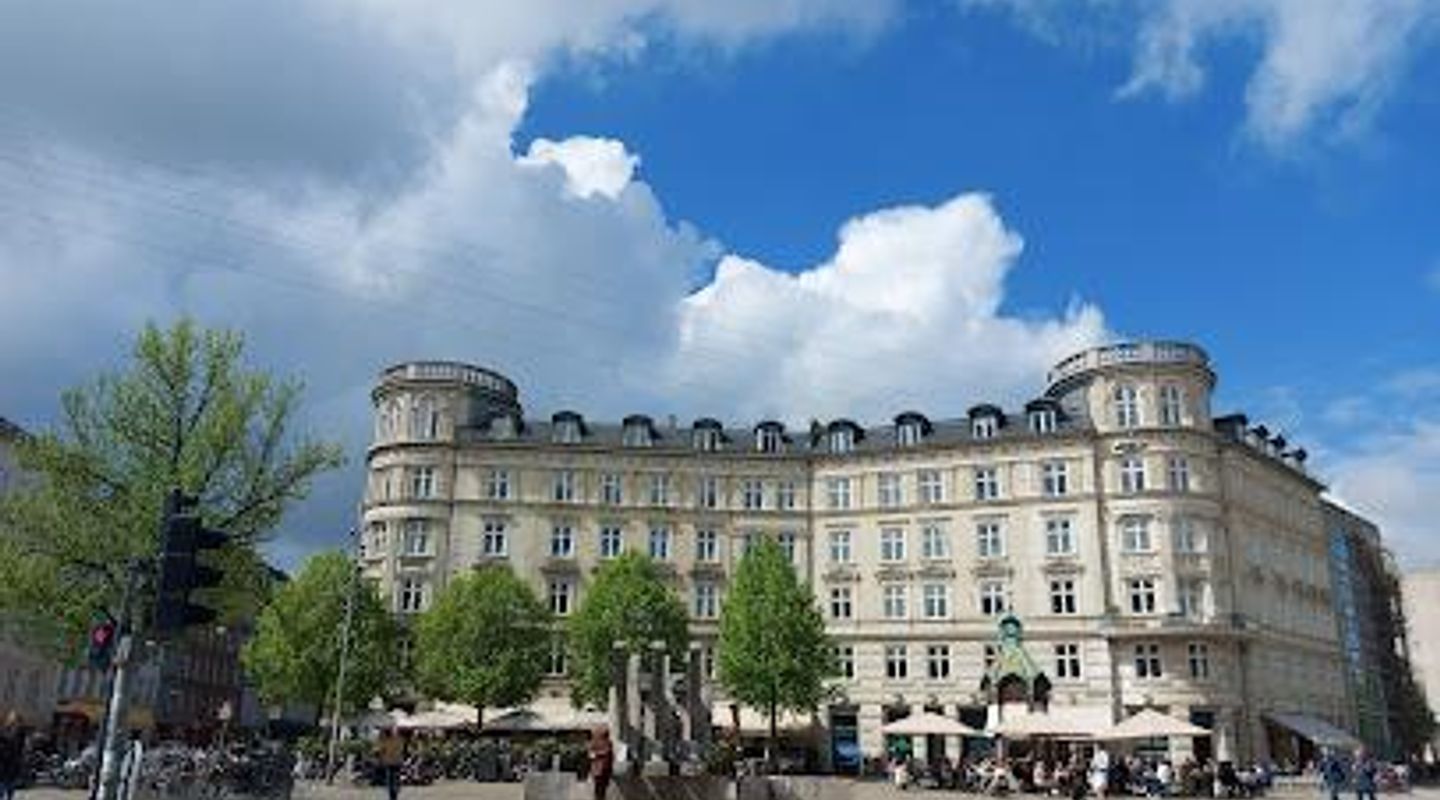
A brief summary of Sankt Hans Torv
Nørrebro's revitalized heart where historic charm meets contemporary café culture and public art.
Sankt Hans Torv is a vibrant public square in Copenhagen's Nørrebro district, transformed through urban renewal into a lively gathering space. Once a cattle market and major traffic junction, the square now features a gently undulating granite plaza, contemporary public art, and a thriving café culture. Dominated by Jørgen Haugen Sørensen's sculptural water feature and surrounded by historic architecture including St. John's Church, it serves as the social and cultural heart of the neighborhood.
On-site amenities
 Restrooms
 Drink options
 Food options
 Seating areas
 Trash bins
 Information boards
- Address
- 2200 Copenhagen
Getting there
Metro
Bicycle
Bus
Walking
Discover more about Sankt Hans Torv
From Common Land to Urban Hub
Sankt Hans Torv occupies a site with deep historical roots in Copenhagen's urban development. The location was originally part of Blegedam Common, one of several commons that surrounded Copenhagen when the city was fortified. During the medieval and early modern periods, this area served as grazing land where cattle from the surrounding commons were brought for milking. Blegdamsvej, one of the oldest roads in the area, connected these pastoral lands to the city center. As Copenhagen expanded and the Demarcation Line restricting building outside the fortifications was moved to The Lakes in the mid-19th century, the site transformed from open countryside into dense urban fabric.
The Emergence of a Market Square
The square's identity as a marketplace emerged gradually through the 19th century. For a period, the site functioned as a cattle market, reflecting its agricultural heritage even as urbanization accelerated around it. By the late 1800s, as Nørrebro developed into a working-class neighborhood with dense residential and commercial buildings, the location evolved into a major traffic junction where multiple streets converged. Nørre Allé, established in the middle of the 19th century, became one of the principal thoroughfares, while Blegdamsvej, Guldbergsgade, Elmegade, Fælledvej, and Sankt Hans Gade all met at this critical intersection. The square's importance as a transportation hub grew steadily, though this function came at the cost of its utility as a public gathering space.
Architectural Character and Notable Structures
The square is anchored by distinctive architecture that reflects different eras of Nørrebro's development. St. John's Church, the largest and oldest church in Nørrebro, stands just east of the square and was constructed in 1862 following the relaxation of building restrictions. The oldest building directly on the square is Sankt Hans Gade School, built in 1851 by Peter Christoph Hagemann and later adapted by Theodor Sørensen in 1862, as documented by an inscription on its facade. The school operated until 1984. The square is also dominated by a large property with a distinctive concave facade flanked by two projecting, rounded corners, positioned between Nørre Allé and Guldbergsgade. These structures create an architectural frame that anchors the square's identity while telling the story of Nørrebro's transformation from rural to urban.
Urban Renewal and Contemporary Design
The modern Sankt Hans Torv emerged from a comprehensive urban renewal programme completed in 1993, designed by Sven-Ingvar Andersson and Henrik Pøhlsgaard under City Architect Otto Käszner. This redesign fundamentally reimagined the space by concentrating traffic along three sides of the square, liberating the interior as a pedestrian-focused public realm. The design features a gently undulating granite plaza that mimics natural terrain, creating visual and spatial interest while subtly managing water drainage. A single mature tree provides organic shade and greenery, while the granite paving blends seamlessly with surrounding street cobblestones. These design choices transformed what had been a chaotic traffic intersection into an inviting, human-scaled gathering space.
Art, Water, and Public Life
At the heart of the square stands Jørgen Haugen Sørensen's sculptural water feature titled "The House that Rains," which occasionally releases trickles of water from small fountains integrated into the paving. This artwork serves both aesthetic and functional purposes, adding visual interest and a sensory dimension to the public space. The square's design creates what urban planners call "spatial respite"—a break in the city's dense traffic and built environment where the pace of life slows and social interaction flourishes. Despite ongoing traffic on surrounding streets, the atmosphere within the square remains friendly and relaxed, providing residents with a sanctuary in their busy neighborhood.
Café Culture and Contemporary Vitality
Since its redesign, Sankt Hans Torv has become synonymous with Copenhagen's café culture. The square is lined with establishments that have become neighborhood institutions. Café Sebastopol, a French-style café at No. 32, has occupied the square since 1994, while Kaffeplantagen, a local coffee house chain, opened its first branch at No. 3 in 2004. These venues, along with numerous other cafés and restaurants surrounding the square, create a vibrant social scene that draws both locals and visitors. The square's proximity to Nørrebrogade, a major shopping street, and its location near The Lakes further enhance its role as a central hub for commerce, leisure, and community life in Nørrebro.
Evendo Review Centre
 Google
Guest reviews
Best time to go
Quietest: Jan, Feb & Nov · before 7am
Busy times are Evendo estimates for a typical year, to help you plan. Actual crowds vary with events, school holidays and the weather.
Explore Sankt Hans Torv on the map
A handpicked selection of must-see spots near Sankt Hans Torv, mapped for you.
Get your free copy of our complete guide to Sankt Hans Torv, delivered straight to you.
Everything on this page, from opening hours and how to get there to Eve’s tips and the best time to go, in one PDF you can read offline, print or share.
Already have an account? Sign in
Your Sankt Hans Torv guide is ready.
We'll send it to · Not you? Sign out

Getting your guide ready…
We are putting together a fresh copy of the Sankt Hans Torv guide. This can take up to a minute.
This can take a few moments. If your browser asks, choose Allow so the download can start. You'll find the guide in your Downloads folder.
Nothing happened? Download it again
Sorry, the guide is taking longer than usual. Please try again in a minute, or get it by email instead.
Unlock the best of Sankt Hans Torv
Skip-the-line tickets, guided tours with entry, and walking tours of the area, booked in a few clicks.


Other nearby places you may find interesting
The closest places of the same kind, if this one is not quite what you had in mind.
-
-
-
-
-


Swipe for more places
More to explore near Sankt Hans Torv

 Best experiences near Sankt Hans Torv
 Best hotels near Sankt Hans Torv
 Best landmarks near Sankt Hans Torv
 Best attractions near Sankt Hans Torv
 Best shops near Sankt Hans Torv
 Best restaurants near Sankt Hans Torv
 Best bars near Sankt Hans Torv
Do you manage this location?
Take control to get all the benefits, like improved information, better appearance, and stronger visibility across AI-powered discovery.
Explore more
Explore more of Køge
Explore Køge, Denmark's coastal gem, with its medieval charm, beautiful marina, and close proximity to the stunning Stevns Klint UNESCO World Heritage site.
Explore Køge
Explore more of Denmark
Discover Denmark: A perfect blend of history, modern design, and the cozy concept of hygge. Explore vibrant cities, serene landscapes, and world-class cuisine.
Explore Denmark
