Gedser Odde Travel Guide
Free Guide: Wind-swept cliffs, wide Baltic horizons and migrating birds at Denmark’s southernmost point, where simple coastal paths lead you right to the edge of the country.


A brief summary of Gedser Odde
Wind-swept cliffs, wide Baltic horizons and migrating birds at Denmark’s southernmost point, where simple coastal paths lead you right to the edge of the country.
Wind-sculpted dunes, a low sandy cliff and endless sea views make Gedser Odde one of Denmark’s most evocative coastal viewpoints. Standing at the country’s southernmost point, you look out where the Baltic Sea and busy shipping lanes meet, framed by migrating seabirds and a raw, shifting shoreline shaped by storms and currents. Simple paths, open skies and the nearby Gedser lighthouse create a quietly dramatic landscape that feels both remote and very Danish.
On-site amenities
 Restrooms
 Trash bins
 Information boards
 Seating areas
Opening hours
- Every dayOpen 24 hours
Opening hours as listed on the venue’s Google Business Profile. Hours can change for services and special events, so check with the venue before you go.
- Address
- Gedser Fyrvej, 4874 Gedser
- Website
Getting there
Car
Regional bus
Bicycle
Discover more about Gedser Odde
Where Denmark Ends and the Baltic Begins
Gedser Odde is a slender, wind-battered promontory that forms the absolute southern tip of Denmark, a place where the map quite literally runs out and the sea takes over. The land tapers into a sandy cliff and pebble shore, set against wide horizons and ever-changing light over the Baltic Sea. It is a landscape dominated by sky and water, with little to distract from the feeling of standing at the edge of the country.The point has long been a navigational reference for ships crossing between continental Europe and Scandinavia. Today, large ferries and freight vessels still pass in the middle distance, their slow movement adding a sense of scale to the panorama. On clear days you can pick out the low outline of Germany across the water, a reminder of how close the borders are in this corner of Europe.
Shifting Cliffs, Stone Beaches and Quiet Dunes
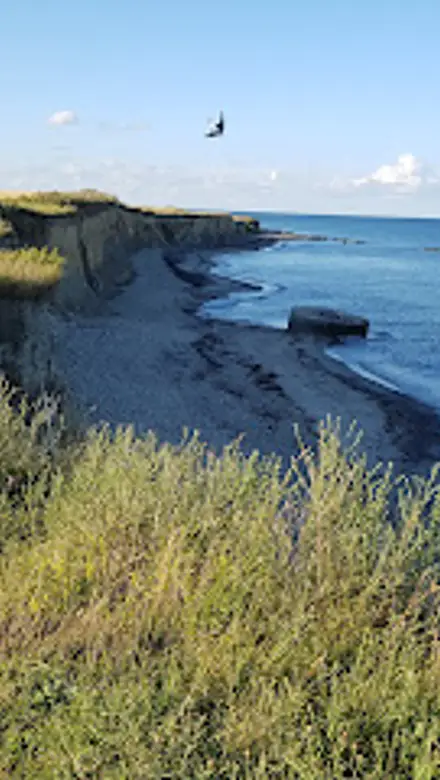
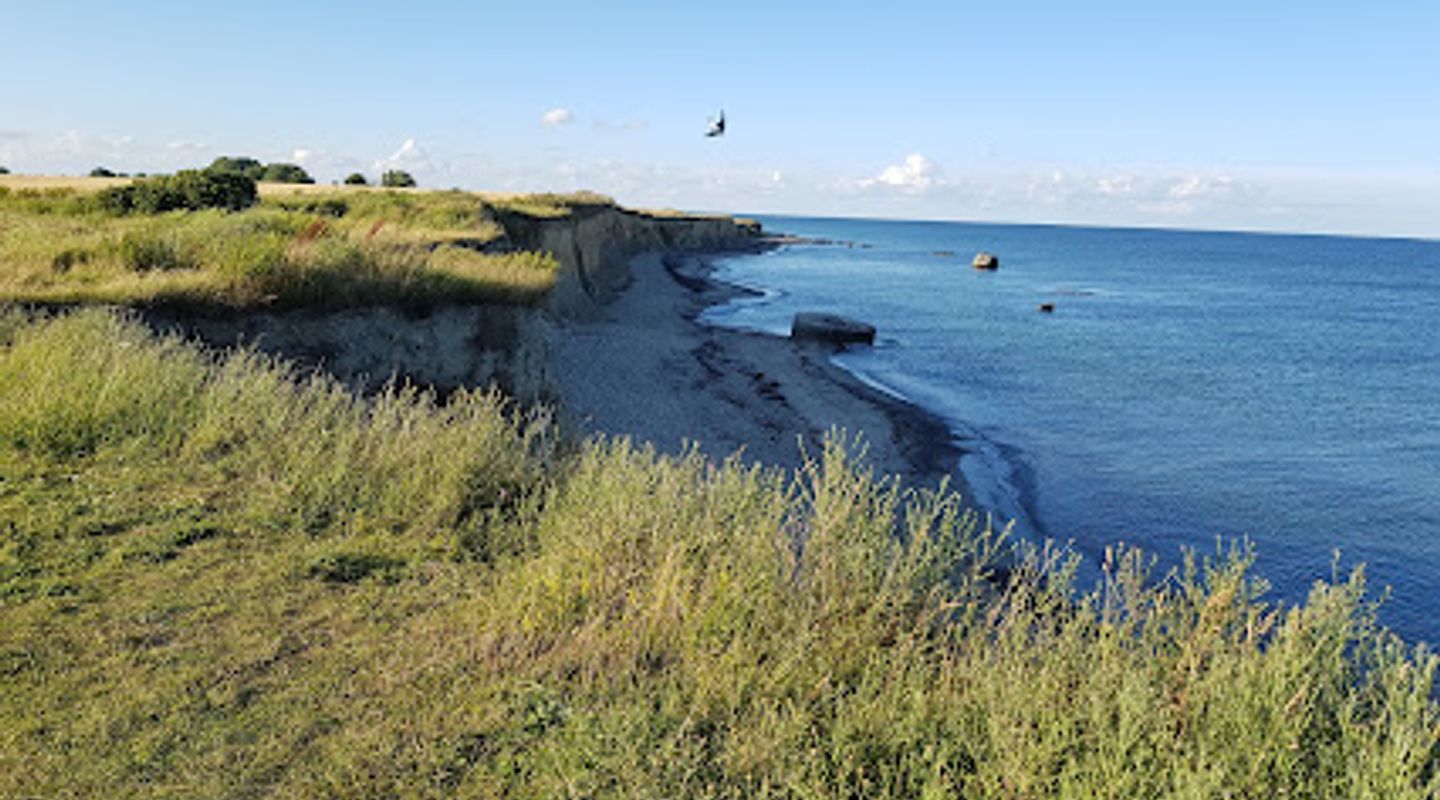
The coastline at Gedser Odde is constantly being reshaped by wind and waves. A low cliff of sand and glacial deposits runs along parts of the shore, gradually eroding and feeding pebbles and stones down to the beach below. In some places the cliff is gently sloping and easy to descend; in others it drops more abruptly, revealing striped layers of sand and clay that tell the story of past ice ages.Behind the edge, low dunes and sparse coastal vegetation create a fragile buffer between land and sea. Marram grass holds the sand in place, while small ponds and wet hollows add variety to the terrain. Paths cross the area in an informal network rather than as a single marked trail, inviting you to choose your own route while still keeping the delicate nature in mind.
Bird Routes and Baltic Migrations
Gedser Odde lies on major migration routes, making it an important vantage point for birdlife passing between northern breeding grounds and warmer wintering areas. In spring and autumn, flocks of geese and ducks trace lines across the sky, while sea birds skim the waves close to shore. The open horizon allows you to follow their journey for long stretches, even with the naked eye.Raptors use the promontory as a landmark as well, gliding along the coastline and circling on thermals before continuing south or north. Even outside peak migration seasons there is almost always some activity over the sea: gulls arguing over scraps, cormorants diving for fish, and swans or eiders resting on the water just offshore.
Lighthouse, Coastal History and Human Traces
Not far from the tip stands Gedser Fyr, the red-and-white lighthouse that has watched over this coast for generations. Though modest in height compared to some beacons, it sits on slightly higher ground and commands impressive views along the shore. Together, lighthouse and headland form a classic Baltic coastal scene of working maritime landscape and low, open countryside.The area bears other traces of human activity as well: older coastal protection works, remnants of military installations from more uncertain times, and signs explaining the geology and natural history of the odde. Yet the overall impression remains one of simplicity and space. Buildings are few, sounds are carried away by the wind, and the sea sets the rhythm.
Walking, Watching and Simply Being Outdoors
Visiting Gedser Odde is about slow experiences rather than busy attractions. Many people come to walk along the shore, feel the wind, and listen to the low roar of the Baltic rolling onto the stones. The flat terrain makes it accessible to most walkers, though the loose pebbles can be tiring underfoot and the cliff edges demand basic caution.The headland is especially atmospheric in soft evening light, when the sea shifts towards silver and the sky deepens over the horizon. On days with clear air and only a light breeze, the stillness can feel almost meditative. In rougher weather the same openness becomes dramatic, with spray in the air and waves pounding the foot of the cliffs, offering a different but equally memorable side of this exposed point.
Seasons, Weather and Coastal Mood Swings
Every season changes the character of Gedser Odde. In summer, the grasses are high and the sea often calm, the colours leaning towards soft greens and blues. Autumn brings sharper winds, migrating birds and a more rugged palette of browns and steel-grey water. Winter days can be stark and beautiful, with frost on the grass, ice shards along the tideline and a low sun that barely clears the horizon.Whatever the time of year, this is a place where weather is part of the experience. Layers, windproof clothing and sturdy footwear make it easier to enjoy the long views and coastal atmosphere. With simple amenities and a largely untouched shoreline, Gedser Odde rewards those who appreciate nature at its most elemental and the quiet thrill of standing at the very end of Denmark.
Evendo Review Centre
 Google
Guest reviews
Best time to go
Quietest: Jan, Feb & Mar · before 6am or from 10pm
Busy times are Evendo estimates for a typical year, to help you plan. Actual crowds vary with events, school holidays and the weather.
Explore Gedser Odde on the map
A handpicked selection of must-see spots near Gedser Odde, mapped for you.
Get your free copy of our complete guide to Gedser Odde, delivered straight to you.
Everything on this page, from opening hours and how to get there to Eve’s tips and the best time to go, in one PDF you can read offline, print or share.
Already have an account? Sign in
Your Gedser Odde guide is ready.
We'll send it to · Not you? Sign out

Getting your guide ready…
We are putting together a fresh copy of the Gedser Odde guide. This can take up to a minute.
This can take a few moments. If your browser asks, choose Allow so the download can start. You'll find the guide in your Downloads folder.
Nothing happened? Download it again
Sorry, the guide is taking longer than usual. Please try again in a minute, or get it by email instead.
Other nearby places you may find interesting
The closest places of the same kind, if this one is not quite what you had in mind.
-
Labyrint Lolland-Falster Lose yourself in a leafy forest maze where quiz clues, gentle trails and fresh Lolland-Falster air turn getting lost into an easygoing family adventure.
-
Evolution Museet World-class real dinosaur fossils and a 300-million-year journey through evolution, set inside Denmark’s Knuthenborg Safaripark on the island of Lolland.
-
Lupinmark A seasonal sea of lupins turning the Lolland farmland into a vivid carpet of color, perfect for a peaceful countryside pause and striking photographs.
-
Skelsnæs-pavillionen A restored 1822 forest pavilion on a lakeside promontory in Naturpark Maribosøerne, offering peaceful picnic shelter amid historic woods and bird‑rich waters.
-
Relic of the Castle Revshale Subtle grassy earthworks on Borgø Island where a forgotten royal fortress, fierce 13th‑century battles and the serene Maribo Lakes Nature Park meet.
Swipe for more places
More to explore near Gedser Odde

 Best experiences near Gedser Odde
 Best hotels near Gedser Odde
 Best landmarks near Gedser Odde
 Best attractions near Gedser Odde
 Best shops near Gedser Odde
 Best restaurants near Gedser Odde
 Best bars near Gedser Odde
Do you manage this location?
Take control to get all the benefits, like improved information, better appearance, and stronger visibility across AI-powered discovery.
Explore more
Explore more of Lolland
Discover Lolland, Denmark's tranquil island retreat, offering lush landscapes, historic sites, and delightful local cuisine for an unforgettable escape.
Explore Lolland
Explore more of Denmark
Discover Denmark: A perfect blend of history, modern design, and the cozy concept of hygge. Explore vibrant cities, serene landscapes, and world-class cuisine.
Explore Denmark