Gedser Odde Travel Guide
Free Guide: Wind-swept cliffs, a southernmost stone and vast Baltic horizons make Gedser Odde a raw, beautiful meeting point of land, sea, birds and deep time.


A brief summary of Gedser Odde
Wind-swept cliffs, a southernmost stone and vast Baltic horizons make Gedser Odde a raw, beautiful meeting point of land, sea, birds and deep time.
Gedser Odde, on the southern tip of Falster, marks the southernmost point of Denmark and the Nordic countries. Here sheer coastal cliffs, the iconic Gedser Lighthouse and the Sydstenen marker meet open Baltic horizons. The headland is famed for dramatic coastal scenery, Ice Age geology and exceptional bird migration, with tens of thousands of seabirds and raptors passing each spring and autumn. Simple paths, windswept grasses and sea air create a raw, elemental feel that suits quiet walks, birdwatching and unhurried contemplation.
On-site amenities
 Restrooms
 Seating areas
 Trash bins
 Information boards
Opening hours
- Every dayOpen 24 hours
Opening hours as listed on the venue’s Google Business Profile. Hours can change for services and special events, so check with the venue before you go.
- Address
- Gedser Fyrvej, 4874 Gedser
- Website
Getting there
Car from Nykøbing Falster
Regional bus from Nykøbing Falster
Car plus ferry via Rostock–Gedser
Discover more about Gedser Odde
Where Denmark Ends and the Baltic Begins
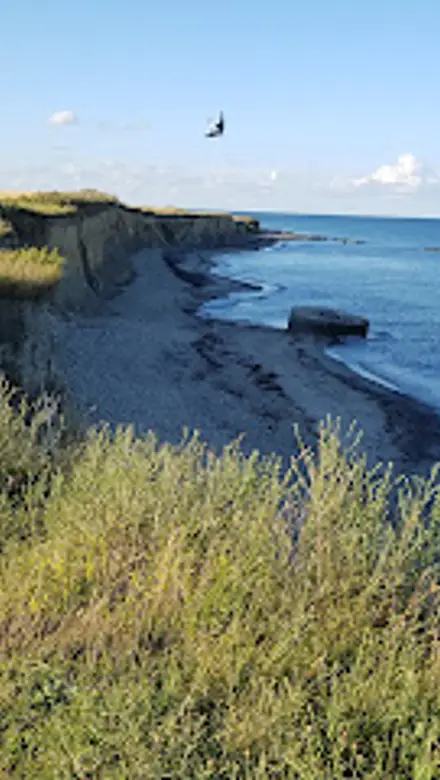
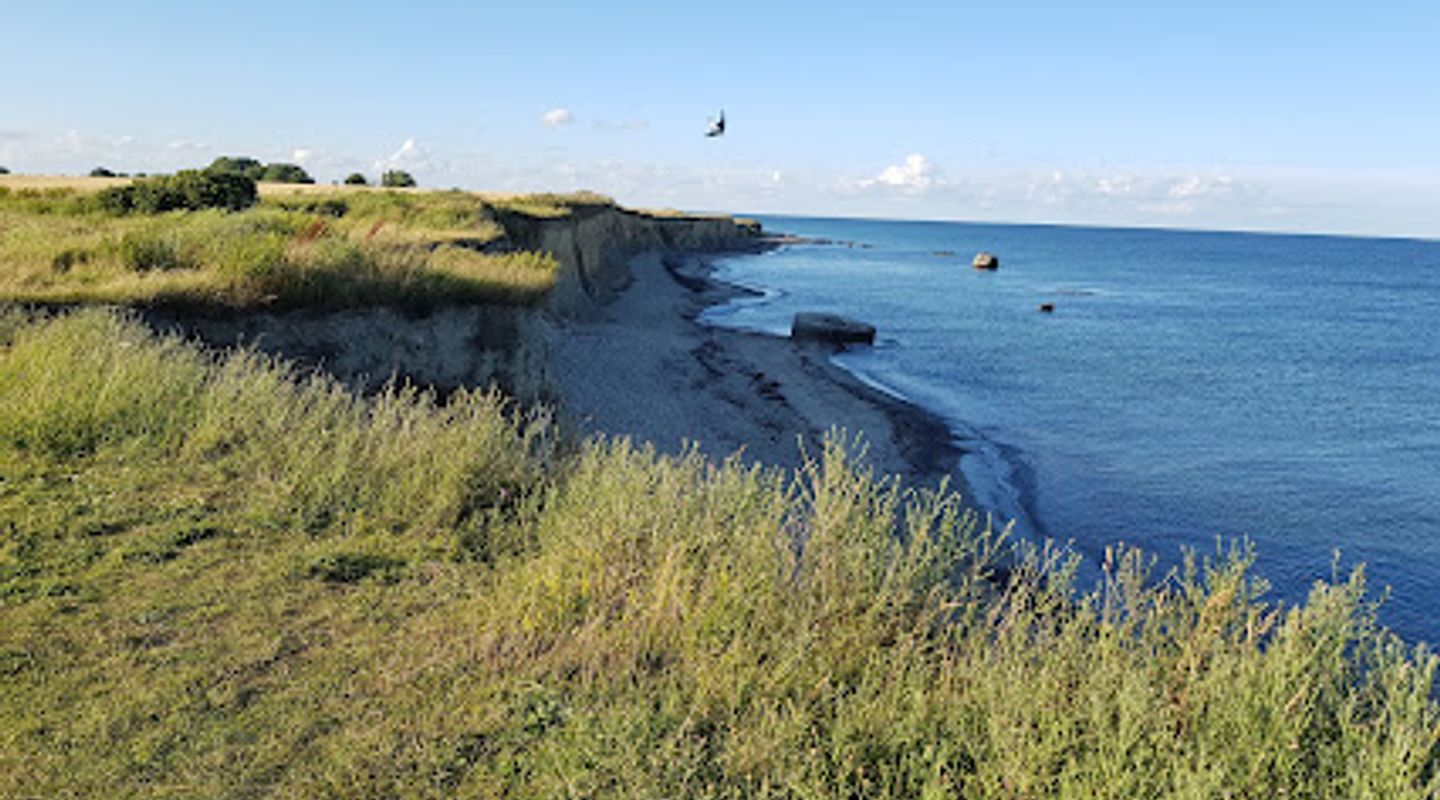
Gedser Odde is the pointed fingertip of Denmark, a narrow tongue of land stretching into the Baltic where Scandinavia quite literally stops. Out here, the horizon feels bigger, the sky lower and the light sharper, with the sea wrapping around you on three sides. Wind-sculpted grasses, low scrub and a ribbon of track lead you towards the low cliffs and the unbroken blue-grey of the water beyond.This is a place defined by edges and contrasts: land versus sea, north versus south, calm days with glassy water versus roaring storms that gnaw at the shoreline. Standing near the edge of the cliff, you can feel how exposed the headland is, yet there is also a strong sense of calm, a quiet that is broken mostly by the surf and the cries of gulls.
Ice Age Landscapes and a Billion-Year Stone
The landscape at Gedser Odde is a long, low ridge of clay, sand and gravel pushed together by glaciers around 12–15,000 years ago. The cliffs reveal coloured layers of these deposits, stacked and folded like a geological layer cake that tells the story of the last Ice Age. Each winter storm bites a little more from the bluff, exposing fresh slices of this frozen past.Close by, the Sydstenen marks the country’s southernmost point with a hefty glacial boulder believed to be around a billion years old. Carried here from what is now Sweden by moving ice, it quietly underlines how this seemingly simple coastline is the result of enormous geological forces and vast stretches of time.
Lighthouse, Listening Post and Sea-Watching
The red-and-white Gedser Lighthouse stands a short distance back from the brink, the southernmost beacon in Denmark. Its tower has long helped guide shipping through these busy waters, and the building complex adds a human scale to the otherwise wild headland. Nearby, a former Cold War marine listening station has been reshaped into an information and exhibition space, with displays on local nature, history and offshore wind farms.Around these structures, low buildings and masts sit against the sky, while simple paths thread between them. It is easy to imagine watchkeepers and signal operators scanning the same horizon that birdwatchers, walkers and sea-gazers study today, albeit for very different reasons.
On the Main Highway of Migrating Birds
Gedser Odde sits on one of northern Europe’s major bird migration routes, funnelling birds between Scandinavia and continental Europe. In spring, huge flocks of eiders stream past offshore on their way to nesting grounds deeper into the Baltic, sometimes in their hundreds of thousands in a single day. In autumn, the flow reverses as geese, ducks, divers, terns and skuas head south.Land birds also gather here: finches, thrushes and warblers pause in the sparse vegetation or at the bird station before launching out over the sea. On good days, the sky can be patterned with raptors using rising air to gain height before crossing the water. Even on quieter days, there is usually some movement to watch, making binoculars almost as essential as a windproof jacket.
Walking the Windy Edge
Exploring Gedser Odde is about simple pleasures rather than facilities. A parking area by the cliffs and lighthouse area forms the starting point for gentle walks along the bluff or down to the beach where access is safe. The terrain is mostly flat but can be uneven, and the constant wind gives even short strolls a brisk, invigorating quality.There are basic information boards and occasional seating spots where you can pause and absorb the shifting light over the sea. Many visitors linger longer than planned, watching the colour of the water change with passing clouds or tracking ships and ferries as they cross the horizon between Denmark and Germany.
Seasons, Weather and the Art of Lingering
The character of Gedser Odde changes markedly with the seasons. Spring and autumn bring peak bird migration and lively skies, while summer tends to be gentler, with longer days and calmer seas that encourage lingering near the cliffs. In winter, the headland can feel raw and wild, with powerful winds, racing clouds and, at times, a dusting of snow or ice along the shore.This is not a place of elaborate attractions; its appeal lies in exposure to weather and space. On clear days, the light can be dazzling, perfect for photography and long views. On grey, gusty days, the atmosphere becomes dramatic and moody. Either way, Gedser Odde rewards unhurried time, a slow walk, and a willingness to simply stand and look south across the Baltic to the wider world beyond.
Evendo Review Centre
 Google
Guest reviews
Best time to go
Quietest: Jan, Feb & Dec · before 6am or from 9pm
Busy times are Evendo estimates for a typical year, to help you plan. Actual crowds vary with events, school holidays and the weather.
Explore Gedser Odde on the map
A handpicked selection of must-see spots near Gedser Odde, mapped for you.
Get your free copy of our complete guide to Gedser Odde, delivered straight to you.
Everything on this page, from opening hours and how to get there to Eve’s tips and the best time to go, in one PDF you can read offline, print or share.
Already have an account? Sign in
Your Gedser Odde guide is ready.
We'll send it to · Not you? Sign out

Getting your guide ready…
We are putting together a fresh copy of the Gedser Odde guide. This can take up to a minute.
This can take a few moments. If your browser asks, choose Allow so the download can start. You'll find the guide in your Downloads folder.
Nothing happened? Download it again
Sorry, the guide is taking longer than usual. Please try again in a minute, or get it by email instead.
Other nearby places you may find interesting
The closest places of the same kind, if this one is not quite what you had in mind.
-
The Medieval Center Experience 15th-century Denmark through living history, trebuchets, tournaments, and authentic medieval crafts.
-
Guldborgsund Zoo & Botanisk Have Intimate town-edge zoo and botanical garden where animal encounters, leafy paths and playgrounds have long shaped family days out in Nykøbing Falster.
-
Horreby Lyng Falster’s only raised bog, where quiet boardwalks, restored peatland and traces of ancient life create a subtle, atmospheric escape into Danish nature.
-
Zipline Systofte Seasonal lakeside adventure park near Nykøbing Falster with a 400 m twin zipline, floating aquapark and high-jump airbag for families and thrill-seekers.
-
Crocodile Zoo, Falster Tropisk, fugtig varme, kæmpekrokodiller og bevaringsprojekter samles i et kompakt, intenst reptilunivers midt på Falster.
Swipe for more places
More to explore near Gedser Odde

 Best experiences near Gedser Odde
 Best hotels near Gedser Odde
 Best landmarks near Gedser Odde
 Best attractions near Gedser Odde
 Best shops near Gedser Odde
 Best restaurants near Gedser Odde
 Best bars near Gedser Odde
Do you manage this location?
Take control to get all the benefits, like improved information, better appearance, and stronger visibility across AI-powered discovery.
Explore more

Explore more of Falster
Discover Falster: A blend of serene beaches, rich history, and lush landscapes in Denmark's southern island treasure.
Explore Falster
Explore more of Denmark
Discover Denmark: A perfect blend of history, modern design, and the cozy concept of hygge. Explore vibrant cities, serene landscapes, and world-class cuisine.
Explore Denmark