Vallø Castle, Mon Travel Guide
A Renaissance fortress reborn: Denmark's iconic castle of nobility, resilience, and baroque gardens.
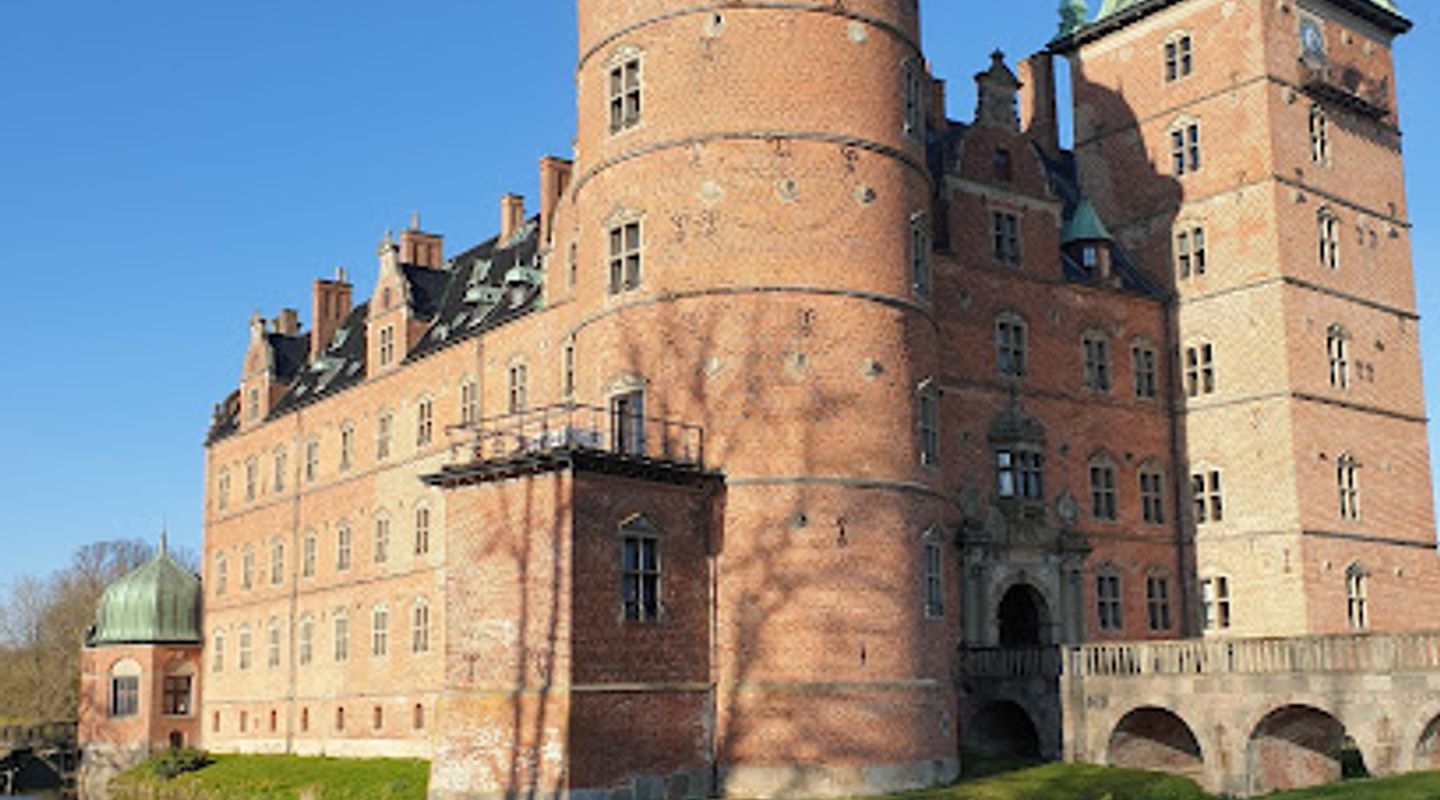
Vallø Castle is a striking Renaissance fortress in Køge, Denmark, with origins tracing to the 1300s and its current form completed in 1586. Originally a royal residence, it was transformed in 1737 into a foundation for unmarried daughters of Danish nobility. The castle's impressive red-brick walls, distinctive round and square towers, and meticulously restored interiors survive a devastating 1893 fire. The surrounding baroque-inspired park, redesigned in English style during the 19th century, features manicured gardens, tree-lined avenues, and classical pavilions.
A brief summary to Vallø Castle
- Slotsgade 4, Køge, 4600, DK
- Click to display
- Click to display
- Duration: 1.5 to 3 hours
- Free
-
 Outdoor
- Mobile reception: 4 out of 5

Know before you go
Hi, I'm Eve. Here are a few practical things to know before exploring Vallø Castle.
- Visit the castle park during spring or early summer when the gardens are in full bloom and the tree-lined avenues provide natural shade for leisurely walks.
- Allow time to explore the supporting 1700s structures—the castle inn, rectory, and servant quarters—which provide context for understanding the estate's historical hierarchy and daily operations.
- The castle's exterior is particularly photogenic during golden hour, when the red-brick walls and distinctive towers are illuminated against the sky.
- Check ahead for seasonal events or guided tours that may offer deeper insight into the foundation's history and the lives of its residents.
- Bring binoculars to observe architectural details of the sandstone ornamentation and decorative elements that survived the 1893 fire and were carefully restored.
Do you manage this location?
Take control to get all the benefits, like improved information, better appearance, and stronger visibility across AI-powered discovery. Learn more about listing your business on Evendo
Activate your presenceOther nearby places you may find interesting
The closest places of the same kind, if this one is not quite what you had in mind.

Explore Vallø Castle on the Map
A handpicked selection of must-see spots near Vallø Castle, mapped for you.
Getting There
-
Train from Copenhagen Central Station
Regional trains depart Copenhagen Central Station toward Køge approximately every 20–30 minutes. The journey takes 25–35 minutes. From Køge Station, the castle is a 10–15 minute walk through the town center (approximately 1 km) following local signage toward Slotsgade. Trains operate throughout the day; service is frequent on weekdays and reduced on Sundays. Single tickets cost approximately 60–80 Danish kroner.
-
Car via Route 6 South
From Copenhagen, take Route 6 southbound toward Køge, approximately 40 km. Driving time is 35–50 minutes depending on traffic. Follow signs for Køge town center and then Slotsgade. The castle has limited on-site parking; street parking is available nearby in Køge town. Parking fees apply in designated zones. Fuel and tolls are minimal on this route.
-
Bus from Copenhagen
Regional bus services operate from Copenhagen to Køge, with departures every 30–60 minutes. Journey time is 45–60 minutes depending on stops. Buses arrive at Køge Bus Station, from which the castle is a 10–15 minute walk. Single tickets cost approximately 50–70 Danish kroner. Service frequency is lower on weekends and evenings.
-
Bicycle from Køge Town Center
Køge is a compact medieval town with cycling infrastructure. From Køge Station or town center, the castle is accessible via local cycling routes, approximately 1–2 km. Journey time is 5–10 minutes. The terrain is flat and suitable for casual cyclists. No rental services are noted at the castle itself, but Køge town offers bicycle rental options.
For the on-the-go comforts that matter to you
-
 Information Boards
-
 Seating Areas
-
 Picnic Areas
Discover more about Vallø Castle
From Fortress to Royal Foundation
Vallø Castle's history spans nearly seven centuries, beginning as a fortified stronghold during the reign of Erik Menved (1274–1319). The castle was surrounded by a sophisticated system of defensive moats and ramparts. Over subsequent centuries, the estate passed through the hands of prominent Danish noble families including the Oxe, Rosensparre, and Skeel lineages. In 1708, King Frederik IV acquired Vallø and granted it to Anne Sophie Rewentlow, his left-hand queen, elevating the property to a county residence. Following Frederik IV's death in 1730, Anne Sophie was exiled to Clausholm in Jutland. King Christian VI then bestowed Vallø upon his pietistic queen, Sophie Magdalene, who in 1737 transformed the estate into a royal foundation—a kongeligt frøkenstift—dedicated to providing refuge and support for unmarried daughters of Danish nobility with Christian virtue and unblemished character.Architectural Mastery and Renaissance Design
The castle's main structure was erected between 1580 and 1586 by Mette Rosenkrantz, widow of the royal chamberlain Peder Oxe. Her construction established the southern and western wings, flanked by two characteristic towers—one square and one circular—that remain defining features of the castle's silhouette. The northern wing and the baroque structure known as "Det Hvide Stift" (The White Foundation) were added approximately 150 years later. The castle's exterior is distinguished by its heavy red-brick construction rising three stories, creating an imposing presence above the surrounding settlement. Original sandstone portals, medallions, and decorative stonework adorned the walls, testifying to the craftsmanship of the Renaissance period.Catastrophe and Resurrection
On a fateful night in 1893, a candle accident ignited a devastating fire that consumed the castle's interior, destroying countless cultural treasures and irreplaceable artifacts. Miraculously, no lives were lost, and the castle's thick outer walls withstood the inferno, preserving the structural skeleton. Despite financial strain from agricultural crisis and inadequate fire insurance, the decision to rebuild was made swiftly. Architect Hans Jørgen Holm, a professor at the Royal Academy of Fine Arts, was entrusted with the reconstruction, assisted by architect Søren Lemche. Throughout spring 1893, detailed surveys and measurements of the ruins were conducted. By autumn, comprehensive drawings and specifications were completed, leading to royal confirmation on 17 February 1894. Reconstruction commenced in spring 1894 and proceeded methodically over a decade. The thick outer walls were partially salvaged and reused, while the interior was completely reimagined. Where the castle once housed a chapel, knights' hall, garden hall, and royal chambers, nine apartments for foundation residents were installed, along with a grand foyer and garden hall. The original sandstone ornamentation was carefully preserved and reintegrated. By summer 1904, the castle was formally reinaugurated, welcoming nine foundation residents into their new homes.The Evolving Landscape of Slotsparken
The castle park, or slotspark, was established during the 1700s as a formal French baroque garden, featuring precisely clipped hedges, geometric flower parterres, and symmetrical tree-lined avenues. By the mid-19th century, the garden was redesigned in the fashionable English landscape style, transforming the rigid geometry into a more naturalistic composition. Today's park showcases this refined English aesthetic, with linden groves, ornamental pavilions, classical columns with capitals, and winding pathways that invite leisurely exploration. The 1385 hectares of protected land surrounding Vallø Stift encompass significant landscape, cultural-historical, and recreational value, designated for preservation as a heritage site.Social Mission and Community Legacy
Beyond providing residential support for unmarried noblewomen, Vallø Stift was mandated to undertake extensive social work within the local community. This dual purpose—caring for residents while serving the broader population—established the foundation as a center of both aristocratic life and charitable endeavor. The castle complex includes supporting structures from the 1700s: a castle inn (slotskro), foundation offices, servant quarters, a rectory, and a physician's residence, all arranged in proximity to the main castle. These buildings collectively form a cohesive historical settlement that reflects the hierarchical and functional organization of 18th-century Danish estate life.












Your all‑in‑one travel companion app
Explore expert travel guides, compare and book tours, experiences, hotels, and more—all from the palm of your hand. Download now for seamless trip planning wherever your wanderlust takes you.


Explore More of Mon
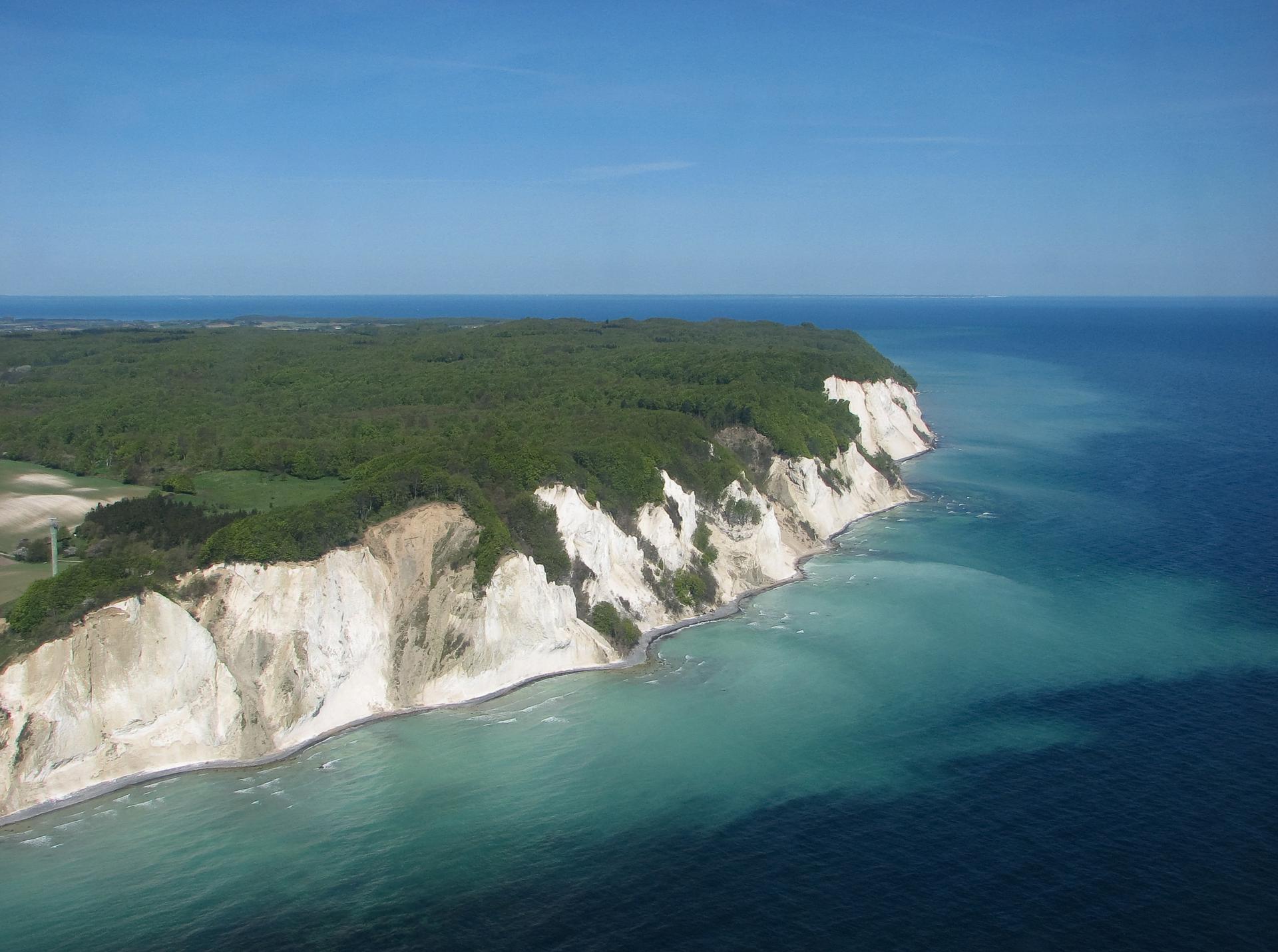
Looking beyond Vallø Castle? Discover Mon for broader travel guides, local hot-spots, and regional highlights.
Explore Mon