Frendrup Nihøje Travel Guide
Free Guide: Wind-swept Bronze Age burial mounds on a Himmerland hilltop, where wide North Jutland views meet the quiet presence of 3,000-year-old history.


A brief summary of Frendrup Nihøje
Wind-swept Bronze Age burial mounds on a Himmerland hilltop, where wide North Jutland views meet the quiet presence of 3,000-year-old history.
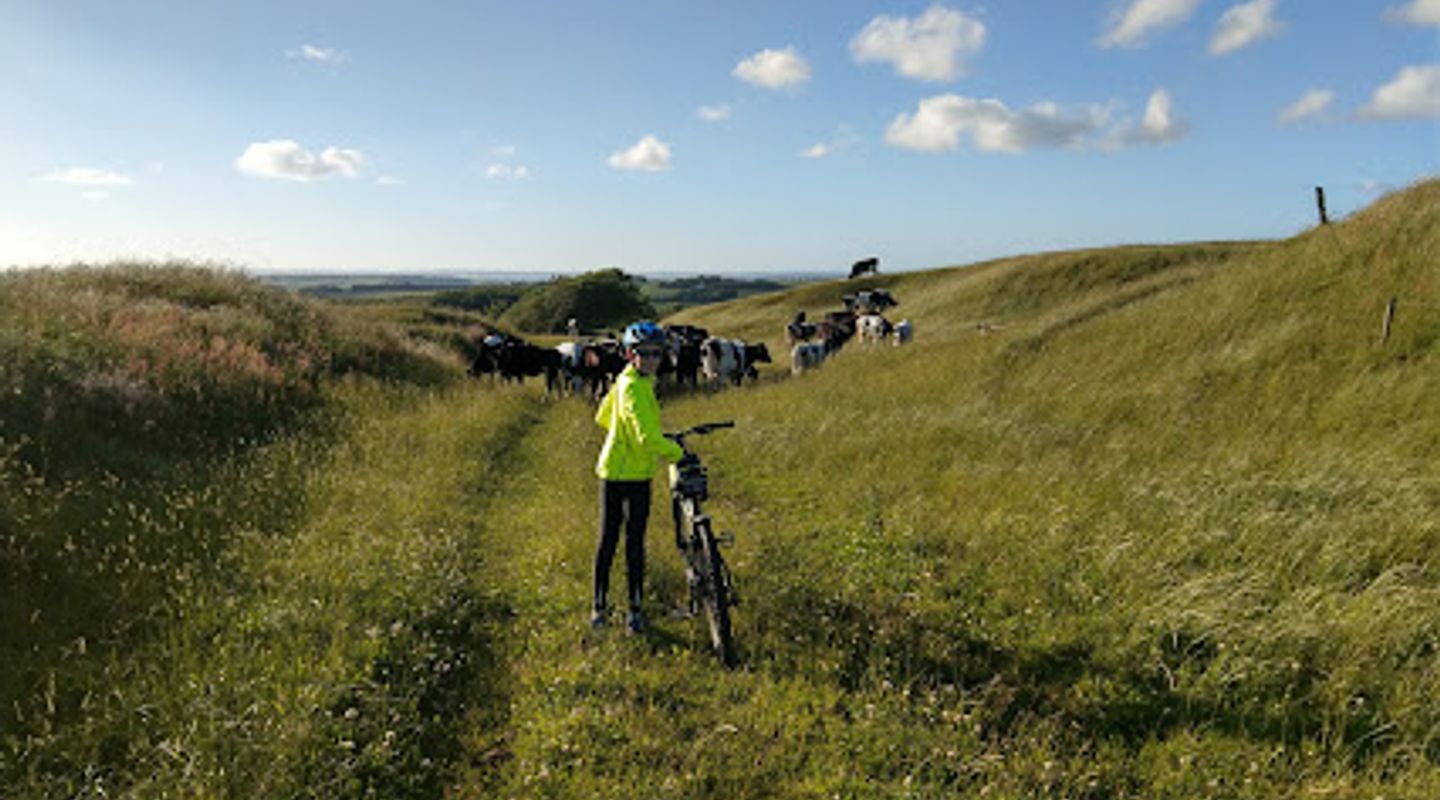
Frendrup Nihøje is a cluster of Bronze Age burial mounds set on one of the highest points in Himmerland, just northwest of Øster Hornum near Støvring. Rising around 105 meters above sea level, the protected site offers sweeping views over fields, forests, and the undulating North Jutland landscape. Simple paths and low, grass-covered mounds create a quiet, contemplative atmosphere where prehistoric heritage and open countryside blend seamlessly. It is an easy, low-key stop for walkers, history fans, and anyone seeking a tranquil outlook.
On-site amenities
 Parking
 Information boards
Opening hours
- Every dayOpen 24 hours
Opening hours as listed on the venue’s Google Business Profile. Hours can change for services and special events, so check with the venue before you go.
- Address
- Nihøjevej 38, 9530 Støvring
- Website
Getting there
Car from Støvring
Car from Aalborg
Train and taxi via Støvring
Cycling from Øster Hornum
Discover more about Frendrup Nihøje
Ancient mounds on a Himmerland hilltop
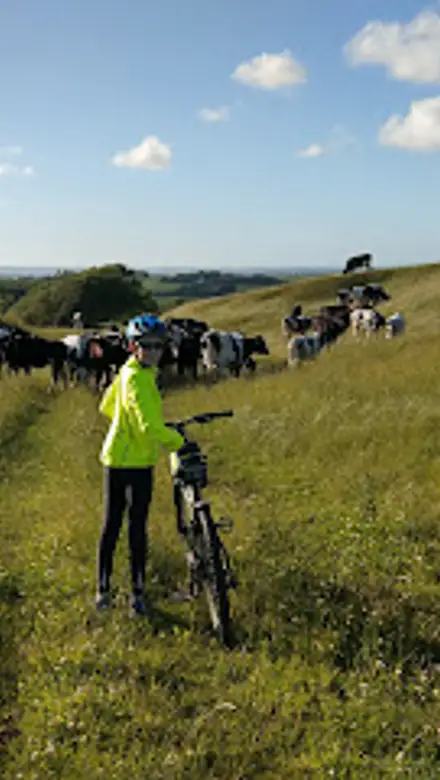
Frendrup Nihøje is a compact group of prehistoric burial mounds crowning one of the highest natural points in Himmerland, about two kilometres northwest of Øster Hornum. The rounded silhouettes rise gently from a broad, open plateau, their grass-clad forms hinting at the rituals and beliefs of Bronze Age communities who chose this exposed hilltop for their dead.From the moment you arrive, the sense of elevation is clear. At roughly 105 metres above sea level, the view opens in all directions, with fields, hedgerows, and distant farms fanning out below. In clear weather the horizon feels particularly wide, giving the mounds a commanding yet understated presence in the landscape.
Traces of early life in Himmerland
Beneath the turf, the mounds speak of a time when this part of North Jutland was an important settlement area. Archaeological finds in and around Frendrup Nihøje include remains of some of the earliest known habitation in Himmerland, as well as traces of cultivated fields from the Bronze Age. These discoveries show that the hill was not an isolated ritual site, but part of a lived-in, actively farmed landscape.The mounds themselves were likely raised over high-status individuals, marking both memory and territory. Set high above the surrounding land, they would have been visible from far away, acting as long-lasting landmarks guiding travellers and signalling community identity for generations.
A modest landscape with big horizons
Today the site is a protected area, kept largely free of modern development so that the shapes of the mounds and the rolling farmland remain the main features. Low vegetation and cropped grass reveal the contours of each burial hill, while the wind is often the loudest sound, rustling in nearby trees and across the open fields.On bright days the sky feels expansive, with clouds casting slow-moving shadows over the terrain. At other times, mist and low light can make the mounds appear more mysterious, their rounded forms emerging quietly from the haze. The overall impression is one of open space rather than dramatic scenery, rewarding those who appreciate subtle changes of light, weather, and season.
Walking, pausing, and looking outward
Paths lead from the small parking area onto the hilltop, making it easy to stroll among the mounds and choose your own vantage point. The ground is mostly grass and earth, sometimes a little uneven but not technically demanding. Many visitors simply wander for a short while, then sit or stand to take in the panorama of Himmerland’s patchwork of fields, villages, and distant ridges.There is no built-up infrastructure on the hill itself, so the atmosphere stays pleasantly simple. This quietness encourages slow exploration: noticing the height of each mound, the way they align along the ridge, and how the surrounding farmlands echo the long history of cultivation already underway when the mounds were raised.
Subtle details and changing seasons
Frendrup Nihøje rewards repeat visits at different times of year. In spring and summer, the grass on and around the mounds is lush, and the fields below shift from early green to gold. Autumn brings softer light, highlighting the curves of the hills and the patchwork of harvested land. In winter, when leaves fall and the air clears, the long views can seem even sharper, and a dusting of frost or snow outlines every contour.Because the site is small in area, it pairs naturally with wider explorations of Himmerland and nearby nature areas. Yet even as a short standalone stop, the combination of archaeological significance and broad views gives a strong sense of place, linking present-day North Jutland to its Bronze Age past in a single, quietly impressive hilltop.
Evendo Review Centre
 Google
Guest reviews
Best time to go
Quietest: Jan, Feb & Mar · before 8am or at 8pm
Busy times are Evendo estimates for a typical year, to help you plan. Actual crowds vary with events, school holidays and the weather.
Explore Frendrup Nihøje on the map
A handpicked selection of must-see spots near Frendrup Nihøje, mapped for you.
Get your free copy of our complete guide to Frendrup Nihøje, delivered straight to you.
Everything on this page, from opening hours and how to get there to Eve’s tips and the best time to go, in one PDF you can read offline, print or share.
Already have an account? Sign in
Your Frendrup Nihøje guide is ready.
We'll send it to · Not you? Sign out

Getting your guide ready…
We are putting together a fresh copy of the Frendrup Nihøje guide. This can take up to a minute.
This can take a few moments. If your browser asks, choose Allow so the download can start. You'll find the guide in your Downloads folder.
Nothing happened? Download it again
Sorry, the guide is taking longer than usual. Please try again in a minute, or get it by email instead.
Other nearby places you may find interesting
The closest places of the same kind, if this one is not quite what you had in mind.
-
Råbjerg Mile Northern Europe's largest migrating dune—a living desert where sand reshapes the landscape 15 meters each year.
-
Rubjerg Knude A solitary North Sea lighthouse in a shifting dune sea, rescued from the eroding cliff edge and offering one of Denmark’s most dramatic coastal panoramas.
-
Grenen Walk to the narrow tip of Denmark’s sandy branch at Skagen, where Skagerrak and Kattegat collide in foaming waves and wild North Sea light.
-
Sea War Museum Jutland Powerful World War I naval history on Denmark’s wild west coast, where salvaged wreckage, human stories and a striking dune memorial bring the Battle of Jutland to life.
-
Thingbæk Chalk Mines / Rebild Center Underground limestone galleries filled with sculpture, Cold War tales, bats, and geology, all set in the rolling, protected landscape near Rebild Bakker.
Swipe for more places
More to explore near Frendrup Nihøje

 Best experiences near Frendrup Nihøje
 Best hotels near Frendrup Nihøje
 Best landmarks near Frendrup Nihøje
 Best attractions near Frendrup Nihøje
 Best shops near Frendrup Nihøje
 Best restaurants near Frendrup Nihøje
 Best bars near Frendrup Nihøje
Do you manage this location?
Take control to get all the benefits, like improved information, better appearance, and stronger visibility across AI-powered discovery.
Explore more
Explore more of North Jutland
Discover North Jutland: Denmark's northernmost region, renowned for its stunning coastlines, rich Viking history, vibrant culture, and outdoor adventures.
Explore North Jutland
Explore more of Denmark
Discover Denmark: A perfect blend of history, modern design, and the cozy concept of hygge. Explore vibrant cities, serene landscapes, and world-class cuisine.
Explore Denmark