

Hanstholm fortress Travel Guide
Free Guide: Northern Europe’s largest WWII coastal fortress, where colossal guns, concrete bunkers and wild North Sea dunes meet on the windswept edge of Denmark.


A brief summary of Hanstholm fortress
Northern Europe’s largest WWII coastal fortress, where colossal guns, concrete bunkers and wild North Sea dunes meet on the windswept edge of Denmark.
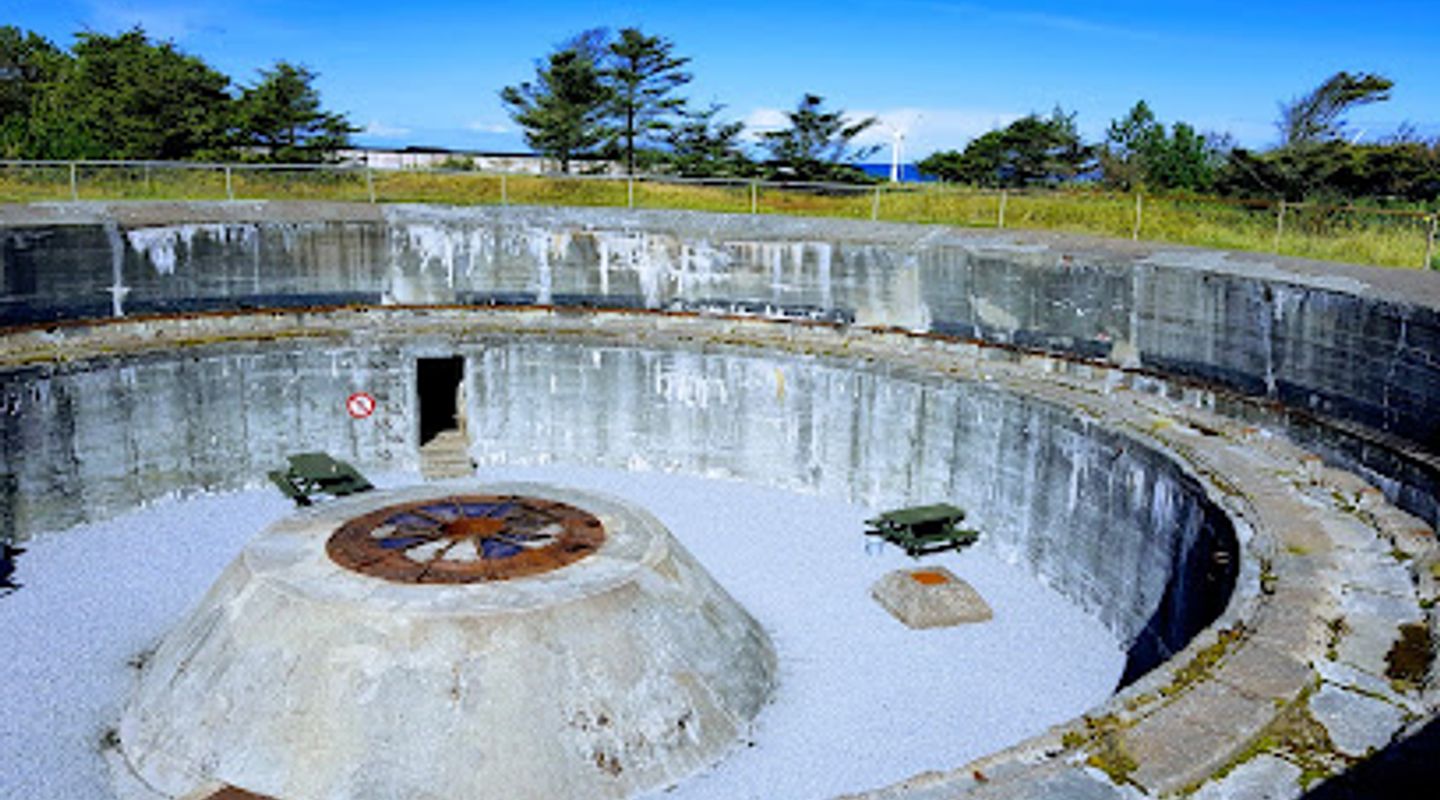
Hanstholm Fortress, home to Bunker Museum Hanstholm, is Denmark’s largest bunker museum and part of Northern Europe’s most powerful WWII coastal fortification. Built in 1941 as a key link in the Atlantic Wall, the complex once hosted four 38 cm naval guns and more than 3,000 troops guarding the Skagerrak. Today you can explore a 2,500 m² bunker, an immersive documentation centre, a historic ammunition train and an open-air landscape dotted with bunkers on the edge of Thy National Park.
On-site amenities
 Restrooms
 Drink options
 Drinking water
 Food options
 Seating areas
 Sheltered areas
 Picnic areas
 Trash bins
 Information boards
 Visitor centre
Opening hours
- Every day10 am–5 pm
Opening hours as listed on the venue’s Google Business Profile. Hours can change for services and special events, so check with the venue before you go.
- Address
- Molevej 29, 7730 Hanstholm
- Phone
- Website
Getting there
Car from Thisted
Regional bus from Thisted
Car from Aalborg
Cycling from Hanstholm town centre
Discover more about Hanstholm fortress
A coastal fortress built to command the Skagerrak
Hanstholm Fortress was constructed by German forces in 1941 as part of the Atlantic Wall, a vast chain of defences stretching from Norway to France. Here at Denmark’s northwestern edge, the task was clear: to seal off the 120 km-wide entrance to the Skagerrak and keep the British fleet at bay. The battery at Hanstholm was paired with a sister battery in Kristiansand, Norway, creating a deadly crossfire zone over the sea lane.At its wartime peak the fortress covered roughly 9 square kilometres and housed more than 3,000 men. Four colossal 38 cm naval guns formed its core, each weighing around 110 tonnes and capable of firing shells up to 55 km out to sea, almost halfway to Norway. The sheer scale of the engineering leaves little doubt how strategically important this wind-battered headland once was.
Life inside the 2,500 m² museum bunker
Today the heart of the site is a 2,500 m² bunker that once sheltered one of those massive guns along with around 90 soldiers. Several rooms have been meticulously restored to their original wartime appearance, from sleeping quarters and mess rooms to communications spaces. Walking the narrow corridors, you get a tangible sense of the routines, boredom and tension that filled long shifts on watch.Other chambers host detailed exhibitions on topics such as the 38 cm guns themselves, the battleship Bismarck and even the Olsen Gang in Jutland film, which used the fortress as a backdrop. Together they turn bare concrete into a layered narrative about technology, propaganda, everyday habits and the human cost of occupation.
Stories of occupier and occupied
Above the bunker, a modern documentation centre adds an important civilian perspective. Under the title “Enemy and Neighbour – Hanstholm occupied!”, the exhibition traces how fortress and fishing town coexisted under German control. Personal testimonies, photographs and artefacts explore rationing, requisitioned land, collaboration and resistance, viewed from both German and Danish angles.Rather than focusing purely on hardware, these galleries emphasise relationships and dilemmas. You see how local families navigated life in the shadow of heavy guns, how soldiers coped with isolation on a distant coast, and how the landscape itself was reshaped by concrete, barbed wire and searchlights.
Riding the ammunition train through the battery
Out in the museum terrain, part of the original narrow-gauge ammunition railway has been restored. A small museum train now follows a one-kilometre loop through the battery, passing an ammunition bunker and one of the gun bunkers. The ride lasts around ten minutes, but it vividly shows how shells and supplies once moved around this military city.The track winds through dunes and low vegetation, with bunkers half-sunk into the sand on either side. It is an unusual way to grasp the extent of the site: instead of looking at a map, you feel distance and layout in real time as the carriages rattle from position to position across the old firing sector.
Bunkers, dunes and the edge of Thy National Park
Beyond the core museum area, Hanstholm’s surroundings form an open-air extension of the story. To the south lies the Hanstholm 1 open-air museum, one of Denmark’s best-preserved coastal batteries, where 19 bunkers dot a hilly dune landscape. Many are still accessible, inviting careful exploration with a torch and a bit of imagination.What was once a bare, windswept military zone has partly rewilded into mixed forest and heath that now sits on the fringe of Thy National Park. Walking these paths, you move between skylarks and concrete cupolas, heather and gun emplacements. It is a striking combination of nature and history, where Atlantic surf, North Sea winds and silent casemates all shape the atmosphere of this remote corner of Jutland.
Evendo Review Centre
 Google
Guest reviews
Best time to go
Quietest: Jan, Nov & Dec · before 8am or from 7pm
Busy times are Evendo estimates for a typical year, to help you plan. Actual crowds vary with events, school holidays and the weather.
Explore Hanstholm fortress on the map
A handpicked selection of must-see spots near Hanstholm fortress, mapped for you.
Get your free copy of our complete guide to Hanstholm fortress, delivered straight to you.
Everything on this page, from opening hours and how to get there to Eve’s tips and the best time to go, in one PDF you can read offline, print or share.
Already have an account? Sign in
Your Hanstholm fortress guide is ready.
We'll send it to · Not you? Sign out

Getting your guide ready…
We are putting together a fresh copy of the Hanstholm fortress guide. This can take up to a minute.
This can take a few moments. If your browser asks, choose Allow so the download can start. You'll find the guide in your Downloads folder.
Nothing happened? Download it again
Sorry, the guide is taking longer than usual. Please try again in a minute, or get it by email instead.
Other nearby places you may find interesting
The closest places of the same kind, if this one is not quite what you had in mind.
-
Råbjerg Mile Northern Europe's largest migrating dune—a living desert where sand reshapes the landscape 15 meters each year.
-
Rubjerg Knude A solitary North Sea lighthouse in a shifting dune sea, rescued from the eroding cliff edge and offering one of Denmark’s most dramatic coastal panoramas.
-
Grenen Walk to the narrow tip of Denmark’s sandy branch at Skagen, where Skagerrak and Kattegat collide in foaming waves and wild North Sea light.
-
Sea War Museum Jutland Powerful World War I naval history on Denmark’s wild west coast, where salvaged wreckage, human stories and a striking dune memorial bring the Battle of Jutland to life.
-
Thingbæk Chalk Mines / Rebild Center Underground limestone galleries filled with sculpture, Cold War tales, bats, and geology, all set in the rolling, protected landscape near Rebild Bakker.
Swipe for more places
More to explore near Hanstholm fortress

 Best experiences near Hanstholm fortress
 Best hotels near Hanstholm fortress
 Best landmarks near Hanstholm fortress
 Best attractions near Hanstholm fortress
 Best shops near Hanstholm fortress
 Best restaurants near Hanstholm fortress
 Best bars near Hanstholm fortress
Do you manage this location?
Take control to get all the benefits, like improved information, better appearance, and stronger visibility across AI-powered discovery.
Explore more
Explore more of North Jutland
Discover North Jutland: Denmark's northernmost region, renowned for its stunning coastlines, rich Viking history, vibrant culture, and outdoor adventures.
Explore North Jutland
Explore more of Denmark
Discover Denmark: A perfect blend of history, modern design, and the cozy concept of hygge. Explore vibrant cities, serene landscapes, and world-class cuisine.
Explore Denmark
